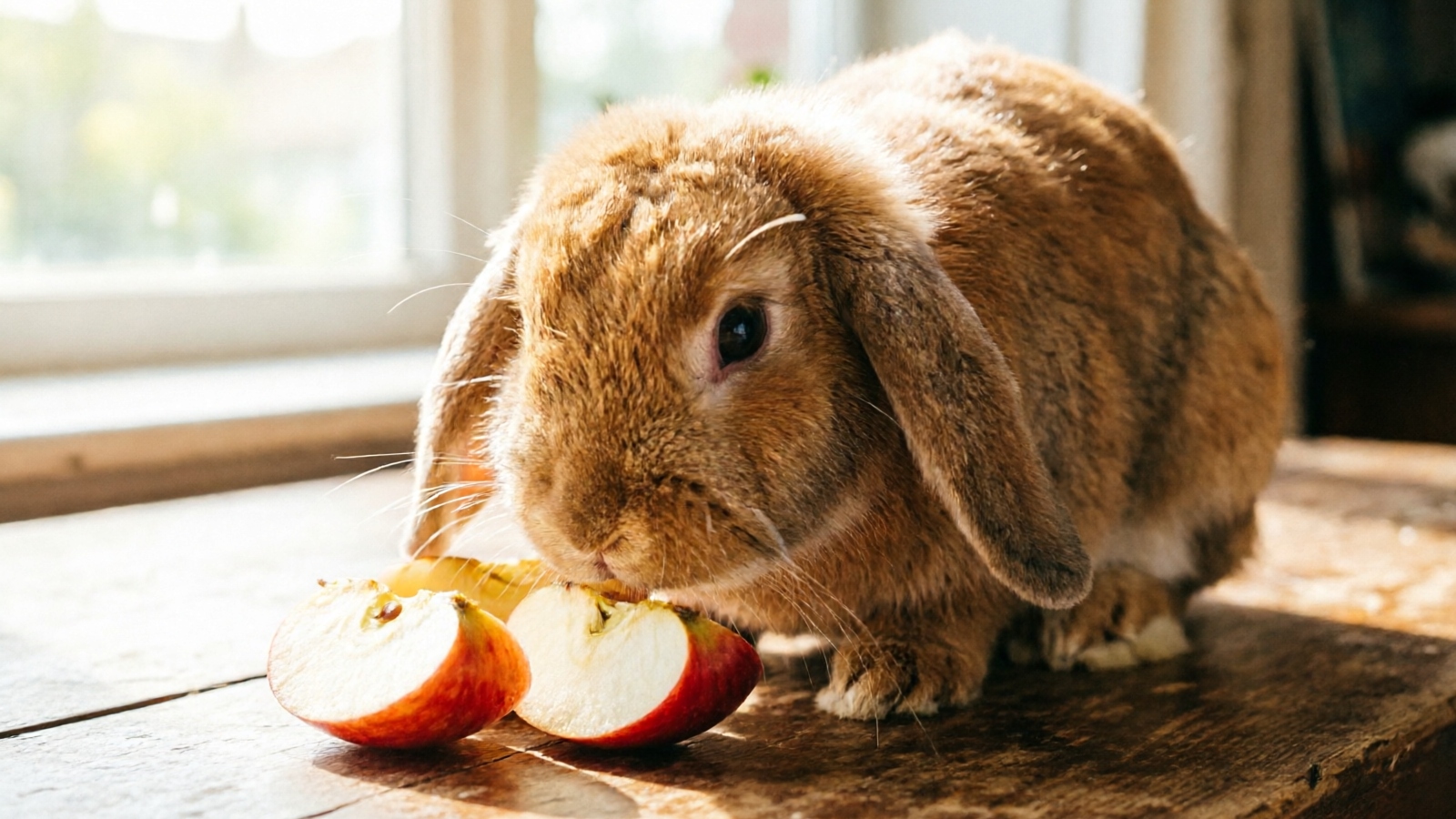
Quick Answer: Can Rabbits Eat Apples?
Yes, rabbits can eat apples — but with two important rules: remove all seeds (they contain cyanide compounds) and limit portions strictly. Apples offer fiber and hydration, but at 10.39g of sugar per 100g, they’re a treat food, not a daily staple.
💡 TL;DR: Feed 1-2 tablespoons of chopped apple once or twice per week. Always remove seeds and core. Wash thoroughly. Green apples have slightly less sugar than red. If you’re wondering can rabbits eat apples safely, the answer is yes — with strict portion control. For lower-sugar alternatives, consider cucumber or bell peppers.
⚠️ Medical Disclaimer: This article is not a substitute for professional veterinary care. If your rabbit is showing signs of illness, consult a qualified exotic veterinarian.
I’ve been feeding apples to my rabbits for years, and they’re one of the most reliable treat options — most rabbits I’ve met get genuinely excited at the sound of an apple being sliced. But I’ve also learned that enthusiasm can be misleading. Apples taste great to rabbits precisely because they’re high in sugar, and that sugar needs careful management as part of a balanced rabbit diet. When people ask me can rabbits eat apples, I always say yes — but with a much shorter leash than vegetables.
Nutritional Value of Apples for Rabbits
USDA nutritional data — raw apples with skin, per 100g USDA FoodData Central FDC ID 09003:
| Nutrient | Per 100g | Per 1 tbsp (~8g) | Relevance to Rabbits |
|---|---|---|---|
| Calories | 52 kcal | ~4.2 kcal | ✅ Low-moderate — safe in small portions |
| Sugar | 10.39g | ~0.83g | ⚠️ High for a rabbit treat — portion control critical |
| Carbohydrates | 13.81g | ~1.1g | ⚠️ Moderate-high |
| Fiber | 2.4g | ~0.19g | ✅ Supports gut motility |
| Vitamin C | 4.6mg | ~0.37mg | ✅ Rabbits synthesize their own, but extra is fine |
| Potassium | 107mg | ~8.6mg | ✅ Supports heart and muscle function |
| Calcium | 6mg | ~0.48mg | ✅ Low — minimal bladder stone risk |
| Water | 85.6g (85.6%) | ~6.8g | ✅ Good hydration support |
| Protein | 0.26g | ~0.02g | Negligible |
| Fat | 0.17g | Negligible | Negligible |
The Numbers That Matter Most
10.39g sugar and 2.4g fiber. Those two numbers define apples’ role in a rabbit’s diet. Unlike guinea pigs, rabbits can synthesize their own vitamin C, so the modest 4.6mg per 100g in apples isn’t a selling point. What apples do offer is hydration (85.6% water) and some fiber — both useful in moderation.
But the sugar is the concern. At 10.39g per 100g, apples have more than double the sugar of strawberries (4.89g) and more than six times the sugar of cucumber (1.67g). A single tablespoon of chopped apple delivers about 0.83g of sugar — manageable once or twice a week, but dangerous if offered daily. Can rabbits eat apples daily? Absolutely not.
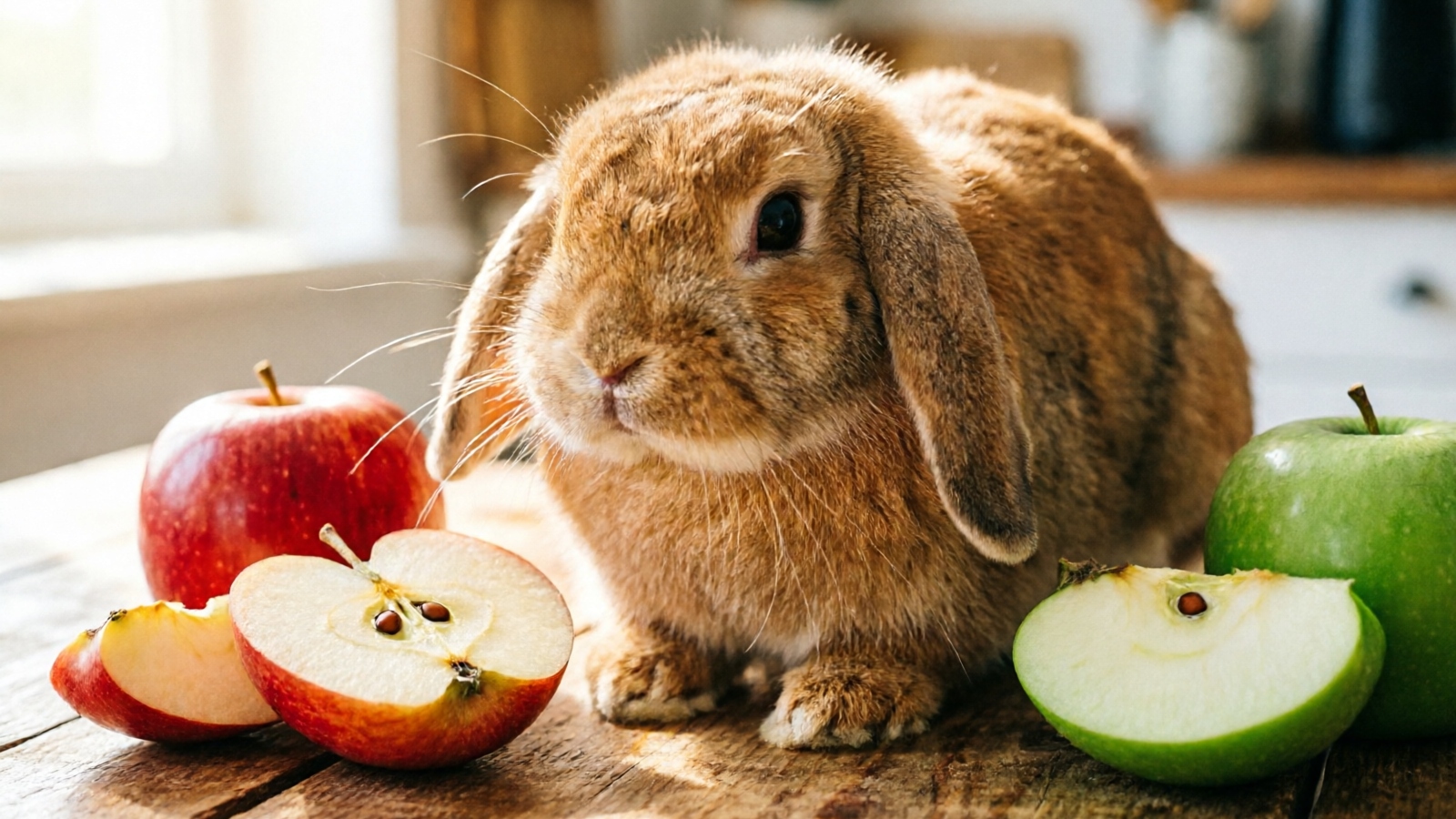
Apple vs Other Fruits
| Fruit | Sugar (g/100g) | Fiber (g/100g) | How Often |
|---|---|---|---|
| Apple | 10.39 | 2.4 | 1-2x/week |
| Strawberry | 4.89 | 2.0 | 1-2x/week |
| Blueberry | 9.96 | 2.4 | 1x/week |
| Banana | 12.23 | 2.6 | 1-2x/month |
| Grape | 15.48 | 0.9 | Rarely |
| Watermelon | 6.2 | 0.4 | 1-2x/week |
| Bell Pepper | 2.4 | 1.7 | Daily |
| Carrot | 4.74 | 2.8 | 2-3x/week |
Apples sit in the middle of the fruit sugar spectrum — sweeter than berries but less sugary than grapes and bananas. Their fiber is decent, making them a better choice than grapes (which have only 0.9g fiber per 100g). Think of apples as a fun treat, not a nutritional staple.
Benefits of Apples for Rabbits
Fiber for Digestive Health
The 2.4g of fiber per 100g supports healthy gut motility. A rabbit’s digestive system requires constant fiber movement to prevent GI stasis — a potentially fatal condition where the gut slows or stops entirely. While hay should always be the primary fiber source (it should make up 80% of the diet), the additional fiber from occasional apple pieces provides variety and supports a diverse gut microbiome. Apples contain both soluble fiber (pectin) — a prebiotic that feeds beneficial gut bacteria — and insoluble fiber that adds bulk to stool.
Hydration Support
At 85.6% water, apples provide meaningful hydration. This is especially useful during hot weather or for rabbits recovering from illness and drinking less than usual. Cucumber is still the hydration champion at 95% water, but apples are a solid secondary option.
Dental Health Through Crunch
The crisp texture of fresh apple requires active chewing, which helps wear down continuously growing teeth and prevents dental malocclusion. In my experience, the crunch factor is one reason rabbits enjoy apples so much — it satisfies their natural urge to gnaw. For more dedicated dental enrichment, apple wood chew sticks provide safe, long-lasting chewing material that supports dental health between fresh fruit treats.
Mental Enrichment
Offering a new food like apple provides mental stimulation. Rabbits are intelligent, curious animals that benefit from variety in their environment. A small apple piece placed in a treat toy or scattered in their cage setup encourages natural foraging behavior.
Risks of Feeding Apples to Rabbits
⚠️ Apple Seeds Contain Cyanide Compounds
This is the single most important safety point when considering can rabbits eat apples safely. Apple seeds contain amygdalin, a cyanogenic glycoside that releases hydrogen cyanide when chewed and digested. While the amount in a single apple seed is tiny and a rabbit would likely need to consume many seeds for acute poisoning, the risk is completely unnecessary.
Always core the apple and remove every seed before feeding. It takes 10 seconds and eliminates the risk entirely.
Sugar Overload
At 10.39g per 100g, apples deliver significant sugar per serving. The problems from excess sugar in rabbits are serious:
- Obesity: Rabbits in indoor environments are prone to weight gain. Extra sugar calories compound quickly, increasing risk of health problems including heart disease, joint strain, and fatty liver disease.
- GI stasis: Excess sugar disrupts the delicate gut bacterial balance, potentially slowing or stopping gut motility. GI stasis is one of the leading causes of death in pet rabbits and can become fatal within 12-24 hours if untreated.
- Dental disease: Sugar feeds oral bacteria, causing tooth decay and gum infections that can prevent normal eating.
- Food preference shift: Rabbits that develop a sweet tooth may start refusing hay — the food that should make up 80% of their diet. Breaking this habit is stressful and takes weeks.
Choking Hazard
Apple pieces that are too large can cause choking. Rabbits cannot vomit, so a lodged piece is an emergency. Always cut apple into small, bite-sized pieces — roughly the size of a pencil eraser or smaller.
Pesticide Residue
Apples consistently rank near the top of the EWG’s Dirty Dozen list for pesticide contamination. If you feed apple skin (recommended for the fiber), wash thoroughly for 30+ seconds. Organic is ideal but not mandatory.
How Much Apple Can a Rabbit Eat?
Serving Guide by Breed
| Rabbit Type | Serving Size | Max per Week |
|---|---|---|
| Large breed (Flemish Giant, 10+ lbs) | 2-3 tbsp chopped (~25-30g) | 1-2 times |
| Medium breed (Holland Lop, Mini Lop, 4-6 lbs) | 1-2 tbsp chopped (~15-20g) | 1-2 times |
| Small/Dwarf breed (Netherland Dwarf, 2-3 lbs) | 1 tbsp chopped (~8-10g) | 1 time |
| Baby (under 12 weeks) | None | Never |
| Young (12-24 weeks) | Pea-sized test piece | Once as test |
| Overweight rabbit | 1 tbsp or skip | 1 time or avoid |
For breed-specific care, see our guides for Holland Lops, Mini Lops, Netherland Dwarfs, Flemish Giants, and Lionheads.
Step-by-Step First Feeding Guide
- Start with a pea-sized piece — roughly 2g as a first-time introduction
- Wait 24 hours — monitor stool for diarrhea, bloating, or behavioral changes
- If no reaction, increase to one tablespoon at the next feeding
- Maintain 1-2x per week maximum — never exceed this long-term
Serving Rules at a Glance
- ✅ 1-2 tbsp chopped apple, 1-2x per week
- ✅ Remove all seeds and the core — non-negotiable
- ✅ Wash thoroughly — 30+ seconds under running water
- ✅ Cut into small, bite-sized pieces
- ✅ Keep the skin on — that’s where most of the fiber is
- ✅ Room temperature only — never chilled or cooked
- ✅ Remove uneaten pieces after 2 hours
- ❌ No apple juice, applesauce, pie, or cooked apples
- ❌ No dried apples with added sugar
- ❌ No daily feeding
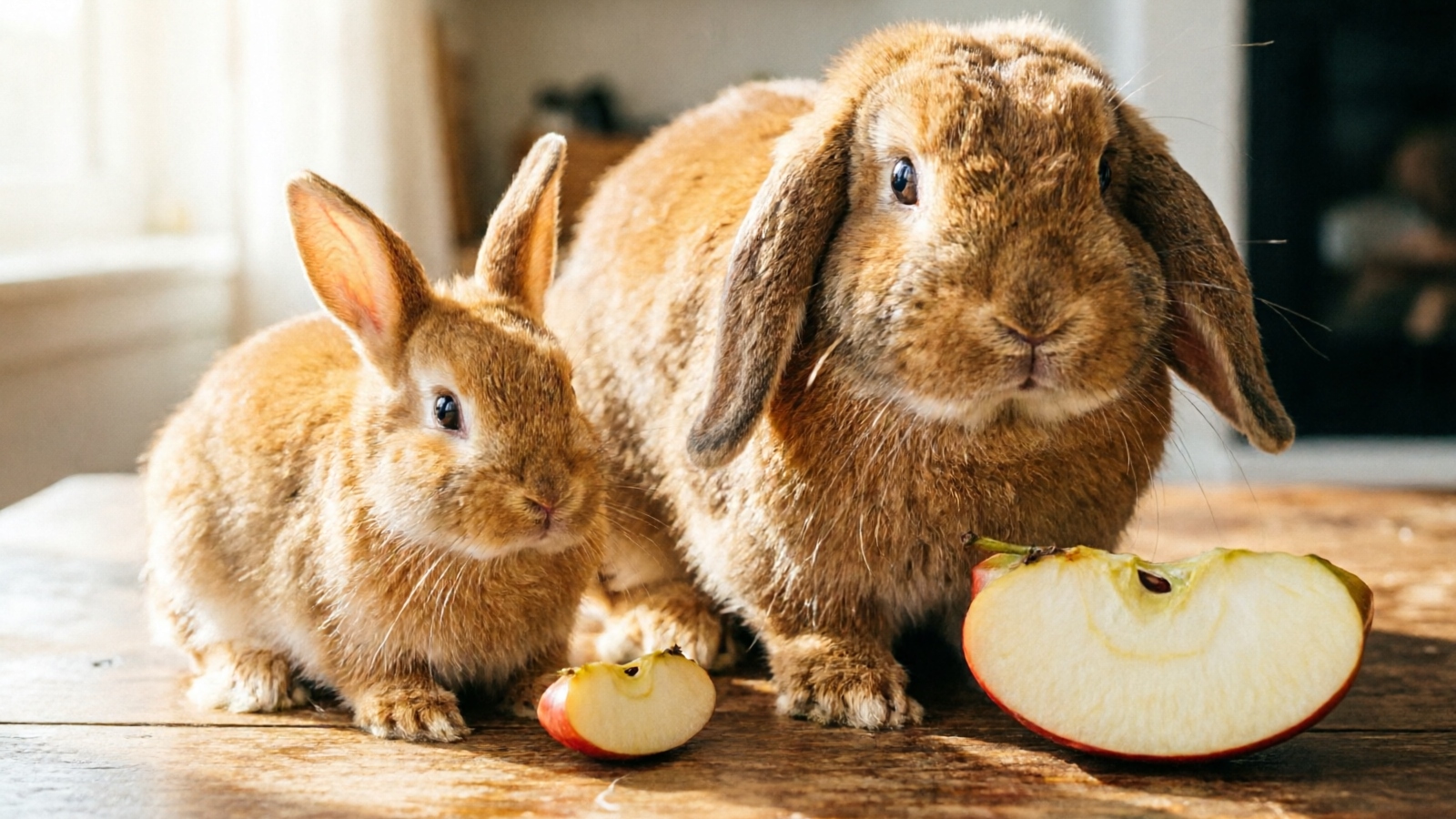
Which Parts of the Apple Are Safe?
| Part | Safe? | Notes |
|---|---|---|
| Flesh | ✅ Safe | Main edible part, best for regular feeding |
| Skin | ✅ Safe | Contains most of the fiber; wash thoroughly |
| Seeds | ❌ Toxic | Contain amygdalin (cyanide compound) — always remove |
| Core | ❌ Unsafe | Choking hazard + highest seed concentration |
| Stem | ❌ Avoid | Tough, fibrous, no nutritional value |
| Leaves | ⚠️ Use caution | Non-toxic but very fibrous; occasionally only |
Can Rabbits Eat Apple Skin?
Yes — and I’d recommend keeping it on. The skin contains roughly half the apple’s total fiber and significant antioxidants (quercetin and catechin). Just wash thoroughly — 30+ seconds under running water removes most surface residue. Organic is ideal but not mandatory.
Can Rabbits Eat Apple Seeds?
No. This is the one hard rule when considering can rabbits eat apples safely. Apple seeds contain amygdalin, which releases hydrogen cyanide when metabolized. The dose from a single seed is small, but why take any risk? Core the apple, discard all seeds, and feed only flesh and skin. It takes 10 seconds.
Can Rabbits Eat Apple Cores?
No. Cores are tough, fibrous, and the perfect size to lodge in a rabbit’s throat. Since rabbits cannot vomit, a choking incident is a life-threatening emergency. Cores also concentrate the most seeds. Remove and discard the entire core before feeding.
Can Rabbits Eat Green Apples?
Yes. Green apples (Granny Smith and similar tart varieties) are safe and have a slight nutritional edge — around 9.6g of sugar per 100g compared to 10.4g for sweeter red varieties. The lower sugar makes green apples marginally better, though the difference is small. The tartness is a wildcard: some rabbits love it, others refuse it entirely. Offer a small test piece first.
Can Baby Rabbits Eat Apples?
| Age | Apples? | Reasoning |
|---|---|---|
| 0-7 weeks | ❌ No | Mother’s milk + alfalfa hay only |
| 7-12 weeks | ❌ No | Transitioning to timothy hay + pellets |
| 12-24 weeks | ⚠️ Pea-sized test, once | Monitor for 24 hours |
| 24+ weeks | ✅ Full adult portions | Standard serving guidelines |
Baby rabbits are building their gut microbiome in those first critical weeks. High sugar disrupts the delicate bacterial balance, and GI stasis in a young rabbit can be fatal within hours due to rapid dehydration. Hay must be the sole focus. For more on raising young rabbits, see our rabbit care guide.
What to Avoid When Feeding Apples
- Apple juice: Concentrated sugar with zero fiber. Causes dangerous glucose spikes. Never offer.
- Applesauce: Usually contains added sugar and preservatives. Lost fiber through processing.
- Baked apples, pie, caramel apples: All contain ingredients toxic to rabbits — refined sugar, butter, dairy, and preservatives.
- Dried apples: Often contain added sugar or sulfur dioxide. Even unsweetened versions have ~3x the sugar of fresh (25-30g per 100g).
- Apple-flavored treats with added sugar: Some commercial treats use apple flavoring with significant added sugar. Check ingredient lists carefully.
Apple Treat Alternatives for Rabbits
If you want apple-related treats beyond fresh fruit, there are safe commercial options:
Apple Wood Chew Sticks
Natural apple wood sticks are one of the best dental enrichment options for rabbits. They satisfy the natural chewing instinct while wearing down teeth, and apple wood is non-toxic. I keep a few in each of my rabbit enclosures at all times — they last weeks and provide constant enrichment.
Healthy Everyday Treats
For a non-fruit daily treat, Kaytee Alfalfa Cubes offer high-fiber compressed alfalfa — ideal for young rabbits and as an occasional supplement for adults. Kaytee Healthy Bits provide a mixed grain treat with seeds, grains, and veggies for variety.
For a premium option, Oxbow Organic Rewards barley and hay biscuits are USDA organic and vet-recommended — a wholesome choice for rabbits with sensitive systems.
Timothy Hay Sticks
Timothy hay sticks combine dental health with fiber enrichment — 40 pieces of compressed timothy hay that support healthy teeth grinding. These are especially good for rabbits that need extra motivation to chew.
For a complete treat selection, see our best rabbit treats guide.
Better Alternatives to Apples for Rabbits
If you’re looking for lower-sugar options:
- Bell peppers — 2.4g sugar, 1.7g fiber per 100g. Great daily vegetable with solid vitamins.
- Cucumber — 1.67g sugar per 100g. Essentially sugar-free hydration.
- Strawberries — 4.89g sugar, 2.0g fiber per 100g. Best fruit option for regular treat rotation.
- Celery — Very low sugar. Cut into short pieces to prevent stringy fiber issues.
- Broccoli — Low sugar with good vitamin content. Feed leaves and florets, not thick stems.
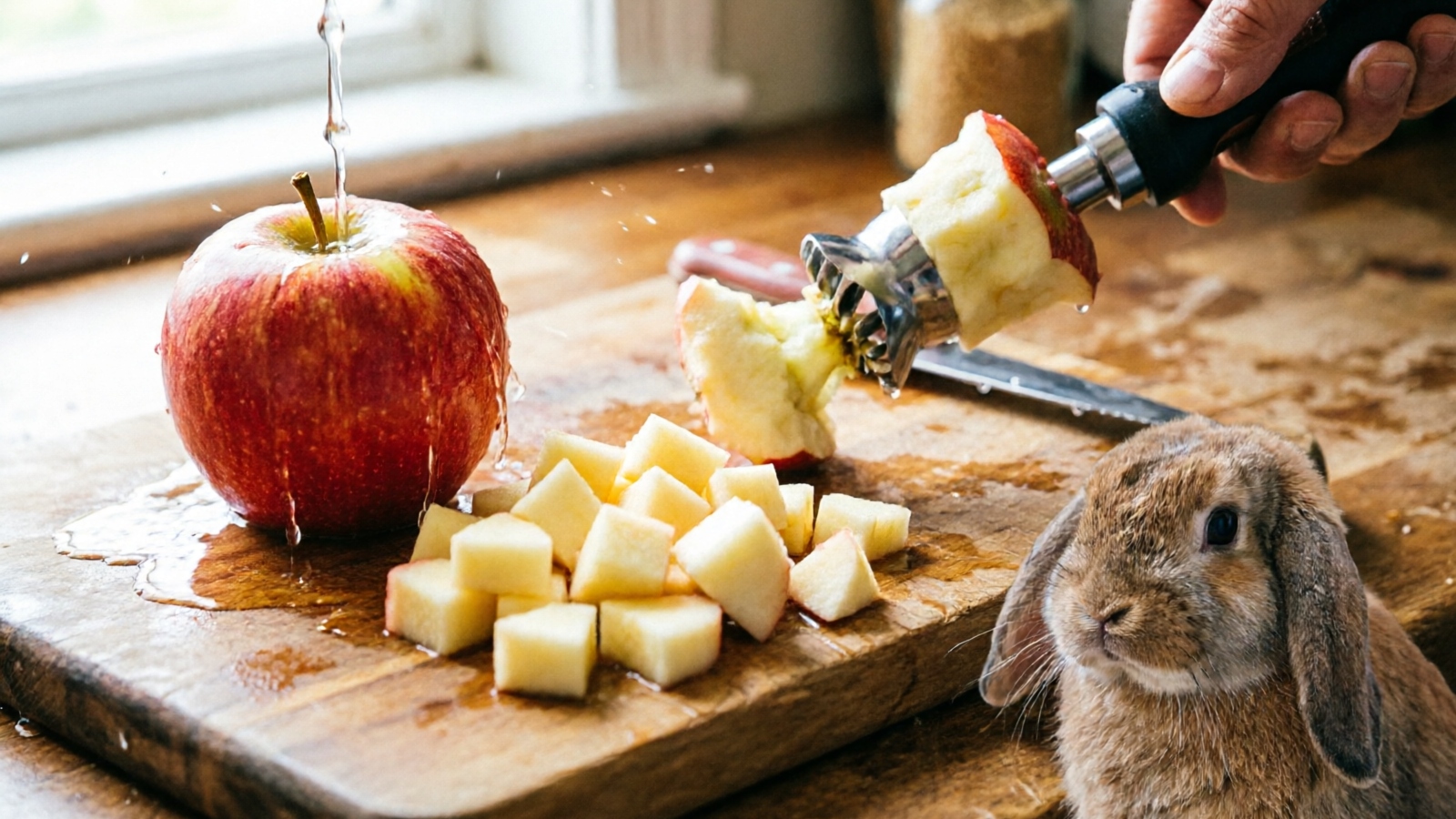
How to Prepare Apples for Your Rabbit
- Choose fresh, firm apples — no soft spots or mold. Organic preferred.
- Wash thoroughly — 30+ seconds under running water, scrubbing the skin
- Core completely — remove the entire core and every seed
- Cut into small pieces — roughly pencil-eraser sized or smaller
- Serve at room temperature on a clean dish
- Remove uneaten pieces after 2 hours — apples brown quickly and attract bacteria
Other Foods Your Rabbit Can Eat
Fruits: Bananas | Blueberries | Grapes | Mango | Strawberries | Tomatoes | Watermelon
Vegetables: Bell Peppers | Broccoli | Carrots | Celery | Cucumbers | Spinach
Further Reading
- Rabbit Diet Guide | Rabbit Care Guide
- Best Rabbit Food | Best Rabbit Cage
- Rabbit Health | Rabbit Grooming
- Rabbit Litter Training | Rabbit Sounds
- Rabbit Behavior | Best Rabbit Toys
- Holland Lop | Flemish Giant | Lionhead | Netherland Dwarf | Mini Lop
Frequently Asked Questions
Can rabbits eat apples?
Yes — 1-2 tbsp chopped apple once or twice per week. Remove all seeds and core. Sugar (10.39g/100g) makes apples a treat, not a daily staple.
Can rabbits eat apple seeds?
No. Seeds contain amygdalin (a cyanide compound). Always core and remove every seed before feeding.
Can rabbits eat apple skin?
Yes, and it’s recommended — most of the fiber is in the skin. Wash thoroughly. Organic preferred.
Can rabbits eat green apples?
Yes. Granny Smith and similar varieties have slightly less sugar (~9.6g vs 10.4g per 100g). Offer a small test piece first — tartness isn’t for every rabbit.
How much apple can a rabbit eat?
1-2 tbsp (~15-20g) once or twice per week for medium breeds. Large breeds get slightly more, dwarf breeds get less. Never daily.
Can baby rabbits eat apples?
Not before 12 weeks. From 12-24 weeks, offer a tiny test piece and monitor for 24 hours. Hay must be the priority for young rabbits.
Can rabbits eat apples every day?
No. Daily feeding causes obesity, GI stasis risk, dental disease, and food refusal of hay. Limit to 1-2x per week maximum.
Can rabbits eat apple cores?
No. Choking hazard + highest seed concentration. Rabbits cannot vomit, so a lodged core is an emergency. Always discard.
This guide is based on USDA nutritional data (FDC ID 09003), veterinary guidance, and established rabbit care standards. Individual rabbits may have different tolerances — always introduce new foods gradually.
Last Updated: April 29, 2026