Quick Answer: Can Rabbits Eat Bananas?
Yes — but only in very small amounts as an occasional treat. Bananas are one of the highest-sugar fruits you can offer a rabbit, with 12.2g of sugar per 100g. That’s roughly 12 times the sugar content of a rabbit’s natural diet of hay and grass, making portions critical.
💡 TL;DR: Medium rabbits (4-6 lbs): one thin slice (thumbnail-sized), 1-2 times per week. Small breeds: half a thin slice, once a week. Large breeds: one thin slice to half a small banana, 1-2 times per week. Never offer banana as a daily food.
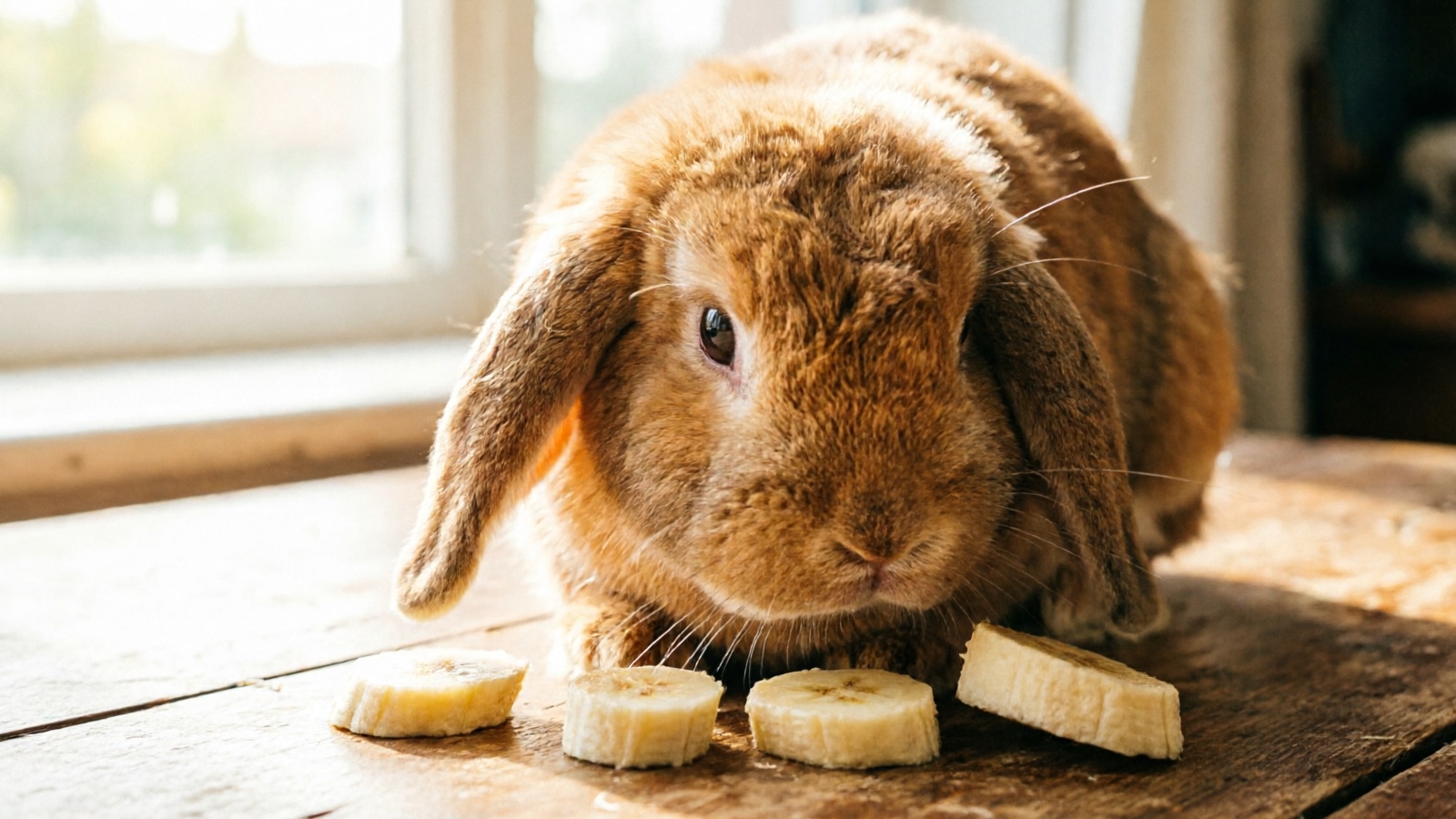
When rabbit owners ask me can rabbits eat bananas, my answer is always the same: yes, but with extreme caution. I’ve offered bananas to my rabbits for years, and I’ll be honest — they’re one of the most addictive treats you can put in front of a rabbit. My Holland Lop would practically beg for banana pieces, thumping his foot and circling my legs whenever he caught the scent. But that enthusiasm is exactly why portion control matters so much. When rabbits eat bananas, the sugar hits their system hard, and overfeeding is dangerously easy when your pet loves the food that much.
Bananas sit near the top of the sugar spectrum for common rabbit treats — below grapes (16.3g per 100g) and mango (13.7g) but well above strawberries (4.9g), carrots (4.7g), and watermelon (6.2g). For the complete dietary framework, see our rabbit food guide and best rabbit food recommendations.
Banana Nutrition Facts for Rabbits
Vceoa 17.5x11x11 is a quality option worth considering for your setup.
USDA nutritional data — raw banana, per 100g USDA FDC ID 173944 — “Bananas, raw”:
| Nutrient (per 100g) | Amount | Relevance to Rabbits |
|---|---|---|
| Energy | 89 kcal | ⚠️ Higher calorie than most treats |
| Protein | 1.09g | Minimal protein |
| Fat | 0.33g | Negligible fat |
| Carbohydrate | 22.84g | High carb |
| Fiber | 2.6g | Moderate fiber — not a substitute for hay |
| Sugar | 12.2g | High sugar — 12x natural diet |
| Water | 74.9g | Moderate hydration |
| Calcium | 5mg | Low calcium |
| Phosphorus | 22mg | Low phosphorus |
| Potassium | 358mg | Excellent — heart and muscle function |
| Magnesium | 27mg | Good — supports bone health |
| Vitamin C | 8.7mg | Moderate vitamin C |
| Vitamin B6 | 0.37mg | Good — metabolism support |
| Manganese | 0.27mg | Bone metabolism |
The Numbers That Matter Most
Sugar at 12.2g per 100g: This is the single most important number on this chart and the reason bananas demand strict portion control. At 12.2g per 100g, bananas have roughly twice the sugar of strawberries, nearly three times the sugar of carrots, and about 12 times the sugar of a rabbit’s natural diet. Among commonly offered rabbit fruits, only grapes (16.3g) rank higher. This places bananas firmly in the “high-risk treat” category — safe in tiny amounts, dangerous when overfed.
Potassium at 358mg per 100g: This is banana’s standout nutrient. Potassium supports heart function, muscle contraction, and nerve signaling. At 358mg per 100g, bananas are one of the most potassium-rich foods you can offer a rabbit — significantly higher than watermelon (112mg) or carrots (320mg). However, potassium alone doesn’t justify frequent feeding given the sugar tradeoff.
Calories at 89 kcal per 100g: Bananas are among the highest-calorie fruit treats available — nearly three times the calorie density of strawberries (32 kcal) or watermelon (30 kcal). A single thin slice (about 5g) provides roughly 4.5 calories. That’s not alarming on its own, but it means banana treats contribute more to daily calorie intake than most alternatives. For rabbits already prone to weight gain, this matters.
Fiber at 2.6g per 100g: Decent for a fruit, comparable to strawberries (2.0g) and better than watermelon (0.4g), but still far below what rabbits need. If you’re wondering can rabbits eat bananas for the fiber content, the answer is no — a rabbit requires 20-25% dietary fiber for proper gut motility, and bananas should never be considered a fiber source. Hay holds that role exclusively.
Bananas vs Other Safe Treats
| Food | Sugar (per 100g) | Fiber | Calories | Risk Level |
|---|---|---|---|---|
| Grapes | 16.3g | 0.9g | 69 kcal | Very high sugar |
| Bananas | 12.2g | 2.6g | 89 kcal | High sugar |
| Watermelon | 6.2g | 0.4g | 30 kcal | Moderate |
| Strawberries | 4.9g | 2.0g | 32 kcal | Moderate |
| Carrots | 4.7g | 2.8g | 41 kcal | Moderate |
| Bell peppers | 4.2g | 2.1g | 31 kcal | Low |
| Cucumber | 1.7g | 0.5g | 16 kcal | Low |
| Broccoli | 1.7g | 2.6g | 34 kcal | Very low |
Bananas sit in the high-sugar tier alongside grapes. While the sugar content is lower than grapes, the calorie density is actually higher (89 kcal vs 69 kcal). Can rabbits eat bananas as often as lower-sugar fruits? No — I’d recommend treating bananas with the same caution as grapes — small portions, infrequent feeding, and never on consecutive days.
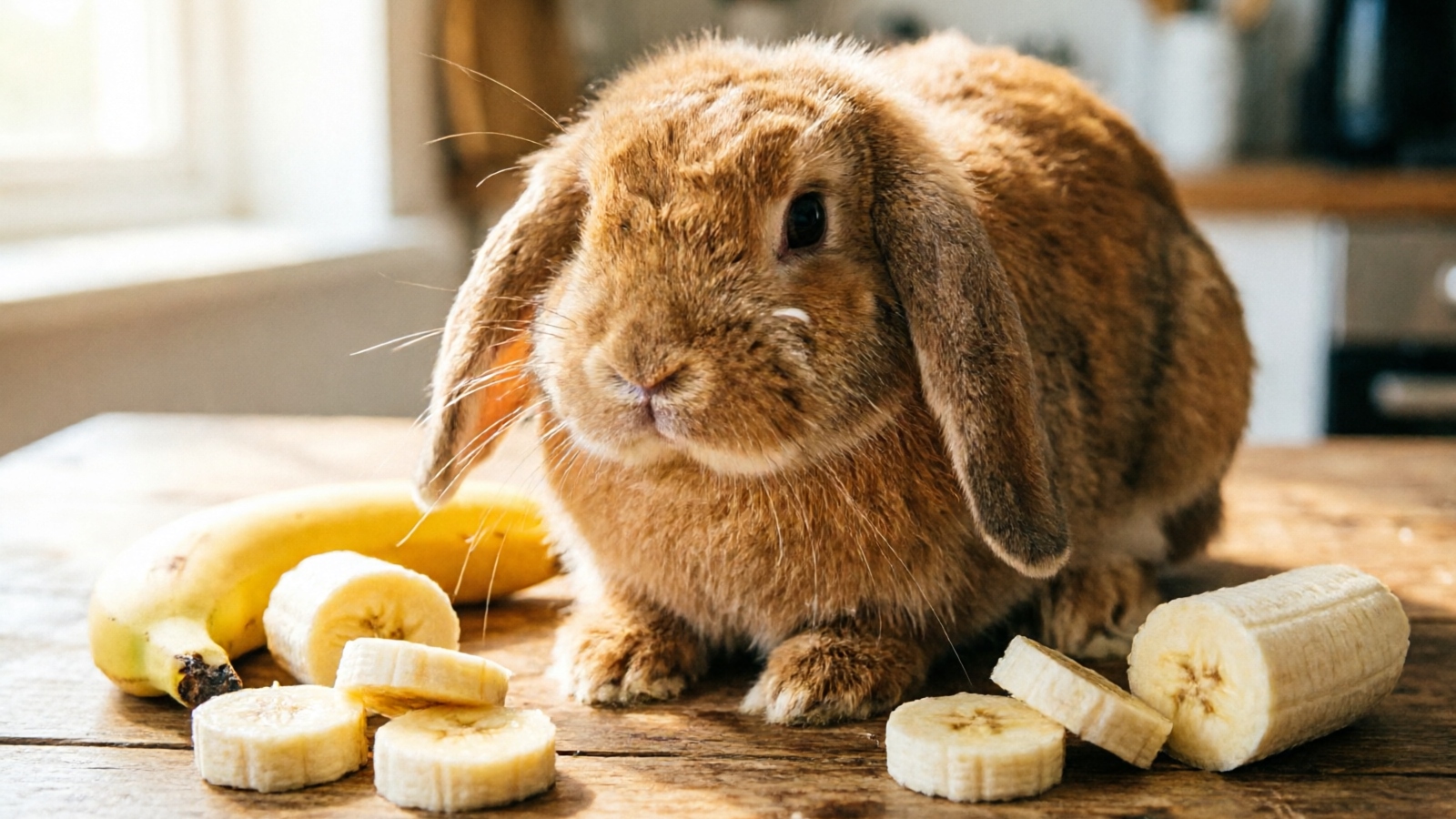
Benefits of Bananas for Rabbits
Many owners find that TOKAYIFE Hanging Automatic Food Dispenser works well for their pet’s needs.
Potassium Content
At 358mg per 100g, bananas are an excellent source of potassium. Potassium supports heart function, helps regulate blood pressure, and plays a role in proper muscle contraction. While rabbits don’t typically suffer from potassium deficiency on a normal diet, the additional intake from a small banana slice provides a meaningful boost — especially during hot weather when electrolyte loss through increased water consumption becomes a factor.
Vitamin B6
Bananas provide 0.37mg of vitamin B6 per 100g, which supports metabolism, brain function, and immune response. This isn’t a nutrient rabbits commonly lack, but it’s a genuine nutritional benefit that most other rabbit treats don’t offer at meaningful levels.
Vitamin C
At 8.7mg per 100g, bananas provide moderate vitamin C. While rabbits synthesize their own vitamin C internally (unlike guinea pigs), the additional dietary antioxidant support contributes to overall immune health. Bell peppers still dominate for vitamin C (80-120mg), but bananas are a reasonable secondary source.
Digestive Comfort
The soft texture of bananas makes them easy to chew and digest — a genuine advantage for senior rabbits or those with dental issues who may struggle with crunchier treats. I’ve found bananas to be particularly useful as a post-illness recovery food when a rabbit’s appetite is low and you need something gentle and appealing to encourage eating.
Training and Bonding
In my experience, bananas are the single most motivating rabbit treat I’ve ever used. My rabbits respond to banana with an enthusiasm I’ve never seen with any other food — even strawberries and blueberries don’t come close. I’ve used tiny banana flakes for nail trimming, carrier training, and medication administration. The strong, sweet aroma is detectable from across a room, which makes it an extremely effective bonding tool — just keep the reward pieces genuinely tiny.
Energy Boost
The combination of natural sugars and carbohydrates provides a quick energy source. This can be helpful for underweight rabbits recovering from illness or surgery, where a few extra calories from a palatable food can support recovery. Of course, this is a situational benefit — for healthy, weight-stable rabbits, the extra calories are a disadvantage rather than an advantage.
Risks and Precautions
For this purpose, timothy hay tunnel is a popular choice among pet owners.
High Sugar Content — The Primary Concern
At 12.2g per 100g, bananas present one of the highest sugar challenges among common rabbit treats. When asking can rabbits eat bananas, the answer depends entirely on portion size — a rabbit’s digestive system evolved to process high-fiber, low-sugar foods — primarily grass and hay, which contain less than 1g of sugar per 100g. Introducing sugar disrupts the delicate balance of gut bacteria and can slow or stop gut motility. Introducing sugar disrupts the delicate balance of gut bacteria and can slow or stop gut motility.
Consequences of excess sugar from bananas:
- GI stasis — the most serious risk. Sugar disrupts the cecal bacteria population, slowing or stopping gut movement. GI stasis is painful and can become fatal within 12-24 hours if untreated. Symptoms include reduced appetite, smaller or fewer droppings, bloating, teeth grinding, and lethargy. See our rabbit health guide for detailed recognition and response.
- Obesity — at 89 kcal per 100g, bananas are calorie-dense. Excess calories convert to fat, directly impacting rabbit lifespan. Obese rabbits face higher risks of joint problems, heart disease, and fatty liver disease. I’ve seen rabbits that received daily banana treats become visibly overweight within weeks.
- Dental disease — sugar promotes harmful oral bacteria. Since rabbit teeth grow continuously throughout their lives, dental problems escalate quickly and become expensive to treat.
- Enterotoxemia — a dangerous overgrowth of toxin-producing bacteria (particularly Clostridium) in the gut, triggered by high-sugar, low-fiber conditions. This condition can kill a rabbit within hours and is especially dangerous for young and small breeds.
Nutritional Displacement
When a rabbit fills up on banana, it eats less hay — and hay is the single most important component of a rabbit’s diet, making up 80% or more of total food intake. Bananas’ high calorie density (89 kcal per 100g vs 32 kcal for strawberries) means even small portions deliver significant calories. A rabbit that eats a generous banana portion may feel satisfied and skip hay consumption for hours, which directly compromises digestive health.
The “Addiction” Factor
I use the word deliberately. Rabbits develop a genuine preference for bananas that can make them resistant to eating healthier foods. I’ve seen rabbits refuse their morning hay because they were waiting for a banana treat. This behavioral impact is real and requires discipline from the owner — offer banana only after your rabbit has finished their hay, never before, and never as a consolation prize for refusing hay.
Diarrhea
The combination of high sugar and moderate fiber can cause diarrhea, especially in rabbits new to banana or those with sensitive digestive systems. Rabbit diarrhea is more dangerous than in many other pets because it can rapidly lead to dehydration and GI stasis. If your rabbit develops loose stool after eating banana:
- Remove all fresh food and treats immediately
- Provide unlimited Timothy hay and fresh water only
- Monitor droppings every few hours
- If diarrhea persists beyond 12 hours, your rabbit stops eating, or you notice bloating, contact a rabbit-savvy vet immediately
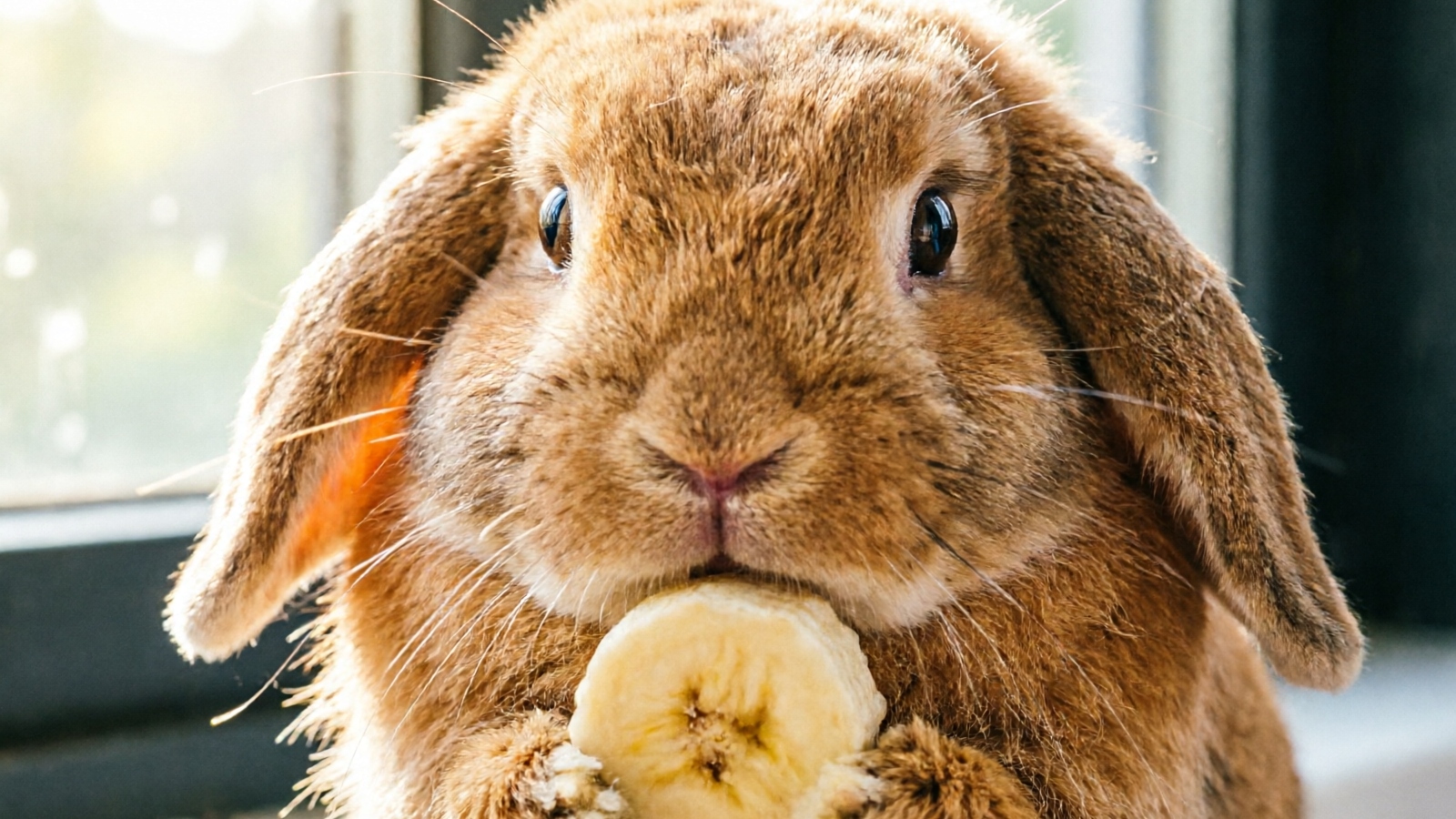
Serving Guide by Breed and Size
Serving sizes depend primarily on body weight. Can rabbits eat bananas safely at any size? Yes, but banana portions should be noticeably smaller than portions for lower-sugar fruits like strawberries or watermelon.
Small Breeds (2-4 lbs)
Breeds: Netherland Dwarf, Holland Lop, Lionhead, Polish, Dwarf Hotot
- Amount: Half a thin slice, roughly the size of a fingernail clipping
- Frequency: Once a week maximum
- Why smaller: Small rabbits have significantly less body mass to absorb sugar. For a 2-pound rabbit, even a half-slice delivers a concentrated sugar dose that can upset their digestive balance.
I’ve found that small breeds are the most enthusiastic about bananas, which makes portion control particularly challenging. My Holland Lop would actively seek out banana scent from across the room. I learned to cut pieces even smaller than felt necessary — a piece the size of a pencil eraser was enough to satisfy him, and it kept the sugar exposure minimal.
Medium Breeds (4-8 lbs)
Breeds: Mini Lop, English Spot, Rex, Dutch, Angora
- Amount: One thin slice, roughly the size of a thumbnail
- Frequency: 1-2 times per week
- Preparation: Peeled or unpeeled (wash if unpeeled), cut into a thin slice no thicker than a coin
Medium breeds handle banana’s sugar better than small breeds, but the portion should still be modest. One thin slice provides the flavor experience without overwhelming the digestive system. I’d recommend once a week as the default and twice only if your rabbit is active and at a healthy weight.
Large Breeds (8-12+ lbs)
Breeds: Flemish Giant, French Lop, Giant Chinchilla, New Zealand
- Amount: One thin slice to half a small banana
- Frequency: 1-2 times per week
- Why more: Larger body mass processes sugar more effectively, allowing slightly larger portions. Even so, a Flemish Giant shouldn’t eat more than half a small banana per serving.
Baby Rabbits (Under 12 Weeks)
Baby rabbits should not eat bananas. Their digestive systems are developing and cannot handle sugar of any kind — can rabbits eat bananas is a question that only applies to rabbits over 12 weeks old. The proper diet progression is:
- 0-6 weeks: Mother’s milk + alfalfa hay
- 6-8 weeks: Introduce high-quality pellets gradually
- 8-12 weeks: Introduce small amounts of leafy greens one at a time
- 12+ weeks: Fruit treats like bananas can be introduced — start with a tiny piece (roughly half a fingernail clipping) and wait 48 hours to confirm no digestive upset before offering a full portion
Senior Rabbits
Senior rabbits can enjoy bananas in the same portions as adults of similar size. The soft texture is actually an advantage for older rabbits with dental issues. Can rabbits eat bananas throughout their senior years? Yes, but senior rabbits often have slower metabolisms and reduced activity levels, making them more susceptible to weight gain from calorie-dense treats like bananas. If your senior rabbit is overweight or has a history of GI issues, consider reducing frequency to once every two weeks or switching to lower-sugar alternatives like cucumber or bell peppers.
How to Prepare Bananas for Your Rabbit
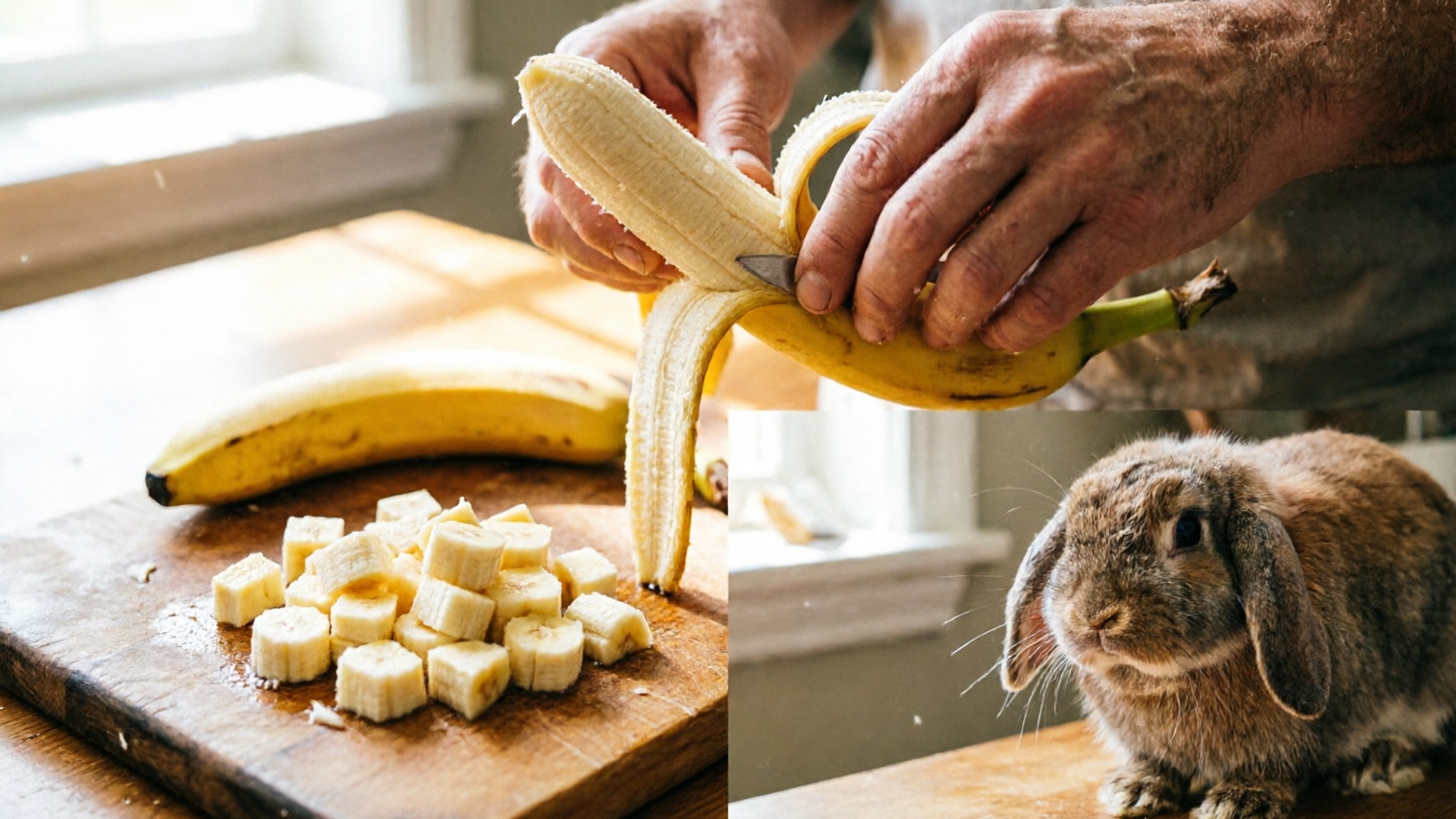
Step 1: Choose the Right Banana
Select bananas that are:
- Fully yellow with small brown spots — this is peak ripeness, when sugar content is highest but the fruit is easiest to digest
- Firm but not hard — avoid overly mushy bananas with large brown patches
- Organic when possible — especially if you plan to offer the peel, which is the most pesticide-exposed part
Step 2: Peel or Wash
You have two options:
- Peeled: Remove the peel entirely and serve only the flesh. This eliminates pesticide concerns but removes the extra fiber the peel provides.
- Unpeeled: If offering the peel, wash the banana thoroughly under cool running water. Use a vegetable brush to scrub the surface, then dry with a clean paper towel. Organic bananas are strongly preferred when serving unpeeled.
Step 3: Cut Into Thin Slices
This is critical. A whole banana or even a large chunk is too much for any rabbit. Cut slices roughly 3-5mm thick — about the thickness of a coin. For small breeds, cut those slices in half again. The goal is a piece small enough that your rabbit can eat it in two or three bites.
Step 4: Serve at Room Temperature
Don’t serve banana straight from the refrigerator. Cold food can cause temporary digestive slowdown in rabbits. Let the pieces sit at room temperature for 5-10 minutes. Room temperature also releases more aroma, making the treat more appealing.
Step 5: Introduce Gradually
If your rabbit has never had banana before, offer just half a thin slice and wait 24-48 hours. Check for:
- Normal stool (not loose or runny)
- Normal activity level
- No bloating or signs of discomfort
- Continued hay consumption
If everything checks out, you can offer the full recommended portion next time.
Step 6: Remove Uneaten Pieces After 1-2 Hours
Banana flesh oxidizes and becomes mushy quickly at room temperature. Uneaten pieces attract fruit flies and can develop mold. Check food bowls, cage floor, and favorite hiding spots for leftover pieces.
Banana Peels: A Healthier Alternative
Here’s something many owners don’t realize: banana peels are actually a healthier treat than the banana flesh itself. Compared to the flesh, the peel contains:
- More fiber — roughly 3-4g per 100g vs 2.6g in the flesh
- Less sugar — significantly lower sugar content than the sweet interior
- More resistant starch — which feeds beneficial gut bacteria
I’ve started offering washed banana peel strips to my rabbits as an alternative to the flesh. Not all rabbits accept the peel at first — the bitter exterior can be off-putting compared to the sweet flesh — but many grow to enjoy the crunch. Cut the peel into thin strips (about ¼ inch wide and 1 inch long) and offer alongside or instead of the flesh. Wash extremely thoroughly, and only use organic bananas if possible.
What to Avoid
Dried Bananas
Dried bananas concentrate sugar dramatically — they can contain 30g or more of sugar per 100g, roughly 2.5 times the sugar content of fresh bananas. That’s an enormous amount of sugar for a small animal. Most commercially dried bananas also contain added sugar or preservatives like sulfur dioxide. Never offer dried bananas to rabbits. Always serve fresh, raw banana only.
Banana Chips
Banana chips (even “healthy” baked ones) are essentially dried bananas with added oil and often added sugar. They’re even worse than plain dried bananas — higher in sugar, higher in fat, and with a crunchy texture that can be a choking hazard. Avoid them entirely.
Banana Bread, Muffins, and Baked Goods
Any baked good containing banana is unsafe for rabbits. These products contain added sugar, butter, flour, eggs, and often artificial ingredients that a rabbit’s digestive system cannot process. The banana content is irrelevant — the other ingredients make these foods dangerous.
Banana Juice or Smoothies
Never offer banana juice to rabbits. Can rabbits eat bananas in juice form? Absolutely not — juicing removes the already moderate fiber (2.6g per 100g) while concentrating the sugar into a liquid that floods the digestive system. A blended banana smoothie contains even more sugar per volume than juice. Only solid, fresh banana flesh or peel is acceptable.
Banana-Flavored Rabbit Treats
Some commercial rabbit treats are marketed with “banana flavor.” Read the ingredient list carefully — many of these contain added sugar, artificial flavors, and fillers. A small piece of fresh banana is always better than any processed “banana-flavored” treat.
Overfeeding
The most common mistake with bananas isn’t feeding the wrong thing — it’s feeding the right thing too often. Can rabbits eat bananas every day? Absolutely not. Because rabbits love bananas so intensely, owners frequently overfeed out of a desire to make their pet happy. I’ve seen owners who offered banana daily because their rabbit “begged for it.” The result is typically digestive issues, weight gain, and a rabbit that refuses hay because it’s holding out for banana.
Offering Before Hay
Never offer banana (or any treat) before your rabbit has finished its hay. The strong flavor and high calorie content of banana can cause rabbits to fill up and skip their essential fiber intake. I always make sure my rabbits have eaten a good amount of hay before offering any treat, and I never use banana as a consolation prize for refusing hay.
Safe Alternatives to Rotate With Bananas
Variety prevents both boredom and the behavioral addiction that bananas can create. Here’s a good rotation:
Daily vegetables: Bell peppers (high vitamin C, moderate sugar), romaine lettuce (low calorie, good hydration), cilantro, parsley
Regular treats (2-3x/week): Carrots (4.7g sugar), broccoli (1.7g sugar), cucumber (1.7g sugar), tomatoes (2.6g sugar)
Fruit treats (1-2x/week, strict portions): Strawberries (4.9g sugar), watermelon (6.2g sugar), banana (12.2g sugar — smallest portions), grapes (16.3g sugar — smallest portions)
A sample weekly rotation for a medium rabbit: daily bell pepper + leafy greens, Tuesday — carrot slice, Thursday — half a strawberry, Saturday — thumbnail-sized banana slice, Sunday — cucumber slices. For comprehensive care beyond diet, see our setup guide, grooming guide, litter training guide, and health guide.
Other Foods Your Rabbit Can Eat
Each link leads to a full safety guide with breed-specific serving recommendations.
Vegetables
- Can Rabbits Eat Carrots?
- Can Rabbits Eat Bell Peppers?
- Can Rabbits Eat Broccoli?
- Can Rabbits Eat Cucumber?
- Can Rabbits Eat Tomatoes?
- Can Rabbits Eat Celery?
- Can Rabbits Eat Spinach?
- Can Rabbits Eat Grapes?
Core Guides
- Rabbit Food Guide | Best Rabbit Food
- Rabbit Care Guide | Rabbit Health
- Rabbit Lifespan | Rabbit Behavior
- Rabbit Grooming | Litter Training
- Rabbit Sounds
Housing and Supplies
- Best Rabbit Cage | Rabbit Cage Size
- Best Rabbit Toys | Best Rabbit Treats
- Best Rabbit Harness | Best Rabbit Litter
- DIY Hutch Plans
Breed Guides
Product Recommendations
Here are some products mentioned in this guide:
Frequently Asked Questions
Can rabbits eat bananas?
Yes, in very small amounts — one thin slice (thumbnail-sized) for a medium rabbit, 1-2 times per week. Bananas contain 12.2g of sugar per 100g, making them one of the highest-sugar fruits you can offer. Always use fresh, raw banana, cut into thin slices, and serve at room temperature.
Can rabbits eat banana peels?
Yes, banana peels are safe and actually healthier than the flesh — more fiber, less sugar. Wash thoroughly (organic preferred), cut into thin strips, and offer alongside or instead of the banana flesh. Not all rabbits accept the peel at first, but many grow to enjoy the crunch.
Can baby rabbits eat bananas?
No. Under 12 weeks, their digestive systems can’t process sugar. Follow the standard progression: mother’s milk + alfalfa hay → pellets at 6-8 weeks → leafy greens at 8-12 weeks → fruit treats like bananas after 12 weeks. Start with a tiny piece and wait 48 hours to check for digestive upset.
How much banana can a rabbit eat?
Medium breeds (4-6 lbs): one thin slice (thumbnail-sized), 1-2x/week. Small breeds (Netherland Dwarf, Holland Lop): half a thin slice, once/week. Large breeds (Flemish Giant): one thin slice to half a small banana, 1-2x/week. Always start with half the recommended amount the first time.
Can rabbits eat dried bananas?
No. Dried bananas concentrate sugar to roughly 30g per 100g — about 2.5 times the sugar of fresh bananas. Most commercially dried bananas also contain added sugar and preservatives. Always serve fresh, raw banana only.
What happens if a rabbit eats too much banana?
The most likely result is diarrhea caused by the high sugar content (12.2g per 100g) disrupting gut bacteria. In more serious cases, excess sugar can cause GI stasis — a potentially fatal condition where the digestive system stops moving. Symptoms include reduced appetite, smaller droppings, bloating, and lethargy. If diarrhea persists beyond 12 hours or your rabbit stops eating entirely, contact a rabbit-savvy vet immediately.
Can rabbits eat banana leaves?
Banana leaves are not toxic but are not practical as a regular treat. Their tough, fibrous texture is difficult for rabbits to digest raw. If you have access to pesticide-free banana leaves, you can offer a small piece, but banana flesh or washed peels are far more practical options.
Why do rabbits love bananas so much?
Rabbits are naturally drawn to sweet foods, and bananas are among the sweetest fruits available. The strong aroma and soft texture make them immediately appealing. This enthusiasm is exactly why portion control is critical — can rabbits eat bananas in large amounts is always the wrong question. A rabbit that loves banana will happily eat far more than is safe, leading to digestive problems and weight gain.