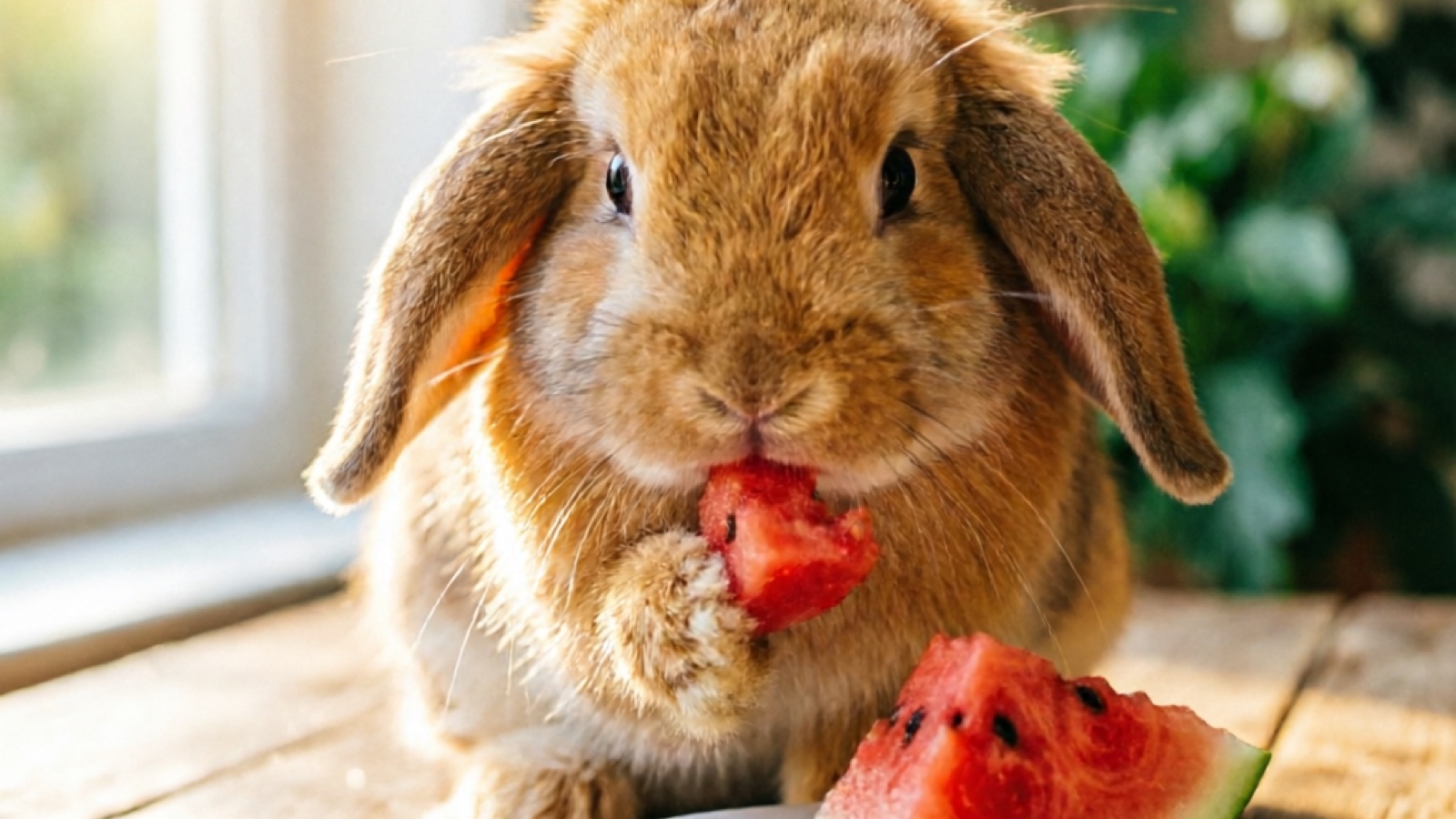
Quick Answer: Can Rabbits Eat Watermelon?
Yes — rabbits can eat watermelon, but only in small amounts as an occasional treat. Watermelon is roughly 91% water and contains 6.2g of sugar per 100g, making it a refreshing but sugary snack that needs strict portion control.
💡 TL;DR: Medium rabbits (4-6 lbs): 1-2 small cubes (about 1 tablespoon), 1-2 times per week. Small breeds: half a small cube, once a week. Large breeds: 2-3 small cubes, 1-2 times per week. Always remove seeds and cut into bite-sized pieces.
I’ve offered watermelon to my rabbits during summer for years, and it’s become one of their seasonal favorites — alongside strawberries and blueberries. But I’ve also learned that rabbits eat watermelon differently than they approach other treats. The high water content means it passes through their system quickly, and the low fiber means it contributes almost nothing to their digestive health. When rabbits eat watermelon, the key is treating it as a hydration booster on hot days — not a meal replacement or a daily staple.
For the complete dietary framework that should make up 80%+ of your rabbit’s diet, see our rabbit food guide and best rabbit food recommendations.
Watermelon Nutrition Facts for Rabbits
Prevue Multi-Color Small Pet Playpen is a quality option worth considering for your setup.
USDA nutritional data — raw watermelon, per 100g USDA FDC ID 170458 — “Watermelon, raw”:
| Nutrient (per 100g) | Amount | Relevance to Rabbits |
|---|---|---|
| Energy | 30 kcal | Very low calorie |
| Protein | 0.61g | Minimal protein |
| Fat | 0.15g | Negligible fat |
| Carbohydrate | 7.55g | Moderate carb |
| Fiber | 0.4g | Very low fiber — far below rabbit needs |
| Sugar | 6.2g | Moderate sugar — 6x natural diet |
| Water | 91.45g | Excellent hydration |
| Calcium | 7mg | Low calcium |
| Phosphorus | 11mg | Low phosphorus |
| Potassium | 112mg | Heart and muscle function |
| Vitamin C | 8.1mg | Moderate vitamin C |
| Vitamin A | 28 µg | Eye and skin health |
| Lycopene | 4,532 µg | Outstanding antioxidant |
The Numbers That Matter Most
Sugar at 6.2g per 100g: This is higher than strawberries (4.9g) and carrots (4.7g), though still well below grapes at 16.3g. The sugar itself isn’t dangerous in small portions, but it’s roughly six times higher than a rabbit’s natural diet of hay and grass. That gap means watermelon is firmly in treat territory — not an everyday food.
Fiber at 0.4g per 100g: This is the most concerning number on the chart. Rabbits require 20-25% dietary fiber for proper gut motility, and watermelon barely registers. For comparison, broccoli offers 2.6g, and bell peppers provide 2.1g. Watermelon’s near-zero fiber means it contributes nothing to the digestive process that keeps rabbits healthy.
Water at 91.45g: This is watermelon’s biggest selling point for rabbits. During hot summer months, the extra hydration can be genuinely beneficial — especially for rabbits that don’t drink enough from their water bottle. Cucumber is similar at ~96% water, but watermelon offers more vitamins and antioxidants alongside the hydration.
Lycopene at 4,532 µg: This is a genuinely standout nutrient. Lycopene is a powerful antioxidant linked to cardiovascular health and cellular protection, and watermelon is one of the richest dietary sources available — even higher than raw tomatoes per 100g. While rabbits don’t need lycopene to survive, the antioxidant support is a real benefit that most other rabbit treats can’t match.
Watermelon vs Other Safe Treats
| Food | Sugar (per 100g) | Fiber | Water | Calories | Risk Level |
|---|---|---|---|---|---|
| Grapes | 16.3g | 0.9g | 81% | 69 kcal | High sugar |
| Watermelon | 6.2g | 0.4g | 91% | 30 kcal | Moderate |
| Strawberries | 4.9g | 2.0g | 91% | 32 kcal | Moderate |
| Carrots | 4.7g | 2.8g | 88% | 41 kcal | Moderate |
| Bell peppers | 4.2g | 2.1g | 92% | 31 kcal | Low |
| Cucumber | 1.7g | 0.5g | 96% | 16 kcal | Low |
| Broccoli | 1.7g | 2.6g | 89% | 34 kcal | Very low |
| Tomatoes | 2.6g | 1.2g | 95% | 18 kcal | Low |
Watermelon sits in the moderate-risk zone. Its sugar content is manageable, but the extremely low fiber (0.4g) and high water content mean it can cause digestive upset more easily than fruits with more fiber, like strawberries. I’d rank it as a summer-only treat — one that shines when the temperature climbs but isn’t necessary the rest of the year.
Benefits of Watermelon for Rabbits
Many owners find that kathson Stainless Steel Hanging Bowl works well for their pet’s needs.
Hydration
This is watermelon’s primary benefit. At 91.45% water, a few small cubes provide meaningful fluid intake — especially useful during summer heat waves or for rabbits recovering from illness who may be reluctant to drink from their water bottle. I’ve found that watermelon is particularly effective for encouraging hydration in older rabbits or those recovering from GI episodes where maintaining fluid intake is critical.
Lycopene and Antioxidants
Watermelon is one of the best dietary sources of lycopene — even richer per 100g than raw tomatoes. Lycopene supports cardiovascular health and helps protect cells from oxidative damage. While rabbits don’t have the same lycopene research base as humans, the antioxidant properties are broadly beneficial for reducing inflammation and supporting immune function.
Low Calorie Density
At only 30 kcal per 100g, watermelon is one of the lowest-calorie treats you can offer. A typical serving of 1-2 small cubes (about 15-20g) delivers only 4-6 calories — a negligible amount even for a small rabbit. This makes watermelon a good choice for overweight rabbits who need treat variety without extra calories, provided the sugar is managed.
Vitamin C and Vitamin A
While rabbits synthesize their own vitamin C, the 8.1mg per 100g in watermelon provides additional antioxidant support. The 28 µg of vitamin A contributes to eye health and skin condition. Neither is at the level of bell peppers (80-120mg vitamin C), but every bit helps.
Enrichment and Bonding
In my experience, watermelon is one of the most excitement-inducing treats you can offer. The sweet aroma travels well, and rabbits seem to detect it from across the room. I’ve used small watermelon cubes as training rewards for nail trimming and carrier acceptance with more success than almost any other treat. The strong motivation factor makes it a valuable bonding tool — just keep the pieces small to prevent your rabbit from filling up on sugar water instead of hay.
Risks and Precautions
For this purpose, MidWest 42-Inch Exercise Pen is a popular choice among pet owners.
Low Fiber Content — The Biggest Concern
At just 0.4g of fiber per 100g, watermelon provides essentially no digestive support. A rabbit’s gut depends on a constant supply of high-fiber material (primarily hay) to maintain proper motility. When rabbits eat watermelon in large amounts, the combination of low fiber and high water can actually slow digestion by diluting the gut contents and reducing the concentration of beneficial bacteria.
This is why I never offer watermelon two days in a row, even in summer. The gut needs time to recover from the fiber deficit, and hay intake should always be the priority.
Sugar Content
At 6.2g per 100g, watermelon has more sugar than strawberries, carrots, or bell peppers. Excess sugar in a rabbit’s diet disrupts the gut bacteria balance and can lead to:
- GI stasis — sugar slows gut motility, potentially leading to complete digestive shutdown. GI stasis is painful and can become fatal within 12-24 hours if untreated. Symptoms include reduced appetite, smaller droppings, bloating, and lethargy.
- Obesity — excess sugar calories convert to fat, which directly impacts rabbit lifespan and increases risks of joint problems and fatty liver disease.
- Enterotoxemia — dangerous bacterial overgrowth (Clostridium) triggered by high-sugar, low-fiber conditions in the gut.
Diarrhea and Loose Stool
The combination of high water (91%) and moderate sugar (6.2g) makes watermelon one of the most diarrhea-prone treats for rabbits. Loose stool after watermelon is common and usually harmless if it resolves within a few hours. But persistent diarrhea in rabbits is a medical emergency — it can lead to dehydration and GI stasis rapidly.
If your rabbit develops loose stool after eating watermelon:
- Remove all fresh food and treats immediately
- Provide unlimited Timothy hay and fresh water only
- Monitor droppings every few hours
- If diarrhea persists beyond 12 hours, contact a rabbit-savvy vet
Nutritional Displacement
When a rabbit fills up on watermelon, it eats less hay — and hay is the single most important part of their diet. The satisfying sweetness and water content can make rabbits feel full without providing any of the fiber they need. I always offer watermelon after my rabbits have finished their morning hay, never before.
Pesticide Residue
Watermelon rind can carry pesticide residue. While the thick rind provides some protection compared to thin-skinned fruits like strawberries, it’s still worth buying organic when possible or washing thoroughly with a vinegar-water solution.
Serving Guide by Breed and Size
Small Breeds (2-4 lbs)
Breeds: Netherland Dwarf, Holland Lop, Lionhead, Polish, Dwarf Hotot
- Amount: Half a small cube, roughly ½ tablespoon
- Frequency: Once a week maximum
- Why smaller: Less body mass means less tolerance for sugar and water volume. A small cube’s worth of watermelon can cause loose stool in a 2-pound rabbit if they’re not used to it.
My Holland Lop would get half a sugar-cube-sized piece on summer weekends, and that was plenty. I noticed that even that small amount would sometimes produce softer droppings the next morning — a sign I was at the upper limit of what his system could handle.
Medium Breeds (4-8 lbs)
Breeds: Mini Lop, English Spot, Rex, Dutch, Angora
- Amount: 1-2 small cubes, roughly 1 tablespoon
- Frequency: 1-2 times per week
- Preparation: Seedless preferred, cut into ½-inch cubes, serve at room temperature
Medium breeds tolerate watermelon reasonably well. The 1-2 cube serving provides noticeable hydration without overwhelming their digestive system, as long as you don’t offer it on consecutive days.
Large Breeds (8-12+ lbs)
Breeds: Flemish Giant, French Lop, Giant Chinchilla, New Zealand
- Amount: 2-3 small cubes, roughly 1½ tablespoons
- Frequency: 1-2 times per week
- Why more: Larger body mass processes sugar and water more effectively. Even so, a Flemish Giant shouldn’t receive more than a few cubes per serving.
Baby Rabbits (Under 12 Weeks)
Baby rabbits should not eat watermelon. Their digestive systems are developing and cannot handle sugar or excess water. Follow the standard progression:
- 0-6 weeks: Mother’s milk + alfalfa hay
- 6-8 weeks: Introduce high-quality pellets gradually
- 8-12 weeks: Introduce small amounts of leafy greens one at a time
- 12+ weeks: Fruit treats like watermelon can be introduced — start with a tiny piece (roughly a fingernail-sized portion) and wait 48 hours to confirm no digestive upset before offering a full portion
Senior Rabbits
Senior rabbits can enjoy watermelon in the same portions as adults of similar size, but monitor more carefully. Older rabbits often have slower metabolisms and more sensitive digestive systems. If your senior rabbit has a history of GI issues, consider offering just the rind (more fiber, less sugar) or skip watermelon entirely in favor of safer options like cucumber or bell peppers.
How to Prepare Watermelon for Your Rabbit
Step 1: Choose the Right Watermelon
Pick watermelon that is:
- Heavy for its size — indicates high water content
- Firm with no soft spots — soft areas signal overripeness or spoilage
- Organic when possible — reduces pesticide exposure, especially for the rind
- Seedless variety preferred — eliminates the choking hazard of black seeds
Step 2: Wash Thoroughly
Even though you’ll only be serving the inner flesh, bacteria from the rind can transfer to the flesh when you cut through it. Wash the entire watermelon under cool running water before cutting. If you plan to offer the rind as well, scrub it with a vegetable brush and use a 1:3 vinegar-water soak for 2-3 minutes, then rinse thoroughly.
Step 3: Cut Into Small Cubes
Cut the watermelon into small, bite-sized cubes — roughly ½ inch for medium breeds, ¼ inch for small breeds. The pieces should be small enough that your rabbit can eat them in a few bites without using their paws to hold a large chunk. Remove all black seeds; if using a seeded variety, take the time to pick them out carefully.
Step 4: Serve at Room Temperature
Don’t serve watermelon straight from the refrigerator. Cold food can cause temporary digestive slowdown in rabbits. Let the pieces sit at room temperature for 5-10 minutes before offering. This also releases more of the aroma, making the treat more appealing.
Step 5: Remove Uneaten Pieces After 1-2 Hours
Watermelon spoils quickly at room temperature. Uneaten pieces attract flies and can develop mold within hours. Check food bowls and the cage floor for leftover pieces — rabbits sometimes hide food in corners.
Watermelon Rind: The Healthier Option
Here’s something that surprises many owners: watermelon rind is actually the healthier part for rabbits. Compared to the pink flesh, the rind contains:
- More fiber — roughly 3-4g per 100g vs 0.4g in the flesh
- Less sugar — roughly 2-3g per 100g vs 6.2g in the flesh
- More chew resistance — the firm texture encourages natural chewing behavior
I’ve started offering watermelon rind more often than the flesh for my rabbits. They need a moment to figure out that the green part is edible, but once they do, most rabbits enjoy the crunch. Cut the rind into thin strips (about ¼ inch wide and 1 inch long) and offer it alongside or instead of the flesh.
What to Avoid
Watermelon Seeds
Black watermelon seeds are a choking hazard and can potentially cause intestinal blockage in rabbits. Always buy seedless watermelon or meticulously remove every black seed before serving. A stray white seed kernel is generally harmless, but black seeds with their hard outer shells are the real concern.
Watermelon Juice
Never offer watermelon juice to rabbits. Juicing strips away the already minimal fiber while concentrating the sugar into a liquid form that floods the digestive system. A single cup of watermelon juice can contain 15-20g of sugar with virtually zero fiber — a dangerous combination for any rabbit.
Dried Watermelon
Dried watermelon concentrates sugar to extreme levels — commercially dried watermelon can reach 50-60% sugar by weight. The dehydration process also removes virtually all the water content that makes fresh watermelon useful for hydration. Stick to fresh only.
Watermelon-Flavored Products
Any processed watermelon product — candy, yogurt, ice cream, baked goods — is unsafe for rabbits. These contain added sugar, artificial flavors, and preservatives. Only raw, fresh watermelon is acceptable.
Canned Watermelon or Fruit Cocktail
Canned watermelon or fruit cocktail packed in syrup contains excessive added sugar and preservatives. These are not safe for rabbits in any amount.
Overfeeding
The most common mistake with watermelon isn’t feeding the wrong thing — it’s offering too much because rabbits love it so much. I’ve seen owners fill an entire bowl with watermelon cubes because their rabbit kept begging for more. The result is almost always diarrhea within hours and reduced hay consumption for a day or two. One or two small cubes is plenty — your rabbit won’t hold it against you.
Offering on Consecutive Days
Even within the weekly limit, I recommend spacing watermelon treats at least 2-3 days apart. The low fiber content means the gut needs recovery time between servings. Back-to-back watermelon days significantly increase the risk of loose stool.
Safe Alternatives to Rotate With Watermelon
Variety prevents boredom and spreads nutritional risk. Here’s a good summer rotation:
Daily vegetables: Bell peppers (high vitamin C, moderate sugar), romaine lettuce (low calorie, good hydration), cilantro, parsley
Regular treats (2-3x/week): Carrots (4.7g sugar), broccoli (1.7g sugar), cucumber (1.7g sugar), tomatoes (2.6g sugar)
Fruit treats (1-2x/week): Strawberries (4.9g sugar), watermelon (6.2g sugar), blueberries (~10g sugar — small portions), grapes (16.3g sugar — strictest portions)
A sample summer week for a medium rabbit: daily bell pepper + leafy greens, Tuesday — carrot, Thursday — 1-2 watermelon cubes, Saturday — half a strawberry, Sunday — cucumber slices. For comprehensive care beyond diet, see our setup guide, grooming guide, litter training guide, and health guide.
Other Foods Your Rabbit Can Eat
Each link leads to a full safety guide with breed-specific serving recommendations.
Vegetables
- Can Rabbits Eat Carrots?
- Can Rabbits Eat Bell Peppers?
- Can Rabbits Eat Broccoli?
- Can Rabbits Eat Cucumber?
- Can Rabbits Eat Tomatoes?
- Can Rabbits Eat Celery?
- Can Rabbits Eat Spinach?
- Can Rabbits Eat Grapes?
Core Guides
- Rabbit Food Guide | Best Rabbit Food
- Rabbit Care Guide | Rabbit Health
- Rabbit Lifespan | Rabbit Behavior
- Rabbit Grooming | Litter Training
- Rabbit Sounds
Housing and Supplies
- Best Rabbit Cage | Rabbit Cage Size
- Best Rabbit Toys | Best Rabbit Treats
- Best Rabbit Harness | Best Rabbit Litter
- DIY Hutch Plans
Breed Guides
Product Recommendations
Here are some products mentioned in this guide:
Frequently Asked Questions
Can rabbits eat watermelon?
Yes, in moderation — 1-2 small cubes for a medium rabbit, 1-2 times per week. Watermelon is about 91% water with 6.2g of sugar per 100g, so it’s a hydrating treat but not a staple food. Always remove seeds, cut into bite-sized pieces, and serve at room temperature.
Can rabbits eat watermelon rind?
Yes, and it’s arguably healthier than the flesh. Watermelon rind contains more fiber (roughly 3-4g per 100g vs 0.4g in the flesh) and less sugar (2-3g vs 6.2g). Wash the outside thoroughly, cut the rind into thin strips, and offer alongside or instead of the pink flesh. Most rabbits need a moment to accept the rind, but many grow to prefer its crunch.
Can baby rabbits eat watermelon?
No. Rabbits under 12 weeks should not eat watermelon or any fruit. Their digestive systems are still developing and cannot process sugar. Follow the standard progression: mother’s milk + alfalfa hay → pellets at 6-8 weeks → leafy greens at 8-12 weeks → fruit treats like watermelon after 12 weeks.
Can rabbits eat watermelon seeds?
Black watermelon seeds should be avoided — they’re a choking hazard and can potentially cause intestinal blockage. Buy seedless watermelon whenever possible. If you have a seeded variety, take the time to remove every black seed before serving. A few soft white seed coats are generally harmless, but removing them all is the safest approach.
How much watermelon can a rabbit eat?
Medium breeds (4-6 lbs): 1-2 small cubes (about 1 tablespoon), 1-2 times per week. Small breeds (Netherland Dwarf, Holland Lop): half a small cube, once a week. Large breeds (Flemish Giant): 2-3 small cubes, 1-2 times per week. Start with half the recommended amount the first time and wait 48 hours to check for digestive upset.
What happens if a rabbit eats too much watermelon?
The most likely result is diarrhea, caused by the combination of high water content (91%) and sugar (6.2g) overwhelming the digestive system. In more serious cases, excess sugar can contribute to GI stasis — a potentially fatal condition where the gut slows or stops moving. If your rabbit has persistent diarrhea beyond 12 hours, stops eating, or shows signs of bloating and lethargy, contact a rabbit-savvy vet immediately.
Can rabbits eat watermelon juice?
No. Watermelon juice removes the already minimal fiber while concentrating the sugar into a form that floods the digestive system. Only fresh, solid watermelon flesh or rind is acceptable for rabbits.
Can rabbits eat frozen watermelon?
Not directly from the freezer — the extreme cold can cause digestive shock. If you want to use frozen watermelon, thaw it completely and bring it to room temperature first. However, freezing alters the texture significantly, and thawed watermelon becomes mushy, which some rabbits find unappealing. Fresh is always the better choice.