Best Rabbit Food — Top 3 Picks at a Glance
Warning: Medical Disclaimer: This article is not a substitute for professional veterinary care. If your rabbit is showing signs of illness, consult a qualified exotic veterinarian.
After comparing 6 brands across nutrition quality, price, rabbit acceptance rates, and veterinary recommendations, Oxbow Garden Select is the best rabbit food for 2026.
| Pick | Product | Best For | Key Feature |
|---|---|---|---|
| Best Overall | Oxbow Garden Select | Most rabbits | Timothy hay-based, Non-GMO |
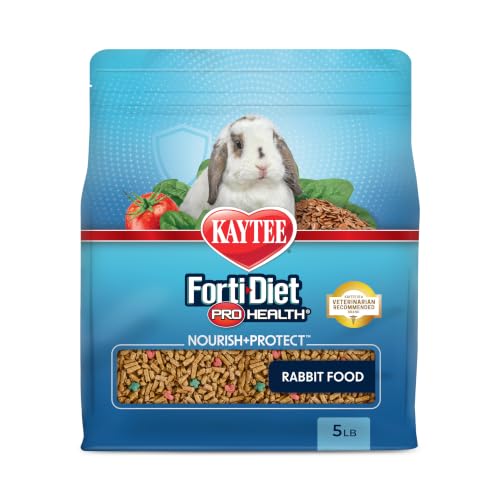
| Best Value | Kaytee Forti-Diet Pro Health | Budget-conscious | Probiotics, widely available |
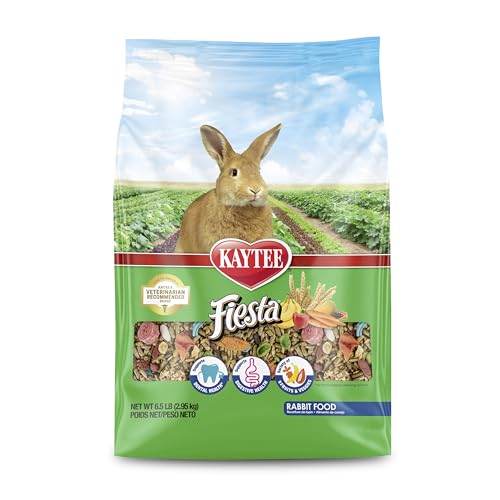
| Best for Picky Eaters | Kaytee Fiesta | Selective eaters | Variety blend, most popular |
Oxbow Garden Select wins because it combines the highest quality ingredients (Timothy hay first, no soy, no wheat, Non-GMO) with strong rabbit acceptance and the most vet recommendations of any brand. It is the safest default choice for rabbit owners who want to get it right without overthinking.
Kaytee Forti-Diet Pro Health takes the value slot — it offers scientifically formulated nutrition with added probiotics at a lower price point, making it the best rabbit food for owners who want solid nutrition without the premium price tag.
Kaytee Fiesta earns the picky eater spot despite a caveat we will discuss in detail below — it is the most popular rabbit food on Amazon for a reason, and that reason is that rabbits love it. But popularity does not equal veterinary endorsement for daily feeding.
For the complete dietary framework beyond pellets — hay, vegetables, and treats — see our rabbit diet guide.
How to Choose the Best Rabbit Food — Buying Guide
Picking the right rabbit food comes down to a few objective criteria that anyone can evaluate by reading the ingredient label. Here is what matters:
- Check the base ingredient — Timothy hay should be the first ingredient for adult rabbits. Alfalfa-based pellets are appropriate for young rabbits under 6 months (higher calcium and protein for growth), but adults need Timothy or orchard grass as the foundation.
- Look for uniform pellets over mixed formulas — uniform pellets prevent selective eating, where rabbits pick out the tasty pieces and leave the nutritious ones. This is the single biggest factor in long-term nutritional balance.
- Check fiber content — should be 18-25% minimum. Fiber drives gut motility, which is the cornerstone of rabbit digestive health. Low-fiber diets directly contribute to GI stasis.
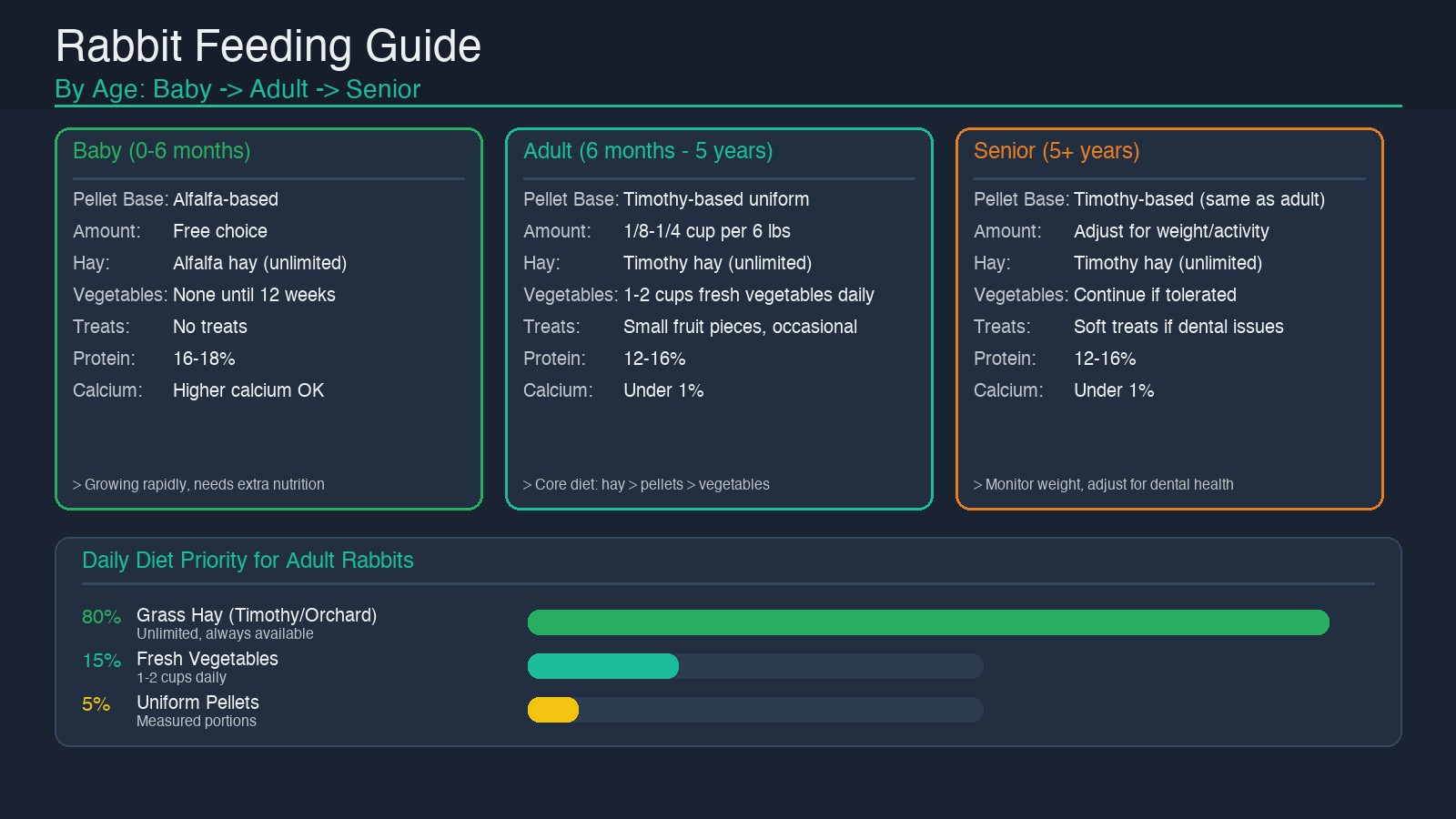
- Check protein — 12-16% ideal for adults, 16-18% for young rabbits under 6 months. Excess protein in adults stresses the kidneys over time.
- Avoid seeds, corn, nuts, and colored pieces in daily food — these are filler ingredients that encourage selective eating and add unnecessary sugar and fat.
- Check calcium — under 1% for adults. Excess calcium leads to bladder sludge and urinary stones, which are painful and potentially dangerous.
When evaluating the best rabbit food pellets, these six criteria separate quality products from the rest.
Red Flags in Rabbit Food
- Alfalfa as the #1 ingredient (for adults — fine for babies under 6 months)
- Seeds, nuts, or corn mixed into the pellet
- Added sugar, molasses, or artificial colors
- Fiber content below 18%
- Protein above 18% (for adult rabbits)
- Timothy hay as the first ingredient
- Uniform pellet shape (no mixed pieces)
- 18-25% fiber, 12-16% protein
- Calcium under 1% for adults
Poor diet is one of the leading causes of rabbit health problems caused by poor diet — dental disease, GI stasis, obesity, and bladder sludge can all trace back to inappropriate food choices. The upfront cost of quality pellets is a fraction of the vet bills that result from cheap food.
What the Rabbit Community Recommends
If you browse r/Rabbits on Reddit, you will find Oxbow and Small Pet Select mentioned far more frequently than any other brands when experienced owners discuss the best rabbit food. When searching for the best rabbit food reddit, the consensus is clear: uniform Timothy pellets from a reputable brand, with Oxbow as the most commonly cited choice. Kaytee products receive mixed reviews — Forti-Diet and Supreme are generally accepted, while Fiesta draws criticism for its mixed formula despite being the best rabbit food on Reddit by pure sales volume.
Nutrition Comparison — All 6 Brands Side by Side
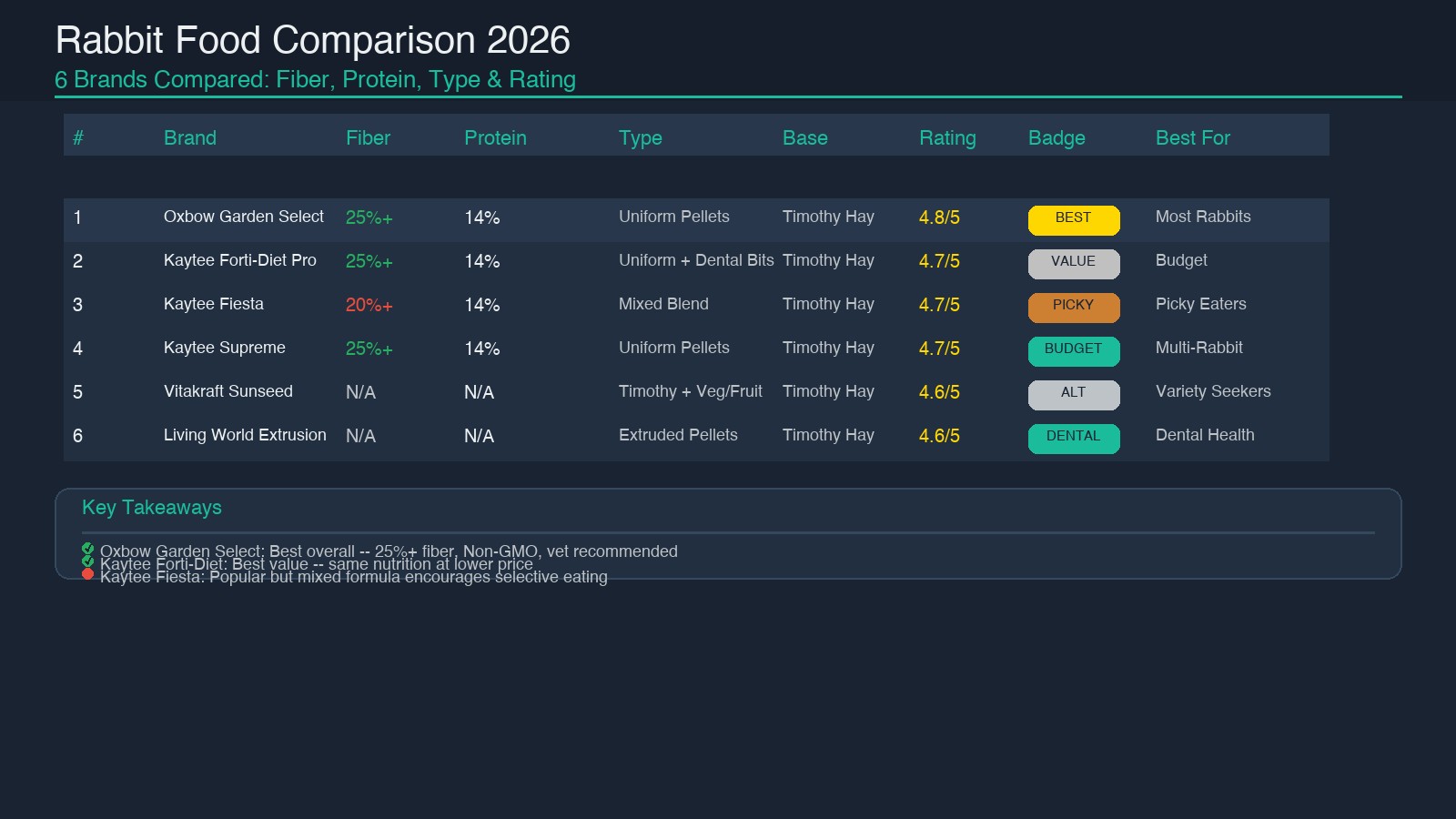
This table breaks down the nutritional profile of every rabbit food we evaluated, making it easy to compare at a glance.
| Brand | Base | Fiber | Protein | Fat | Calcium | Formula |
|---|---|---|---|---|---|---|
| Oxbow Garden Select | Timothy hay | 25%+ | 14% | 3% | <1% | Uniform pellets |
| Kaytee Forti-Diet Pro | Timothy hay | 25%+ | 14% | 3% | <1% | Uniform + dental bits |
| Kaytee Fiesta | Timothy hay | 20%+ | 14% | 4% | ~1% | Mixed blend |
| Kaytee Supreme | Timothy hay | 25%+ | 14% | 3% | <1% | Uniform pellets |
| Vitakraft Vita Prima | Timothy hay | 25%+ | 14% | 3% | <1% | Timothy + veg/fruit |
| Oxbow Essentials Adult Rabbit Food | Timothy hay | 22%+ | 14% | 3% | <1% | Extruded pellets |
Extruded pellets (used by Oxbow Essentials Adult Rabbit Food) are cooked under high pressure to create a uniform, hard texture. Unlike cold-pressed pellets, every extruded piece has identical nutrition, which eliminates selective eating entirely. The harder texture also promotes dental wear — rabbit teeth grow continuously, and abrasive food helps keep them at a healthy length.
Diet quality directly impacts longevity. Research and veterinary experience show that how diet affects rabbit lifespan is significant — rabbits on proper Timothy-hay-based diets with appropriate pellets and fresh vegetables routinely live 8-12 years, while rabbits on poor diets (seed mixes, low hay, high sugar treats) often develop life-threatening conditions by age 4-5. Beyond diet, understanding rabbit behavior helps you recognize early signs of health problems that often start with changes in eating patterns.
Category Winners — Best Rabbit Food for Specific Needs
Not every rabbit fits the “standard adult” profile. Here are our picks for specific situations.
Best Rabbit Food for Young Rabbits (Under 6 Months)
Young rabbits have different nutritional requirements than adults. They need higher protein (16-18%) and higher calcium for bone growth and muscle development. The best rabbit food for young rabbits is an alfalfa-based pellet rather than Timothy-based.
Oxbow Essentials Young Rabbit Food is the best rabbit pellets for young rabbits — it is specifically formulated with alfalfa as the base ingredient, 16% protein, and added calcium. At around 6 months of age, transition gradually to a Timothy-based adult pellet over a 2-week period.
Best Rabbit Food for Indoor Rabbits
Indoor rabbits are typically less active than rabbits with outdoor access, which means they need fewer calories. The best rabbit food for indoor rabbits is a uniform Timothy pellet with no added sugar — Oxbow Garden Select fits this perfectly. Pair it with controlled vegetable portions and avoid high-calorie treats to prevent obesity, which is one of the most common health issues in indoor rabbits.
Best Rabbit Pellets for Sensitive Stomach
Rabbits with sensitive digestive systems need the most predictable, uniform food possible. The best rabbit pellets for sensitive stomach are either Oxbow Garden Select or Oxbow Essentials Adult Rabbit Food — both are uniform formulas that eliminate the selective eating risk that can trigger GI upset. When transitioning a sensitive rabbit to new food, use a slower 10-14 day transition instead of the standard 7-day method.
Best Rabbit Food for Weight Gain
Underweight rabbits — often rescues or seniors recovering from illness — need higher calorie density. The best rabbit food for weight gain temporarily is an alfalfa-based pellet (higher protein and calories than Timothy) combined with free-choice hay. Monitor weight weekly and transition back to Timothy-based pellets once the rabbit reaches a healthy weight. Alfalfa hay can also be offered alongside Timothy during the recovery period.
Breed-Specific Picks — Holland Lop, Mini Lop & Flemish Giant
Different breeds have different tendencies when it comes to diet-related health issues. Here is how to choose the best rabbit food based on breed.
Holland Lop and Mini Lop
Holland Lops and Mini Lops are among the most popular pet rabbit breeds, and both are prone to two diet-related problems: dental issues (due to their compact skull shape) and obesity (because they are less active than larger breeds).
The best rabbit food for Holland Lops is either Oxbow Garden Select (strict portion control for weight management) or Oxbow Essentials Adult Rabbit Food (harder pellet texture for dental wear). Portion size should be roughly 1/8 cup per 2 lbs of body weight daily — Holland Lops typically weigh 2-4 lbs, so most need no more than 1/4 cup of pellets per day. The rest of their diet should be unlimited hay and measured vegetables.
The best rabbit food for Mini Lops follows the same logic. Mini Lops are slightly larger (4-6 lbs) but share the same dental and obesity risks. Portion at 1/8 cup per 2 lbs, and resist the urge to overfeed — these breeds have endearing faces that make it very easy to overfeed.
Flemish Giant
Flemish Giants are the largest domestic rabbit breed, typically weighing 12-20 lbs as adults. Their size means they eat significantly more than smaller breeds like the Polish Rabbit, which makes food cost a real consideration.
The best rabbit pellets for Flemish Giants need to balance nutrition with affordability. Kaytee Supreme (the budget option) or Oxbow Garden Select (best nutrition) are both solid choices. A Flemish Giant eats roughly 1/4 to 1/2 cup of pellets daily, plus unlimited hay — so a 10 lb bag of pellets lasts about 3-4 weeks. For multi-rabbit households with large breeds, Kaytee Supreme’s pack-of-2 pricing becomes genuinely economical.
Understanding your rabbit’s needs goes beyond food. If your rabbit is acting unusual around mealtime, our rabbit sounds guide can help you interpret whether those noises signal contentment or distress.
Portion control matters even for giant breeds. While they need more food than a Holland Lop, free-feeding pellets to any rabbit is a recipe for obesity. For more on setting up the right environment for your breed, see our rabbit setup guide for new owners.
Budget & Store Options — Where to Buy Rabbit Food
Where you buy matters almost as much as what you buy. Prices vary significantly between retailers, and knowing where to find the best deal can save 20-40% over time.
Best Rabbit Food at Tractor Supply
Tractor Supply is one of the best brick-and-mortar sources for rabbit food. They stock Kaytee Forti-Diet Pro Health, Kaytee Supreme, and Kaytee Fiesta — all at competitive in-store prices that are often lower than Amazon, especially when factoring in no shipping costs.
For the best rabbit food at Tractor Supply, Kaytee Forti-Diet Pro Health is the strongest pick. It offers the best nutrition-to-price ratio of what they carry. If you are already at Tractor Supply for hay or bedding, grab your rabbit pellets there too.
Where to Buy Each Brand
| Brand | Amazon | Chewy | Tractor Supply | PetSmart | Best Price |
|---|---|---|---|---|---|
| Oxbow Garden Select | Yes | Yes | No | Yes | Amazon (Subscribe & Save) |
| Kaytee Forti-Diet Pro | Yes | Yes | Yes | Yes | Tractor Supply |
| Kaytee Fiesta | Yes | Yes | Yes | Yes | Amazon |
| Kaytee Supreme | Yes | Yes | Yes | Yes | Tractor Supply |
| Vitakraft Vita Prima | Yes | Yes | No | No | Amazon |
| Oxbow Essentials Adult Rabbit Food | Yes | Yes | No | No | Amazon |
Money-saving tip: Amazon Subscribe & Save offers 5-15% off recurring deliveries. If you feed the same brand consistently, setting up a subscription is the easiest way to lock in a lower price. For multi-rabbit households, bulk buying from Chewy or directly from the manufacturer’s website often yields the best per-pound price. For UK-based owners, the best rabbit food uk brands like Burgess Excel and Science Selective are available at Pets at Home rather than Amazon US. The best rabbit pellets uk are generally found through online UK pet retailers.
Best Vegetables to Pair With Rabbit Pellets
Pellets are only one part of a healthy rabbit diet. Fresh vegetables provide essential vitamins, minerals, and hydration that pellets alone cannot deliver. Here is a quick reference for the best rabbit food vegetables to rotate alongside your pellets.
Safe Daily Vegetables
- Romaine lettuce — daily, unlimited amounts
- Cilantro — daily, most rabbits love it
- Parsley — daily, good for digestion
- Bell peppers — daily, low sugar, good vitamin C
- Basil — daily, strong flavor that most rabbits enjoy
Occasional Treats (2-3x per week)
- Strawberries, blueberries, apple slices (small, no seeds), mango (tiny piece, high sugar)
- Carrots — high sugar, feed sparingly despite the Bugs Bunny myth
- Broccoli — stalks only, watch for gas
- Cucumber — good hydration but low nutrition, use as occasional treat
The ideal rabbit diet ratio is 80% hay, 10% pellets, 10% vegetables. Pellets should supplement, not replace, hay and fresh greens. A rabbit eating only pellets and no hay is at serious risk for GI stasis and dental disease.
Essential Accessories — Best Rabbit Food Bowls & Hay Feeders
The right accessories make feeding time easier, cleaner, and healthier for your rabbit.
Best Rabbit Food Bowls
A heavy ceramic bowl is the best rabbit food bowl for most owners. Ceramic is heavy enough that rabbits cannot tip it over (a universal rabbit behavior), dishwasher safe, and does not harbor bacteria like plastic. Stainless steel is the next best option — lightweight but easy to clean. Slow feeder bowls work well for rabbits that eat too quickly, though this is less common than in dogs.
Place the food bowl in a corner of the cage away from the litter area. Rabbits naturally eat and eliminate in separate zones, and respecting this preference keeps the feeding area clean.
Hay Feeders
A wall-mounted hay rack is the most space-efficient option and keeps hay off the floor where it would get soiled. Timothy hay boxes reduce waste by containing loose strands. Combo feeders that hold both food and hay in one unit save cage space but can be harder to clean.
For housing recommendations that accommodate feeding setups, see our guide to the best rabbit cage for setup. Proper cage size matters too — cramped quarters can lead to stress-related eating problems. Check our rabbit cage size guide for breed-specific space requirements. If you want to build a custom feeding station into a homemade enclosure, our DIY rabbit hutch guide covers built-in hay rack and bowl placement.
Product Reviews — 6 Best Rabbit Food Brands in Detail
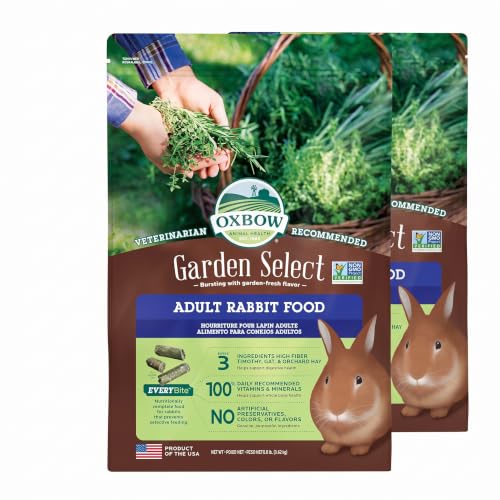
#1 Oxbow Garden Select Rabbit Food — Best Overall
| ASIN: B0GHCDB5HV
Oxbow Garden Select is the most vet-recommended rabbit food brand in the United States, and for good reason. It uses Timothy hay as the base ingredient, is Non-GMO, contains no soy or wheat, and comes in a uniform pellet shape that eliminates selective eating.
Pros:
- Highest quality Timothy hay-based pellets on the market
- Non-GMO ingredients with no artificial preservatives
- Strong rabbit acceptance — most rabbits transition to it willingly
- Consistent quality across batches, made in USA
- Uniform pellet shape prevents selective eating
Cons:
- Premium pricing — roughly $25 for an 8 lb bag
- Only available in one size (8 lb)
- Some rabbits need a gradual transition from sweeter foods
- Occasional dust at the bottom of the bag
Best for: Most rabbit owners looking for reliable, vet-recommended nutrition. If you are not sure what to buy, buy Oxbow. It is the safest choice and the one most likely to be recommended by your exotic vet.
View Oxbow Garden Select on Amazon →
#2 Kaytee Forti-Diet Pro Health — Best Value
| ASIN: B001VB6KFG
Kaytee Forti-Diet Pro Health offers scientifically formulated nutrition at a more accessible price point than Oxbow. Its standout feature is the inclusion of prebiotics and probiotics for digestive health, plus DHA Omega-3 — supplements that most budget rabbit pellets skip.
Pros:
- Probiotics and prebiotics support gut health
- DHA Omega-3 for immune support
- Widely available at Amazon, Chewy, Tractor Supply, and PetSmart
- More affordable than Oxbow
- Good basic Timothy hay nutrition
Cons:
- Contains colored dental health bits that some rabbits selectively eat
- More processed than premium brands
- Pellet dust is a common complaint across multiple bags
- The colored bits encourage selective eating despite the otherwise uniform formula
Best for: Budget-conscious owners who want vet-backed nutrition without paying premium prices. It is the best rabbit pellets brand for the price-to-nutrition ratio if you can tolerate the colored dental bits.
View Kaytee Forti-Diet Pro Health on Amazon →
#3 Kaytee Fiesta Rabbit Food — Best for Picky Eaters (With Caveat)
| ASIN: B002DZE4SE
Kaytee Fiesta is the most popular rabbit food on Amazon by a wide margin — consistently high sales. Rabbits love the variety of shapes, textures, and colors. The problem is that many veterinarians do not recommend it as a primary daily food.
Warning: Kaytee Fiesta Honest Warning: Mixed formulas like Fiesta can cause rabbits to pick out their favorite pieces (seeds, colored bits, fruit pieces) and leave the nutritious pellets behind. Over time, this selective eating leads to nutritional imbalance. If your rabbit picks through Fiesta and leaves pellets uneaten, switch to a uniform pellet immediately. Fiesta is best used as a transition tool for extremely picky eaters or as a small supplement mixed with uniform pellets — not as the sole daily food.
Pros:
- Irresistible to most rabbits — the best option for converting picky eaters
- Variety of shapes, textures, and colors provides mental stimulation
- Supports dental health through chewing different textures
- Great value per pound in the 6.5 lb bag
Cons:
- Mixed formula encourages selective eating
- Contains seeds and colored pieces that are less healthy than plain pellets
- Higher sugar content than uniform pellets
- Not recommended by most veterinarians as sole daily food
- Some pieces get left uneaten, creating waste
Best for: Converting a rabbit that refuses to eat uniform pellets, or as a small supplement mixed 80/20 with a uniform pellet. Not recommended as the primary food for rabbits that will selectively eat.
View Kaytee Fiesta on Amazon →
#4 Kaytee Supreme Rabbit Food — Best Budget
| ASIN: B0G4SHVNVF
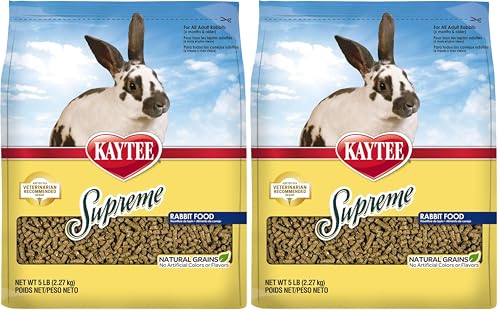
Kaytee Supreme is the no-frills option in the Kaytee lineup. It uses a simple, uniform Timothy pellet formula with no colored pieces, no seeds, and no mixed shapes. What you get is straightforward nutrition at the lowest price per pound of any brand we researched.
Pros:
- Most affordable option — especially in the pack-of-2 format
- Simple uniform pellet formula eliminates selective eating
- No artificial colors or flavors
- Readily available at multiple retailers including Tractor Supply
- Good basic nutrition for the price
Cons:
- Basic formula without added supplements (no probiotics, no DHA)
- Some rabbits find it boring compared to mixed formulas
- Less nutrient-dense than premium brands
- More pellet dust reported than higher-end options
Best for: Multi-rabbit households watching their budget, or owners who want a reliable, simple pellet without paying for premium marketing. It is the best rabbit food to buy in bulk if you have multiple rabbits consuming pellets quickly.
View Kaytee Supreme on Amazon →
#5 Vitakraft Vita Prima — Alternative Premium
| ASIN: B07Z76MG1T
Vitakraft Vita Prima is a lesser-known option that deserves attention as a premium alternative to Oxbow. It combines Timothy hay pellets with real vegetable and fruit pieces, uses no artificial preservatives or colors, and has a noticeably fresh smell with minimal bag dust.
Pros:
- Timothy hay base with real vegetable and fruit pieces
- No artificial colors or preservatives
- Fresh smell and minimal dust in the bag
- Rabbits enjoy the variety pieces
- 8 lb bag offers good value
Cons:
- Lower review count than mainstream brands (531 vs thousands)
- Contains fruit pieces that add sugar
- Some selective eating risk due to mixed pieces
- Price fluctuates frequently on Amazon
- Less widely available in stores
Best for: Owners who want a more “natural” premium alternative to Oxbow and do not mind the selective eating risk that comes with mixed-in fruit and vegetable pieces. If your rabbit eats everything in the bowl, this is a strong choice.
View Vitakraft Vita Prima on Amazon →
#6 Oxbow Essentials Adult Rabbit Food — Best for Dental Health
| ASIN: B003SLLF48
Oxbow Essentials Adult Rabbit Food takes a different approach from every other brand on this list. Instead of cold-pressed pellets, it uses extruded pellets — cooked under high pressure to create a harder, denser, completely uniform piece. Every pellet has identical nutrition, and the hard texture forces rabbits to chew more thoroughly.
Pros:
- Extruded texture promotes dental wear — excellent for rabbits prone to tooth problems
- Zero selective eating — every piece is identical in taste and nutrition
- No waste — rabbits eat every piece
- Highly palatable — most rabbits accept it readily
- Complete and balanced nutrition
Cons:
- Small 3 lb bag — not practical for multi-rabbit households
- More expensive per pound than any other brand on this list
- Harder texture may not suit rabbits with advanced dental disease
- Limited availability — primarily found on Amazon
- Basic formula without added probiotics or Omega-3
Best for: Rabbits prone to dental issues (especially Holland Lops and Mini Lops), or owners frustrated by rabbits that waste food by selectively eating. The extruded texture is genuinely different from standard pellets and provides real dental benefit. If your vet has mentioned molar problems, this is the food to try.
View Oxbow Essentials Adult Rabbit Food on Amazon →
How to Transition Your Rabbit to New Food
Never switch rabbit food abruptly — sudden changes in diet are a leading trigger for GI stasis. Use the 7-day transition method for healthy adult rabbits:
| Days | Old Food | New Food |
|---|---|---|
| Days 1-2 | 75% | 25% |
| Days 3-4 | 50% | 50% |
| Days 5-6 | 25% | 75% |
| Day 7+ | 0% | 100% |
Monitor throughout: Check droppings daily — they should remain well-formed, round, and plentiful. If droppings become small, irregular, or decrease in number, slow down the transition. Go back to the previous ratio for 2-3 extra days before advancing again.
For rabbits with sensitive stomach issues, extend the transition to 10-14 days. Some rescue rabbits with unknown dietary history need even longer — up to 3 weeks in extreme cases. Patience during transition prevents emergency vet visits.
Conclusion
The best rabbit food is the one that provides complete Timothy-hay-based nutrition in a form your rabbit will eat consistently without selective eating. For most owners, that is Oxbow Garden Select.
Quick category recap:
- Best Overall: Oxbow Garden Select — highest quality, most vet recommendations
- Best Value: Kaytee Forti-Diet Pro Health — solid nutrition with probiotics at lower cost
- Best for Picky Eaters: Kaytee Fiesta — use with caution, mix with uniform pellets
- Best Budget: Kaytee Supreme — simple, affordable, no selective eating risk
- Best Alternative Premium: Vitakraft Vita Prima — natural ingredients with variety
- Best for Dental Health: Oxbow Essentials Adult Rabbit Food — harder texture, zero waste
The formula that keeps rabbits healthiest long-term is simple: 80% hay + 10% pellets + 10% vegetables. No brand of pellet can compensate for inadequate hay intake. For the complete dietary framework, see our complete rabbit food and diet guide.
Beyond food, a rabbit’s environment plays a huge role in overall health. Regular rabbit grooming prevents hairballs that can complicate digestion, and rabbit litter training keeps the feeding area clean and hygienic. Providing rabbit toys encourages natural foraging behavior and prevents boredom-related overeating.
For safe vegetable options to pair with any of these pellets, explore our guides on bell peppers, carrots, cucumber, and broccoli. For setting up the right feeding environment, our rabbit setup guide covers cage selection, accessory placement, and daily care routines.