Quick Answer: Can Ferrets Eat Strawberries?
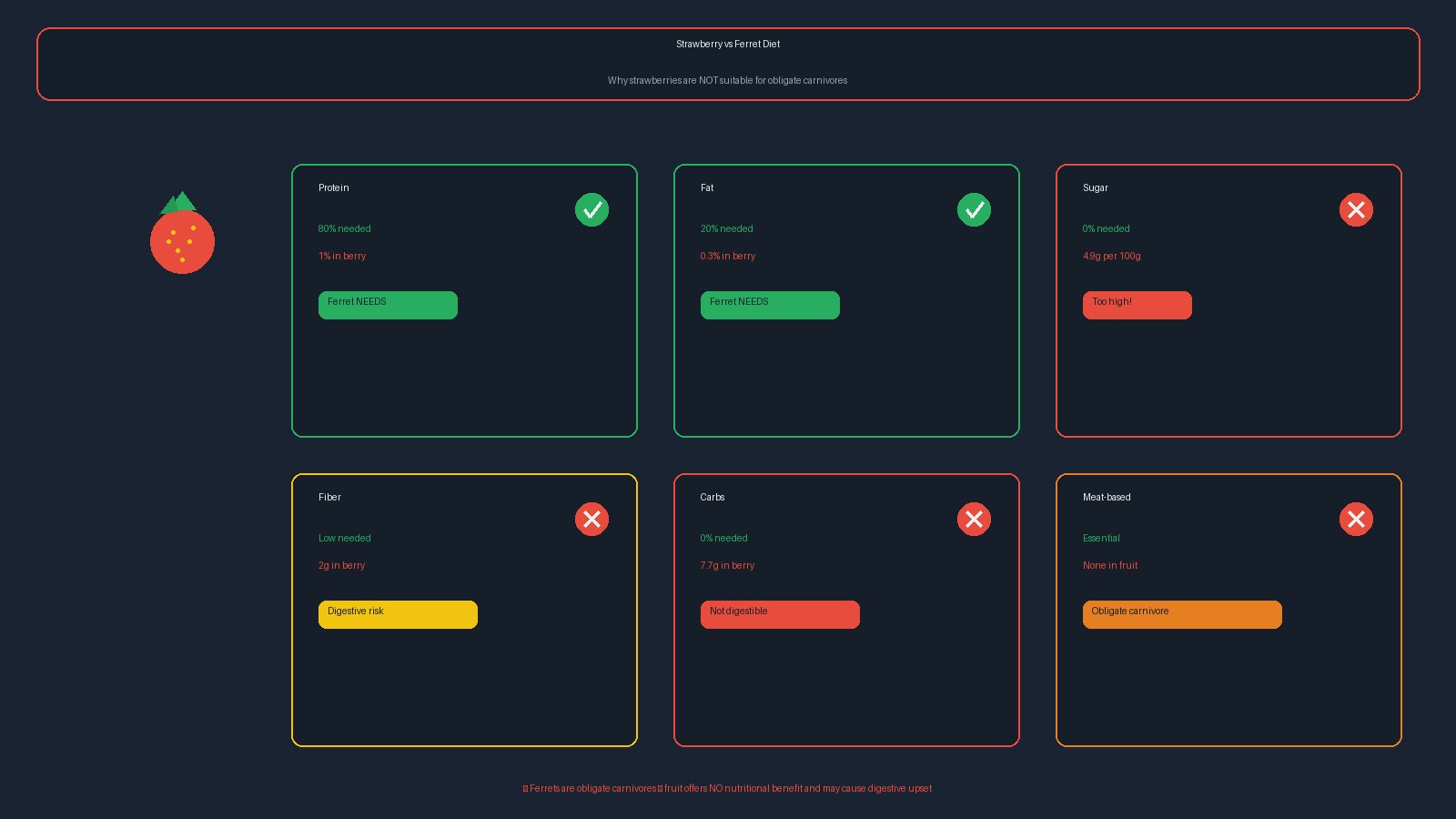
Technically not toxic, but strongly not recommended. Ferrets are obligate carnivores — their digestive system is designed exclusively for meat. Strawberries contain 4.9g of sugar per 100g, which is far more than a ferret’s body can safely process.
💡 TL;DR: The recommended amount of strawberry for a ferret is zero. If your ferret accidentally ate a tiny piece, monitor for 24 hours. There is no nutritional benefit a ferret can extract from a strawberry that it can’t get more safely from meat.
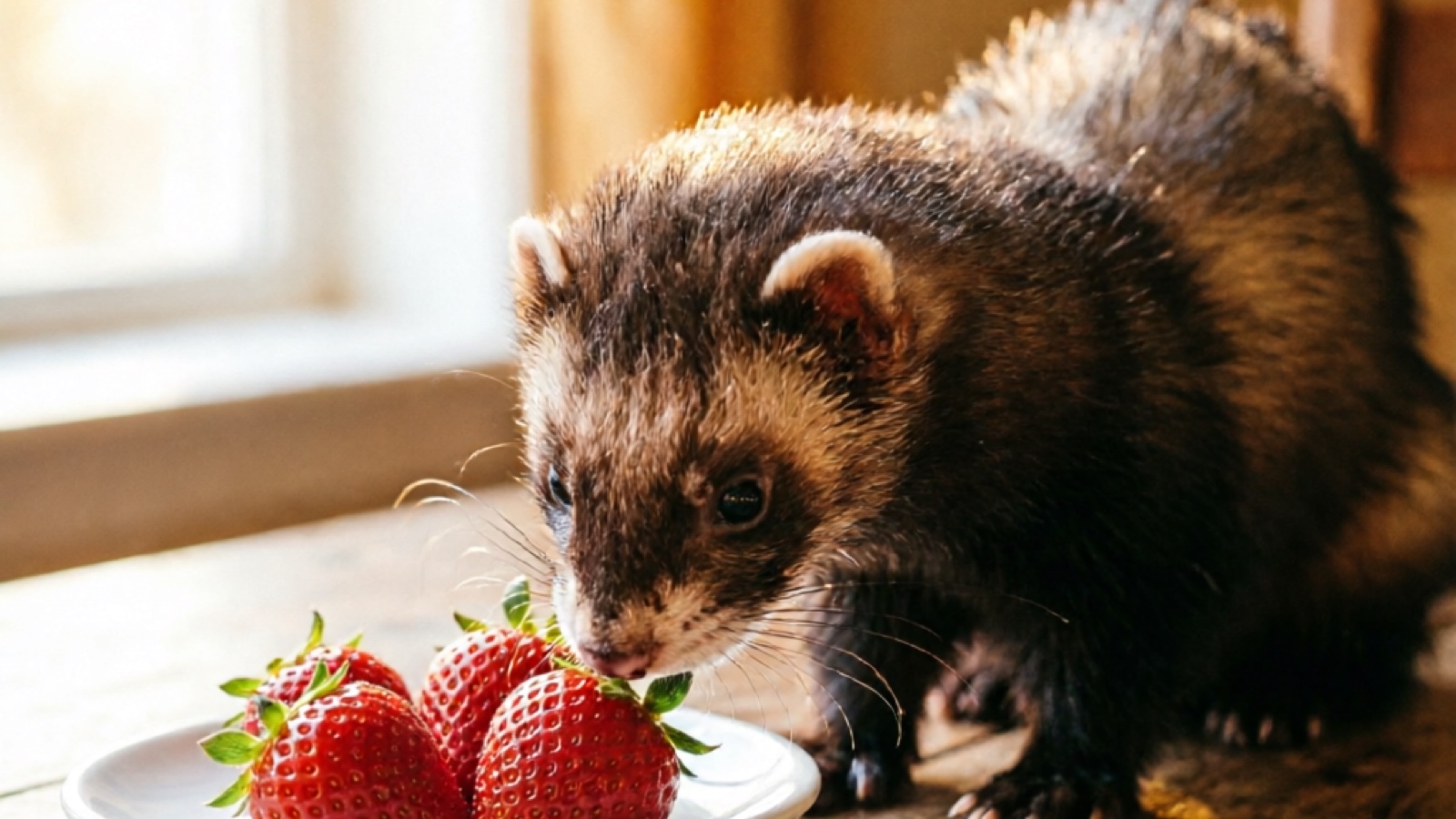
If you’re researching can ferrets eat strawberries, the honest answer is that you shouldn’t. I understand the temptation — ferrets are curious animals that investigate everything, and a strawberry’s bright red color and sweet aroma naturally attract their attention. I’ve had ferrets sniff around fruit bowls more times than I can count. But curiosity doesn’t equal nutritional suitability, and giving in to that temptation puts your ferret at real risk.
Can ferrets eat strawberries without dying? Probably yes, for a single small piece. But that’s the wrong question. The right question is whether can ferrets eat strawberries without causing cumulative harm over time — and the answer to that is a firm no. For a comprehensive understanding of what ferrets should actually eat, see our ferret diet guide.
Why Ferrets Can’t Digest Strawberries — The Obligate Carnivore Problem
Ware Lock-N-Litter Jumbo is a quality option worth considering for your setup.
Ferrets are obligate carnivores (also called hypercarnivores), meaning they must eat animal-based protein to survive. This isn’t a dietary preference — it’s a biological requirement with specific anatomical and biochemical foundations. Understanding these differences explains exactly why can ferrets eat strawberries is a question with an undesirable answer.
| Feature | Ferret (Obligate Carnivore) | Dog (Omnivore) | Human (Omnivore) |
|---|---|---|---|
| Digestive tract length | Very short — 3-4 hour transit time | Medium | Long — 24-48 hour transit time |
| Cecum (fermentation organ) | Completely absent | Small, limited function | Present and active |
| Amylase production | Minimal to none | Moderate | High |
| Primary energy source | Animal protein and fat | Mixed protein, fat, carbs | Mixed |
| Fiber digestion | Cannot digest plant fiber | Limited ability | Extensive |
| Sugar tolerance | Very poor | Moderate | Good |
The most critical differences are the missing cecum and the near-absence of amylase. The cecum is a pouch at the junction of the small and large intestine where herbivores and omnivores ferment plant fiber. Ferrets don’t have one. Amylase is the enzyme responsible for breaking down carbohydrates into simple sugars. Ferrets produce almost none of it.
Here’s what happens when a ferret eats a piece of strawberry:
- The strawberry enters the ferret’s extremely short digestive tract
- With minimal amylase available, the sugar and carbohydrates are not properly broken down
- Undigested sugar reaches the intestines, where it disrupts the natural balance of gut bacteria
- Blood sugar spikes sharply, forcing the pancreas to work overtime producing insulin
- Over time, repeated blood sugar spikes significantly increase the risk of insulinoma — a cancerous pancreatic tumor
This isn’t speculation — it’s basic ferret biology. Whether you’re asking can ferrets eat strawberries or can ferrets eat bananas, the answer is the same: their body was not built for it.
Strawberry Nutrition vs Ferret Needs — The Numbers Don’t Work
Many owners find that Lixit Corner Litter Pan works well for their pet’s needs.
USDA nutritional data — raw strawberry, per 100g USDA FDC ID 169365 — “Strawberries, raw”:
| Nutrient (per 100g) | Amount | Ferret Daily Need | Problem |
|---|---|---|---|
| Sugar | 4.9g | Under 1g (ideally zero) | 5x the safe limit |
| Carbohydrates | 7.68g | Under 2g (ideally zero) | 4x the safe limit |
| Fiber | 2.0g | Cannot digest | Useless — causes bloating |
| Protein | 0.67g | 30-40g (35-45% of diet) | Negligible contribution |
| Fat | 0.30g | 15-25g (20-30% of diet) | Negligible contribution |
| Vitamin C | 58.8mg | Synthesized internally | Unnecessary |
| Water | 90.95g | From meat + water bowl | Excess causes diarrhea |
The sugar figure alone should be enough to stop any ferret owner from offering strawberries. A ferret’s daily sugar intake should ideally be zero. Even allowing a theoretical maximum of 1g, a single small strawberry (roughly 12g) contains approximately 0.59g of sugar — already more than half the entire day’s limit. And that sugar provides absolutely zero nutritional value that a ferret can actually use.
What about the vitamin C? At 58.8mg per 100g, strawberries are vitamin C-rich — for humans and guinea pigs. But ferrets synthesize their own vitamin C internally. They don’t need dietary vitamin C at all, making this nutritional benefit entirely irrelevant.
The protein and fat figures are perhaps the most telling. Ferrets need 30-40g of animal protein and 15-25g of animal fat daily. Strawberries provide 0.67g of plant protein (which ferrets can’t efficiently utilize) and 0.3g of fat. In every metric that matters to a ferret, strawberries score near zero.
Benefits of Strawberries for Ferrets
For this purpose, Kaytee High Corner 2pk is a popular choice among pet owners.
This is the shortest section in this article, and for good reason. When evaluating can ferrets eat strawberries for nutritional benefit, the honest answer is essentially none.
Potential (but negligible) benefits:
- Trace vitamin C — Irrelevant since ferrets synthesize their own vitamin C
- Trace manganese (0.39mg per 100g) — Present in far higher, more bioavailable quantities in organ meats like liver
- Hydration (91% water) — Ferrets should get hydration from their water bowl, not from sugary fruit that disrupts digestion
- Enrichment value — The curiosity factor of investigating a new food provides some mental stimulation, but this can be achieved with safe meat-based treats that don’t carry health risks
Every supposed benefit of strawberries for ferrets is either irrelevant (vitamin C), available in better forms (manganese from organ meat), or achievable through safer means (enrichment from meat treats). I’ve never found a compelling nutritional argument for feeding strawberries to ferrets, and in my experience, neither has any exotic vet I’ve spoken with.
Risks and Precautions
When considering can ferrets eat strawberries, the risks are well-documented and serious.
Risk 1: Insulinoma — The Number One Ferret Disease
Insulinoma is a cancerous tumor of the pancreas that causes excessive insulin production, leading to dangerously low blood sugar (hypoglycemia). It affects an estimated 30-50% of ferrets over the age of 3, making it the single most common cancer in domestic ferrets and one of the leading causes of death in the species.
High-sugar diets are a known contributing factor to insulinoma development. Every blood sugar spike from eating carbohydrate-rich food forces the pancreas to produce excess insulin. Over months and years, this constant overwork can trigger the cellular changes that lead to tumor formation. Strawberries, at 4.9g of sugar per 100g, are more than capable of causing these spikes.
Symptoms of insulinoma include:
- Lethargy and weakness (especially in the rear legs)
- Drooling and excessive salivation
- Stumbling or appearing “drunk”
- Pawing at the mouth
- Seizures in advanced cases
- Collapse and unresponsiveness
This is a progressive, life-threatening condition that requires ongoing veterinary management with medications like prednisolone and diazoxide, and often surgical removal of affected pancreatic tissue. For more on this and other common conditions, see our guide to ferret health problems.
Risk 2: Gastrointestinal Distress and Diarrhea
When undigested carbohydrates reach a ferret’s intestines, they begin to ferment. This fermentation produces gas, causes bloating, and disrupts normal gut motility. The result is diarrhea — sometimes severe — along with abdominal pain and cramping.
The 91% water content in strawberries compounds this problem. Ferrets don’t need extra hydration from food — they drink from their water bowl. Excess water from fruit accelerates the movement of food through an already short digestive tract, leaving even less time for any nutrient absorption.
In extreme cases, gastrointestinal distress can progress to GI stasis — a partial or complete shutdown of intestinal movement, which is a veterinary emergency in ferrets.
Risk 3: Nutritional Displacement
Ferrets have very small stomachs — roughly 30-40ml capacity, about the size of a large grape. If even a small portion of that space is filled with strawberry (which provides zero useful nutrition for a ferret), it means the ferret eats less of its proper meat-based diet. Over time, this nutritional displacement leads to protein deficiency, weight loss, and muscle wasting.
This is especially dangerous for young ferrets that are still growing and older ferrets that may already be losing muscle mass. Every calorie your ferret consumes should come from a bioavailable animal source — a calorie from strawberry is essentially a wasted calorie.
Risk 4: Dental Disease
Sugar promotes tooth decay and periodontal disease. Ferrets are already prone to dental problems as they age, and adding sugar to their diet accelerates this process. Dental disease in ferrets can lead to difficulty eating, pain, and systemic infections from oral bacteria entering the bloodstream.
Serving Guide — If You Absolutely Must (Not Recommended)
The recommended amount of strawberry for a ferret is zero. I strongly advise against feeding strawberries to ferrets in any situation. However, if your ferret has already stolen a piece, or you’re dealing with a well-meaning friend or family member who gave your ferret fruit, here’s the safety protocol:
Maximum Safe Amount (One-Time Only)
- Amount: A fragment no larger than a green pea, roughly 1-2 grams — about one-quarter of a small strawberry
- Frequency: Never more than once every few months — and ideally never
- Preparation: Washed, stem and leaves removed, cut into the smallest possible pieces
Monitoring After Accidental Ingestion
If your ferret ate strawberry without your knowledge, watch for these signs over the next 24 hours:
- Diarrhea — The most common and earliest sign. Soft stool is concerning; watery stool warrants a vet call.
- Lethargy — A normally active ferret that becomes unusually sleepy or disinterested in playing
- Bloating — A swollen or firm abdomen, which may indicate gas from fermenting undigested sugar
- Loss of appetite — Refusing regular food, which is especially concerning in ferrets due to their fast metabolism
- Changes in stool color or consistency — Greenish or mucous-covered stool can indicate GI distress
If any of these symptoms appear, contact your exotic vet. Don’t wait to see if things improve — ferrets can deteriorate rapidly, and early intervention makes a significant difference.
What to Strictly Avoid
- Dried strawberries — Sugar is concentrated 12-14 times compared to fresh. Even a tiny piece of dried strawberry is dangerous.
- Strawberry jam, preserves, or sauce — Added sugar on top of already problematic fruit sugar. Absolutely unsafe.
- Strawberry-flavored treats — Commercial treats marketed for ferrets sometimes contain fruit flavoring with hidden sugar. Read ingredient lists carefully.
- Any strawberry in the regular food bowl — Never mix fruit with a ferret’s staple diet.
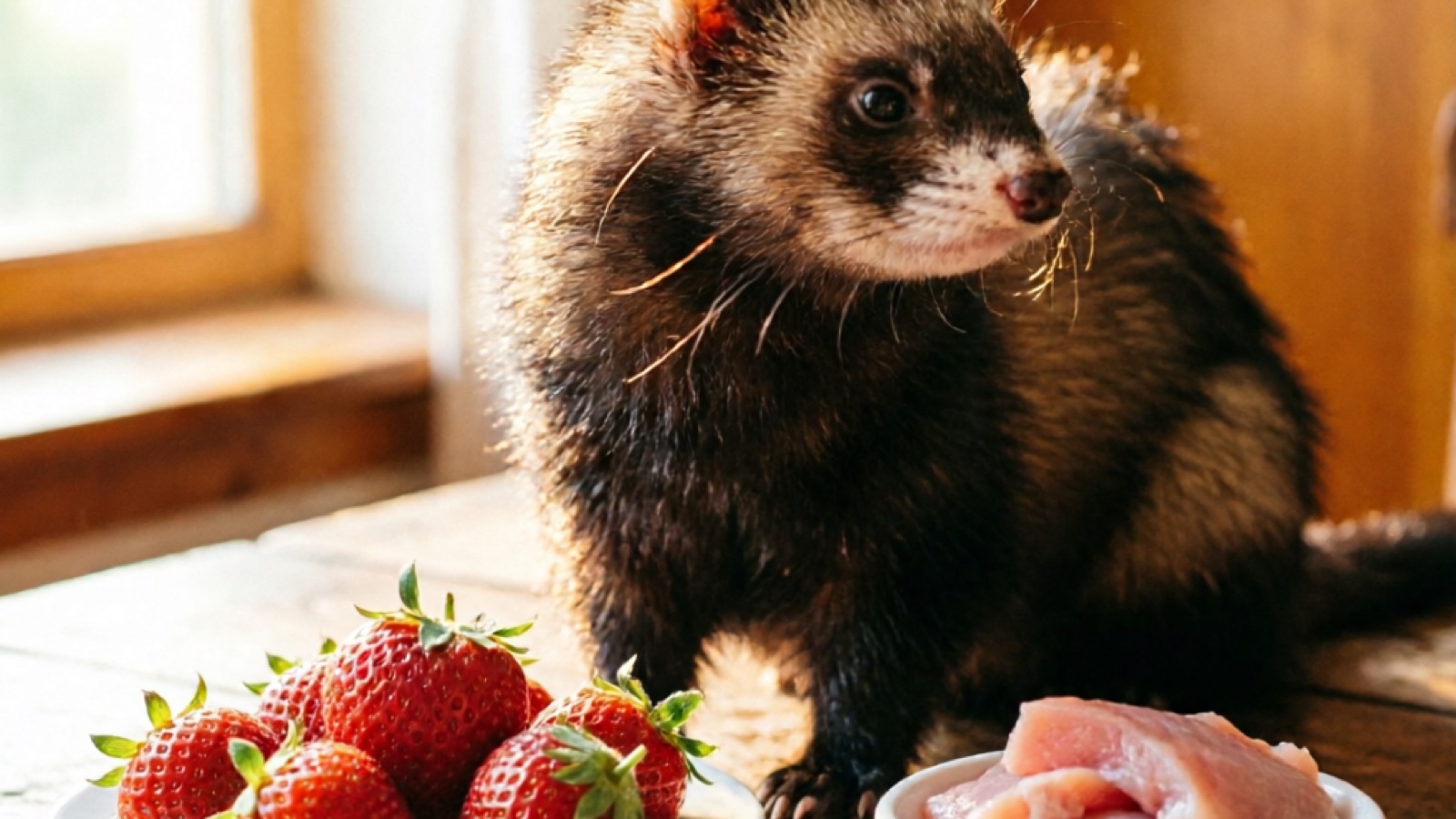
How to Prepare Strawberries If Your Ferret Already Ate One
If your ferret got hold of a strawberry before you could stop them, here’s what to do:
Step 1: Don’t Panic
A single small piece is unlikely to cause serious harm. Ferrets are resilient animals, and their digestive systems can handle occasional foreign material. The danger is in repeated exposure, not a one-time incident.
Step 2: Remove Any Remaining Strawberry
Ferrets sometimes stash food for later. Check your ferret’s favorite hiding spots — under furniture, inside blankets, in tunnel toys — for any leftover strawberry pieces that could be eaten later.
Step 3: Monitor for 24 Hours
Watch for the symptoms listed above: diarrhea, lethargy, bloating, appetite changes. Most ferrets will pass a small piece of fruit without issues, but monitoring is essential.
Step 4: Ensure Normal Diet Resumes
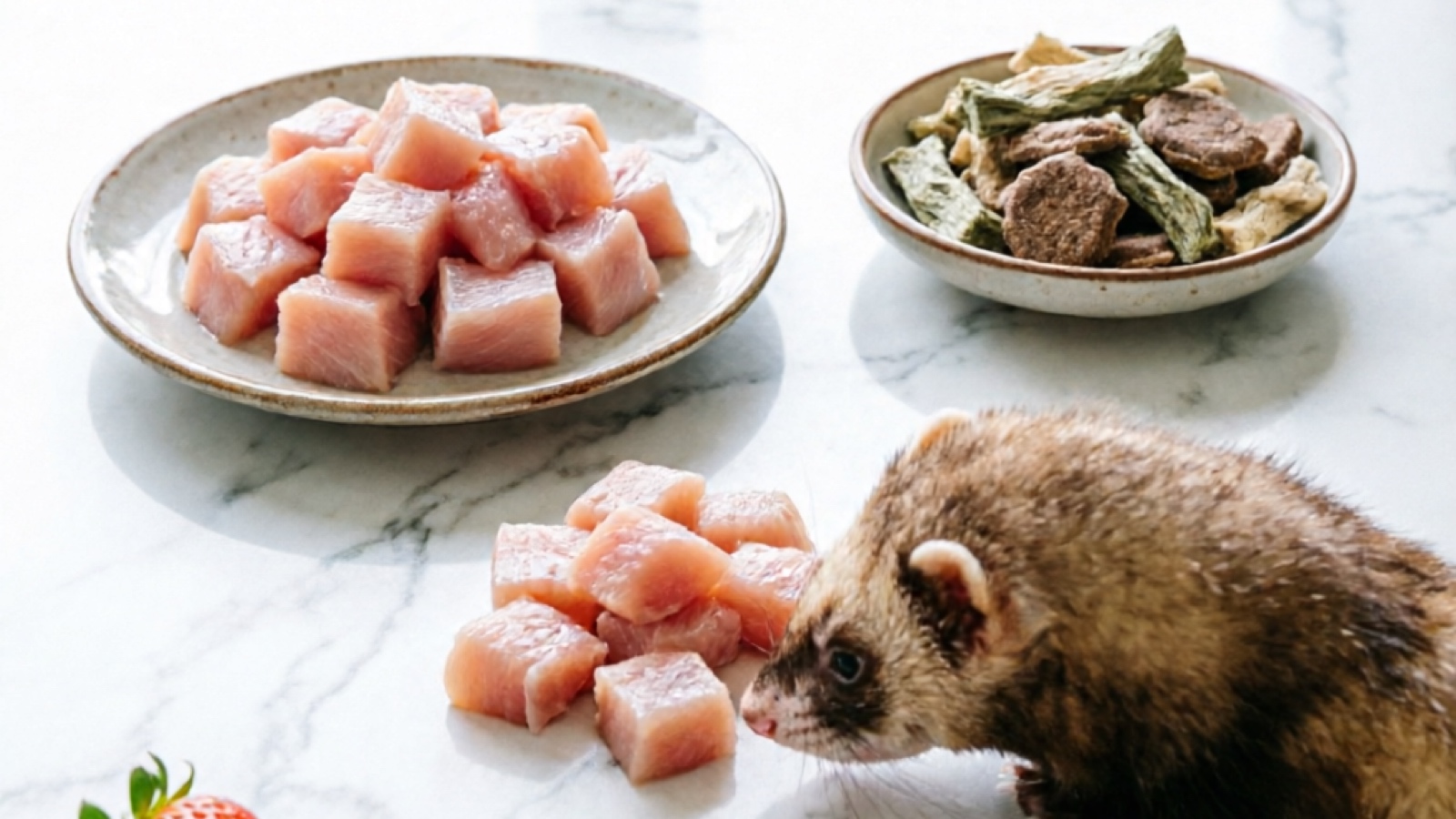
Make sure your ferret returns to eating their regular meat-based diet. If your ferret seems less interested in their food after eating strawberry, try offering a particularly high-value meat treat (freeze-dried chicken works well) to re-establish normal eating patterns.
Step 5: Prevent Future Access
Store fruit out of your ferret’s reach. Ferrets are clever, agile, and persistent — they can open cabinets, climb onto tables, and squeeze into spaces you wouldn’t expect. A covered fruit bowl or a closed pantry door is your best defense.
What to Avoid
Dried Strawberries
Dried strawberries concentrate sugar to 60-70% by weight — compared to about 5% in fresh strawberries. That’s a 12-14x concentration, making even a crumb-sized piece dangerous for a ferret. Most commercially dried strawberries also contain added sugar. Never offer dried strawberries to ferrets under any circumstances.
Strawberry Jam, Preserves, or Sauce
These products contain added sugar, preservatives, and often artificial ingredients. The sugar content in strawberry jam can reach 40-50g per 100g — a catastrophic amount for a ferret’s pancreas. Absolutely unsafe.
Strawberry-Flavored Commercial Treats
Some ferret treats are marketed with fruit flavors or contain fruit derivatives in their ingredient lists. Read labels carefully. If you see sugar, molasses, corn syrup, honey, fructose, dextrose, or any fruit-derived ingredient, avoid that product. For genuinely safe treat options, see our guide to the best ferret treats.
Any Other Fruit
This article focuses on strawberries, but the same reasoning applies to all fruit. Whether it’s bananas, apples, grapes, blueberries, or watermelon — every fruit contains sugar and carbohydrates that a ferret cannot process. When owners ask can ferrets eat strawberries vs other fruits, the answer is uniformly negative across the board.
Better Treat Alternatives for Ferrets
If you want to give your ferret treats — and you should, because enrichment and bonding through food is important — there are plenty of genuinely safe options that align with their biological needs. Since the answer to can ferrets eat strawberries is a firm no, here’s what to offer instead:
Safe Ferret Treats
- Freeze-dried raw meat (chicken, turkey, lamb) — The single best treat option. 100% meat, no additives, and ferrets go crazy for it. The freeze-drying process preserves nutrients while creating a satisfying crunchy texture. I keep a bag of freeze-dried chicken in the cupboard at all times — it’s my go-to for training and bonding.
- Cooked plain meat (chicken breast, turkey, beef) — Cooked without any seasoning, oil, or sauce. Cut into tiny pieces appropriate for a ferret’s small mouth. This is as close to their natural diet as you can get in a home setting.
- Freeze-dried organ treats (liver, heart) — Extremely high-value treats that are also nutrient-dense. Liver in particular is packed with vitamin A and B vitamins. Use sparingly — a little goes a long way.
- Small piece of raw egg (occasional) — Excellent protein source. Offer it raw, not cooked — ferrets handle raw animal products better than cooked ones. Eggs are a well-tolerated occasional treat.
- Cooked plain chicken — The most accessible safe treat for most ferret owners. Plain, unseasoned chicken breast cut into small pieces is always a hit.
Treats to Avoid
- Any fruit (strawberries, bananas, apples, berries, melon — all of them)
- Any vegetable (carrots, peas, pumpkin, sweet potato)
- Dairy products (yogurt, cheese, milk — ferrets are lactose intolerant)
- Grains (bread, cereal, crackers, pasta)
- Sugary commercial treats (check labels for hidden sugar, molasses, or corn syrup)
- Nuts and seeds (choking hazard and inappropriate fat profile)
- Processed human food of any kind
For recommendations on quality commercial food brands, see our guide to the best ferret food. For comprehensive care beyond diet, see our ferret care guide and ferret cage guide.
Other Foods Your Ferret Can Eat
Safe Protein Sources
- Can Ferrets Eat Chicken? — The best everyday protein source
- Can Ferrets Eat Eggs? — Excellent occasional protein boost
- Can Ferrets Eat Bananas? — No, and for the same reasons as strawberries
Core Guides
- Ferret Diet Guide | Best Ferret Food
- Ferret Care Guide | Ferret Health Problems
- Ferret Lifespan | Ferret Behavior
- Litter Training | Why Does My Ferret Stink?
Housing and Supplies
- Best Ferret Cage | Large Ferret Cage
- Best Ferret Toys | Best Ferret Treats
- Best Ferret Bedding | Best Ferret Harness
- Cage Ideas | Critter Nation vs Ferret Nation
- Best Cage Accessories
Product Recommendations
Here are some products mentioned in this guide:
Frequently Asked Questions
Can ferrets eat strawberries safely?
No. While strawberry flesh is not acutely toxic, it contains 4.9g of sugar per 100g, which far exceeds what a ferret’s digestive system can handle. Ferrets are obligate carnivores with virtually no ability to digest carbohydrates. Regular sugar intake significantly increases the risk of insulinoma, a life-threatening pancreatic cancer affecting 30-50% of ferrets over age three.
Are strawberries toxic to ferrets?
Not acutely — a small accidental bite won’t cause immediate poisoning. But they are chronically dangerous. The sugar disrupts digestive function, contributes to insulinoma development, and causes nutritional displacement. The risk is cumulative and long-term, not instant.
How much strawberry can I feed my ferret?
Zero is the recommended amount. If your ferret accidentally ate a small piece, monitor for 24 hours for diarrhea, lethargy, or bloating. The absolute maximum in a one-time emergency would be a fragment no larger than a green pea (1-2 grams), but this should never be given intentionally.
What fruits can ferrets eat?
None safely. All fruits contain sugar and carbohydrates that ferrets cannot properly digest. The best ferret treats are meat-based: freeze-dried chicken, cooked plain turkey, organ meats, or commercial ferret treats made from animal protein. Check ingredient lists carefully to avoid hidden sugar.
Why can’t ferrets eat fruits and vegetables?
Ferrets are obligate carnivores. They lack a cecum for fermenting plant fiber, produce almost no amylase for breaking down carbohydrates, and have an extremely short digestive tract (3-4 hour transit time). Plant matter passes through essentially undigested, causing fermentation, gas, diarrhea, and dangerous blood sugar spikes.
Can ferrets eat strawberry leaves?
No. While non-toxic, strawberry leaves contain plant fiber that ferrets cannot digest. They provide zero nutritional value and carry the same risks as the fruit itself — gastrointestinal upset and unnecessary filling of a very small stomach.
What happens if my ferret eats a strawberry?
A single small accidental bite is unlikely to cause serious harm. Monitor for 24 hours for diarrhea, lethargy, bloating, or appetite changes. If symptoms appear, contact your exotic vet. The real danger is repeated exposure, which contributes to insulinoma over time.
What should I feed my ferret instead of strawberries?
Meat-based treats are the only appropriate option. Freeze-dried raw chicken is the single best ferret treat — 100% meat, no additives, and ferrets love it. Cooked plain chicken breast, raw egg, and freeze-dried organ meats are also excellent choices. For commercial options, check our best ferret treats guide.