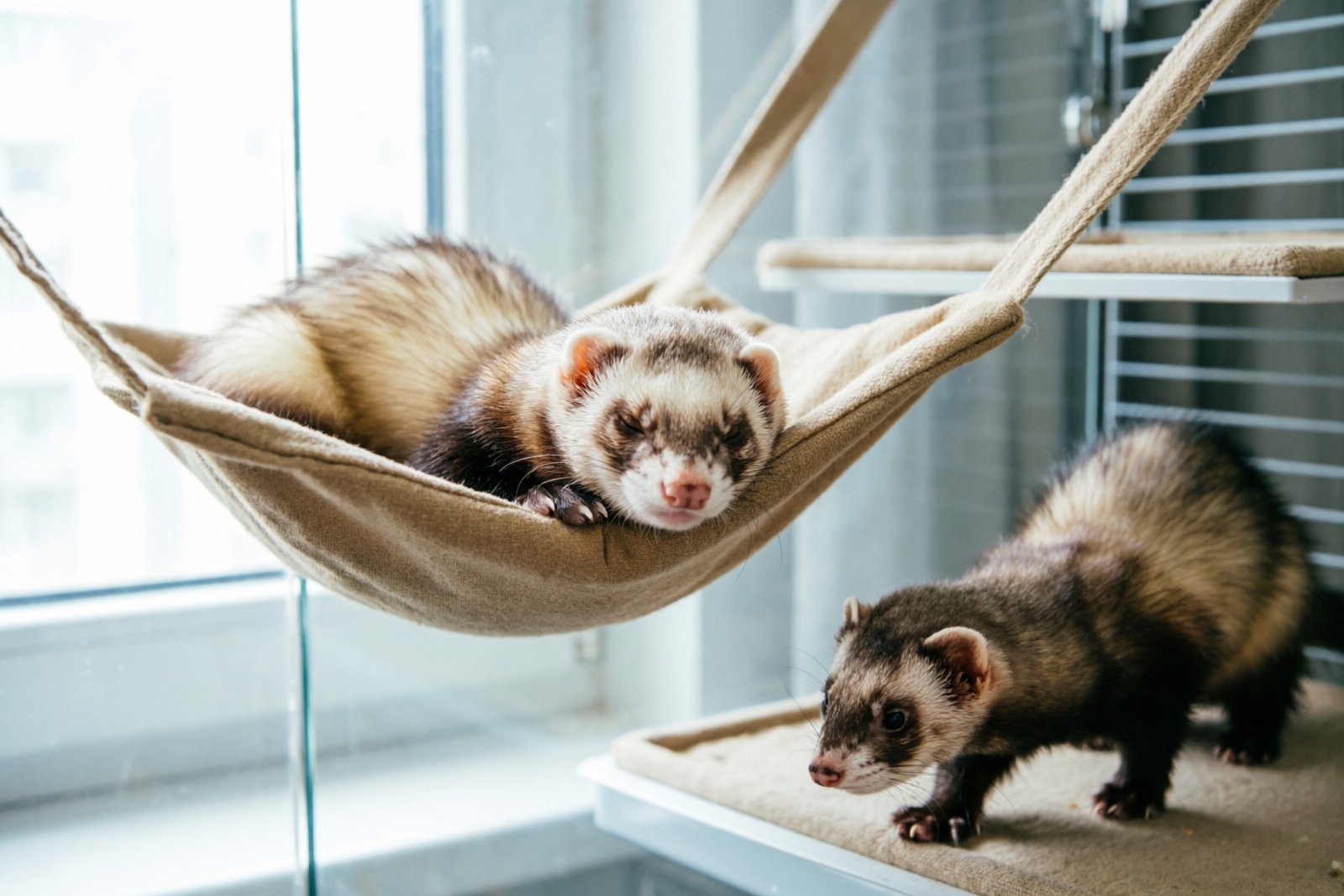
The ferret cage market has evolved significantly through 2026, with major brands introducing improved latch mechanisms, wider pans, and better ventilation compared to models from just two years ago. With ferret ownership rising in urban areas and apartment-friendly pet trends continuing to grow, choosing the right cage — one that balances safety, space, and ease of cleaning — has become the single most important decision a new ferret owner makes.
Ferrets spend 14 to 18 hours a day sleeping, which means the cage is where they live the majority of their lives. A poorly sized or unsafe cage leads to stress, injury, and behavioral problems. A well-set-up cage gives your ferret a secure territory to sleep, eat, play, and retreat.
This guide covers cage sizing, types, setup, safety, cleaning, and placement so you can build the right habitat from day one. For specific product recommendations, see our best ferret cage roundup.
Cage Size Requirements
The absolute minimum floor space for a single ferret is 8 square feet of usable floor area. This number comes from shelter and rescue guidelines widely adopted across the ferret community, and it represents the bare floor — not platforms, shelves, or hammock space.
Single Ferret Dimensions
A cage measuring at least 24 inches long × 24 inches wide × 36 inches tall gives one ferret enough room to stretch, climb, and turn around comfortably. The height matters because ferrets are vertical animals. They climb ramps, scale shelves, and lounge in hammocks mounted near the top of the enclosure. A flat, single-level cage that technically hits 8 square feet on paper does not provide the same quality of life as a multi-level setup with the same footprint.
Multi-Ferret Dimensions
For two ferrets, bump up to at least 30 inches long × 24 inches wide × 48 inches tall. Each additional ferret needs roughly 4 more square feet of floor space. A three-ferret household should be looking at enclosures in the 24+ square foot range, which usually means a double-unit cage or a large custom build.
The Critter Nation vs Ferret Nation comparison breaks down the two most popular multi-level cages and their exact dimensions for multi-ferret households.
Height and Vertical Space
Ferrets use vertical space differently than horizontal space. A 48-inch tall cage with three levels provides more usable territory than a 36-inch tall cage with the same floor dimensions, even though the floor area is identical. Platforms, ramps, and hanging accessories convert empty air into functional living space. When you are comparing cages, look at total shelf area plus floor area to get a true picture of the space your ferret can actually use.
Go as large as your room and budget allow. Ferrets in undersized cages develop cage rage — pacing, bar-biting, and aggression — that disappears when they move to a properly sized enclosure.
Types of Ferret Cages
Kaytee High Corner 2pk is a quality option worth considering for your setup.
Wire Multi-Level Cages
The most common ferret cage is a powder-coated wire enclosure with multiple levels connected by ramps or shelves. Models like the Midwest Ferret Nation and Prevue Hendryx fall into this category. They provide excellent ventilation, easy visibility, and straightforward cleaning through pull-out trays.
The trade-off is weight. A fully assembled multi-level wire cage can weigh 60 to 90 pounds, making it difficult to move once set up. Wire cages also require solid flooring or shelf covers to protect your ferret’s feet from pressure sores.
For a full breakdown of top-rated models, see our best ferret cage guide.
DIY and Custom-Built Cages
Some owners build their own cages from modified bookshelves, melamine panels, or wire shelving units. A DIY ferret cage lets you customize every dimension, add as many levels as you want, and tailor the layout to your ferret’s habits. The ferret cage ideas page has photos and plans from owners who built their own setups.
The downside is safety. DIY cages need the same bar spacing restrictions (1 inch or less), the same escape-proof latching, and the same non-toxic materials as commercial cages. Melamine is easy to wipe clean but heavy and can chip. Unsealed wood absorbs urine and harbors bacteria. Every edge, corner, and joint needs to be smooth and secure.
Cage Alternatives: Playpens and Free-Roam
A ferret playpen is not a full-time housing solution, but it supplements cage time with safe, enclosed floor space. A playpen gives your ferret room to run, dig, and play without full room-proofing. See our best ferret playpen recommendations for options that actually contain ferrets.
Some experienced owners go fully cage-free, ferret-proofing an entire room or section of the house. This works only if you can truly ferret-proof every gap, opening, and chewable surface. Most ferret owners use a cage as the home base and give supervised free-roam time for at least 3 to 4 hours daily.
Cage Setup and Accessories
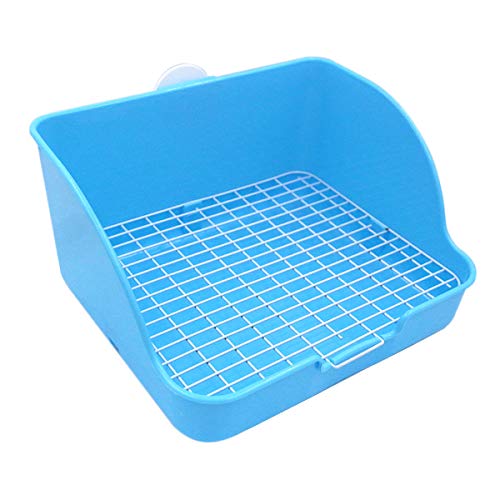
Many owners find that Amakunft Grid Potty works well for their pet’s needs.
The cage itself is just the structure. The accessories inside determine whether your ferret is comfortable, stimulated, and healthy.
Bedding and Floor Covering
Wire floors cause bumblefoot (ulcerative pododermatitis), a painful bacterial infection of the foot pads. Cover every wire surface with solid shelving, fleece liners, or plastic pan inserts. For detailed product picks, see our best ferret bedding guide.
Fleece liners with waterproof backing are the top choice. They are soft, machine-washable, and inexpensive over time. Paper-based bedding like Carefresh works as a disposable alternative. Never use cedar or pine shavings — the volatile oils cause respiratory damage in ferrets.
Hammocks and Sleeping Spots
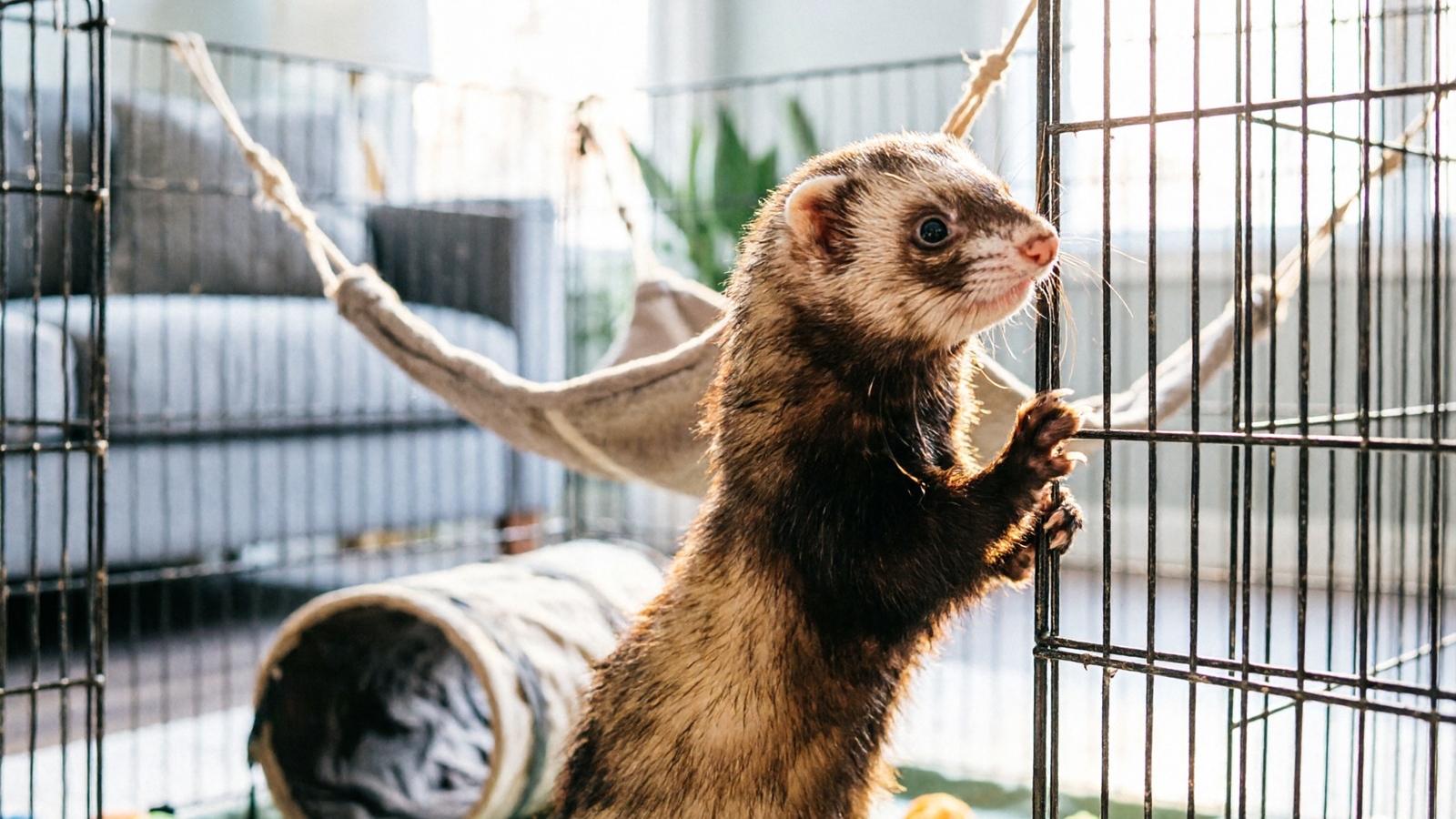
Ferrets sleep in enclosed, dark spaces. Provide at least one sleep sack or cuddle cup per ferret on the cage floor, plus one or two hanging hammocks on upper levels. Ferrets pile together in groups, so having multiple sleep options prevents one ferret from hogging the best spot.
Hammocks also serve as enrichment. Ferrets climb into them, flip them, and wrestle with each other inside them. For more enrichment ideas, check out the best ferret cage accessories page.
Litter Boxes
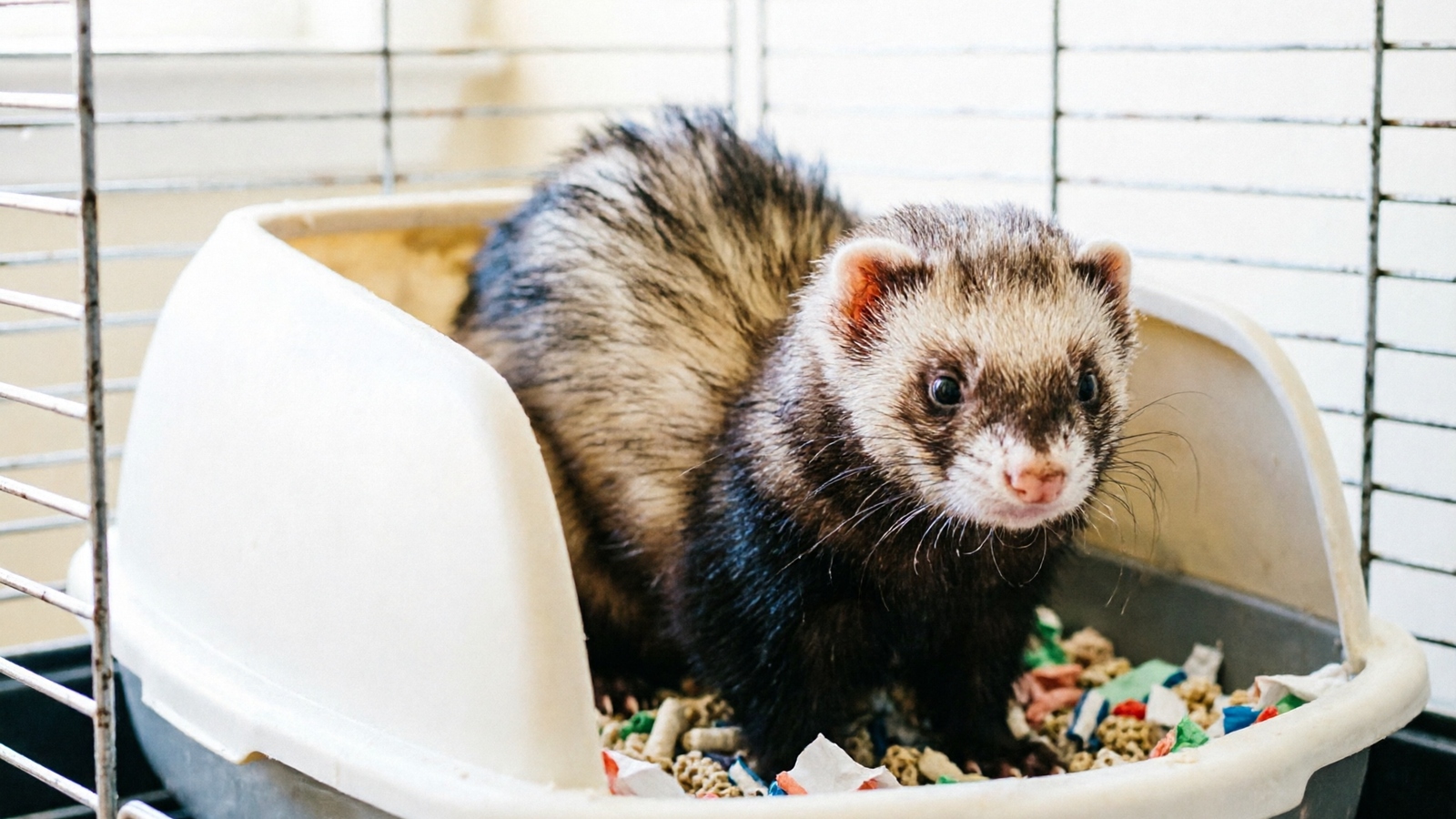
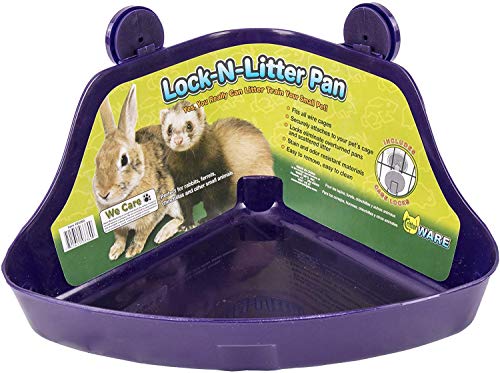
Place a litter box on every level of the cage. Ferrets back into corners to relieve themselves, and they will not travel across an entire level to reach a distant box. Corner litter boxes work well for ferrets because they match the animal’s natural backing-up posture.
Use a ferret-safe litter — paper pellets or wood pellets. Clumping clay litter expands in the digestive tract if ingested and can cause fatal blockages. Our best ferret litter guide compares the safest options.
Food and Water Placement
Put food bowls and water bottles on the main floor level, away from the litter box. Ferrets have fast metabolisms and eat 8 to 10 small meals per day, so food should always be accessible. A heavy ceramic bowl prevents tipping. Water bottles with sipper tubes are cleaner than bowls, but some ferrets prefer drinking from a dish. Many owners provide both.
Tunnels and Enrichment
Ferrets are burrowing animals. Tunnels, tubes, and crawl spaces are not optional extras — they are core habitat features. Connect vertical levels with fabric tunnels, and drape tube toys across the cage interior. Swap toys and accessories weekly to prevent boredom. The best ferret toys list has specific product recommendations for cage-safe enrichment.
Safety Considerations
For this purpose, Ware Lock-N-Litter 2-Pack is a popular choice among pet owners.
Bar Spacing
Bar spacing must be 1 inch or less for adult ferrets and 0.75 inches or less for kits (baby ferrets). Ferrets are escape artists with flexible spines. They can compress their bodies through gaps that look impossible. A cage with 1.25-inch spacing will hold a large adult male but not a small female or any kit.
Latches and Door Security
Ferrets learn to open latches. Simple spring-loaded clips, twist ties, and small hooks are child’s play for a motivated ferret. Use slide bolts, barrel bolts, or carabiner clips on every cage door. If your ferret has escaped once, it will try the same route again — and it will succeed faster the second time.
Wire Floor Dangers
Uncovered wire floors are the single most common cause of foot injuries in caged ferrets. The wire grid concentrates pressure on small areas of the foot pad, causing abrasions that become infected. Cover all wire surfaces with solid material. Even if the cage came with wire shelves from the manufacturer, add covers.
Toxic Materials and Chewing Hazards
Ferrets chew everything. Rubber, foam, soft plastic, and fabric with loose threads are all ingestion risks. Any accessory inside the cage must be made from durable, non-toxic materials. If a hammock develops a hole or a toy starts shedding pieces, remove it immediately. For more safety tips across all aspects of ferret care, see our full ferret care guide.
Escapes and Ferret-Proofing
Even the best cage is only as secure as the room it sits in. Ferrets escape cages, slip under doors, and crawl into furniture. The area around the cage should be ferret-proofed: block gaps under and behind furniture, seal holes in walls and floors, and keep electrical cords out of reach. Ferret-proofing is an ongoing process because ferrets find new weaknesses constantly.
Cleaning and Maintenance
A consistent cleaning routine prevents odor buildup, bacterial growth, and cage deterioration. Ferrets have a musky odor that is manageable with proper hygiene but overwhelming without it.
Daily Spot Cleaning (5 to 10 minutes)
- Remove soiled litter from all boxes
- Wipe down shelves and ramps with pet-safe wipes
- Pick up leftover food and replace water
- Check for and remove any chewed or broken accessories
- Sweep or wipe the floor tray
Daily cleaning is non-negotiable. Skipping even one day lets bacteria multiply and smell compound. Ferrets are clean animals by nature — they choose specific corners for elimination and avoid soiling their sleeping areas. But their rapid metabolism produces a lot of waste, and a dirty cage stresses them.
Weekly Deep Cleaning (30 to 60 minutes)
- Move ferrets to a safe, temporary enclosure
- Remove all accessories, bedding, and litter boxes
- Wash the entire cage with warm soapy water or a vinegar-water solution (1:1 ratio)
- Scrub ramps, shelves, and corners where grime builds up
- Launder all fabric items — hammocks, liners, sleep sacks
- Replace litter entirely
- Dry everything thoroughly before reassembling
Avoid bleach, ammonia, or phenol-based cleaners. Ferrets have sensitive respiratory systems, and chemical residue on cage surfaces can cause breathing difficulty and skin irritation.
Monthly Inspection
Once a month, go beyond cleaning and inspect the cage structure:
- Check every weld joint and wire connection for looseness or rust
- Test all latches and doors for secure closure
- Look for bent wires that create gaps wider than 1 inch
- Replace worn fleece liners, torn hammocks, or cracked plastic trays
- Examine ramp connections and shelf brackets for stability
A loose wire or weakened latch is an escape waiting to happen. Catching these issues during a monthly inspection prevents midnight escapes and emergency vet visits.
Cage Placement
Temperature
Ferrets cannot regulate body temperature well. The ideal range is 60°F to 75°F. Below 60°F, ferrets can develop hypothermia. Above 80°F, heatstroke becomes a real risk — ferrets can die from heat exposure in a matter of hours. Never place the cage near a heating vent, radiator, or window that gets direct sunlight.
If your home gets hot during summer, add a ceramic tile to the cage floor (ferrets lie on cool surfaces to lower their body temperature), use a fan directed near but not at the cage, and consider a frozen water bottle wrapped in a towel as a makeshift cooling pad.
Room Selection
Ferrets are social and curious. They enjoy being in rooms where the family spends time — living rooms, dens, and home offices are all good choices. A cage in a basement or spare bedroom where nobody goes isolates the ferret and can lead to depression and behavioral issues.
That said, ferrets sleep deeply during the day and startle easily. Avoid placing the cage directly next to a TV speaker or in a high-traffic hallway where constant noise interrupts their sleep cycle.
Floor Surface
Put the cage on a surface you can clean easily. Accidents happen — ferrets sometimes miss the litter box, and water bottles drip. Tile, linoleum, or a washable mat under the cage makes cleanup simple. Carpet under a ferret cage will eventually smell and stain regardless of how diligent you are with cleaning.
Proximity to Other Pets
Keep the cage away from other animals. Dogs and cats can stress ferrets just by staring at the cage. Even if your other pets are gentle, the constant presence of a predator animal at eye level causes chronic anxiety in ferrets. If you have other pets, position the cage where the ferret has a sight-line retreat — a covered hammock or sleep sack to hide in — and where other animals cannot jump on top of the cage.
Lighting and Natural Light
Ferrets need a regular light-dark cycle. They should have access to natural daylight patterns — not direct sunlight on the cage, but ambient light from a nearby window. Constant artificial light disrupts their adrenal system and has been linked to adrenal disease, one of the most common health problems in pet ferrets. For more on ferret health and nutrition, see our ferret diet guide.
Final Checklist Before Buying
Before you purchase or build a ferret cage, confirm these basics:
- Floor space: At least 8 sq ft for one ferret, more for each additional
- Bar spacing: 1 inch or less for adults, 0.75 inches for kits
- Levels: Minimum 2 levels, ideally 3 or more
- Floors: Solid surfaces on every level, no exposed wire
- Doors: Large enough to reach every corner for cleaning, with secure latches
- Accessibility: Pull-out trays or removable pans for easy cleaning
- Material: Powder-coated wire or other non-toxic, chew-resistant material
- Mobility: Casters or wheels if you need to move it for cleaning
Getting the cage right from the start saves money, prevents injuries, and gives your ferret the foundation for a healthy life. For product-specific recommendations, visit our best ferret cage page.