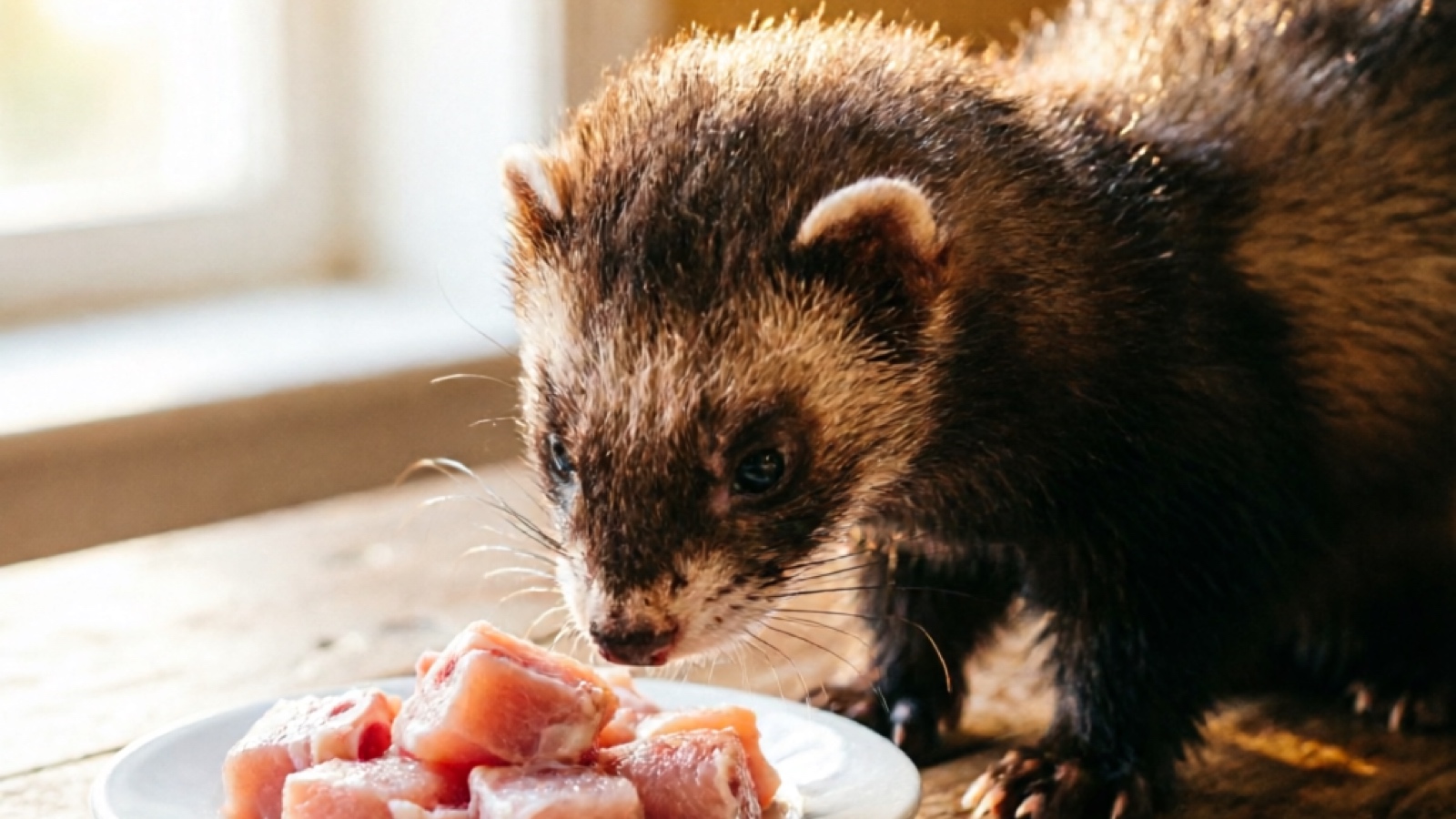
Quick Answer: Can Ferrets Eat Chicken?
Yes — chicken is arguably the single best food you can feed your ferret. As obligate carnivores, ferrets are biologically designed to process animal protein and fat, and chicken delivers both in near-ideal proportions.
💡 TL;DR: Chicken is safe in all forms — raw (preferred), cooked plain (boiled or baked), bone-in (raw only), and as organ meat (liver in moderation). Raw chicken with bone is the closest thing to a ferret’s natural whole-prey diet. Avoid any chicken prepared with oil, salt, garlic, onion, or sauce. Cooked bones are extremely dangerous — they splinter and can kill.
If you’re wondering whether ferrets can eat chicken, the answer is an enthusiastic yes — and it’s one of the rare foods where I’d actually encourage you to make it a regular part of your ferret’s diet rather than limiting it as an occasional treat. Unlike fruits and vegetables, which ferrets have no biological business eating, chicken is exactly what their digestive system evolved to handle.
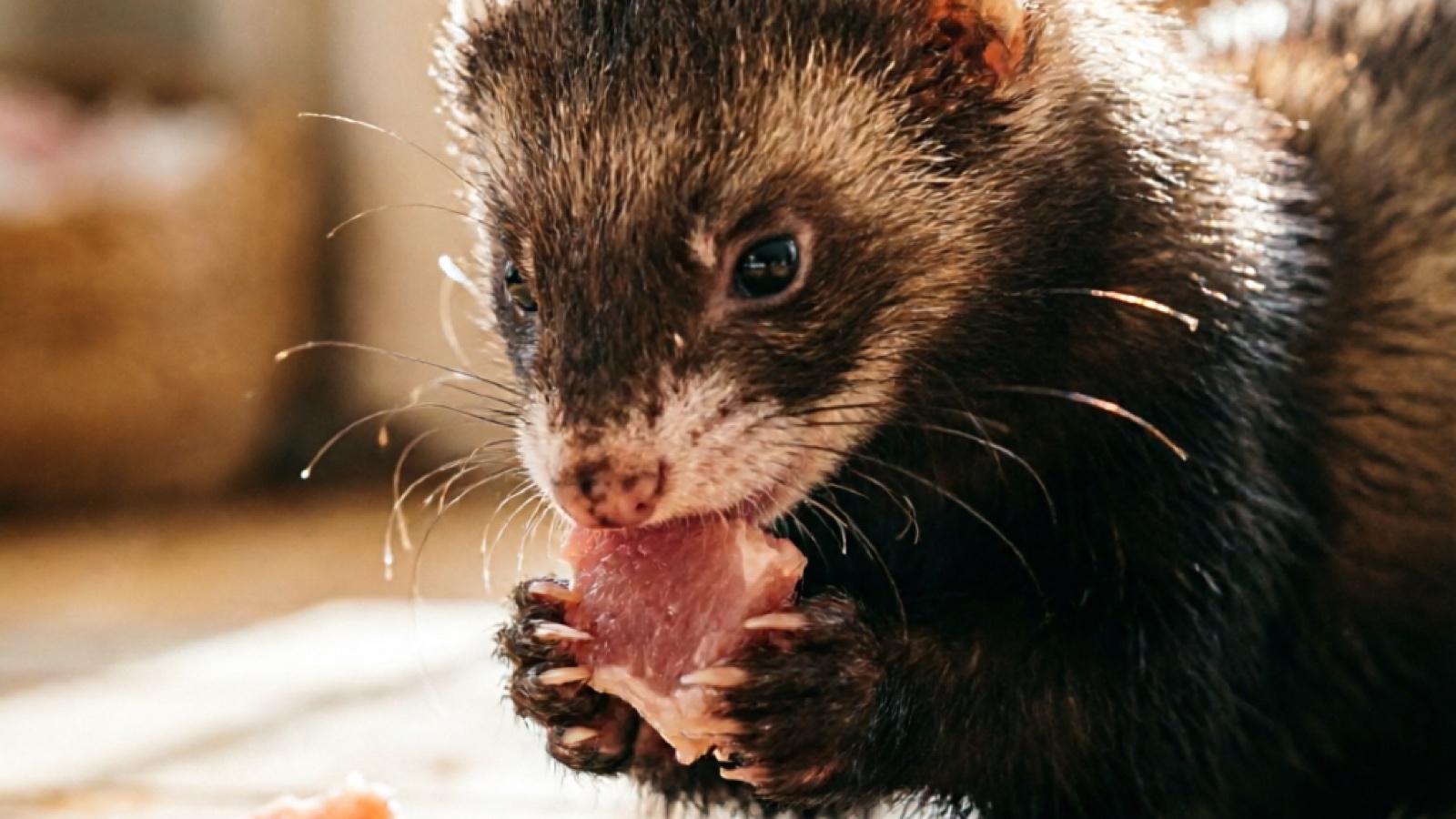
I’ve been feeding raw chicken to my ferrets for years, and the difference in coat quality, energy levels, and dental health compared to kibble-only diets is noticeable. Raw chicken necks in particular are one of the most valuable foods you can offer — they clean teeth naturally while providing calcium and joint-supporting connective tissue.
For a complete ferret nutrition overview, see our ferret diet guide and best ferret food recommendations.
Chicken Nutrition Facts for Ferrets
Ware Lock-N-Litter Jumbo is a quality option worth considering for your setup.
USDA nutritional data — raw chicken, per 100g:
Chicken Breast (boneless, skinless) [USDA FDC 05064]
| Nutrient | Amount | Relevance to Ferrets |
|---|---|---|
| Energy | 165 kcal | Good calorie density |
| Protein | 31.0g | Excellent — primary need |
| Fat | 3.6g | Moderate — good for lean protein |
| Carbohydrate | 0g | Perfect — ferrets need zero carbs |
| Sugar | 0g | Perfect |
| Water | 74.9g | Adequate hydration |
| Calcium | 11mg | Low (boneless) |
| Phosphorus | 228mg | Good phosphorus |
| Potassium | 256mg | Good potassium |
| Vitamin B6 | 0.6mg | Good B vitamin |
| Niacin (B3) | 13.7mg | Excellent — energy metabolism |
| Selenium | 24.3µg | Good antioxidant |
| Taurine | Present | Critical — heart and eye health |
Chicken Thigh (boneless, skinless) [USDA FDC 05067]
| Nutrient | Amount | Relevance to Ferrets |
|---|---|---|
| Energy | 209 kcal | Higher calorie density |
| Protein | 26.0g | Good protein |
| Fat | 10.9g | Higher fat — good for energy |
| Carbohydrate | 0g | Perfect |
| Iron | 1.3mg | Good iron |
| Zinc | 2.5mg | Good zinc — immune support |
| Vitamin B12 | 0.5µg | Good B12 |
Chicken Liver [USDA FDC 05057]
| Nutrient | Amount | Relevance to Ferrets |
|---|---|---|
| Energy | 135 kcal | Moderate calories |
| Protein | 20.4g | Good protein |
| Fat | 3.9g | Low fat |
| Vitamin A | 11,078 IU | Very high — use sparingly |
| Iron | 11.6mg | Excellent — prevents anemia |
| Vitamin B12 | 16.7µg | Exceptional B12 source |
| Folate | 578µg | Very high folate |
| Copper | 0.5mg | Good copper |
Why Chicken Is Ideal for Ferrets
The numbers tell a clear story. Chicken breast delivers 31g of protein with zero carbohydrates — that’s almost exactly what a ferret’s body needs. The protein is highly bioavailable animal protein with a complete amino acid profile, including taurine, which is essential for ferret heart and eye health.
Chicken thigh provides more fat, which is important because ferrets use fat as their primary energy source. The dark meat is richer in iron and zinc. In my experience, most ferrets prefer the taste and texture of dark meat over breast — it’s closer to the whole-prey animals they’d eat in the wild.
Chicken liver is a nutrient powerhouse but must be fed in strict moderation. The vitamin A content is extraordinarily high — a single ounce provides well over a ferret’s daily requirement. Too much vitamin A causes hypervitaminosis A, leading to bone deformities and joint stiffness. I’d recommend liver as a weekly supplement, not a daily food.
Chicken vs Other Protein Sources for Ferrets
| Protein Source | Protein (g/100g) | Fat (g/100g) | Carbs | Ferret Suitability | Notes |
|---|---|---|---|---|---|
| Chicken breast | 31.0g | 3.6g | 0g | Excellent | Best lean protein |
| Chicken thigh | 26.0g | 10.9g | 0g | Excellent | Best balance |
| Turkey breast | 29.0g | 0.7g | 0g | Excellent | Very lean |
| Beef (lean) | 26.0g | 15.0g | 0g | Very good | Higher fat |
| Lamb | 25.5g | 20.9g | 0g | Good | Very high fat — use sparingly |
| Eggs | 12.6g | 9.5g | 0.7g | Good | Must be cooked |
| Fish (salmon) | 20.0g | 13.0g | 0g | Good | Omega-3s, but strong odor |
| Whole prey (mouse) | ~15g | ~10g | ~0g | Ideal | Gold standard |
Chicken sits at the top because it’s widely available, affordable, easy to prepare, and has a protein-to-fat ratio that closely matches a ferret’s natural whole-prey diet. For more on building a complete ferret diet, see our ferret diet guide and best ferret food.
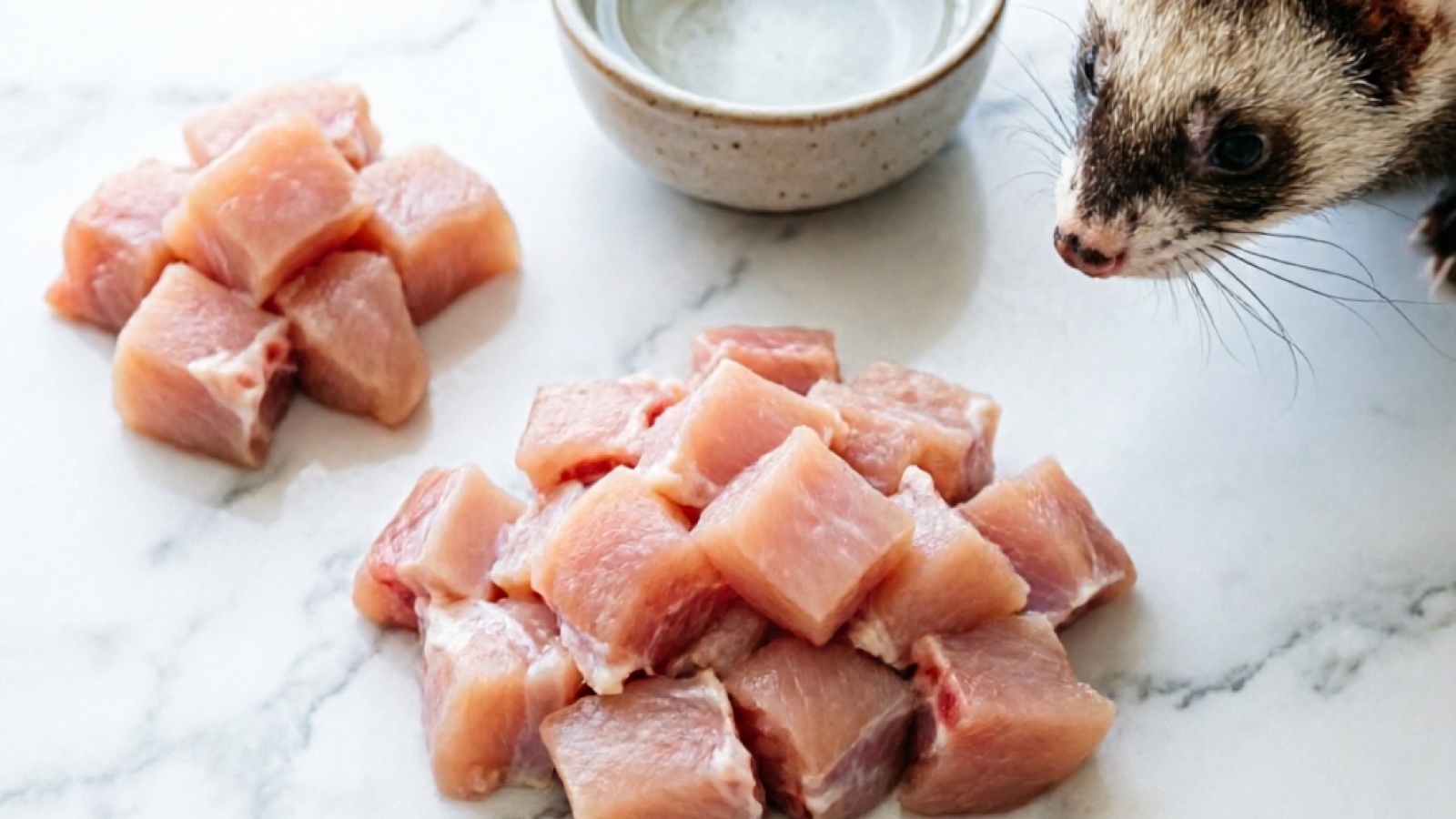
Benefits of Chicken for Ferrets
Many owners find that RUBYHOME Corner Pan works well for their pet’s needs.
Perfect Macronutrient Profile
Chicken provides the exact macronutrient ratio ferrets need: high animal protein, moderate fat, and zero carbohydrates. A ferret’s natural diet (whole prey like mice and rabbits) is roughly 35-45% protein, 20-30% fat, and near-zero carbs. Chicken breast delivers 31% protein and 3.6% fat; chicken thigh delivers 26% protein and 10.9% fat. Neither contains carbohydrates. This is not a coincidence — it’s what their digestive system evolved to process.
Taurine Content
Chicken contains taurine, an amino acid that is essential for ferrets. Taurine supports heart function (preventing dilated cardiomyopathy, a common cause of death in ferrets), eye health, and reproductive function. Unlike humans and dogs, ferrets cannot synthesize sufficient taurine from other amino acids — they must get it directly from their diet. Chicken, along with heart meat and dark meat, is a reliable taurine source.
Dental Health (Bone-In Chicken)
Raw chicken bones — particularly necks and wings — are one of the most effective natural teeth cleaners available. The gnawing and chewing action required to process bone-in meat scrapes plaque and tartar from teeth, stimulates the gums, and exercises the jaw muscles. I’ve seen ferrets with remarkable dental health from regular raw chicken neck feeding, compared to kibble-fed ferrets that often develop dental disease by middle age. The mechanical action of chewing bones does something that no kibble or dental treat can replicate.
Calcium from Bones
Raw chicken bones are an excellent natural calcium source. The calcium-to-phosphorus ratio in bone-in chicken closely approximates what ferrets get from whole prey (roughly 1.5:1 to 2:1). This is important for bone density, especially in growing kits and aging ferrets. Chicken necks in particular are bone-heavy and provide concentrated calcium.
Highly Digestible
Chicken is one of the most digestible proteins available for ferrets. Studies on animal digestibility show that poultry protein has a digestibility coefficient of 85-90% in mustelids (the family that includes ferrets), meaning the body absorbs and utilizes nearly all the protein consumed. This is significantly higher than plant-based or fish-based proteins.
Affordable and Accessible
Unlike specialty exotic pet foods or whole prey, chicken is available at any grocery store and is one of the most affordable proteins per gram. A whole chicken can feed a ferret for a week or more when properly portioned. This accessibility makes chicken-based raw feeding one of the most practical approaches to ferret nutrition.
Mental Enrichment
Eating raw, bone-in chicken provides significant mental enrichment. The process of tearing, gnawing, and chewing engages a ferret’s natural predatory instincts in a way that kibble or pre-ground food cannot. I’ve noticed that ferrets fed whole pieces of raw chicken are generally more satisfied after meals and exhibit fewer behavioral problems like excessive chewing on inappropriate objects.
Risks and Precautions
For this purpose, Lixit Corner Litter Pan is a popular choice among pet owners.
Cooked Bones — The Number One Danger
This is the single most dangerous thing you can do when feeding chicken to a ferret. Never feed cooked chicken bones. Cooking changes the physical structure of bone, making it brittle and prone to splintering into sharp fragments. These bone shards can:
- Puncture the esophagus, stomach, or intestines — causing internal bleeding
- Cause intestinal blockage — a life-threatening emergency requiring surgery
- Damage teeth — by fracturing on hard, brittle bone
- Lodge in the throat — causing choking
Raw bones are soft, pliable, and digestible. Cooked bones are none of these things. This distinction is non-negotiable. If you’re feeding cooked chicken (boiled or baked), remove every trace of bone before serving.
Raw Feeding Safety (Salmonella)
One of the most common concerns about raw chicken feeding is salmonella. Here’s the reality: ferrets are remarkably resistant to bacterial contamination from raw meat.
- Stomach acid pH 1-2: Ferrets produce some of the most acidic stomach acid in the animal kingdom. This environment kills the vast majority of bacteria, including salmonella.
- Short digestive transit: Food passes through a ferret’s digestive system in just 3-4 hours, compared to 12-24 hours in humans. This short transit time prevents bacterial colonization.
- Natural diet: In the wild, ferrets eat raw prey that is far from sterile. Their immune system is adapted to handle the bacteria found in raw meat.
That said, basic hygiene is still important:
- Source chicken from a reputable supplier
- Keep raw chicken refrigerated or frozen until serving
- Clean feeding dishes with hot, soapy water after each meal
- Wash your hands thoroughly after handling raw chicken
- Don’t leave raw chicken at room temperature for more than 30 minutes
- Freeze chicken for at least 48 hours before feeding to reduce parasite risk
Bacterial Contamination in the Home
While ferrets themselves handle raw bacteria well, humans in the household (especially children, elderly, or immunocompromised individuals) could be affected by cross-contamination. Use dedicated cutting boards and dishes for raw ferret food, clean all surfaces with a bleach solution, and supervise children around raw feeding areas.
Choking on Large Pieces
Ferrets sometimes eat enthusiastically without chewing adequately. Large pieces of chicken — especially bone-in pieces like wings or drumsticks — can be a choking hazard if swallowed whole. Always supervise your ferret when feeding bone-in chicken, especially initially. If your ferret tends to gulp food without chewing, cut pieces into smaller, manageable chunks.
Nutritional Imbalance from Chicken-Only Diet
While chicken is excellent, feeding only chicken (even with bone) does not provide complete nutrition. A ferret needs:
- Muscle meat (chicken breast/thigh) — provides protein and fat
- Bone (raw chicken necks/wings) — provides calcium
- Organ meat (chicken liver, heart) — provides vitamins A, B12, iron, taurine
- Variety — rotating with other proteins (turkey, beef, lamb, eggs) ensures broader nutrient coverage
A common beginner mistake is feeding only chicken breast, which lacks calcium and organ nutrients. For a complete raw diet, the general guideline is roughly 70-80% muscle meat, 10-15% bone, and 5-10% organ meat.
Allergies and Sensitivities
Some ferrets develop sensitivities to specific proteins, though chicken is one of the least common allergens. If you notice skin irritation, chronic diarrhea, or excessive scratching after introducing chicken, try switching to turkey or another protein source and consult your exotic vet.
Serving Guide for Ferrets
Raw Chicken Diet (Primary Food)
If chicken is the main component of your ferret’s raw diet:
| Ferret Weight | Daily Amount | Meals Per Day | Composition |
|---|---|---|---|
| 1-1.5 lbs (450-680g) | 23-48g | 2-3 | 80% muscle, 10% bone, 10% organ |
| 1.5-2.5 lbs (680-1130g) | 34-79g | 2-3 | 80% muscle, 10% bone, 10% organ |
| 2.5-4 lbs (1130-1800g) | 57-126g | 2-3 | 80% muscle, 10% bone, 10% organ |
The general rule is 5-7% of body weight per day for adults. This is a guideline — adjust based on your ferret’s activity level, body condition, and metabolism.
Chicken as a Supplement (With Kibble)
If your ferret primarily eats commercial ferret food:
- Raw chicken chunks: 2-3 times per week, a palm-sized piece
- Raw chicken neck: 1-2 times per week, one neck
- Cooked plain chicken breast: 2-3 times per week, half a small breast
- Chicken liver: Once per week, a piece roughly the size of your thumbnail
Treat chicken as a high-value supplement that adds variety and nutrition to a kibble-based diet. Don’t exceed 20-30% of total calories from chicken if your ferret eats a complete commercial food, to avoid nutritional imbalance.
Baby Ferrets (Kits)
- 4-8 weeks: Start with tiny pieces of cooked plain chicken breast — easier to digest than raw for a developing system
- 8-12 weeks: Introduce small pieces of raw chicken breast alongside cooked pieces
- 12+ weeks: Can transition to full raw chicken diet (muscle, bone, organ)
- Monitor closely: Kits have smaller digestive systems and are more sensitive to dietary changes
Senior Ferrets (5+ Years)
Senior ferrets benefit from chicken as a supplement:
- Dental health: Soft cooked chicken if teeth are poor; raw bone-in chicken if teeth are still strong
- Muscle maintenance: Higher protein intake supports aging muscles. Chicken breast is ideal.
- Organ function: Small amounts of chicken liver support liver and immune function, but don’t overdo it
- Appetite stimulation: Many senior ferrets lose interest in kibble but will eagerly eat chicken — use this to maintain caloric intake
Overweight Ferrets
If your ferret is carrying excess weight:
- Use chicken breast (31g protein, 3.6g fat) as the primary protein source
- Reduce or eliminate chicken skin and thigh meat (higher fat)
- Maintain bone-in feeding for dental health and calcium
- Reduce overall portion to 4-5% of body weight per day
- Increase play and exercise — see our best ferret toys for enrichment ideas
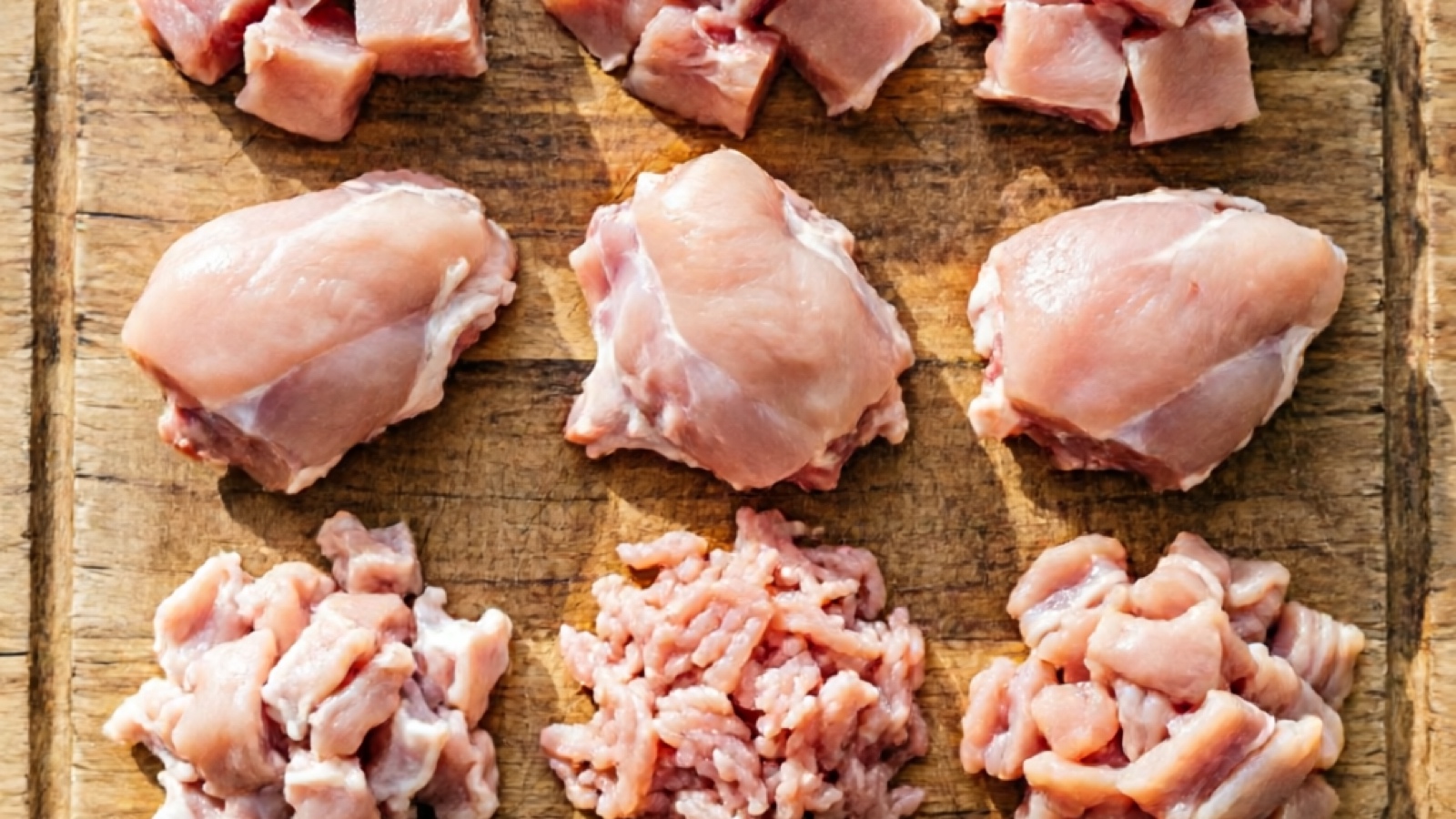
How to Prepare Chicken for Your Ferret
Raw Chicken Preparation (Preferred Method)
For Boneless Chicken (Breast or Thigh):
- Source fresh chicken from a reputable supplier
- Freeze for at least 48 hours before feeding (reduces parasite risk)
- Thaw in the refrigerator (never at room temperature)
- Cut into chunks roughly the size of a grape or small olive
- Serve at room temperature — cold meat straight from the fridge can cause temporary digestive slowdown
- Remove uneaten portions after 30-60 minutes
For Bone-In Chicken (Necks and Wings):
- Source chicken necks or wings (available at most grocery stores — necks are often very inexpensive)
- Freeze for at least 48 hours
- Thaw in the refrigerator
- For chicken wings, cut into sections at the joints to create manageable pieces
- For chicken necks, serve whole or cut in half for smaller ferrets
- Supervise the first few feedings — ensure your ferret chews adequately before swallowing
- Remove uneaten portions after 30-60 minutes
For Chicken Liver:
- Source fresh chicken livers
- Freeze for at least 48 hours
- Thaw in the refrigerator
- Cut a piece roughly the size of your thumbnail (approximately 3-5g)
- Serve once per week at most
- Do not feed liver on the same day as other organ meats
Cooked Chicken Preparation (Alternative Method)
- Use boneless, skinless chicken breast or thigh
- Do not add any oil, butter, salt, garlic, onion, spices, or sauce — plain only
- Boil in water or bake at 350°F until fully cooked through (internal temperature 165°F)
- Let cool completely to room temperature
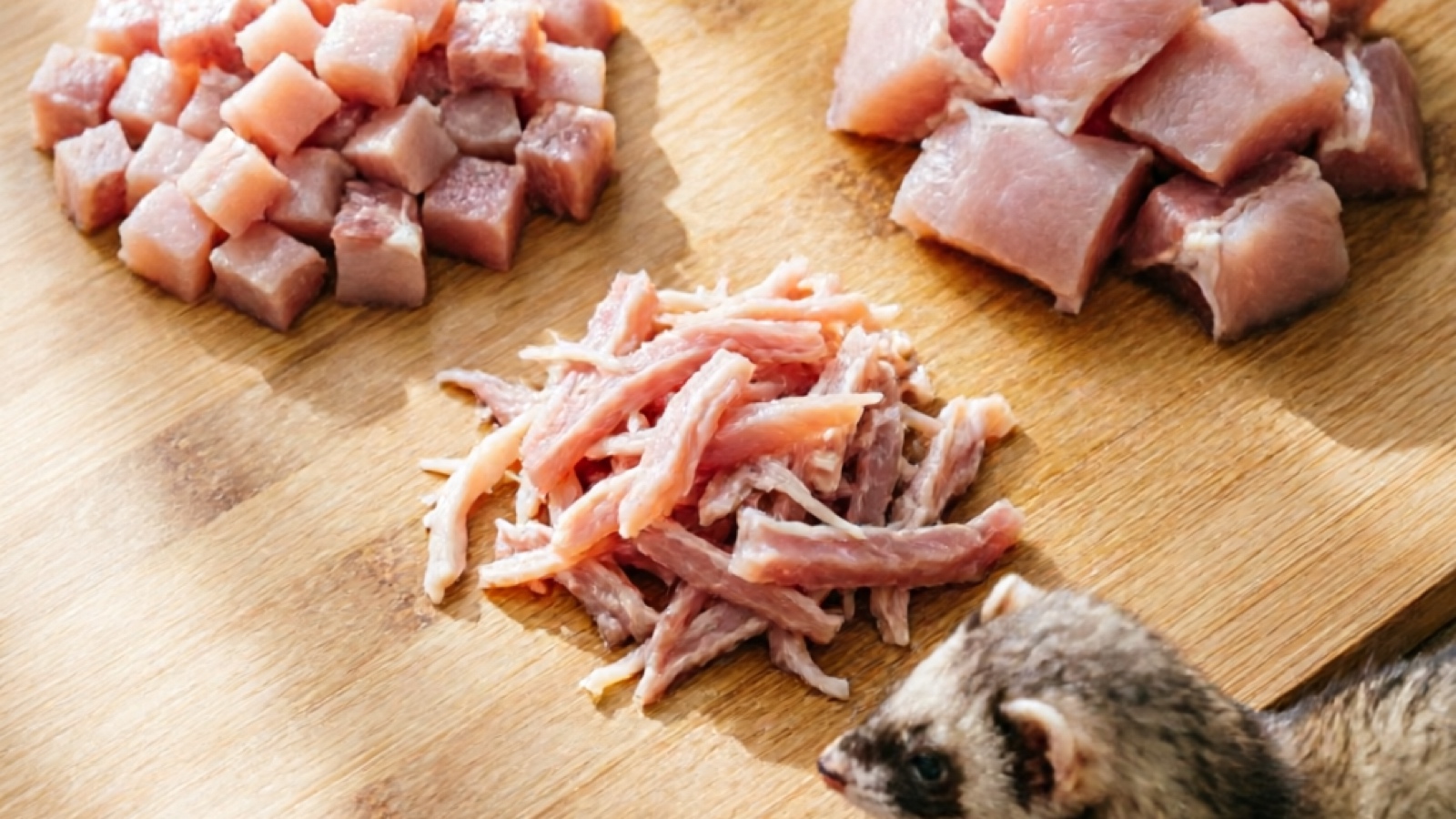
- Cut into small pieces or shred with a fork
- Remove all bones — cooked bones are dangerous
- Serve immediately or refrigerate for up to 3 days
- Remove uneaten portions after 2-3 hours (cooked meat spoils faster than raw at room temperature)
Freeze-Dried Chicken
Freeze-dried chicken is an excellent convenient option:
- 100% meat with no additives
- Long shelf life
- Lightweight and easy to store
- Retains most nutritional value of raw chicken
- Good for travel or boarding situations
- Available at pet stores or online — see our best ferret treats for recommendations
Transitioning from Kibble to Raw Chicken
If your ferret currently eats kibble and you want to introduce raw chicken:
- Week 1: Offer a small piece of raw chicken alongside regular kibble. Don’t force it — let your ferret investigate at their own pace.
- Week 2: Increase raw chicken portion while slightly reducing kibble. Monitor droppings for consistency.
- Week 3-4: Continue shifting the ratio toward more raw, less kibble.
- Full transition: Some ferrets transition in 2-3 weeks; others take 1-2 months. Be patient.
- If diarrhea occurs: Slow down the transition. Mix cooked plain chicken (easier to digest) with kibble temporarily.
Not every ferret owner needs to switch to a fully raw diet. Even adding raw chicken as a regular supplement to a quality kibble provides meaningful benefits. See our ferret diet guide for a balanced approach.
What to Avoid
Cooked Chicken Bones
This is worth repeating: never feed cooked chicken bones to a ferret. Cooking makes bones brittle and splintery. Raw bones are digestible; cooked bones are dangerous. This single mistake can be fatal.
Seasoned or Processed Chicken
Any chicken prepared for human consumption with the following is unsafe:
- Garlic and onion — toxic to ferrets, causes Heinz body anemia and oxidative damage to red blood cells
- Salt — ferrets cannot process significant sodium; causes kidney strain and dehydration
- Oil, butter, or grease — too much fat causes GI upset and pancreatitis risk
- BBQ sauce, marinades, or glazes — contain sugar, garlic, onion, and other harmful ingredients
- Breading or batter — grains and carbohydrates ferrets cannot digest
- Deli meat or processed chicken — contains sodium, nitrates, and preservatives
- Chicken nuggets, tenders, or fast food — processed, breaded, and seasoned — completely unsafe
Chicken Skin (In Excess)
While small amounts of chicken skin are fine, it’s very high in fat (roughly 33g fat per 100g). Too much dietary fat can cause:
- Pancreatitis — inflammation of the pancreas, painful and potentially dangerous
- Steatorrhea — fatty, foul-smelling diarrhea
- Weight gain — ferrets on high-fat diets gain weight quickly
If you feed skin, trim it to a small portion or remove it entirely for overweight ferrets.
Spoiled Chicken
Ferrets may eat spoiled meat in the wild, but that doesn’t mean you should offer it. Spoiled chicken contains harmful bacteria colonies that can overwhelm even a ferret’s robust digestive defenses. If chicken smells off, has discoloration, or has been at room temperature for more than 2 hours, discard it.
Feeding Only Chicken Breast Long-Term
Chicken breast is excellent protein but lacks calcium (only 11mg per 100g) and organ nutrients. A chicken-breast-only diet leads to:
- Calcium deficiency — weak bones, dental problems, muscle tremors
- Nutritional imbalance — missing vitamins A, B12, iron, and copper found in organs
- Heart problems — insufficient taurine variety over time
Always include bone-in pieces and organ meat for a complete diet, or feed a balanced commercial ferret food alongside chicken supplements.
Safer and Better Alternatives
While chicken is excellent, dietary variety is important for ferrets.
Excellent Protein Sources
- Turkey — very similar nutritional profile to chicken, slightly leaner breast meat. Good rotation protein.
- Quail — small whole prey, excellent for ferrets. The small size means most ferrets can eat an entire quail.
- Rabbit — very close to a ferret’s natural prey. Lean protein with good bone ratio.
- Mouse or rat (frozen feeder) — the gold standard whole prey. Provides complete nutrition: muscle, bone, organ, fur, and connective tissue.
Good Supplemental Proteins
- Eggs — must be cooked. Excellent protein and fat. 1-2 times per week.
- Beef — higher fat, good for variety. Use lean cuts.
- Lamb — very high fat, use sparingly as a rotation protein only.
- Salmon — good omega-3 source but strong odor. Feed in moderation due to thiaminase concerns with raw fish.
Commercial Options
For ferret owners who prefer not to handle raw meat, quality commercial ferret foods that list chicken or chicken meal as the first ingredient are a good alternative. See our best ferret food guide for recommendations.
Other Foods Your Ferret Can (and Can’t) Eat
Each link leads to a full safety guide.
Can-Eat Guides
- Can Ferrets Eat Eggs? — yes, but must be cooked
- Can Ferrets Eat Bananas? — no, too much sugar for obligate carnivores
Core Guides
- Ferret Diet Guide | Best Ferret Food
- Ferret Care Guide | Ferret Health Problems
- Ferret Lifespan | Ferret Behavior
- Litter Training | Why Does My Ferret Stink?
Housing and Supplies
- Ferret Cage Guide | Large Ferret Cage
- Cage Ideas | Critter Nation vs Ferret Nation
- Best Ferret Toys | Best Ferret Treats
- Best Ferret Bedding | Best Ferret Cage Accessories
- Best Ferret Harness | Best Toys | Ferret Toys
Product Recommendations
Here are some products mentioned in this guide:
Frequently Asked Questions
Can ferrets eat chicken?
Yes — chicken is one of the best foods for ferrets. As obligate carnivores, ferrets are designed to process animal protein and fat, and chicken provides both in near-ideal proportions. Raw chicken is the preferred preparation, closest to their natural whole-prey diet. Cooked plain chicken (no seasoning) is also safe. Never feed cooked bones.
Can ferrets eat raw chicken?
Yes, raw chicken is safe and actually the preferred preparation for ferrets. Their stomach acid (pH 1-2) kills bacteria like salmonella, and their short 3-4 hour digestive transit time prevents bacterial colonization. Raw chicken more closely mimics their natural diet. Start with boneless pieces and introduce gradually.
Can ferrets eat chicken bones?
Yes, but only raw bones. Raw chicken bones are soft, pliable, and digestible — they provide calcium and naturally clean teeth. Cooked bones become brittle, splinter, and can cause fatal internal injuries. This distinction is critical and non-negotiable.
Can ferrets eat chicken liver?
Yes, in moderation. Liver provides vitamin A, iron, B12, and copper — concentrated nutrients that are valuable as a supplement. However, limit liver to 5-10% of total diet. Too much vitamin A causes hypervitaminosis A, leading to bone deformities. A thumbnail-sized piece once per week is sufficient.
Can ferrets eat cooked chicken?
Yes, but only if prepared completely plain — boiled or baked with no oil, butter, salt, garlic, onion, spices, or sauce. Cooking reduces some nutrient value compared to raw. All cooked bones must be removed. Raw is generally preferred, but cooked plain chicken is a perfectly acceptable alternative for owners uncomfortable with raw feeding.
Can baby ferrets eat chicken?
Yes. After 4 weeks, kits can start with tiny pieces of cooked plain chicken breast. By 8-12 weeks, they can transition to raw chicken. Chicken is actually an ideal first solid food because it’s highly digestible and provides the exact nutrients growing ferrets need.
How much chicken should I feed my ferret?
For a raw chicken-based diet: 5-7% of body weight per day (34-48g for a 1.5 lb ferret), split into 2-3 meals, composed of roughly 80% muscle meat, 10% bone, and 10% organ. As a supplement to kibble: a palm-sized piece 2-3 times per week.
Can ferrets eat chicken wings and necks?
Yes — raw chicken wings and necks are excellent ferret foods. Wings provide meat, bone, and connective tissue in good proportions. Necks are primarily bone and are one of the best natural calcium sources. Both clean teeth through gnawing. Always feed raw, never cooked. Supervise initially to ensure adequate chewing.