Overview
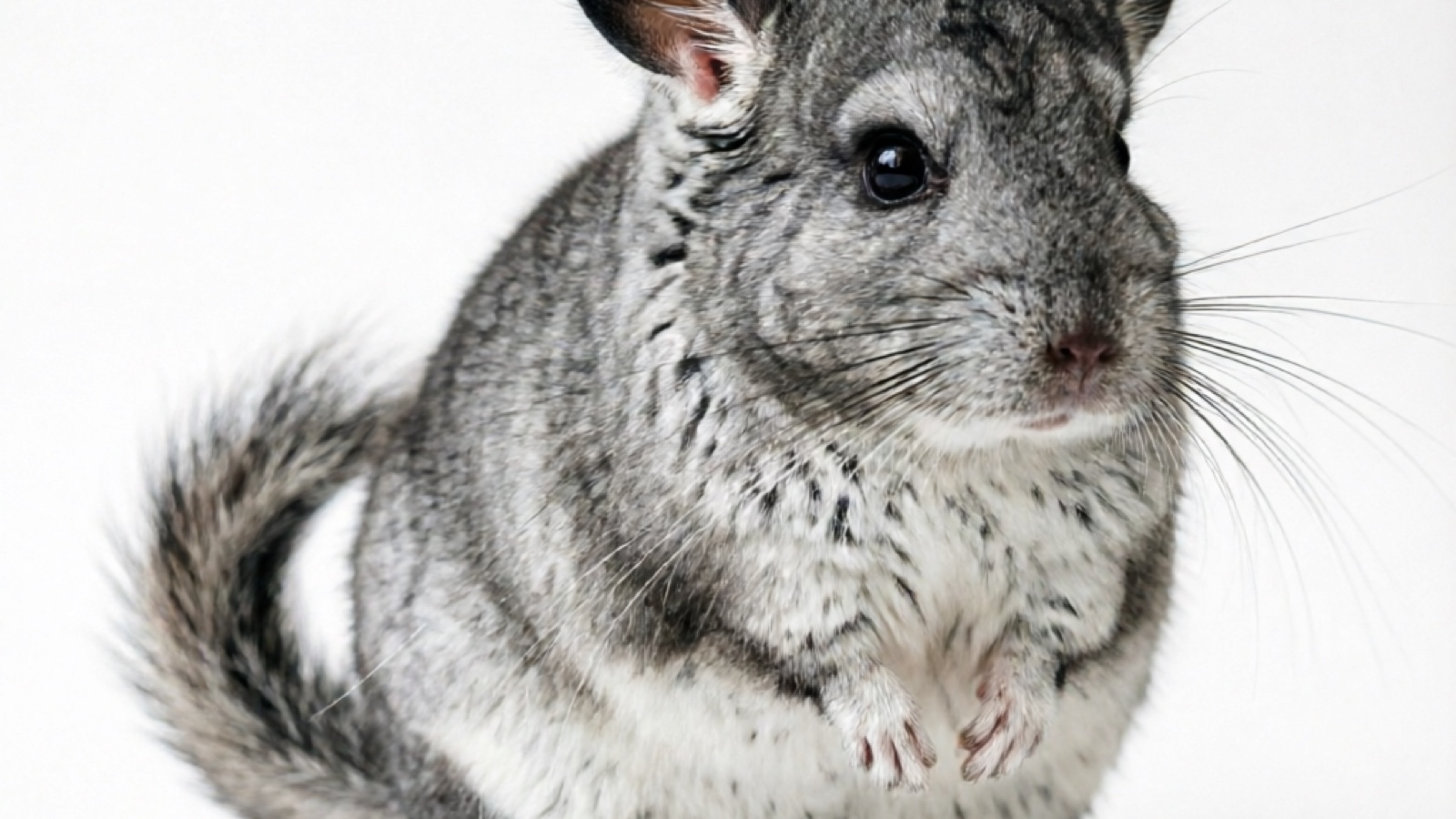
The standard grey chinchilla (sometimes written as standard gray) is the original, natural color of the species Chinchilla lanigera. With a silver-blue grey back, crisp white belly, and evenly dense fur, it represents the coat that wild chinchillas have worn for millions of years in the Andes mountains of South America. Every domestic chinchilla alive today — whether white, black velvet, ebony, violet, or any other mutation — descends from standard grey ancestors.
I’ve always had a soft spot for standard greys. They’re the most “authentic” chinchilla you can own — no selective breeding for unusual colors, just the animal as nature intended. Their fur is remarkably soft and dense, with each follicle producing around 60-80 hairs (compared to a single hair per follicle in humans or dogs). This is what made chinchillas famous in the fur trade, and it’s also what makes them such rewarding pets to observe and interact with.
Quick Facts
| Attribute | Details |
|---|---|
| Scientific Name | Chinchilla lanigera |
| Other Names | Standard gray, natural grey, wild-type |
| Adult Size | 10-14 inches (25-36 cm) body + 4-6 in tail |
| Weight | 1-1.5 lbs (400-600 g) |
| Lifespan | 10-20 years |
| Activity Cycle | Crepuscular (most active dawn and dusk) |
| Temperament | Gentle, curious, social |
| Social | Herd animal — benefits from companionship |
| Origin | Andes Mountains, Chile, Peru, Bolivia |
| Mutation Type | Wild-type (no color mutation) |
Appearance
The standard grey is the baseline against which all other chinchilla colors are measured. Its coat follows a clear, natural pattern:
- Back and sides: Silver-blue grey with a subtle blue undertone in good lighting. Each hair is agouti-banded — dark grey at the base, lighter in the middle, and tipped with dark grey or black. This banding gives the fur a subtle, shimmering depth that photos rarely capture accurately.
- Belly: Pure white with no grey tipping. The transition line between the grey back and white belly is sharp and well-defined — a hallmark of a quality standard grey.
- Face and ears: Grey face with a clean, rounded appearance. Ears are grey with pinkish inner edges. The eyes are dark and round.
- Tail: Grey on top, lighter underneath, covered in coarse guard hairs.
Fur Quality
The standard grey’s fur is the benchmark for chinchilla fur quality. Since the color doesn’t mask or alter the natural texture, you can clearly see the density and condition of the coat. A healthy standard grey will have a plush, upright appearance — the fur should stand at attention rather than lying flat against the body.
In my experience, standard greys often have the best overall fur quality in a breeding program. Breeders who focus on rare colors sometimes sacrifice density and texture for color intensity, but standard greys are consistently evaluated for their structural fur qualities rather than color novelty.
Standard Grey vs Other Chinchilla Colors
| Feature | Standard Grey | White | Black Velvet | Ebony |
|---|---|---|---|---|
| Back Color | Silver-blue grey | White with grey patches | Black with velvet mask | Dark grey to black |
| Belly Color | White | White or light grey | White | Grey to black |
| Genetic Type | Wild-type (recessive) | Dominant + recessive subtypes | Dominant (TOV gene) | Recessive accumulative |
| Price Range | $75-$200 | $150-$400+ | $200-$350 | $150-$400 |
| Rarity | Very common | Common | Uncommon | Moderate |
| Health Concerns | None genetic | Red eye sensitivity (pink white) | Velvet gene lethal factor | None specific |
| Best For | First-time owners | Display/show | Experienced owners | Deep color preference |
The standard grey’s main advantage is its predictability. You know exactly what you’re getting — no surprises with color development (some mutations change color as the animal ages), no genetic health risks tied to the coat, and the widest selection of breeders to choose from.
Temperament & Behavior
Chinchilla temperament is not linked to coat color — a standard grey is just as likely to be friendly, skittish, curious, or stubborn as any other color variety. Individual personality depends far more on genetics, early socialization, and the environment the chinchilla was raised in.
That said, standard greys are often well-socialized simply because they’re the most common color. Breeders tend to have more of them, handle them frequently, and start their socialization earlier. A chinchilla from a reputable breeder who handles kits daily will typically be calmer and more comfortable with human interaction, regardless of color.
Natural Behaviors
- Dust bathing: Essential for fur maintenance. Chinchillas roll in fine volcanic dust to keep their coat clean — water can cause fungal infections and should never be used for bathing.
- Chewing: Their teeth grow continuously. Safe chew toys (apple wood, pumice, loofah) are mandatory.
- Jumping: Chinchillas can leap several feet. Multi-level cages with safe platforms accommodate this natural behavior.
- Nocturnal activity: Most active in the evening and early morning hours. They’re relatively quiet during the day but become energetic and vocal at night.
Diet & Nutrition
Diet is identical across all chinchilla colors — coat color has no effect on nutritional needs. A proper chinchilla diet is critical for long-term health:
- Timothy hay: Unlimited access, 24/7. This is the foundation of their diet and essential for dental and digestive health.
- Pellets: 1-2 tablespoons daily of high-quality chinchilla pellets. See our best chinchilla food guide for specific recommendations.
- Treats: Very limited. A small piece of dried rose hip, rolled oat, or dried apple slice 2-3 times per week maximum. Chinchillas cannot process sugar or fat well.
Avoid fresh vegetables, fruits, seeds, and nuts — these can cause serious digestive issues, obesity, and potentially fatal bloating.
Housing Requirements
Chinchillas need significantly more space than most people expect. Their housing requirements are the same regardless of color:
- Minimum cage size: 3 feet tall x 2 feet wide x 2 feet deep. Taller is better — chinchillas are vertical animals.
- Bar spacing: No wider than 1 inch to prevent escape.
- Temperature: Below 75°F (24°C) at all times. Chinchillas cannot sweat and are highly susceptible to heatstroke. Air conditioning is non-negotiable in warm climates.
- Bedding: Safe, dust-free options like paper-based bedding or fleece liners. Avoid cedar and pine shavings. See our best chinchilla bedding guide.
- Enrichment: Multiple levels, wooden ledges, hide houses, and safe chew toys. A properly set up chinchilla cage should provide climbing, jumping, hiding, and chewing opportunities.
Health & Common Issues
Standard greys have no color-specific health conditions, which is one of their practical advantages. All chinchillas share the same general health concerns:
- Dental disease: Overgrown molars are the most common health problem. Regular chew toys and hay access help prevent this. Watch for drooling, wet chin, or reduced appetite.
- Heatstroke: Fatal if not treated immediately. Keep below 75°F and provide cooling stone slabs in summer.
- Respiratory infections: Often caused by dusty bedding or poor ventilation. Use dust-free bedding and ensure good airflow.
- Gastrointestinal stasis: Can be caused by stress, dehydration, or inappropriate food. Requires immediate veterinary attention.
- Fur chewing: A stress-related behavior where the chinchilla gnaws its own or a cage-mate’s fur. Address environmental stressors.
With proper chinchilla care, standard greys regularly live 15-20 years. Their long lifespan is one of the most important things to consider before bringing one home — this is a decades-long commitment.
Cost of Ownership
| Category | Cost |
|---|---|
| Standard grey chinchilla | $75-$200 |
| Cage setup (initial) | $150-$400 |
| Temperature control (AC unit) | $200-$500 (one-time) |
| Monthly food and bedding | $20-$40 |
| Annual exotic vet check | $50-$100 |
| 15-year total | ~$5,000-$10,000 |
The chinchilla itself is the cheapest part of ownership. The ongoing costs of proper housing, climate control, diet, and veterinary care over their 10-20 year lifespan add up significantly. The standard grey’s lower purchase price does make the initial investment more manageable compared to rarer color mutations.
Frequently Asked Questions
What is a standard grey chinchilla?
A standard grey chinchilla (also spelled standard gray) is the original wild color of the species Chinchilla lanigera. It features a silver-blue grey back with a crisp white underbelly, dark-tipped guard hairs, and a fluffy, evenly colored appearance. Every domestic chinchilla — regardless of its coat color — traces its ancestry back to the standard grey. It’s the most common and typically the most affordable chinchilla color available from breeders and pet stores.
How much does a standard grey chinchilla cost?
Standard grey chinchillas typically cost between $75 and $200 from a reputable breeder, making them one of the most affordable color varieties. Pet store prices may be slightly lower ($50-$150), though quality and health history vary considerably. Rarer mutations like white mosaic, black velvet, or violet can cost $200-$600+. The standard grey’s lower price reflects its abundance — it’s the most common color in breeding programs and requires no specialized genetic pairing to produce.
Are standard grey chinchillas good pets?
Yes — standard grey chinchillas make excellent pets for owners willing to meet their specific care requirements. They are gentle, intelligent, and form strong bonds with their owners over time. They live 10-20 years with proper care, far longer than most small pets. However, they require large cages, regular dust baths, a temperature-controlled environment (below 75°F/24°C), and a specialized diet of hay and pellets. They are not ideal for young children due to their delicate bones and sensitive temperament.
What is the difference between standard grey and ebony chinchillas?
The main difference is the belly color and fur pattern. Standard grey chinchillas have a silver-blue grey back with a distinct white belly — the color transition is sharp and clear. Ebony chinchillas have dark grey to black fur that covers the entire body including the belly, with no white. Ebony is a recessive mutation that darkens the fur progressively with each generation (light ebony, medium ebony, extra dark ebony). Standard grey is the natural, unmodified wild coloration with no genetic mutations involved.
Is the standard grey the healthiest chinchilla color?
Standard grey chinchillas are generally considered the healthiest color variety. Since they represent the natural, unmodified wild coloration, they have no genetic mutations associated with their coat that could affect health. Some rare color mutations — particularly those involving the velvet gene (TOV) or lethal factor genes — carry genetic risks such as fetal reabsorption when homozygous. Standard greys have no such concerns, making them the safest choice from a purely genetic health standpoint.
Related Breeds: Learn about other chinchilla colors and black velvet chinchillas.
Care Guides: Chinchilla care · Chinchilla diet · Best chinchilla food · Chinchilla cage · Best chinchilla bedding