Overview
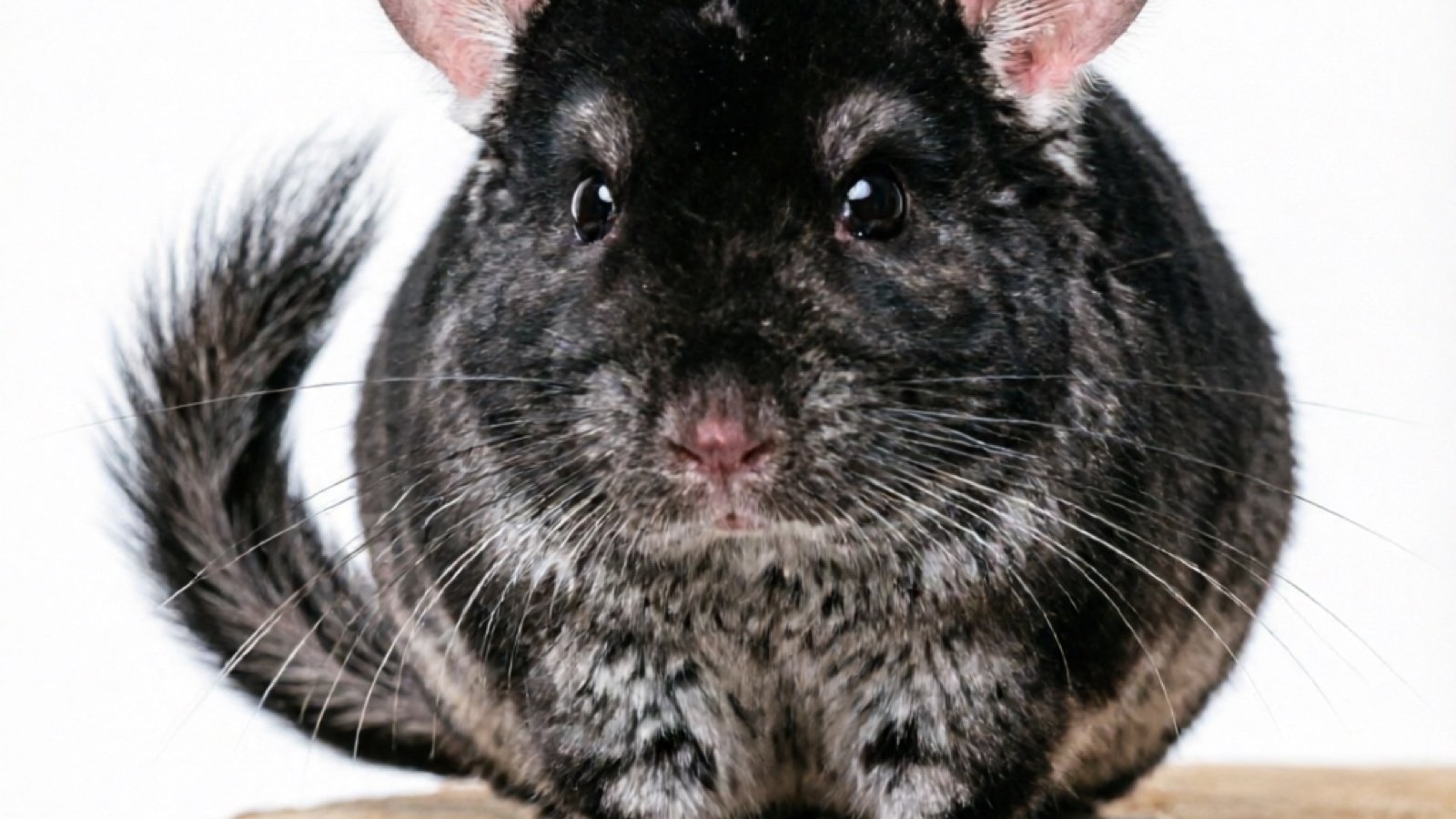
The black velvet chinchilla is one of the most visually distinctive color mutations in the chinchilla world. Created by the dominant TOV (Touch of Velvet) gene, it features a deep black back, a crisp white belly, and a dark face mask that covers the muzzle and eye area — giving it a striking, masked appearance unlike any other chinchilla color. The mutation was one of the earliest documented in domestic chinchilla breeding history, first appearing in the 1950s-1960s.
What makes the black velvet special beyond its appearance is the velvet gene itself. This is a dominant mutation with a unique — and important — genetic characteristic: it is lethal in homozygous form. A chinchilla carrying two copies of the TOV gene will not survive. This means every black velvet chinchilla is heterozygous (carrying one TOV gene and one non-TOV gene), and responsible breeders must plan pairings carefully to avoid lethal combinations.
Quick Facts
| Attribute | Details |
|---|---|
| Scientific Name | Chinchilla lanigera |
| Other Names | TOV black, Gunning black, dark velvet |
| Adult Size | 10-14 inches (25-36 cm) body + 4-6 in tail |
| Weight | 1-1.5 lbs (400-600 g) |
| Lifespan | 10-20 years |
| Activity Cycle | Crepuscular (most active dawn and dusk) |
| Temperament | Gentle, curious, social |
| Social | Herd animal — benefits from companionship |
| Origin | Andes Mountains (wild ancestry); TOV mutation developed in captivity |
| Mutation Type | Dominant (TOV — Touch of Velvet gene) |
Appearance
The black velvet’s appearance is unmistakable once you know what to look for. Every element of its coat is influenced by the TOV gene:
- Back: Deep, rich black covering the entire dorsal surface. The black is darkest along the spine and gradually lightens toward the sides. Unlike ebony chinchillas where the color wraps around the entire body, the black velvet’s darkness stays concentrated on the back.
- Belly: Crisp white — the TOV gene does not affect the belly color. The contrast between the black back and white belly should be sharp and well-defined.
- Face mask: This is the defining feature. A dark mask of black fur covers the nose, muzzle, and area around the eyes. The mask is not uniform — it’s darkest on the nose bridge and fades slightly toward the cheeks. No other chinchilla color has this feature.
- Ears and tail: Dark veiling — the edges of the ears and the tip of the tail are distinctly black, more so than in a standard grey chinchilla.
- Fur texture: The velvet gene produces a noticeably softer, denser feel to the fur compared to non-TOV colors. This plush texture is where the “velvet” name comes from.
Black Velvet vs Black Pearl
This is one of the most common confusions in chinchilla color identification, and the distinction matters because they come from completely different genes:
| Feature | Black Velvet (TOV) | Black Pearl (Recessive) |
|---|---|---|
| Gene | Dominant TOV gene | Recessive accumulative gene |
| Face mask | Yes — dark mask on nose and eyes | No — uniform dark color |
| Belly | White | Dark grey to black |
| Fur texture | Softer, velvety plush | Normal chinchilla texture |
| Veiling on ears/tail | Prominent black edges | Minimal or none |
| Color wrap | Black stays on back/top | Dark color wraps entire body |
| Lethal factor | Yes — homozygous TOV is lethal | No |
| Price | $200-$350 | $250-$500+ |
If you see a chinchilla that looks black all over with no face mask and no white belly, it’s likely a black pearl, not a black velvet. The face mask is the quickest identifier.
TOV Gene Genetics
Understanding the TOV (Touch of Velvet) gene is essential for anyone considering breeding or simply wanting to understand their black velvet chinchilla’s genetics.
How It Works
The TOV gene is dominant — a chinchilla only needs one copy to display the velvet characteristics. However, it’s also a lethal factor gene:
| Genotype | Result |
|---|---|
| TOV / Non-TOV | Black velvet (healthy — this is the only viable combination) |
| Non-TOV / Non-TOV | Non-velvet color (standard, ebony, beige, etc.) |
| TOV / TOV | Lethal — embryo reabsorbed or non-viable kit |
This means every living black velvet chinchilla is heterozygous. There is no such thing as a “double black velvet” or “homozygous TOV” — such a kit simply will not survive to birth.
Safe Breeding Pairings
- Black velvet × Standard grey → Produces black velvets and standard greys (safe)
- Black velvet × Beige → Produces brown velvets (TOV beige) and beiges (safe)
- Black velvet × White (non-TOV) → Produces black white velvets and whites (safe)
- Black velvet × Black velvet → ❌ NEVER — 25% chance of lethal homozygous TOV
- Black velvet × TOV carrier of any color → ❌ NEVER — same lethal risk
The lethal factor is one reason why black velvets command a premium price. Breeders cannot simply pair two black velvets together — every pairing requires a non-TOV partner, which limits production and makes quality black velvets harder to find.
Black Velvet Compared to Other Colors
| Feature | Black Velvet | Standard Grey | White | Ebony |
|---|---|---|---|---|
| Back | Deep black | Silver-blue grey | White/grey patches | Dark grey-black |
| Belly | White | White | White/light grey | Grey-black |
| Face mask | Yes (signature) | No | No | No |
| Price | $200-$350 | $75-$200 | $150-$400+ | $150-$400 |
| Genetic risk | Lethal homozygous | None | Varies by subtype | None |
| Texture | Velvet plush | Standard | Standard | Standard |
Care Requirements
Black velvet chinchillas have the same care needs as all chinchillas — coat color does not affect health, diet, or housing requirements:
- Diet: Unlimited timothy hay, 1-2 tbsp quality pellets daily, minimal treats. See our best chinchilla food recommendations.
- Housing: Tall multi-level cage, bar spacing ≤1 inch, temperature below 75°F (24°C).
- Bedding: Dust-free paper bedding or fleece liners. No pine or cedar.
- Health: Regular dental checks, watch for heatstroke risk, monitor for fur chewing (stress indicator).
The only color-specific consideration: black velvets’ dark fur can make it harder to spot external parasites, skin irritation, or thinning patches early. Regular gentle handling and visual inspection of the skin (parting the fur) helps catch any health issues before they progress.
Cost of Ownership
| Category | Cost |
|---|---|
| Black velvet chinchilla | $200-$350 |
| Cage setup (initial) | $150-$400 |
| Temperature control | $200-$500 (one-time) |
| Monthly food and bedding | $20-$40 |
| Annual exotic vet check | $50-$100 |
| 15-year total | ~$5,500-$10,500 |
The higher initial purchase price compared to a standard grey is modest in the context of the total lifetime cost. The ongoing expenses — housing, climate control, food, and veterinary care over 15-20 years — dwarf the price difference between any two color varieties.
Frequently Asked Questions
What is a black velvet chinchilla?
A black velvet chinchilla is a color mutation caused by the dominant TOV (Touch of Velvet) gene. It has a deep black back with a distinct white belly, a dark face mask covering the nose and eye area, and black veiling on the ears and tail. The velvet gene produces a unique soft, plush texture to the fur. Black velvet was one of the earliest documented mutations in domestic chinchilla breeding and remains one of the most visually striking colors available.
Are black velvet chinchillas rare?
Black velvet chinchillas are uncommon but not extremely rare. They are less common than standard grey or beige but more available than violet, sapphire, or pure ebony. Their relative scarcity comes from the genetic limitation — the velvet gene cannot exist in homozygous form (two copies are lethal), so breeding black velvets requires careful pairing with non-TOV carriers. Expect to pay $200-$350 from a reputable breeder, with show-quality animals reaching $350-$500.
What is the difference between black velvet and black pearl chinchillas?
The key difference is the face mask. Black velvet chinchillas have a dark face mask covering the nose, muzzle, and eye area — this is the signature feature caused by the TOV gene. Black pearl chinchillas (a recessive mutation) have no face mask. Their fur is uniformly dark grey to black across the entire body, including the face and belly. Black pearls also lack the distinctive velvet texture. The two colors come from completely different genes and should not be confused.
Can two black velvet chinchillas breed?
No — breeding two TOV (velvet) chinchillas together is dangerous and should never be attempted. The velvet gene is lethal in homozygous form, meaning a kit that inherits two copies will be reabsorbed in utero or born non-viable. A black velvet should only be paired with a non-TOV chinchilla. Responsible breeders track TOV genetics carefully and never risk lethal pairings, regardless of how desirable the resulting colors might seem.
How much does a black velvet chinchilla cost?
Black velvet chinchillas typically cost $200-$350 from a reputable breeder. Show-quality animals with exceptional mask definition, fur density, and color clarity can command $350-$500. This is more than standard grey ($75-$200) but less than rare mutations like violet ($400-$800+). The price reflects both the visual appeal and the breeding complexity of the velvet gene’s lethal factor.
Related Breeds: Compare with the standard grey chinchilla and explore white chinchilla colors.
Care Guides: Chinchilla care · Chinchilla health · Chinchilla diet · Best chinchilla food · Best chinchilla bedding