
Quick Answer: Can Hamsters Eat Mango?
Yes, hamsters can eat mango — but only in very small amounts as an occasional treat. Fresh mango flesh is safe, but the 13.7g of sugar per 100g puts it firmly in treat territory, alongside bananas and grapes. The pit is dangerous, the skin is indigestible, and dried mango should never be fed.
💡 TL;DR: Syrian hamsters get a raisin-sized piece (5-8g) 1-2x/week. Dwarf hamsters get a pinky nail-sized piece (2-3g) 1x/week max. Fresh only, peeled, no pit, no dried, no skin.
⚠️ Medical Disclaimer: This article is not a substitute for professional veterinary care. If your hamster is showing signs of illness, consult a qualified exotic veterinarian.
I’ve offered mango to my hamsters over the years, and the reaction is always the same — enthusiastic nibbling followed by food hoarding. They genuinely love the sweetness. When friends ask me can hamsters eat mango, my answer is always yes but with strict boundaries. At 13.7g of sugar per 100g, mango is neck-and-neck with bananas (12.2g) and approaches grapes (15.48g) on the sugar scale. That’s high for an animal the size of a tennis ball.
For a complete dietary framework, see our hamster diet guide.
Nutritional Value of Mango for Hamsters
USDA nutritional data — raw mango, per 100g USDA FoodData Central FDC ID 091769:
| Nutrient | Per 100g | Per Raisin-Sized Piece (~5g) | Relevance to Hamsters |
|---|---|---|---|
| Calories | 60 kcal | ~3 kcal | ✅ Low per serving |
| Vitamin C | 36.4mg | ~1.82mg | ✅ Good — supports immune function |
| Sugar | 13.7g | ~0.69g | ⚠️ High — treat territory |
| Fiber | 1.6g | ~0.08g | ⚠️ Low per serving |
| Calcium | 11mg | ~0.55mg | ✅ Low — safe for bones |
| Potassium | 168mg | ~8.4mg | ✅ Supports heart function |
| Vitamin A | 54µg | ~2.7µg | ✅ Supports vision and skin |
| Vitamin B6 | 0.119mg | ~0.006mg | ✅ Supports metabolism |
| Water | 83.46g (83.5%) | ~4.2g | ✅ Good hydration support |
| Protein | 0.82g | ~0.04g | Low but acceptable |
| Fat | 0.38g | ~0.02g | Negligible |
The Numbers That Matter Most
13.7g sugar. That single figure determines mango’s place in a hamster’s diet. At nearly 14% sugar by weight, mango is one of the sweetest fruits you can offer — comparable to bananas and trailing only grapes among commonly discussed fruits. For a hamster weighing 30-45g (Syrian) or 20-40g (dwarf), even a small piece of mango delivers a significant sugar load relative to their body weight.
The vitamin C at 36.4mg per 100g is genuinely good — better than apples (4.6mg) or watermelon (8.1mg). Hamsters can synthesize their own vitamin C, so it’s not a dietary requirement the way it is for guinea pigs, but extra vitamin C still supports immune function and stress resilience.
The calcium at 11mg is comfortably low — no concern for urinary issues.
Mango vs Other Hamster Fruits
| Fruit | Sugar (g/100g) | Vitamin C (mg/100g) | Calcium (mg/100g) | Fiber (g/100g) | How Often |
|---|---|---|---|---|---|
| Mango | 13.7 | 36.4 | 11 | 1.6 | 1-2x/week |
| Grape | 15.48 | 3.2 | 10 | 0.9 | Rarely |
| Banana | 12.2 | 8.7 | 5 | 2.6 | 1-2x/week |
| Apple | 10.39 | 4.6 | 6 | 2.4 | 1-2x/week |
| Strawberry | 4.89 | 58.8 | 16 | 2.0 | 1-2x/week |
| Blueberry | 9.96 | 9.7 | 6 | 2.4 | 1-2x/week |
| Watermelon | 6.2 | 8.1 | 7 | 0.4 | 1-2x/week |
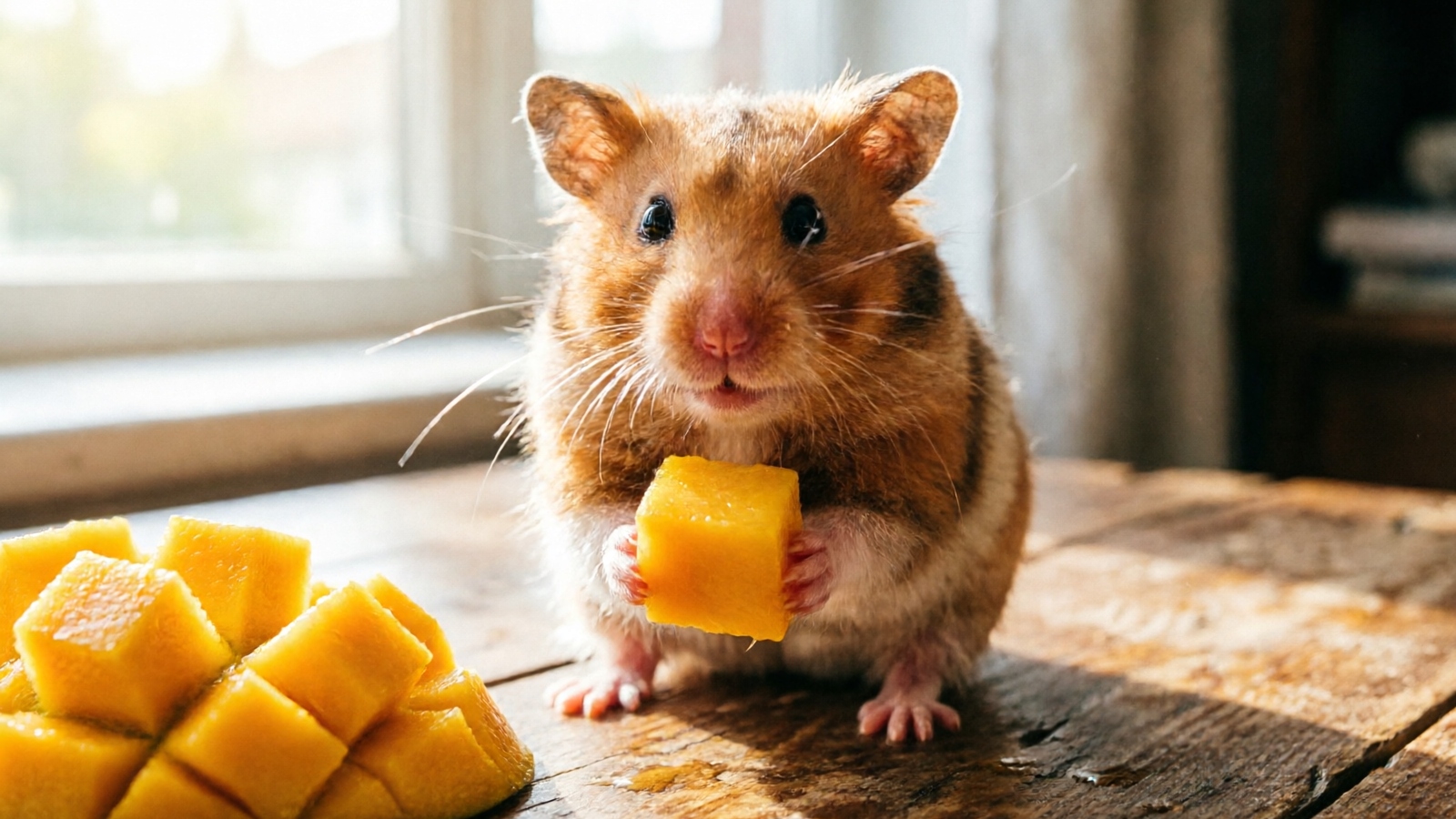
Mango sits in the high-sugar tier alongside bananas and grapes. But it distinguishes itself with the best vitamin C content of any high-sugar fruit on this list — 36.4mg per 100g beats all the other sugar-heavy options. If you’re going to offer a sweet treat, mango at least delivers a nutritional benefit beyond the sugar rush.
Benefits of Mango for Hamsters
Vitamin C for Immune Support
At 36.4mg per 100g, mango is a respectable vitamin C source. While hamsters synthesize their own vitamin C (unlike guinea pigs), additional dietary vitamin C supports immune resilience during stress — cage cleaning, vet visits, temperature changes, or introductions to new cage mates. For hamsters with health conditions or recovering from illness, the extra vitamin C in mango provides a mild immune boost.
Vitamin A and B6
Mango contains 54µg of vitamin A per 100g, supporting skin health, vision, and immune function. The B6 content supports protein metabolism and nervous system function — relevant for active hamsters on high-protein diets. A drop in activity — including less wheel running — can signal illness. Our hamster wheel size guide explains how to check if your wheel is the right size. These aren’t stand-alone reasons to feed mango, but they add nutritional depth to what would otherwise be a pure sugar treat.
Hydration
At 83.5% water, mango provides moderate hydration. It’s not as hydrating as watermelon (91.5%), but it contributes more than bananas (74.9%). On warm days, a small piece of mango alongside regular bottle water offers a hydration supplement.
Enrichment Value
Hamsters are natural foragers and hoarders. The soft texture and sweet aroma of mango trigger foraging behavior — you’ll often see a hamster stuff a mango piece into their cheek pouches for later. This natural behavior provides mental stimulation and reduces boredom, which is important for hamster behavior management.
Risks of Feeding Mango to Hamsters
⚠️ High Sugar Content — The Primary Risk
At 13.7g per 100g, mango delivers more sugar per bite than most vegetables and many other fruits. For hamsters, the consequences of excess sugar are serious:
-
Diabetes: Dwarf hamsters (Campbell’s and Winter White) are genetically predisposed to diabetes. Regular sugar intake dramatically increases risk. If you have a dwarf hamster, I’d recommend discussing fruit treats with your exotic vet before offering mango. See our diabetes guide for more on this condition.
-
Obesity: Syrian hamsters are prone to weight gain, and sugar-dense treats accelerate this. An overweight hamster faces mobility problems, heart strain, and reduced lifespan.
-
Dental problems: Sugar promotes harmful oral bacteria, leading to tooth decay and overgrown teeth — already common problems in hamsters.
-
Gut bacteria disruption: Excess sugar shifts the balance of gut flora, potentially causing diarrhea and reducing nutrient absorption from regular food.
Dwarf Hamsters Need Extra Caution
This deserves its own callout. Campbell’s dwarf hamsters have a diabetes prevalence estimated at 15-30% in captivity, and the condition is strongly linked to dietary sugar intake. If your dwarf hamster has any signs of diabetes — excessive thirst, frequent urination, unexplained weight loss — mango and all sweet fruits should be eliminated from the diet entirely. For at-risk dwarfs, a millet spray provides a safe treat alternative with minimal sugar content.
Choking Hazard from the Pit
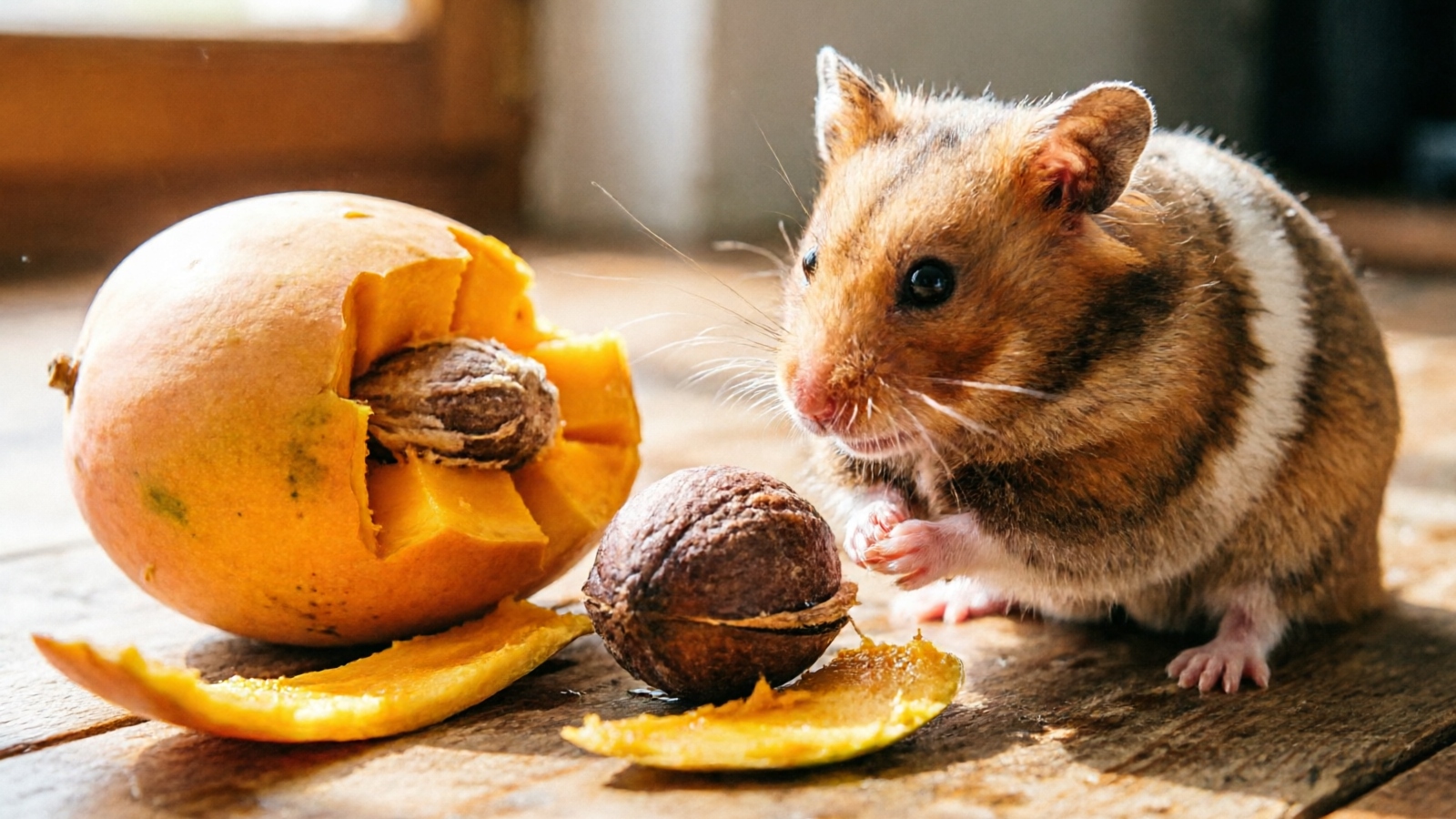
Mango pits are large, hard, and irregularly shaped — a textbook choking hazard for a hamster. The pit also contains trace amounts of cyanogenic glycosides, which release small amounts of cyanide when broken down. While a hamster is unlikely to crack a mango pit, the risk isn’t worth any experimentation. Remove the pit completely and dispose of it where your hamster can’t access it.
Mango Skin Is Indigestible
Mango skin is tough, fibrous, and difficult for a hamster’s small digestive system to process. Additionally, mango skins in some varieties contain urushiol — the same compound that causes allergic reactions in poison ivy. While hamster sensitivity to urushiol isn’t well-studied, the risk is unnecessary when you can simply peel the mango. Always serve only the flesh.
How Much Mango Can a Hamster Eat?
Serving Guide
| Hamster Type | Serving Size | Max per Week |
|---|---|---|
| Syrian (adult, 5-7 oz) | Raisin-sized piece (~5-8g) | 1-2 times |
| Syrian (senior, 1.5+ years) | Half raisin-sized (~3-4g) | 1 time |
| Dwarf Campbell’s | Pinky nail-sized (~2-3g) | 1 time (max) |
| Dwarf Winter White | Pinky nail-sized (~2-3g) | 1 time (max) |
| Dwarf Roborovski | Pinky nail-sized (~2-3g) | 1 time |
| Baby (under 4 weeks) | ❌ No mango | None |
| Baby (4-8 weeks) | Half pinky nail, once | Test only |
| Diabetic hamster | ❌ Avoid completely | None |
Step-by-Step First Feeding Guide
- Start with a piece the size of a grain of rice — roughly 0.5g for any breed
- Wait 24 hours — monitor stool consistency, energy level, and water intake
- If normal, double the amount at the next feeding
- Gradually reach the breed-appropriate serving over 2-3 weeks
- Never exceed the weekly maximum for your hamster’s type
Serving Rules at a Glance
- ✅ Fresh mango flesh only — peeled, pitted, cut small
- ✅ Room temperature — not cold from the fridge
- ✅ Raisin-sized for Syrians, pinky nail for dwarfs
- ✅ 1-2x per week max (Syrians), 1x max (dwarfs)
- ✅ Remove uneaten pieces after 2 hours (fresh fruit spoils)
- ✅ Cut pieces smaller than cheek pouch capacity to prevent choking
- ❌ No mango skin — tough, fibrous, potential urushiol
- ❌ No mango pit — choking hazard + cyanogenic compounds
- ❌ No dried mango — sugar concentrated 3-4x
- ❌ No mango juice — pure sugar liquid
- ❌ No canned, sweetened, or preserved mango
- ❌ No mango ice cream or yogurt
- ❌ No daily feeding
Dwarf vs Syrian: Why the Difference Matters
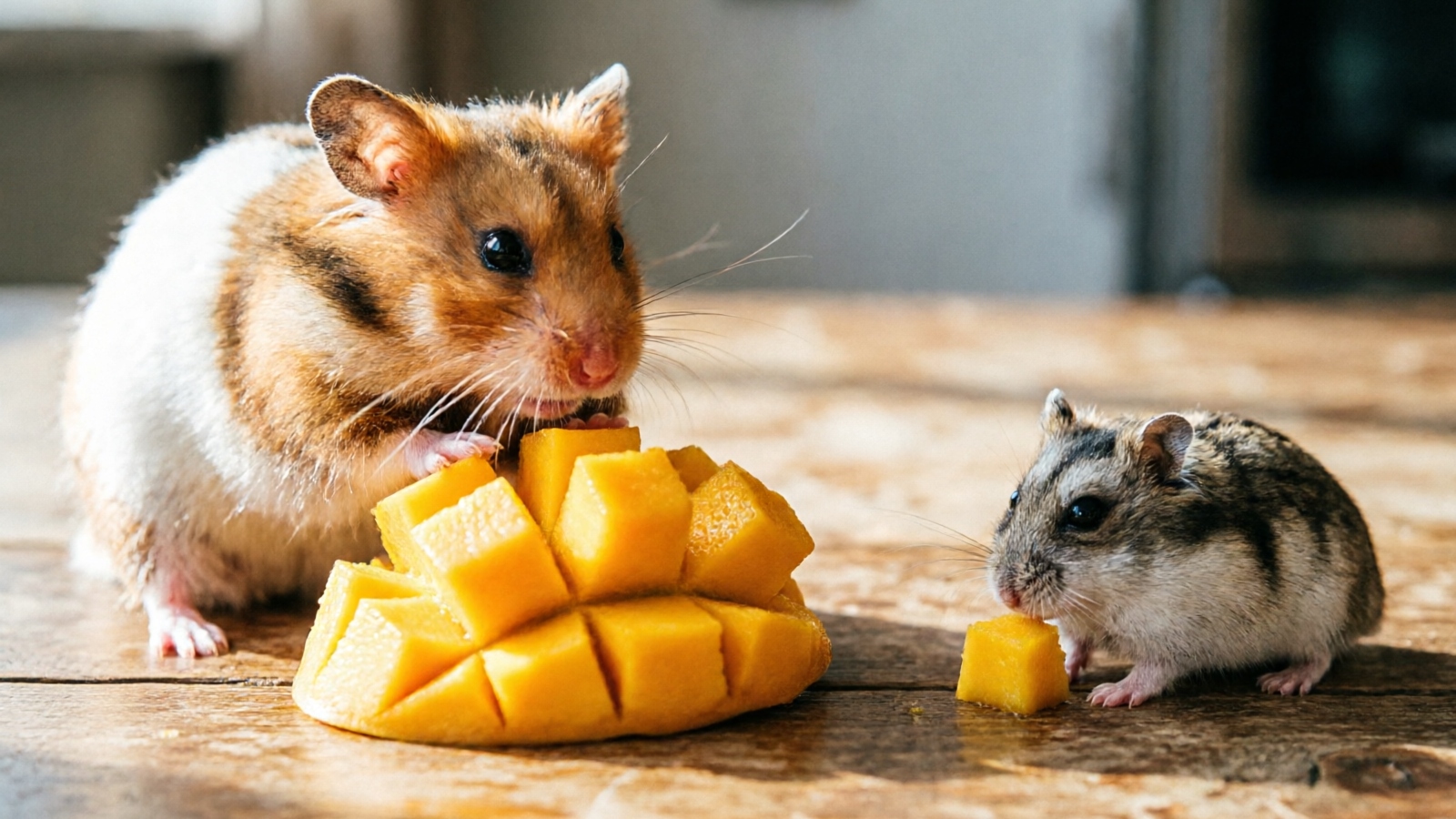
The serving size gap between Syrian and dwarf hamsters isn’t arbitrary — it reflects a real physiological difference. Syrian hamsters have a larger body mass (120-200g vs 20-50g for dwarfs) and a significantly lower genetic predisposition to diabetes. A raisin-sized piece of mango for a Syrian represents a mild sugar treat. The same relative portion for a dwarf hits harder because their pancreas is already working against genetic odds.
If you’re unsure about your dwarf hamster’s diabetes risk, our diabetes guide covers symptoms, testing, and dietary management in detail.
Which Parts of the Mango Are Safe?
| Part | Safe? | Notes |
|---|---|---|
| Flesh (peeled) | ✅ Safe — in moderation | Sweet, soft, nutritious — but high sugar |
| Skin | ❌ Not safe | Tough, indigestible, possible urushiol |
| Pit/Seed | ❌ Dangerous | Choking hazard, cyanogenic compounds |
| Dried mango | ❌ Avoid | Sugar concentrated 3-4x, choking hazard |
| Mango juice | ❌ Dangerous | Pure sugar, no fiber |
| Canned mango | ❌ Avoid | Added sugar and preservatives |
What About Dried Mango?
Dried mango products like ONETANG freeze-dried mango chips or Made In Nature organic dried mangoes are popular snacks for humans — but they’re not appropriate for hamsters. The drying process removes most of the water (83.5% of fresh mango’s weight) while concentrating sugar, vitamins, and calories into a dense, chewy product.
A 10g piece of dried mango can contain the sugar equivalent of 40-50g of fresh mango. For a hamster, that’s a massive sugar hit in a tiny package. The chewy texture is also a choking hazard — it can stick to the roof of the mouth or get lodged in cheek pouches. Even organic dried mango with no added sugar is too concentrated for hamster consumption.
Fresh mango is always the safer and better choice.
Can Hamsters Eat Mango Skin?
No. Mango skin is too tough and fibrous for a hamster’s digestive system. It can cause intestinal blockage if swallowed in chunks. Some mango varieties also contain urushiol in the skin — the same compound that causes poison ivy reactions in sensitive humans. While hamster reactions to urushiol aren’t well-documented, there’s no reason to take the risk. Peel completely before serving.
Can Baby Hamsters Eat Mango?
| Age | Mango? | Reasoning |
|---|---|---|
| 0-3 weeks | ❌ No | Mother’s milk only, digestive system too immature |
| 3-4 weeks | ❌ No | Transitioning to solid food — start with pellets and safe vegetables |
| 4-8 weeks | ⚠️ Half pinky nail, once | First test — monitor for diarrhea |
| 8-12 weeks | ⚠️ Small piece, once per week | Gradual increase to full portion |
| 12+ weeks | ✅ Full adult portions | Standard guidelines apply |
Baby hamsters have underdeveloped digestive systems and immature gut flora. Sugar is harder for them to process, and early exposure to sweet foods can train their palate away from nutritionally balanced pellets. I’d recommend delaying mango introduction until 4-6 weeks at the earliest, and even then only as a tiny taste.
For raising healthy young hamsters, see our care guide and first-time hamster owner guide.
What to Avoid When Feeding Mango
- Dried mango: Sugar concentrated 3-4x. Choking hazard. Never feed.
- Mango juice: Pure sugar water with zero fiber. Causes diarrhea.
- Mango skin: Tough, indigestible, potential urushiol. Peel completely.
- Mango pit: Choking hazard with cyanogenic compounds. Dispose of safely.
- Canned mango: Contains added sugar, syrup, and preservatives.
- Mango-flavored products: Candy, yogurt, or processed foods contain artificial ingredients.
- Frozen mango: Too cold can cause digestive upset. Thaw to room temperature first.
- Mango with chili or salt: Common in some prepared mango snacks. Toxic to hamsters.
- Spoiled or overripe mango: Fermented sugars can cause dangerous bloating.
Healthy Treat Alternatives
Mango is a fun occasional treat, but a hamster’s health depends on a balanced daily foundation of quality pellets and limited fresh foods. In my experience, the hamsters that live longest are the ones where treats like mango are genuinely occasional — not a daily expectation.
Better Everyday Treat Options
For regular treating, I’d lean toward lower-sugar options. Natural millet sprays provide a satisfying crunch and natural foraging experience without the sugar concerns. Mealworms offer protein for active hamsters. Small pieces of cucumber or broccoli deliver hydration and nutrients with minimal sugar.
For our complete treat recommendations, see the best hamster treats guide.
Building a Balanced Diet
Mango should be a small part of a varied diet that includes:
- Unlimited pellets — high-quality commercial hamster food
- Fresh vegetables — bell peppers, broccoli, cucumber as staples
- Protein supplements — mealworms or eggs 1-2x per week
- Occasional fruit treats — mango, strawberries, blueberries, apples
- Chew materials — safe wood, hay, and toys for dental health
How to Prepare Mango for Your Hamster
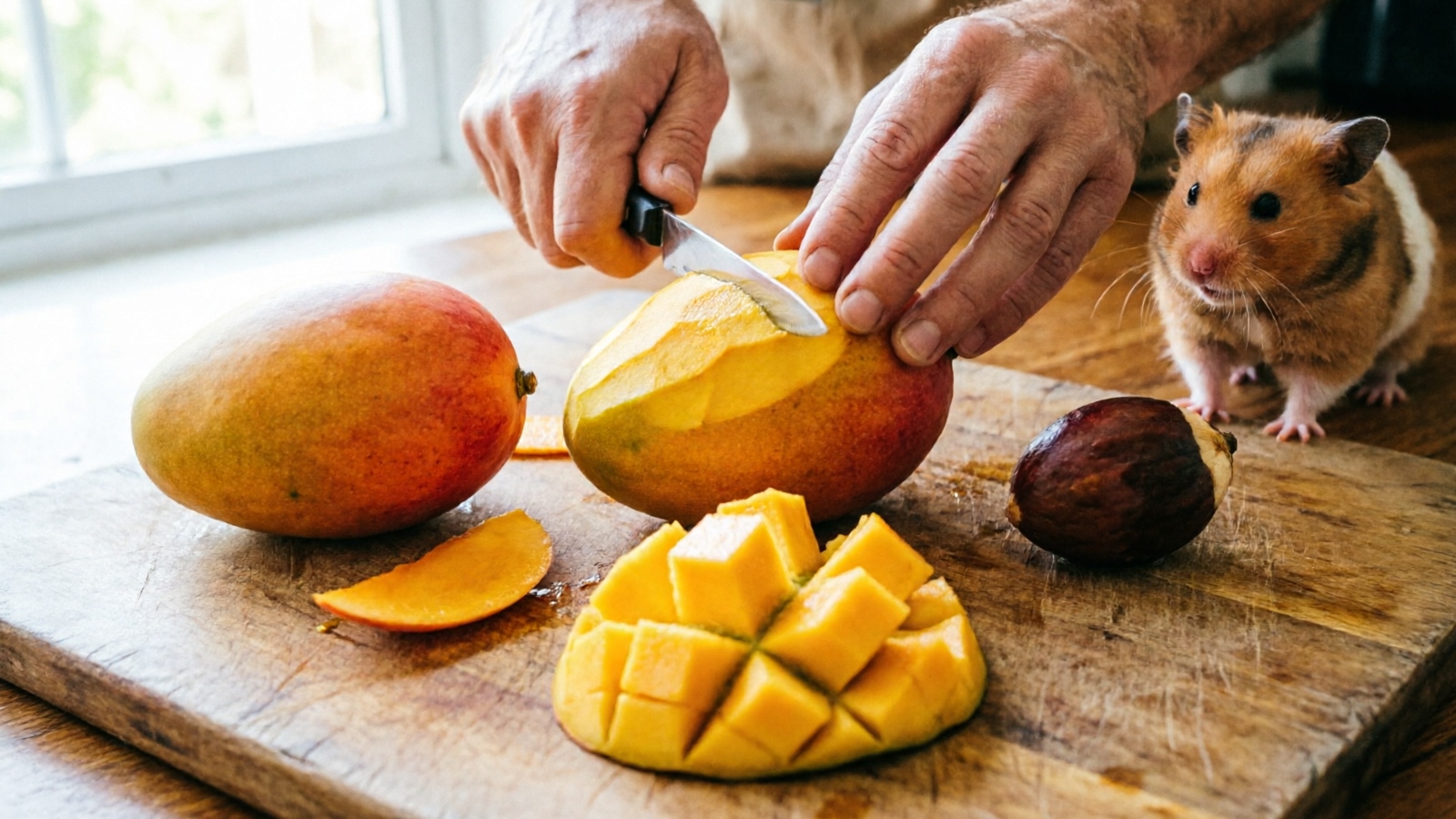
- Choose a ripe but firm mango — soft enough to cut easily, not mushy
- Wash the exterior — even though you’ll peel it, this prevents contamination when cutting
- Peel completely — remove all skin and discard
- Cut away from the pit — slice flesh off the large central seed
- Cut into hamster-sized pieces — raisin-sized for Syrians, pinky nail for dwarfs
- Verify no skin or pit fragments — double-check before serving
- Serve at room temperature on a clean dish
- Remove uneaten pieces after 2 hours — fresh fruit spoils at room temperature
Storing Cut Mango for Future Feedings
If you’re cutting a whole mango for yourself and setting aside hamster portions, store the hamster pieces in an airtight container in the refrigerator for up to 2 days. Cut only what you’ll feed in one serving — pre-cut mango sitting around loses vitamin C and develops bacterial growth. Never refreeze thawed mango. When people ask me can hamsters eat mango that’s been refrigerated overnight, the answer is yes — just let it reach room temperature before serving.
Other Foods Your Hamster Can Eat
Vegetables: Bell Peppers | Broccoli | Carrots | Cucumbers | Celery | Lettuce | Spinach | Tomatoes
Fruits: Apples | Bananas | Blueberries | Grapes | Strawberries | Watermelon
Protein: Eggs | Cheese | Mealworms
Further Reading
- Hamster Diet Guide | Diabetes Guide
- Best Hamster Food | Best Hamster Cage
- Hamster Health | Care Guide
- Hamster Breeds | Best Treats
- Syrian Hamster Care | Best Wheel
- Behavior Guide | Wet Tail Guide
- Handling Guide | Cage Setup
- Hamster Lifespan | Best Bedding
Frequently Asked Questions
Can hamsters eat mango?
Yes, in very small amounts. Fresh mango flesh is safe — feed a raisin-sized piece to Syrians 1-2x/week, or a pinky nail-sized piece to dwarfs 1x/week max. Always peel and remove the pit.
Can dwarf hamsters eat mango?
Yes, but cautiously. Dwarf hamsters are prone to diabetes, and mango has 13.7g sugar per 100g. Limit to a tiny piece once per week. If your dwarf has diabetes risk factors, avoid mango entirely.
Can hamsters eat dried mango?
No. Dried mango concentrates sugar 3-4x compared to fresh, and the chewy texture is a choking hazard. Always feed fresh mango only.
Can hamsters eat mango skin?
No. Mango skin is tough, fibrous, and may contain urushiol. Peel the mango completely before serving.
Can hamsters eat mango pit or seed?
Absolutely not. The pit is a choking hazard and contains cyanogenic compounds. Remove and dispose of it safely.
How much mango can a hamster eat?
Syrian hamsters: raisin-sized piece (5-8g) 1-2x/week. Dwarf hamsters: pinky nail-sized piece (2-3g) 1x/week. Start smaller for first introduction.
Can baby hamsters eat mango?
Not until 4-8 weeks of age, and even then only a tiny taste. Under 4 weeks, they need mother’s milk only. Full portions begin at 12 weeks.
Can hamsters eat mango every day?
No. The sugar content makes daily feeding unsafe, especially for dwarf breeds. Maximum is 1-2x/week for Syrians, 1x/week for dwarfs.
This guide is based on USDA nutritional data (FDC ID 091769), veterinary guidance, and established hamster care standards. Individual hamsters may have different tolerances — always introduce new foods gradually.
Last Updated: April 30, 2026