| Cheese Type | Verdict | Portion | Frequency |
|---|---|---|---|
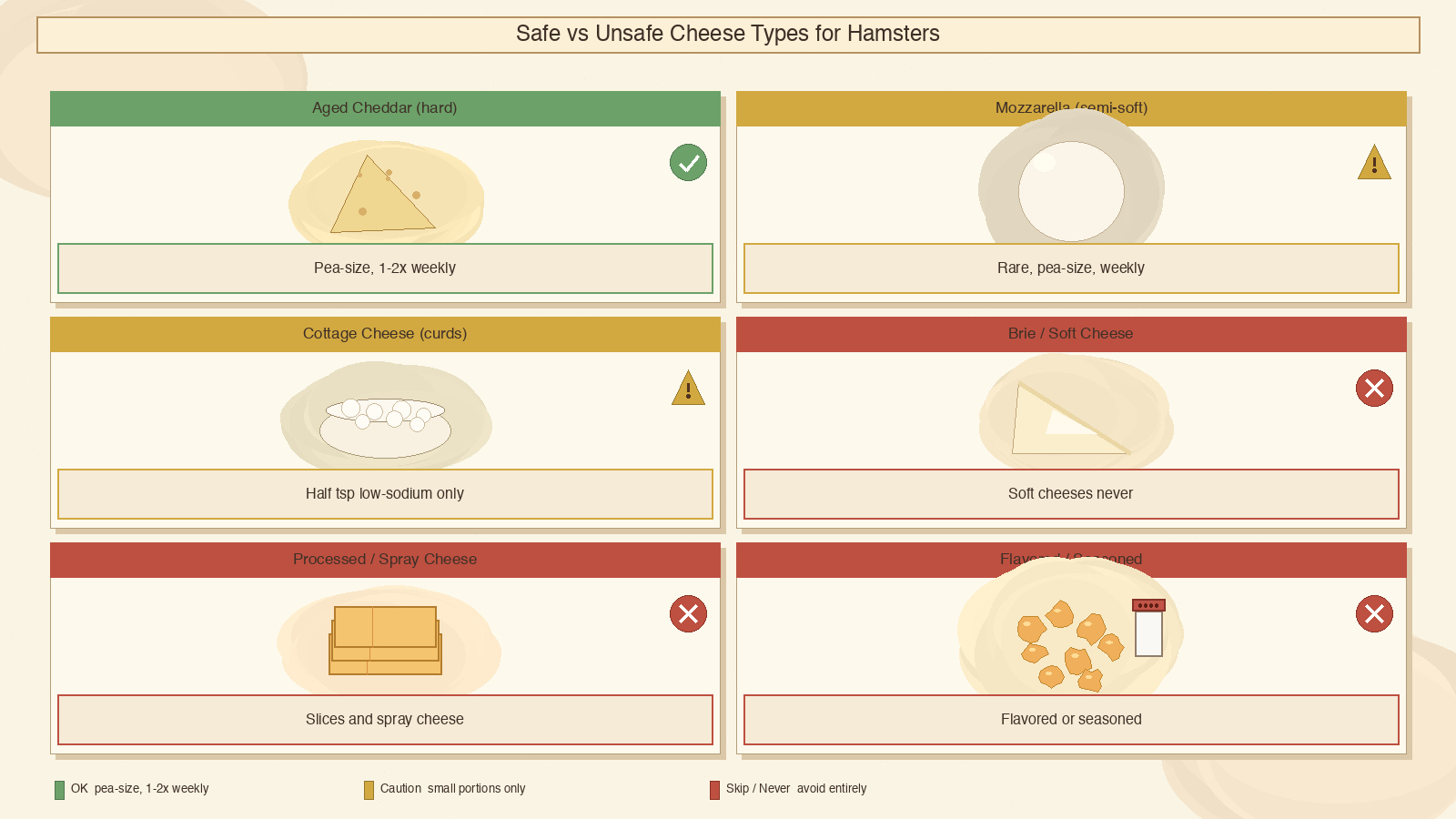
| Hard (cheddar, gouda) | ✅ OK | ~1 g (dwarf: pea-size) | 1–2×/week |
| Semi-soft (mozzarella) | ⚠️ Rare | Pea-size | ≤1×/week |
| Cottage cheese | ⚠️ Caution | ½ tsp, low-sodium | ≤1×/week |
| Soft (brie, cream cheese) | ❌ Skip | — | Never |
| Processed (slices, spray, puffs) | ❌ Never | — | Never |
| Flavored or seasoned (any) | ❌ Never | — | Never |
Medical disclaimer: This page covers general feeding information, not veterinary advice. If your hamster’s symptoms run past the windows described below, or it stops eating entirely, that is a job for an exotic vet.
Can Hamsters Eat Cheese? The Short Answer
Sooner or later a bit of cheddar ends up on the floor near the cage, and your hamster will claim it before you do. That is usually fine — until the wrong type, or too generous a piece, turns a fun snack into diarrhea, and diarrhea dehydrates a hamster fast. The rules that keep cheese safe are short: hard cheese, pea-sized piece, once or twice a week.
This page answers the cheese question only. For the full picture — pellets, vegetables, the entire safe-food list — start with our can hamsters eat series hub.
A hamster-safe cheese is any hard or semi-hard, low-lactose cheese cut to pea size or smaller. That family includes aged cheddar, gouda, and edam. It excludes everything soft, everything spreadable, and everything processed.
- Hamsters are lactose intolerant once weaned — hard cheese is the low-lactose exception, not a loophole.
- A safe portion is about a gram, closer to a pea than a cube.
- Cap frequency at once or twice a week; dwarf breeds get less.
Why Cheese Is Risky: Lactose and Fat
Is cheese bad for hamsters? Only the usual treat ways: wrong form, wrong size, wrong week. Cheese itself is not poisonous.
The mechanism is lactose. Hamsters, like most mammals, make less lactase after weaning. An undigested dose ferments in the gut and pulls water in behind it — hence the loose stool.
Fat is the second problem: cheddar runs roughly a third fat by weight (USDA FoodData Central), against four to six percent in a basic pellet mix.
The full frame — base diet first, extras second — is in our hamster diet guide.
Safe Cheese Types for Hamsters
Almost every question about what types of cheese hamsters can eat collapses into one rule: the harder and the more aged, the safer.
Hard cheeses come first because aging does the digestive work in advance. The same cultures that give cheddar its bite also consume most of its lactose, which is precisely the component a hamster’s gut struggles with.
Cheddar is the practical pick, and it earns the slot: widely available, easy to cut thin, and low in lactose once properly aged. It is also the cheese most fridges already have, which removes the temptation to improvise. Aged gouda and edam sit in the same category.
Mozzarella is the borderline case. It is lower in fat but holds more moisture and more residual lactose, so treat it as a rare event, not a rotation item.
Cottage cheese splits opinion. The curds still carry lactose plus a lot of sodium; if you offer it at all, make it the low-sodium kind, half a teaspoon, no more than once a week.
Everything soft or processed fails on both counts. Brie, cream cheese, and anything spreadable carry more lactose; processed slices stack salt and emulsifiers on top of it. I’d skip the whole spreadable aisle — there is no safe portion of it for an animal this small.
How Much Cheese Can Hamsters Eat?
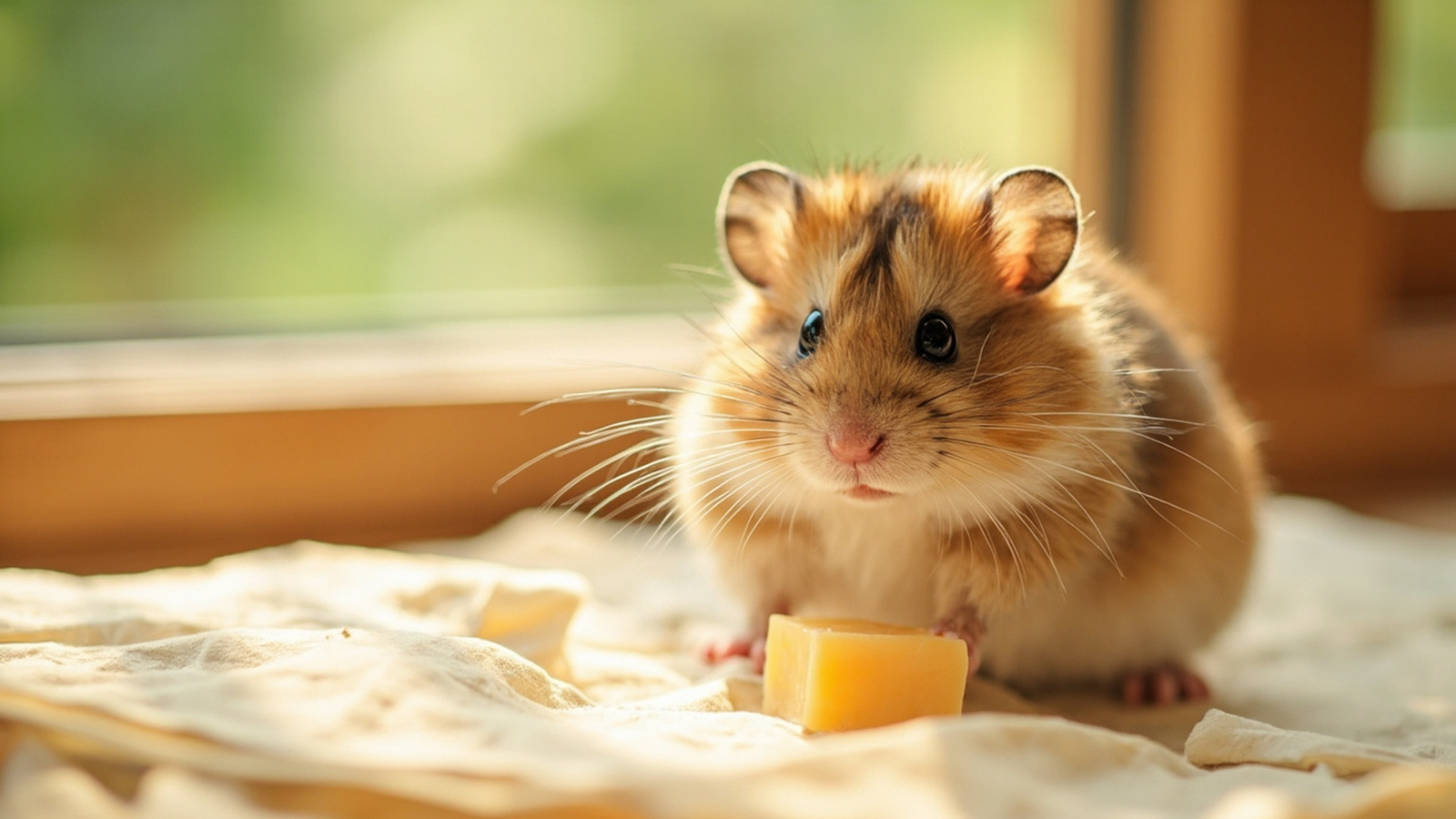
About one gram for a Syrian — half a dice cube, a fingernail clipping’s worth — and that figure is a ceiling, not a target.
One frame note before the numbers: cheese competes with the base diet, and the base diet is pellets. A mediocre pellet mix is the actual problem in most cages; best hamster food covers that choice.
| Hamster | Max Portion | Frequency | Note |
|---|---|---|---|
| Syrian | ~1 g (half a dice cube) | 1–2×/week | Split it into training rewards if you like |
| Dwarf (winter white, Campbell’s, Roborovski) | Pea-size (~0.5 g), or skip | ≤1×/week | Diabetes risk comes first — see our hamster diabetes guide |
How to Feed Cheese Safely
- Pick a block of aged hard cheese — cheddar or gouda, nothing from the squeeze bottle.
- Cut a piece the size of a rice grain up to a pea, smaller for any dwarf breed.
- Watch for the next two days; soft stool means the next serving moves back a week.
That is the whole routine. If your hamster stashes the piece instead of eating it, fish it out at the next cage check — aged cheese keeps for hours, not days.
Can Hamsters Eat Cheese Every Day?
No — cheese is a weekly treat, not a daily snack.
Two ceilings stop it. Treats of any kind get roughly ten percent of the daily calories, and cheese spends that budget fast while leaving nothing for foods that carry real nutrition. Weight is the second: hamsters balloon easily, and dwarf breeds tip into diabetes faster than almost any other pet. For a dwarf, the honest weekly number is closer to zero.
Signs Your Hamster Ate Too Much Cheese
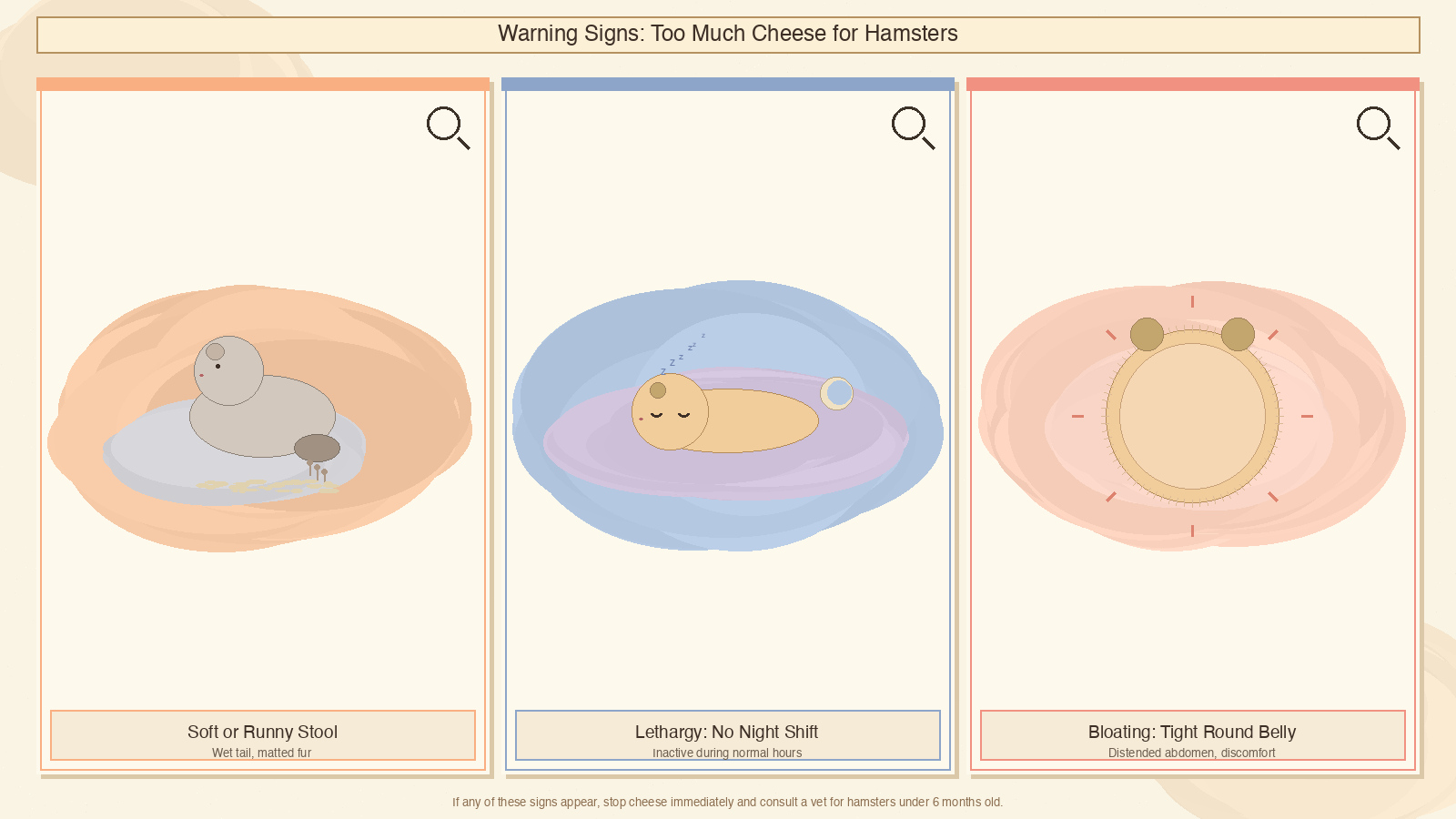
The evidence shows up at the cage floor first. Expect wet or pasted fur around the tail end, soft or runny droppings, sometimes a hamster that stays flattened in one spot instead of running its usual night shift. Bloating is subtler — a round, tight belly on an animal that normally feels like a soft bag of rice. None of this needs a vet on day one, but all of it means dairy stops now.
Keep water topped up, clear any stashed cheese out of the hoard, and give the gut its window. If loose stool lasts past 48 hours, or your hamster also goes off food, escalate — our hamster not eating guide covers that second signal in detail.
Healthier Alternatives to Cheese
Cheese works best as a rare reward, and commercial treats handle the everyday version of that job with better nutrition and no lactose math. Three earn their shelf space:
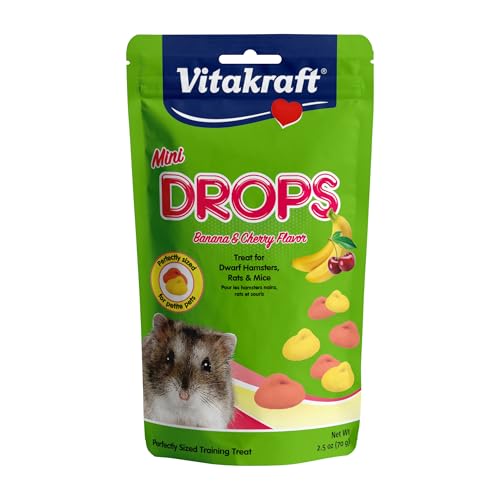
Vitakraft Mini Drops for dwarf hamsters are the hand-feeding pick — small round drops sized to a dwarf’s paws, useful when you are taming a new arrival. Two honest caveats: they are a now-and-then reward, not a staple, and they melt in summer transit, so time the order.
Oxbow Simple Rewards banana bites come from the vet-formulated small-pet brand, baked with real banana and a short ingredient list. The pieces run small and the bag costs more per gram than the aisle brands — you are paying for the simplicity.
Vitakraft Crunchy Bears bring the vegetable angle plus a crunch that helps wear teeth down. Fair warning from owner reports: some pets simply refuse them.
For the full rundown, including foraging treats that turn snack time into a job, see our best hamster treats guide. If you take only one from this page, the Vitakraft mini training drops are the closest thing to a safe version of what people think cheese does.
The Bottom Line
Hamsters can eat cheese the way people eat cake: occasionally, in slices that look absurdly small. Hard and aged is safe; soft, processed, and seasoned never are. A Syrian gets about a gram once or twice a week; a dwarf gets a pea, or nothing.
Safe picks
- ✅ Hard, aged cheese: cheddar, gouda, or edam — aging breaks down most of the lactose
- ✅ Pea-sized piece: about 1 gram for a Syrian, half that for any dwarf breed
- ✅ Once or twice a week: never a daily snack; treats cap at roughly 10% of calories
- ✅ Watch the droppings for 48 hours: soft stool pushes the next serving back a week
- ✅ Fish out stashed cheese within hours: aged cheese keeps for hours, not days
Always skip
- ❌ Soft and spreadable: brie, cream cheese, anything from a tub
- ❌ Processed slices: singles, spray cheese, cheese puffs — none has a safe portion
- ❌ Flavored or seasoned: garlic, herbs, smoked — anything beyond plain hard cheese
- ❌ Daily servings: even safe cheeses pile up fast in a 30-gram hamster
- ❌ Full portions for dwarf breeds: pea-size once a week, or skip — diabetes risk comes first