As of 2026, the consensus on chinchilla nutrition has only strengthened: an 80/20 hay-to-pellet ratio remains the non-negotiable foundation of a healthy diet. New research published in exotic pet nutrition journals has further highlighted the risks of high-calcium pellets and their link to bladder sludge and urinary stones in chinchillas — reinforcing why ingredient quality matters more than brand name. With more commercial pellet brands entering the chinchilla market, understanding what to look for on a nutrition label has become both easier and more essential.
Feeding your chinchilla the right diet is one of the most impactful things you can do for their health. A poor diet leads to dental disease, digestive problems, and a shortened lifespan — a proper diet keeps them active and thriving for 15-20 years. Chinchillas literally cannot vomit, so every food choice is permanent until digested. There is no safety net for toxic or inappropriate foods, which is why the structure of their diet matters more than any individual product you pick.
This guide covers the full picture of chinchilla nutrition: the 80/20 feeding ratio, hay selection, pellets, safe and toxic foods, treats, supplements, and a daily portion schedule. For a complete overview of keeping your chinchilla healthy beyond diet, see our chinchilla care guide. If you want specific product recommendations, jump to our best chinchilla food picks — this page focuses on the framework that makes any pellet or treat work for your pet.
What Do Chinchillas Eat?
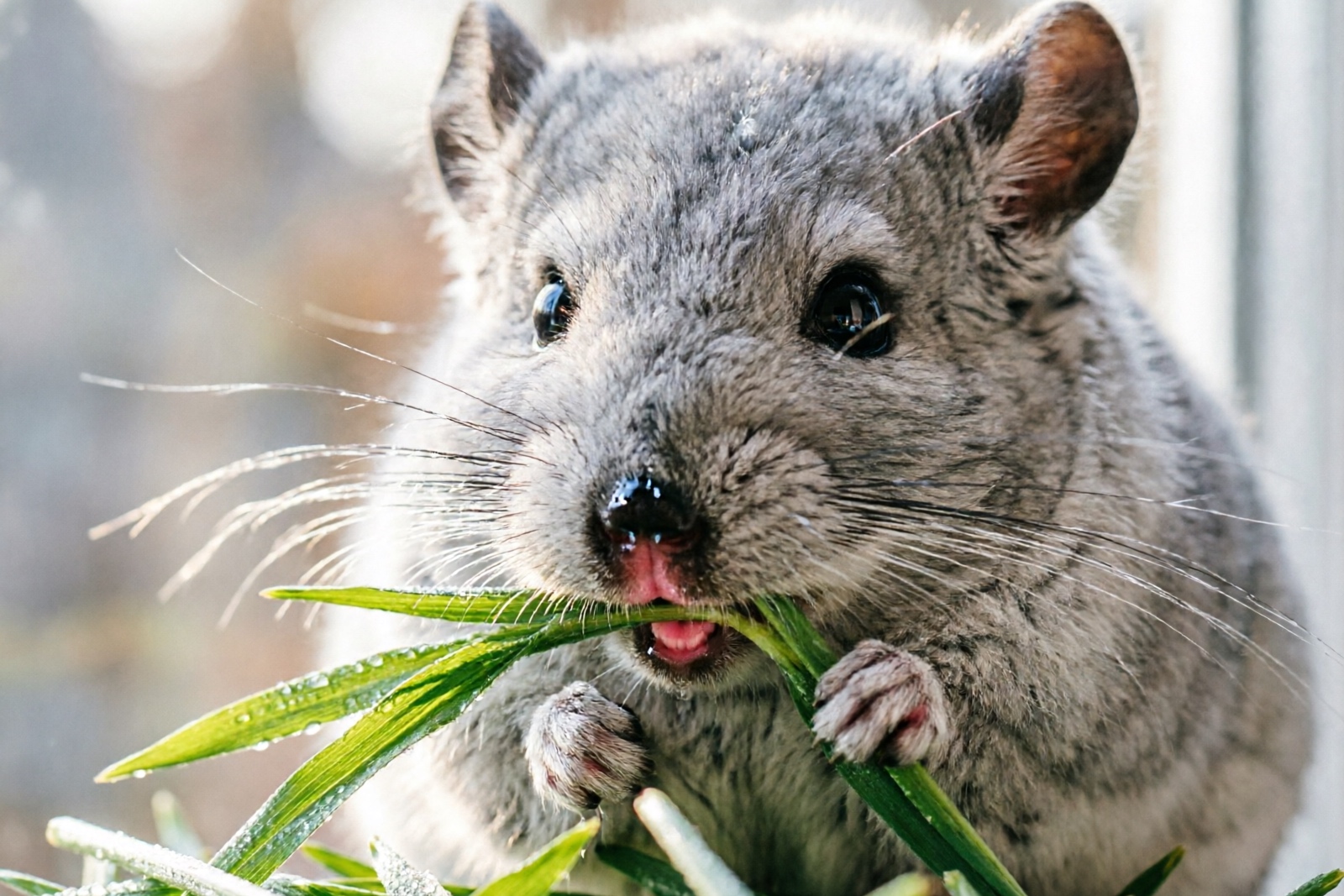
Dietary needs are identical across all color varieties — a White Chinchilla eats the same diet as a Standard Grey. Chinchillas are herbivores native to the Andes Mountains of South America, where their wild diet consists of grasses, bark, roots, leaves, and cactus pads. Everything they eat in the wild is high in fiber and low in sugar and fat, and that profile is the blueprint for feeding them in captivity.
A proper chinchilla diet follows a simple structure: 80% hay, 20% pellets, and under 5% treats. Fresh water must always be available. This ratio isn’t arbitrary — it mirrors what chinchillas evolved to eat and supports two biological systems that need constant work: their continuously growing teeth (worn down by chewing fibrous hay) and their hindgut fermentation (kept moving by long-strand fiber).
Getting the diet wrong is the most common cause of preventable health problems in pet chinchillas. Too many pellets cause obesity. Too little hay leads to overgrown teeth and gut stasis. Sugary treats can be fatal over time. A well-fed chinchilla can live 15-20 years; a poorly fed one rarely reaches ten. Learn more about how diet affects longevity in our chinchilla lifespan guide.
The 80/20 Rule
Think of your chinchilla’s diet as a pyramid:
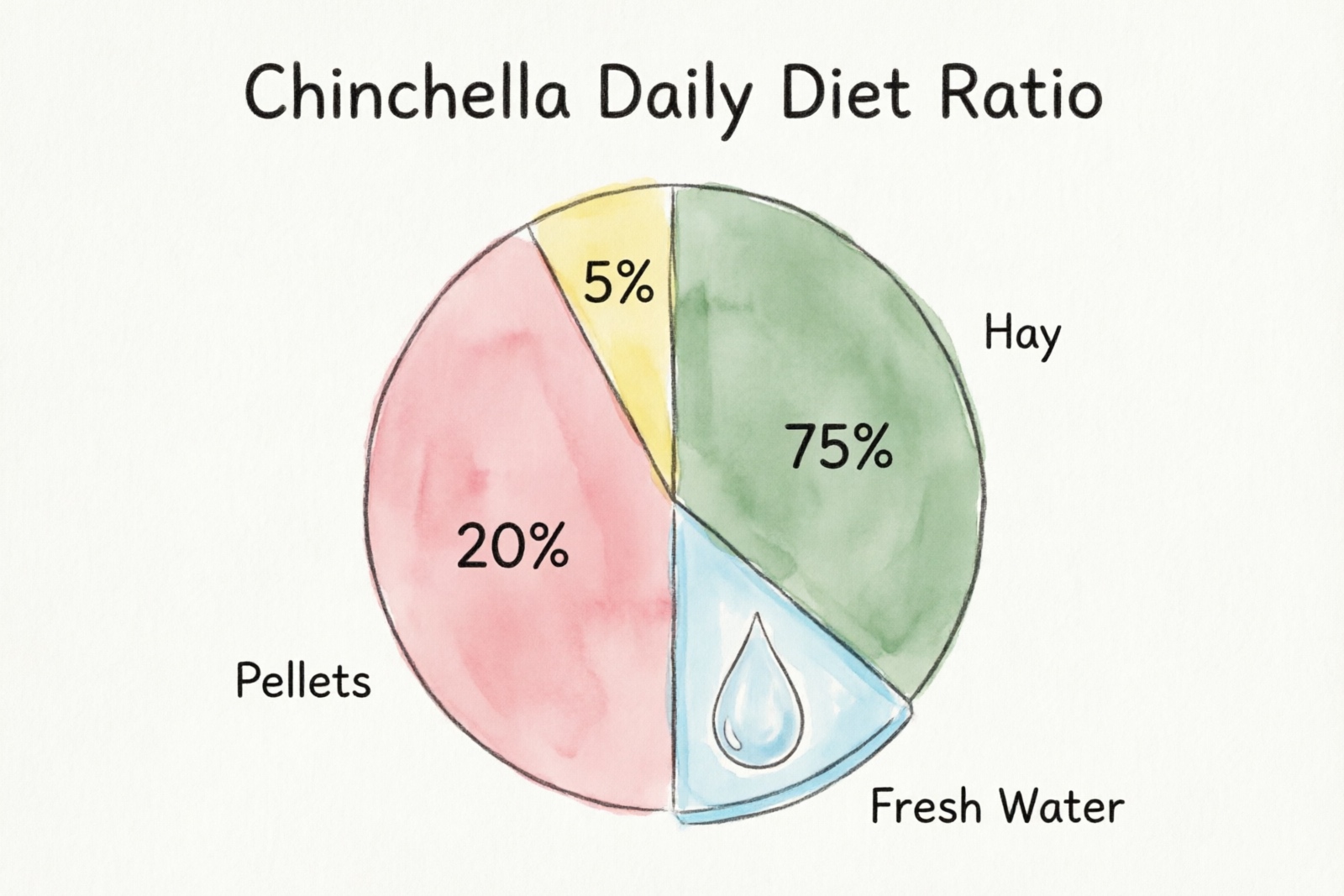
- 80% Timothy Hay — The foundation. Hay provides the long-strand fiber needed for healthy digestion and the constant chewing that wears down their ever-growing teeth. It should be available 24/7.
- 20% Pellets — A measured daily portion of chinchilla-specific pellets fills nutritional gaps. Pellets supplement hay, they don’t replace it.
- <5% Treats — Occasional rewards only. Chinchillas have sensitive digestive systems that cannot handle sugar, fat, or excess protein.
- Fresh Water — Always available. Changed daily.
Hay: The 80% Foundation
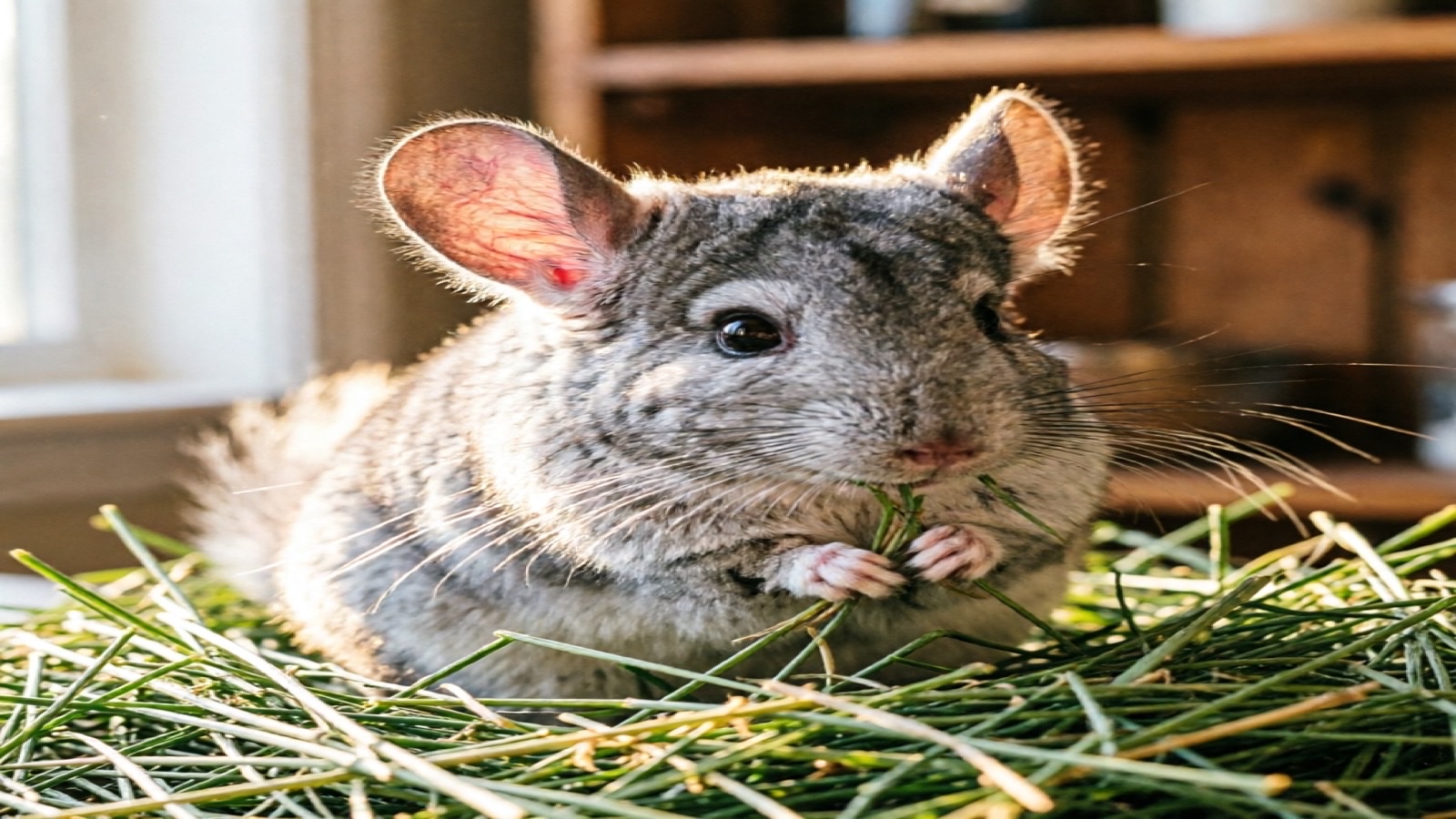
Hay isn’t just food for chinchillas — it’s the most critical component of their entire diet. Chinchillas need constant access to hay for three reasons: dental health (their teeth never stop growing), digestive health (fiber keeps their gut moving), and psychological enrichment (chewing is a natural behavior that reduces stress).
For hay types, sourcing tips, and storage guidance, see our best chinchilla hay guide — the short version is that timothy hay is the daily staple, orchard grass is a good alternative for picky eaters, and alfalfa is reserved for juveniles under 6 months. Quick rules:
- Timothy Hay — Standard for adult chinchillas. Low in calcium and protein, high in fiber. Available 24/7.
- Alfalfa Hay — Higher in calcium and protein. Suitable only for young chinchillas under 6 months to support growth. Long-term feeding to adults can cause bladder stones.
- Orchard Grass — A solid alternative if your chinchilla doesn’t like timothy. Similar nutritional profile, softer texture, slightly sweeter smell.
How to Store Hay
Proper storage extends freshness and prevents mold. Keep hay in a dry, cool, well-ventilated area — a paper bag or cardboard box works better than plastic, which traps moisture. Check hay daily: it should smell like dried grass, not musty or sour. Discard any hay that shows signs of mold (white or grey patches, dampness, or unusual smell).
Pellets: The 20% Supplement
Pellets fill the nutritional gaps hay alone can’t cover — specifically the concentrated vitamins and minerals a chinchilla needs in small daily amounts. The right pellet provides balanced nutrition; the wrong one causes long-term health problems.
What to Look for in a Pellet
A chinchilla-specific pellet should be:
- Uniform — Every piece identical in nutrition, so your chinchilla can’t selectively eat the high-fat pieces and leave the rest
- High in fiber — 18% or more, ideally 20-25%
- Low in fat — 2-3% maximum
- No seeds, nuts, dried fruit, or colored pieces — those are red flags for an inappropriate formula
- Formulated specifically for chinchillas — not rabbits, not guinea pigs
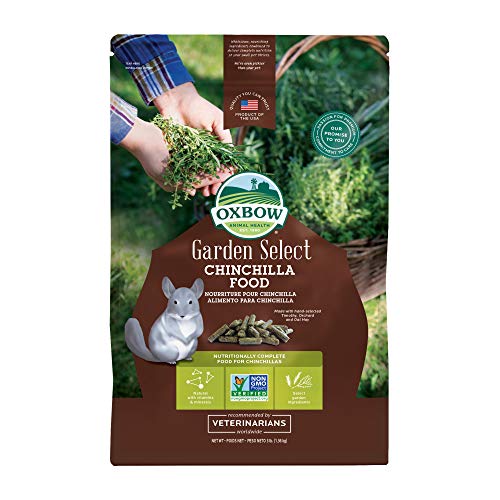
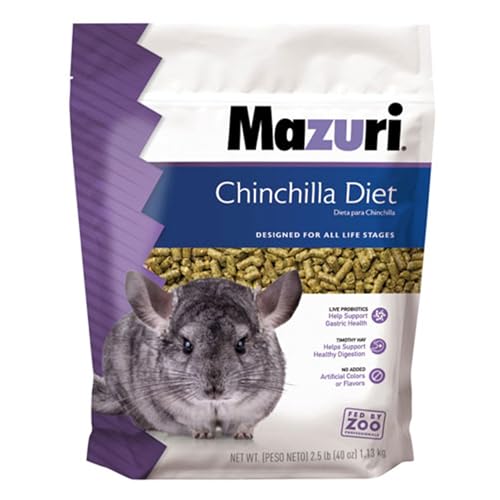
For specific product picks across price points (including budget, premium, and vet-recommended options), see our best chinchilla food comparison. The brands that consistently meet this standard include Oxbow, Mazuri, and Science Selective. If you want a fast starting point, the most widely recommended uniform pellet on Amazon is Oxbow Garden Select Chinchilla Food — a timothy-based formula that hits the fiber, protein, and fat targets above and is the current best overall pick. Budget buyers often start with Mazuri Chinchilla Diet 2.5lb, a zoo-grade uniform pellet at a lower per-pound cost.
Adult vs Baby Chinchilla Pellets
Age matters when choosing pellets. Chinchillas under 6 months benefit from alfalfa-based pellets — the higher calcium and protein support rapid growth. Adults over 1 year should transition to timothy-based pellets to prevent calcium buildup, which can lead to bladder stones.
If you’re transitioning an adult chinchilla from alfalfa to timothy pellets, mix the two gradually over 2-3 weeks. Start with 75% old and 25% new, then 50/50, then 25/75, until fully switched. Watch stool throughout — small, dry droppings mean slow down.
Safe & Unsafe Chinchilla Food List
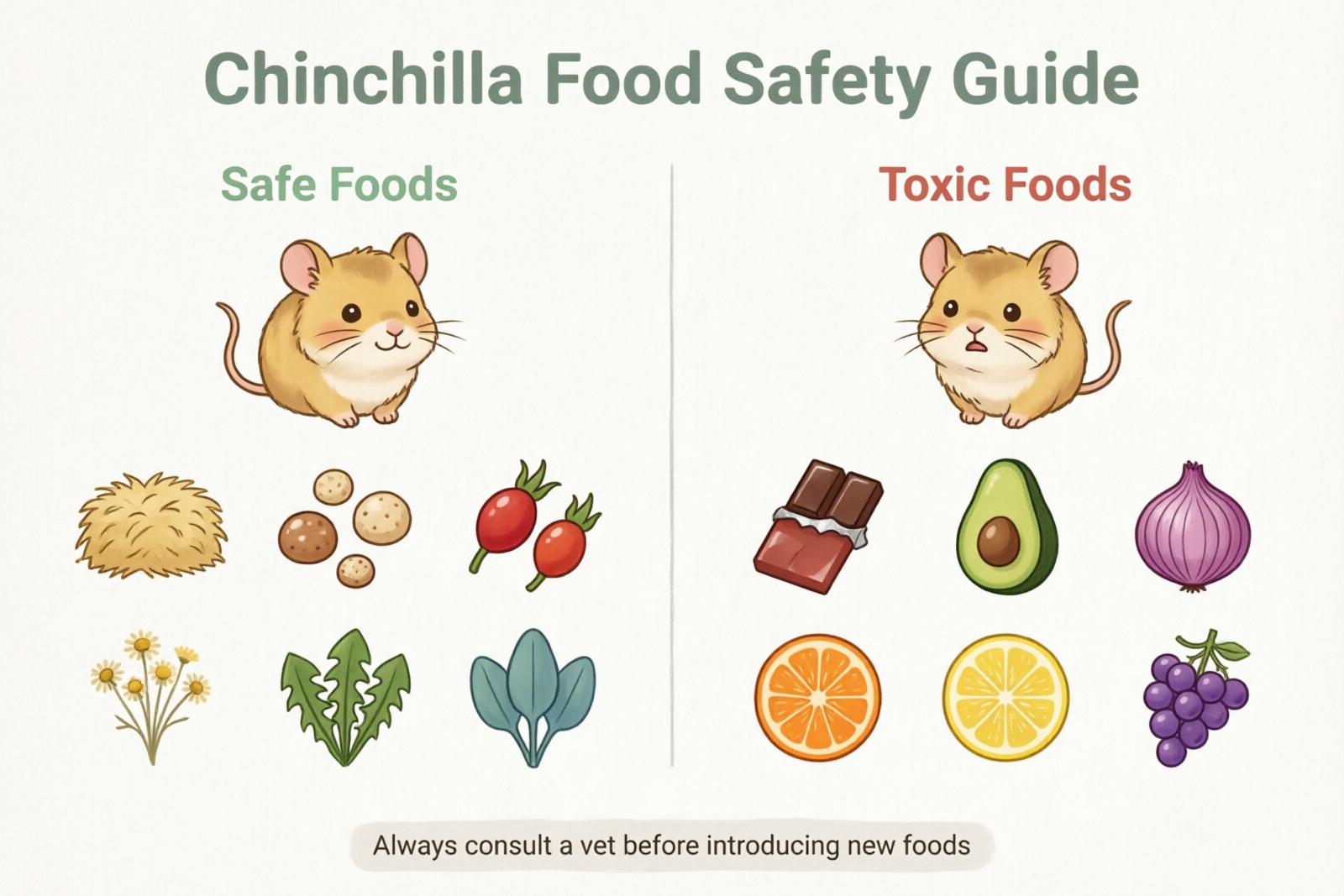
Knowing which foods are safe and which are dangerous is required knowledge for any chinchilla owner. Their digestive systems are extremely sensitive — even a small amount of the wrong food can cause serious illness.
Safe Foods (Feed Occasionally)
| Food | Frequency | Notes |
|---|---|---|
| Apple (seedless) | Once per week | Remove all seeds and core. See our apple safety guide for portions. |
| Blueberries | 1-2x per week | 2-3 berries max. See our blueberry safety guide. |
| Carrot | Once per week | Small piece only — high in sugar. See our carrot safety guide. |
| Rolled oats | Once per week | Plain oats, not instant |
| Rose petals | 1-2x per week | Pesticide-free only |
| Dried dandelion leaves | 2-3x per week | Natural and healthy |
| Dried rose hips | Once per week | High in vitamin C |
Key rule: All fresh foods should be introduced gradually in tiny amounts. Watch for changes in stool — soft or runny droppings mean you’re feeding too much or something that doesn’t agree with your chinchilla.
Toxic Foods (Never Feed)
Some foods are dangerous or potentially fatal to chinchillas. Their digestive systems cannot process high fat, high sugar, or certain compounds found in common foods.
- Chocolate — Contains theobromine, which is toxic and can be fatal
- Onions and garlic — Can cause hemolytic anemia (destruction of red blood cells)
- Avocado — Too high in fat; chinchillas cannot digest it
- Nuts and seeds — Too high in fat and protein; can cause liver damage
- Dairy products — Chinchillas are lactose intolerant
- Meat and processed foods — Completely incompatible with their herbivore digestive system
- Bananas — Very high in sugar (12g per 100g); cause gut stasis. See our banana safety guide for the full risk breakdown.
- Any human junk food — Candy, chips, bread, crackers — all dangerous
Important: Chinchillas cannot vomit. Once they eat something toxic, it stays in their system. This makes prevention critical.
Chinchilla Treats
Treats serve a purpose beyond being tasty — they’re valuable tools for training, bonding, and enrichment. However, treats should never exceed 5% of your chinchilla’s total diet. That means 1-2 small pieces per week, not per day.
What Makes a Good Treat
A safe chinchilla treat is:
- Single-ingredient or minimally processed — dried rose hips, dried dandelion leaves, plain rolled oats
- Low in sugar — under 5% sugar content
- High in fiber — preferably plant material
- Free of additives, colors, and preservatives
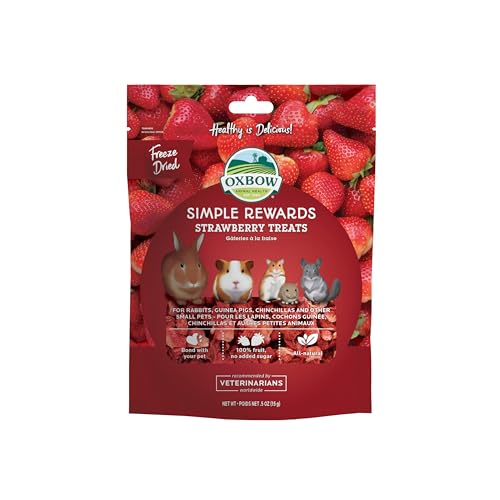
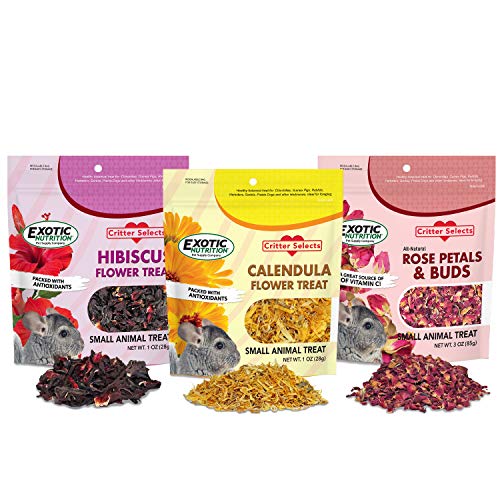
For specific product recommendations across budgets, see our best chinchilla treats guide. The short version: a small piece of dried rose hip or a pinch of plain rolled oats is the safest default reward. Avoid anything marketed as “fruit cocktail,” “berry blend,” or “gourmet mix” — these are typically high in sugar and selective feeding will unbalance the diet. Two widely trusted single-ingredient options are Oxbow Simple Rewards Freeze Dried Strawberry Treats (a small freeze-dried piece is plenty) and Exotic Nutrition Flower Treat 3 Pack (hibiscus, calendula, and rose petals — all on the safe-food list above).
Feeding Schedule & Daily Portions
Consistency is key with chinchilla feeding. They thrive on a predictable routine with measured portions. Here’s a practical daily schedule for adult chinchillas.
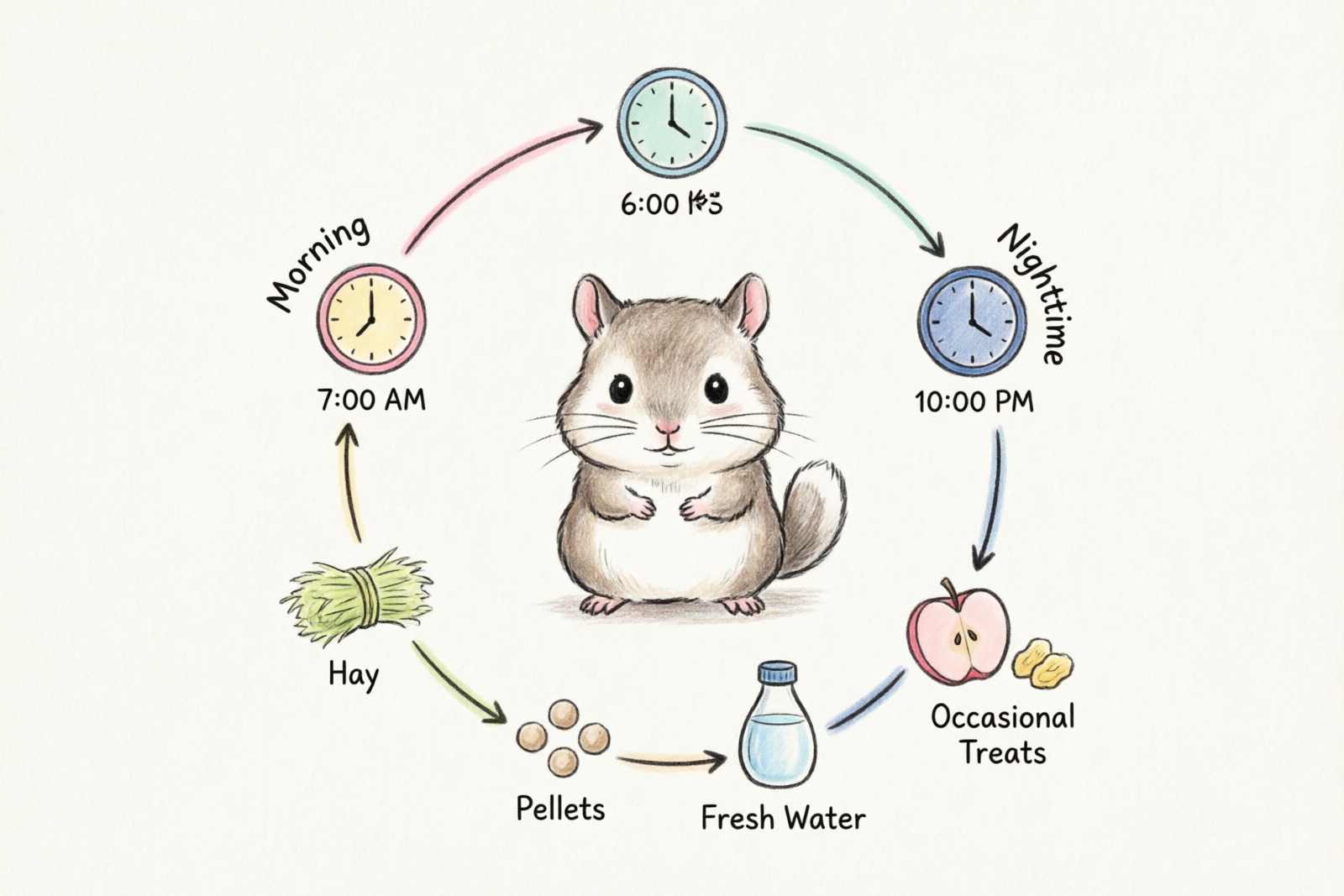
Daily Feeding Schedule
- Morning: Check hay supply — refill if low. Hay must always be available.
- Evening: Provide 1-2 tablespoons of pellets. Chinchillas are most active and likely to eat in the evening.
- Treats: Offer 1 small treat piece as a reward (training, bonding, or enrichment). Never more than once daily, ideally 1-2 times per week.
- Water: Check water bottle daily. Refill with fresh water. Rinse the bottle every 2-3 days.
Portion Guide by Age
| Age | Pellets | Hay | Treats |
|---|---|---|---|
| Baby (<6 months) | 2 tablespoons | Unlimited Timothy + Alfalfa | None |
| Adult (6 months–8 years) | 1-2 tablespoons | Unlimited Timothy | 1-2 pieces/week |
| Senior (8+ years) | 1 tablespoon | Unlimited Timothy | 1 piece/week |
A Note on Water Bottles
Chinchillas should never drink from water bowls. Their dense fur absorbs moisture quickly, creating a breeding ground for fungal infections. A chew-proof glass water bottle is required — plastic bottles will be destroyed in days. For our top picks, see the best chinchilla water bottle guide. Look for a flat-sided glass bottle with a 16 oz capacity that sits flush against the cage.
Supplements for Digestive Health
Most chinchillas on a proper diet of hay and pellets don’t need supplements. However, certain situations call for additional support — especially when dealing with digestive issues, stress, or aging.
Consider supplements during these situations:
- Digestive problems — soft stool, constipation, or reduced appetite
- Stress periods — moving, new environment, travel, or introduction to a cage mate
- Senior chinchillas — older chinchillas may absorb nutrients less efficiently
- Diet transitions — switching pellet brands or introducing new foods
For digestive support, timothy-hay-based digestive support tablets (designed for rabbits and guinea pigs) are safe and effective for chinchillas — they contain prebiotics and enzymes that support healthy gut function. The tablet form can be crumbled and sprinkled on pellets.
A general multivitamin powder is optional for chinchillas on a complete diet, but worth having on hand for picky eaters or those recovering from illness. Always check the ingredient list for added sugar before using.
Common Feeding Mistakes
The mistakes that show up most often when talking to chinchilla owners are simple to fix but can have serious consequences:
- Free-feeding pellets — Leaving pellets available 24/7 leads to selective eating (chinchillas pick out the tasty pieces and ignore hay). Measure portions and remove uneaten pellets after a few hours.
- Forgetting hay — Hay should make up 80% of the diet but is the first thing some owners overlook. If hay isn’t available 24/7, dental and digestive problems are almost inevitable.
- Over-treating — It’s tempting to give treats daily because chinchillas get excited about them. But more than 1-2 pieces per week pushes sugar intake to dangerous levels.
- Switching foods suddenly — Even if the new food is better quality, a sudden switch can cause gut stasis. Always transition gradually over 2-3 weeks.
- Treating fruits and veggies as staples — Many “safe” lists online include vegetables that cause dangerous bloat. The default rule: if in doubt, don’t feed it.
If your chinchilla has stopped eating entirely, see our guide on why your chinchilla isn’t eating — refusal to eat for more than a few hours is a veterinary emergency in chinchillas.
This guide reflects current best practices in chinchilla nutrition based on veterinary guidance, exotic animal research, and verified owner experiences. Individual chinchillas may have different needs — always consult an exotic pet veterinarian for specific dietary concerns.
Related Guides
- Best Chinchilla Food: Top Picks & Comparison — Specific product recommendations
- Best Chinchilla Hay: Types, Storage & Top Picks — Hay selection and storage
- Best Chinchilla Treats: Safe Options by Category — Treats that stay within the 5% rule
- Can Chinchillas Eat Apples? | Bananas | Blueberries | Carrots
- Why Is My Chinchilla Not Eating? 5 Causes and How to Fix It
- Chinchilla Care Guide | Chinchilla Lifespan