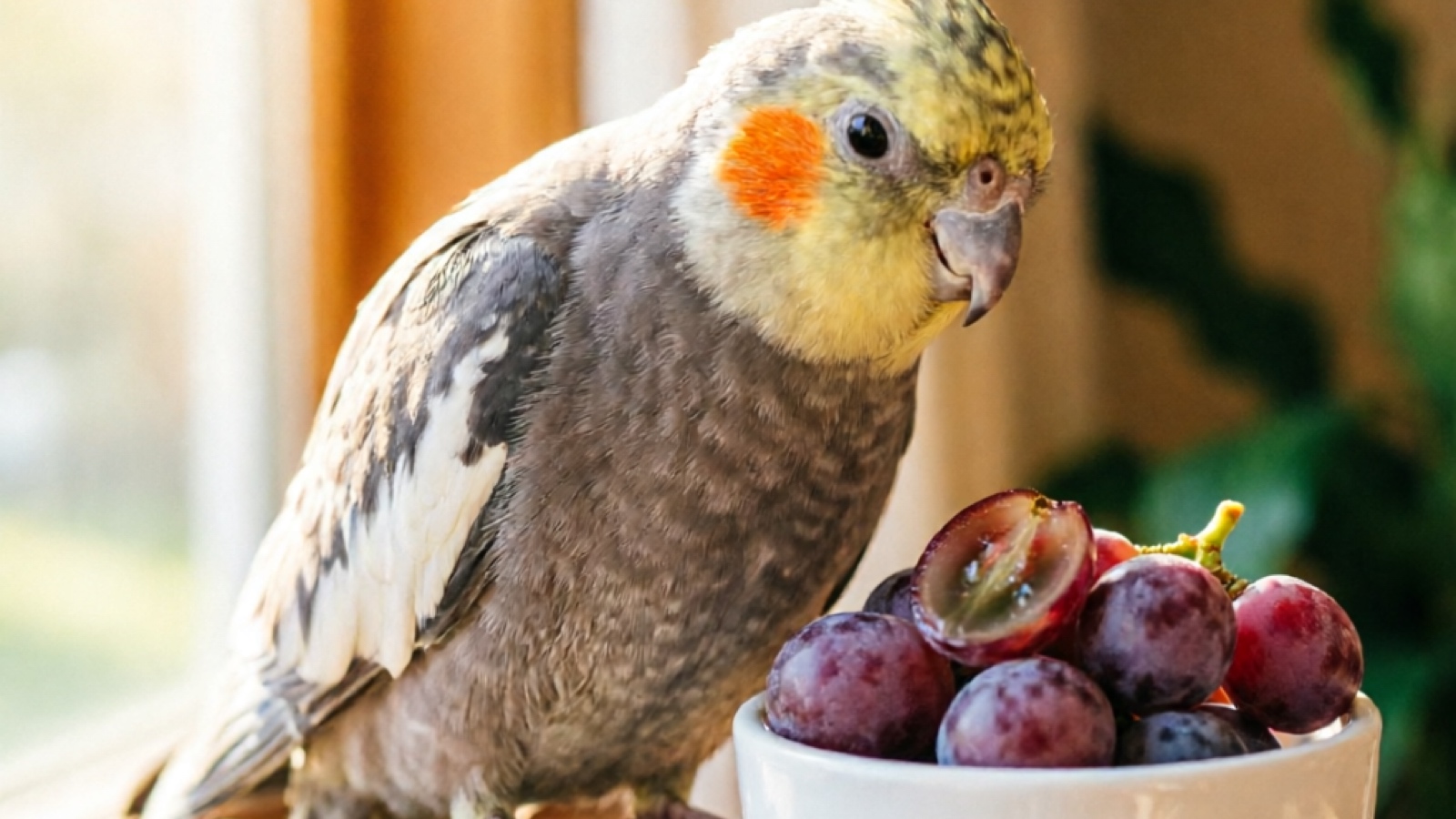
Can Cockatiels Eat Grapes?
Yes — but grapes are a twice-a-week treat at most, not a daily snack. The reason for caution comes down to one number: sugar.
💡 TL;DR: One small grape, cut into halves or quarters, once or twice per week. Remove all seeds. Wash thoroughly. That’s the safe limit for a cockatiel weighing 80-120 grams. A single grape contains roughly 0.7g of sugar — for a bird this size, that’s a meaningful sugar hit. For more frequent fruit treats, choose lower-sugar options like apples or blueberries.
I’ve been offering grapes to my cockatiels for years, and they’re consistently one of the most popular treats. The problem isn’t that grapes are toxic — they’re not. The problem is that cockatiels absolutely love them, which makes it very easy to overfeed. I’ve seen well-meaning owners give their birds a few grapes every day because “he really likes them,” and the consequences are serious. Fatty liver disease is the most common diet-related killer in pet cockatiels, and excess sugar is one of the primary drivers.
In the wild, cockatiels are native to the arid and semi-arid regions of Australia. Their natural diet consists mainly of grass seeds, native grains, and occasional vegetation. Fruit is not a significant part of their ancestral diet. While cockatiels are opportunistic feeders that will eat fruit when available, their bodies are adapted to process seeds — not sugar-heavy fruits.
Understanding this context helps reframe grapes as what they should be for cockatiels: a special-occasion reward that your bird will work for enthusiastically, not something to casually toss into the food bowl every morning.
For a complete guide to proper cockatiel nutrition, see our cockatiel care guide, bird diet guide, and budgie diet guide for broader avian nutrition principles.
Grape Nutrition Facts for Cockatiels
ZENY 53” Flight Cage is a quality option worth considering for your setup.
USDA nutritional data — raw grapes (red or green), per 100g USDA FDC ID 09052 — “Grapes, red or green (European type, such as Thompson seedless), raw”:
| Nutrient (per 100g) | Amount | Relevance to Cockatiels |
|---|---|---|
| Energy | 69 kcal | Moderate calorie density |
| Protein | 0.72g | Very low protein |
| Fat | 0.16g | Very low fat |
| Carbohydrate | 18.1g | High carbohydrate |
| Fiber | 0.9g | Low fiber |
| Sugar | 15.5g | HIGH — the primary concern |
| Water | 80.5g | Good hydration |
| Calcium | 10mg | Low calcium |
| Phosphorus | 20mg | Low phosphorus |
| Potassium | 191mg | Moderate potassium |
| Vitamin C | 3.2mg | Low vitamin C |
| Vitamin K | 14.6µg | Moderate vitamin K |
| Vitamin A | 66 IU | Low vitamin A |
| Resveratrol | Present in skins | Antioxidant (red grapes) |
The Number That Matters Most: 15.5g Sugar
To put 15.5g of sugar per 100g into perspective for a cockatiel:
- A single small grape weighs approximately 4-5g
- That single grape contains roughly 0.6-0.8g of sugar
- A cockatiel weighs 80-120g — roughly 1,500 times less than a human
- If you scale that sugar proportionally to human body weight, one grape for a cockatiel is roughly equivalent to a human eating 12-18 grapes at once
Compare that to a budgie (25-40g), where a single grape scales to 20-30 human grapes. Cockatiels handle sugar somewhat better than budgies simply because they’re bigger, but the risk is still real. The once-or-twice-weekly guideline reflects their larger body size compared to budgies (who should only get grapes once every 1-2 weeks).
Grapes vs Other Fruits for Cockatiels
| Fruit | Sugar (g/100g) | Vitamin C (mg) | Antioxidants | Frequency | Portion |
|---|---|---|---|---|---|
| Grapes | 15.5g | 3.2mg | Moderate (red) | 1-2x/week | 1 small grape |
| Apple | 10.4g | 4.6mg | Moderate | 2-3x/week | 1-2 slices |
| Blueberries | 10g | 9.7mg | High | 2-3x/week | 2-3 berries |
| Mango | 13.7g | 36.4mg | High | 1-2x/week | Small piece |
| Banana | 12.2g | 8.7mg | Moderate | 1-2x/month | Tiny piece |
| Melon (cantaloupe) | 7.9g | 36.7mg | Moderate | 2-3x/week | Small cube |
| Strawberry | 4.9g | 58.8mg | High | 2-3x/week | Half berry |
| Watermelon | 6.2g | 8.1mg | Low | 2-3x/week | Small cube |
The comparison tells the story clearly. Strawberries deliver more than 18 times the vitamin C of grapes with less than a third of the sugar. Apples offer more fiber and a lower sugar load. Blueberries pack far more antioxidants per gram. Grapes aren’t dangerous — but they’re far from the most nutritious fruit available, and their high sugar means they should be the least frequent fruit in your cockatiel’s rotation.
Benefits of Grapes for Cockatiels
Many owners find that Hagen Tropimix works well for their pet’s needs.
Antioxidants (Red Grapes)
Red grape skins contain resveratrol, a well-studied antioxidant that supports cellular health and has anti-inflammatory properties. If you’re going to feed grapes, red varieties offer a slight nutritional edge. However, at one-grape serving sizes, the antioxidant benefit is modest — this is a secondary bonus, not a reason to feed more.
Hydration
At 80.5% water, grapes provide meaningful hydration. During warm weather or in dry indoor environments (especially in heated homes during winter), the extra moisture is helpful. Most cockatiels get adequate hydration from their water dish, so this is a supplementary benefit rather than a primary reason to feed grapes.
Vitamin K
At 14.6µg per 100g, grapes provide moderate vitamin K for blood clotting and bone metabolism. However, dark leafy greens and vegetables deliver far more vitamin K per gram with significantly less sugar. I’d consider this a minor bonus at best.
Potassium
At 191mg per 100g, grapes contribute moderate potassium for heart rhythm and muscle function. This supports healthy nerve signaling and can be beneficial for active cockatiels, though the small serving size limits the practical impact.
Mental Enrichment and Bonding
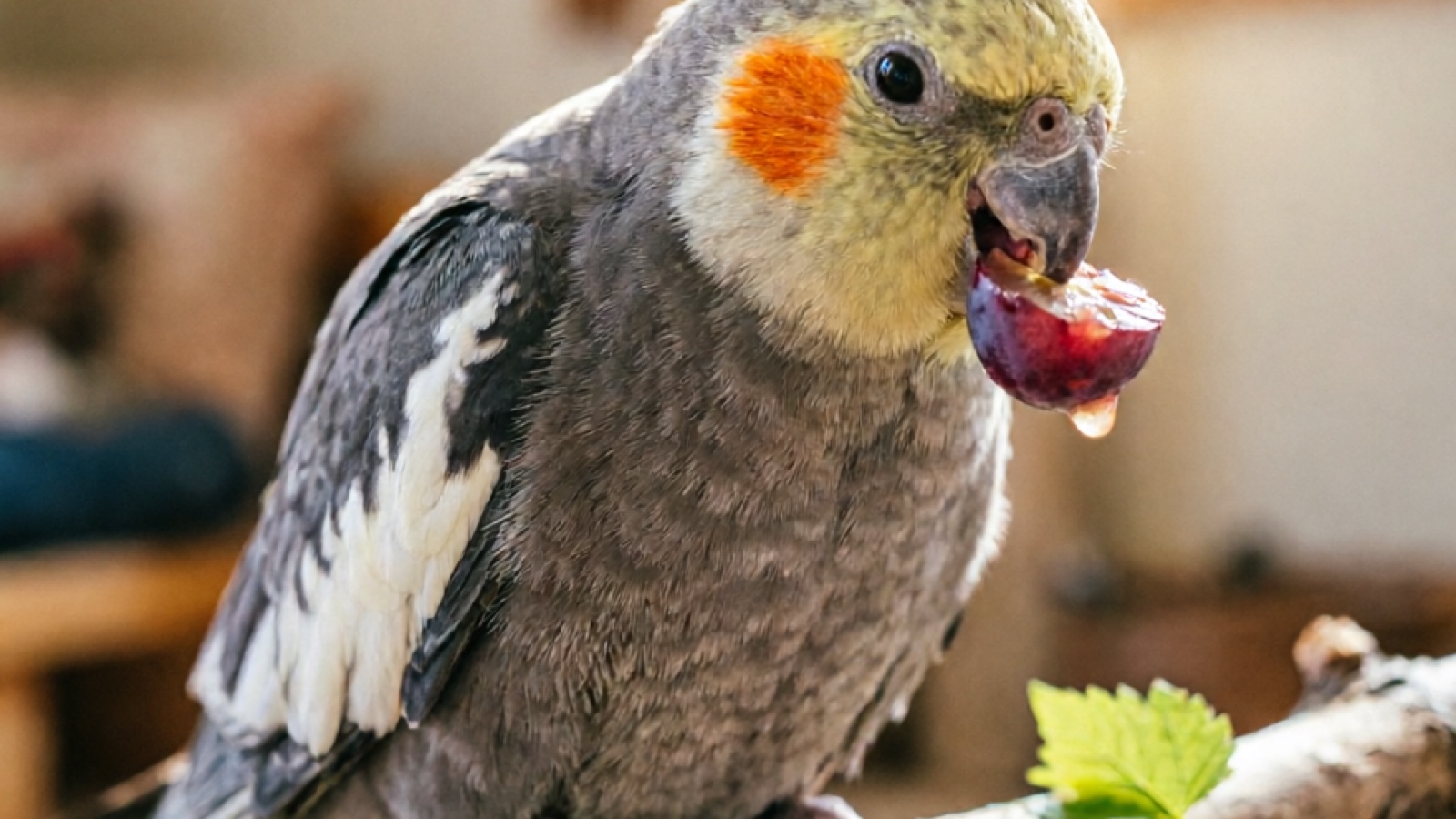
This is the benefit I value most with grapes. Cockatiels genuinely enjoy them — the sweetness and juiciness make grapes one of the most motivating treats available. As a training reward, a small piece of grape can reinforce good behavior far more effectively than a pellet. I’ve used thin grape slices to train step-up commands, target training, and recall — cockatiels will work for them enthusiastically.
The bonding aspect matters too. Hand-feeding a grape piece is a trust-building exercise, and many cockatiels will gently take a grape half from your fingers in a way that strengthens your relationship. Just make sure the treat doesn’t become an expectation rather than a reward.
Easy to Prepare
No peeling, no cooking, minimal cutting. Seedless grapes are among the easiest fruits to prepare: wash, cut in half, check for seeds, and serve. This convenience makes them a practical option even if they’re not the most nutritious choice in the fruit aisle.
Risks and Precautions
For this purpose, Yaheetech 64” Open Top Bird Cage is a popular choice among pet owners.
High Sugar — The Primary Danger
This is the single most important risk with grapes for cockatiels. Excess dietary sugar in birds triggers a cascade of serious health problems:
-
Fatty liver disease (hepatic lipidosis): This is the most common diet-related killer in pet cockatiels and the single biggest reason to limit sugar intake. Excess sugar is metabolized by the liver and stored as fat. Over months and years, the liver becomes infiltrated with fat tissue, progressively losing its ability to function. Symptoms include lethargy, a swollen abdomen, overgrown beak and nails, and yellowish discoloration of the urates (white part of droppings). By the time most owners notice symptoms, the disease is often advanced. Hepatic lipidosis can be managed if caught early through dietary changes, but it’s frequently irreversible in later stages. I’ve seen too many cockatiels lost to this disease — it’s preventable with proper diet.
-
Obesity: Overweight cockatiels have shortened lifespans, reduced flight ability, and are more susceptible to respiratory infections and heart problems. A healthy cockatiel should have a visible keel bone (the ridge running down the center of the chest). If the chest feels rounded or padded with fat, your bird is likely overweight.
-
Diabetes: Cockatiels can develop diabetes mellitus from chronically elevated blood sugar. Symptoms include increased thirst, increased urination (watery droppings), and weight loss despite normal appetite. Diabetes requires lifelong management and significantly reduces quality of life.
-
Behavioral problems: Sugar highs in cockatiels manifest as hyperactivity, territorial aggression, excessive screaming, and feather plucking. In my experience, behavioral changes are often the first visible sign of dietary sugar overload — and they’re usually reversible when the sugar source is eliminated.
-
Crop and digestive issues: Large amounts of sugary fruit can slow crop emptying and disrupt the normal gut flora. This can lead to sour crop (crop stasis), where food ferments in the crop instead of passing through. Symptoms include regurgitation, foul breath, and a swollen crop area.
Grape Seeds — Cyanide Risk
Grape seeds contain amygdalin, a cyanogenic glycoside that releases small amounts of hydrogen cyanide when digested. For a cockatiel (80-120g), the risk from a single seed is lower than for a budgie (25-40g) simply due to body mass — but the cumulative effect of regular seed ingestion is concerning. Chronic cyanide exposure damages the liver, kidneys, and nervous system over time.
The solution is straightforward: buy seedless grape varieties (Thompson Seedless, Flame Seedless, etc.) and always cut each grape open to verify no seeds are present before serving. “Seedless” grapes can occasionally contain small, underdeveloped seed remnants. A quick visual check takes two seconds and could save your bird’s health.
Pesticide Residue
Grapes consistently rank among the Dirty Dozen — the Environmental Working Group’s list of the most pesticide-contaminated fruits. For an 80-gram cockatiel, proportional pesticide exposure is far more dangerous than for a human. Thorough washing is non-negotiable:
- Remove grapes from the stem
- Rinse under cool running water for 15-20 seconds, gently rubbing each grape
- Soak in 1:3 vinegar-water solution for 2-3 minutes
- Rinse again thoroughly under running water
- Pat dry with a clean paper towel
- Organic grapes are strongly preferred
Choking Hazard
Whole grapes can be a choking risk for cockatiels, especially smaller individuals. While a cockatiel’s beak is larger and more powerful than a budgie’s, an entire grape can still be swallowed too quickly. Always cut grapes into halves or quarters before serving.
Serving Guide for Cockatiels
Average Adult Cockatiels (80-120g)
This covers the vast majority of pet cockatiels:
- Amount: 1 small grape, cut into halves or quarters
- Frequency: Once or twice per week
- Preparation: Cut in half, remove all seeds, cut each half in half again if your bird is on the smaller side
- Why this limit: One grape provides about 0.7g of sugar. A cockatiel’s daily treat sugar budget should stay under 1-2g. One grape fits within that budget; two would push it.
Smaller Cockatiels (75-90g)
Some cockatiels, particularly females and younger birds, run on the smaller side:
- Amount: 1 small grape, cut into quarters
- Frequency: Once per week (start here, increase to twice if your bird maintains healthy weight)
- Preparation: Cut into quarters — each piece should be roughly the size of a blueberry
- Note: Smaller birds have less metabolic capacity to process sugar. Err on the conservative side.
Larger Cockatiels (100-120g)
Some males and larger individuals:
- Amount: 1 small-to-medium grape, cut in half
- Frequency: Once or twice per week
- Preparation: Halves are fine for larger birds; quarters are even safer
- Note: Even at the upper end of cockatiel size, these birds are still small enough that sugar management matters. Don’t confuse “larger cockatiel” with “can handle more sugar.”
Baby Cockatiels (Under 12 Weeks)
No grapes, no fruit, no exceptions. Young cockatiels need:
- 0-3 weeks: Parent feeding (crop milk) or commercial hand-feeding formula
- 3-6 weeks: Transitioning to weaning pellets or soft seed mix
- 6-12 weeks: Fully weaning onto pellets and seed mix
- 12-16 weeks: Begin introducing vegetables first (leafy greens, grated carrots)
- 16+ weeks: Introduce safe fruits starting with apple pieces — grapes should be one of the last fruits introduced, only after your bird has tolerated milder fruits without digestive upset
Senior Cockatiels (10+ Years)
Senior cockatiels are at elevated risk for fatty liver disease and diabetes. If your senior bird shows any signs of liver problems (overgrown beak, swollen abdomen, yellowish urates), eliminate grapes entirely. Many avian vets recommend minimizing all fruit for cockatiels with diagnosed hepatic lipidosis. If your senior is otherwise healthy, the standard once-or-twice-weekly limit still applies.
Overweight Cockatiels
If your cockatiel is carrying excess weight (rounded chest with no visible keel bone, difficulty flying short distances), grapes should be eliminated or reduced to once every two weeks as a very rare treat. Focus on low-calorie vegetables (leafy greens, broccoli florets, grated carrots) as treats instead. Weight management in cockatiels requires patience — aim for gradual loss over several weeks through portion control and increased activity, never crash dieting.
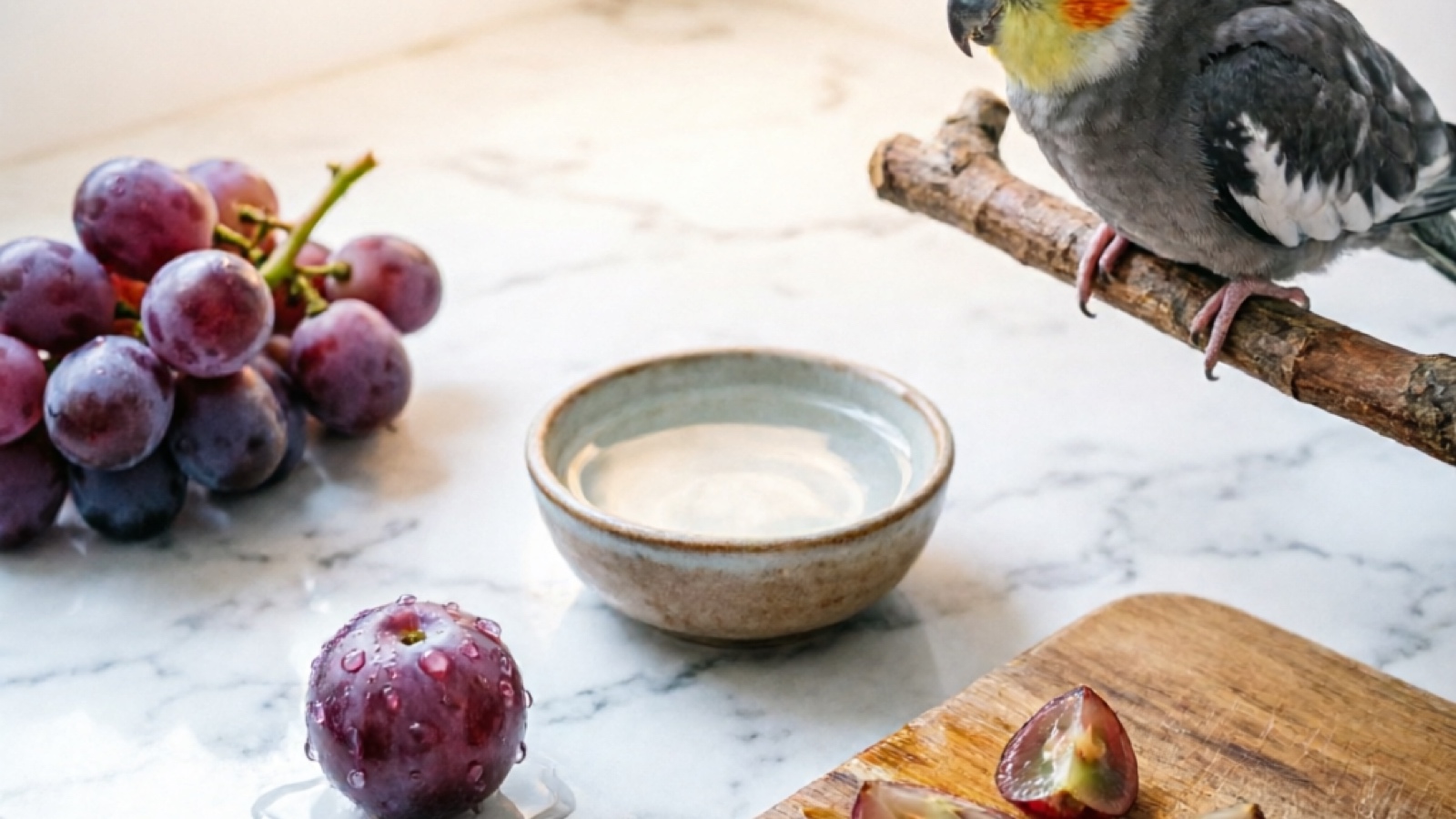
How to Prepare Grapes for Your Cockatiel
Step 1: Choose the Right Grapes
- Seedless varieties only — Thompson Seedless, Flame Seedless, or any clearly labeled seedless option
- Red or green — both are safe; red has slightly more antioxidants (resveratrol)
- Firm and plump — no wrinkles, soft spots, or mold
- Organic preferred — grapes are consistently high in pesticide residue
- Avoid grapes with an unusually thick white coating — while natural bloom is normal, very thick coatings may indicate heavy pesticide or wax application
Step 2: Wash Thoroughly
This step matters — grapes are a Dirty Dozen regular:
- Remove all grapes from the stem
- Rinse under cool running water for 15-20 seconds, gently rubbing each grape with your fingers
- Soak in a 1:3 white vinegar to water solution for 2-3 minutes
- Rinse again thoroughly under running water
- Pat dry with a clean paper towel
Step 3: Remove Seeds (Even for “Seedless” Varieties)
This takes only a few seconds per grape and eliminates a real risk:
- Cut each grape in half with a clean knife
- Inspect both halves — look for small white, green, or brown dots (underdeveloped seeds)
- Remove any seeds found with the knife tip or your fingernail
- Even tiny seed remnants should be removed
Step 4: Cut Into Appropriate Pieces
- Standard cut: Halves for average-to-larger cockatiels
- Safer cut: Quarters for smaller cockatiels or if you want to be extra cautious
- Never serve whole grapes — even though a cockatiel can physically handle a whole grape, cutting reduces choking risk and lets you inspect for seeds
Step 5: Serve in a Clean Dish
Offer grape pieces in a small, clean dish separate from the main pellet bowl. This prevents grape juice from making pellets or seeds damp and moldy. I’ve found that placing grape pieces in a shallow dish or on a foraging platform in the cage keeps them contained and reduces waste.
Step 6: Remove Uneaten Pieces After 2 Hours
Cut grapes spoil at room temperature. Remove any uneaten pieces after 2 hours to prevent bacterial growth. During warmer months, reduce this to 1 hour.
What to Avoid
Raisins and Dried Grapes
Raisins are essentially concentrated sugar bombs — approximately 60g of sugar per 100g, compared to 15.5g in fresh grapes. That’s nearly four times the sugar per gram. They’re also sticky, which can cause crop impaction in birds (the sticky texture clumps in the crop rather than passing through). Avoid all dried grapes and raisins entirely.
Grape Juice
Grape juice is concentrated sugar without the fiber that helps slow absorption in whole fruit. Even 100% pure, no-sugar-added grape juice is dangerous for cockatiels — the sugar hits their bloodstream too quickly. Fresh, whole fruit in small portions is always better than any juice.
Grape Leaves and Vines
While grape leaves are edible for humans and used in cooking across many cultures, their safety for cockatiels hasn’t been established. The oxalate content of grape leaves could be problematic for birds. Stick to the grape itself.
Seeded Grapes (Unprepared)
Never hand your cockatiel a whole, uncut seeded grape. The combination of choking risk and cyanide-releasing seeds makes this dangerous. Always cut, inspect, and serve in pieces.
Flavored or Candied Grapes
Cotton candy grapes, candy-coated grapes, chocolate-covered grapes, or any processed grape product contains added sugar, artificial flavors, or toxic ingredients (chocolate is lethal to birds). Plain, raw grapes only — always.
Daily Feeding
The single most common mistake with grapes is frequency. Cockatiels love grapes, and it’s tempting to give them one every day as a treat. But daily sugar at this level is a direct path to fatty liver disease. The once-or-twice-weekly guideline isn’t arbitrary — it reflects how a cockatiel’s body processes sugar relative to its small size.
Feeding Grapes as a Diet Staple
Grapes are a treat, not a food group. In a healthy cockatiel diet, treats (all fruit combined) should make up less than 10% of total food intake. The remaining 90%+ should come from high-quality pellets supplemented with fresh vegetables and leafy greens. For a complete dietary breakdown, see our bird diet guide.
Safer Alternatives to Grapes
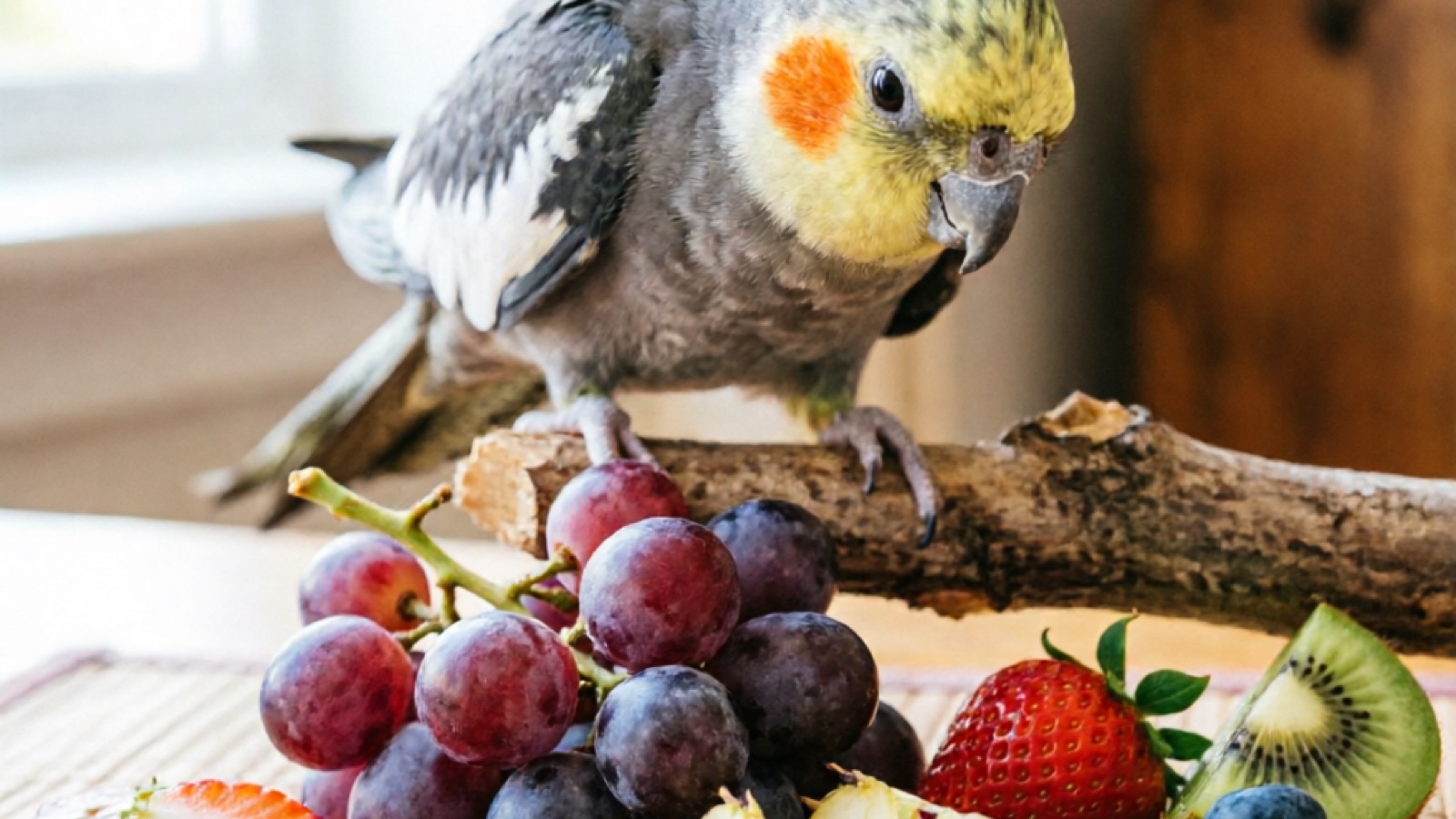
If your cockatiel enjoys fruit (and most do), there are objectively better options that provide more nutrition with less sugar.
Best Fruit Options (2-3 Times Per Week)
- Blueberries — excellent antioxidants with less sugar than grapes (10g/100g), bite-sized, and most cockatiels enjoy them. 2-3 berries per serving.
- Apples — low sugar (10.4g/100g), good crunch, easy to prepare. Remove all seeds. Granny Smith variety has the lowest sugar (~7g). 1-2 thin slices per serving.
- Strawberries — very low sugar (4.9g/100g), high vitamin C (58.8mg — 18 times more than grapes), high antioxidants. Half a strawberry is plenty.
- Melon (cantaloupe) — low sugar (7.9g/100g), high vitamin A and C, excellent hydration. Small cube-sized pieces.
Good Fruit Options (1-2 Times Per Week)
- Mango — high vitamin C (36.4mg) and beta-carotene, moderate sugar (13.7g). Small piece only.
- Papaya — contains papain enzyme that may aid digestion, low sugar (7.8g). Small piece.
Occasional Treats (1-2 Times Per Month)
- Banana — moderate sugar (12.2g), very popular with most cockatiels. Tiny piece only — less than your pinky fingernail.
- Grapes — one small grape, once or twice per week. They work, but there are better options for regular rotation.
Vegetables Should Outnumber Fruit
The healthiest cockatiel diets have vegetables appearing far more frequently than fruit. Dark leafy greens, broccoli florets, grated carrots, cooked sweet potato, and bell pepper strips should be daily or near-daily staples. Fruit is the garnish — enjoyable, but not nutritionally central.
Other Foods Your Cockatiel Can Eat
Each link leads to a full safety guide with serving recommendations.
Fruits
- Can Cockatiels Eat Apples?
- Can Budgies Eat Grapes? (same family, different portion sizes)
- Can Budgies Eat Spinach? (leafy green guidelines)
Core Guides
- Cockatiel Care | Bird Diet Guide
- Budgie Diet Guide | Parakeet Care
- Bird Cage Setup | Best Cockatiel Cage
- Best Parakeet Cage | Best Cockatiel Toys
- Bird Training
Cockatiel Behavior
- Why Does My Cockatiel Bob Its Head?
- Why Does My Cockatiel Hiss?
- Why Does My Budgie Bite?
- Why Does My Budgie Puff Up?
- Why Is My Budgie Screaming?
Product Recommendations
Here are some products mentioned in this guide:
Frequently Asked Questions
Can cockatiels eat grapes?
Yes, in strict moderation. One small grape cut into halves or quarters, once or twice per week. Grapes are high in sugar (15.5g per 100g), which can lead to fatty liver disease, obesity, and diabetes when fed too frequently. Remove all seeds, wash thoroughly, and cut into bite-sized pieces.
Can cockatiels eat grape seeds?
No. Grape seeds contain amygdalin, which releases cyanide when digested. While a cockatiel’s larger body size makes acute poisoning from a single seed less likely than in budgies, regular seed exposure is harmful. Use seedless varieties and inspect each piece before serving.
Can cockatiels eat grapes everyday?
No. Daily grape feeding provides too much sugar for a cockatiel’s small body to process safely. Chronic excess sugar causes fatty liver disease (the most common diet-related killer in pet cockatiels), obesity, diabetes, and behavioral problems like aggression and screaming. Limit to once or twice per week.
Can cockatiels eat green grapes or red grapes?
Both are safe. Red grapes contain slightly more resveratrol (an antioxidant) in their skins, but the nutritional difference is modest at cockatiel serving sizes. Sugar content is nearly identical between colors. Seedless varieties of either color are preferred.
How much grape can a cockatiel eat?
One small grape per serving. Cut into quarters for smaller cockatiels (75-90g), or halves for larger ones (100-120g). Once or twice per week. A single grape contains about 0.7g of sugar, which is close to the maximum treat sugar a cockatiel should have in one sitting.
Can cockatiels eat raisins?
No. Raisins concentrate sugar to roughly 60g per 100g — nearly four times the sugar of fresh grapes. The sticky texture also risks crop impaction. Stick to fresh, raw grapes in proper portions.
Can baby cockatiels eat grapes?
No. Under 12 weeks, no fruit at all. After 12 weeks, introduce vegetables first, then safer fruits like apple pieces. Grapes should be one of the last fruits introduced — only after your bird has tolerated other fruits without digestive upset.
What fruits are better than grapes for cockatiels?
Blueberries (less sugar, more antioxidants), strawberries (very low sugar, high vitamin C), and apple slices (low sugar, good crunch) are all better choices for regular rotation. Grapes should be the least frequent fruit in your cockatiel’s diet — the sugar-to-nutrition ratio simply doesn’t compare to these alternatives.