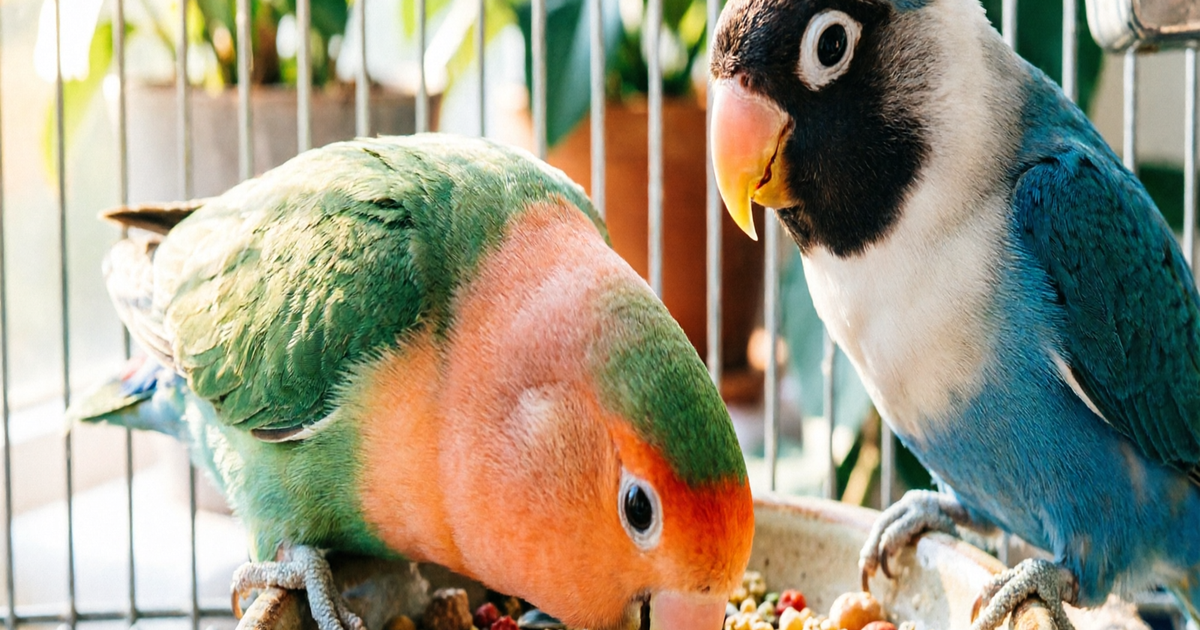
If you’re asking yourself why does my budgie bite, you’re not alone — and no, your bird doesn’t hate you. Biting is one of the most common concerns budgie owners bring up, and it’s almost always a communication issue rather than a behavioral one.
Budgies use their beaks the way we use our hands: to explore, test surfaces, express emotions, and set boundaries. So why does my budgie bite? The key to stopping it isn’t punishment — it’s learning what your budgie is trying to tell you.
In this guide, I’ll explain why does my budgie bite in the first place, walk you through the 7 real reasons budgies bite, how to read their body language before a bite happens, and practical steps to build trust so the biting stops for good.
Understanding Budgie Biting Behavior
If you’re reading this because you want to understand why does my budgie bite, you’re already on the right track — awareness is the first step. Before diving into why does my budgie bite, it helps to understand that not all biting is the same:
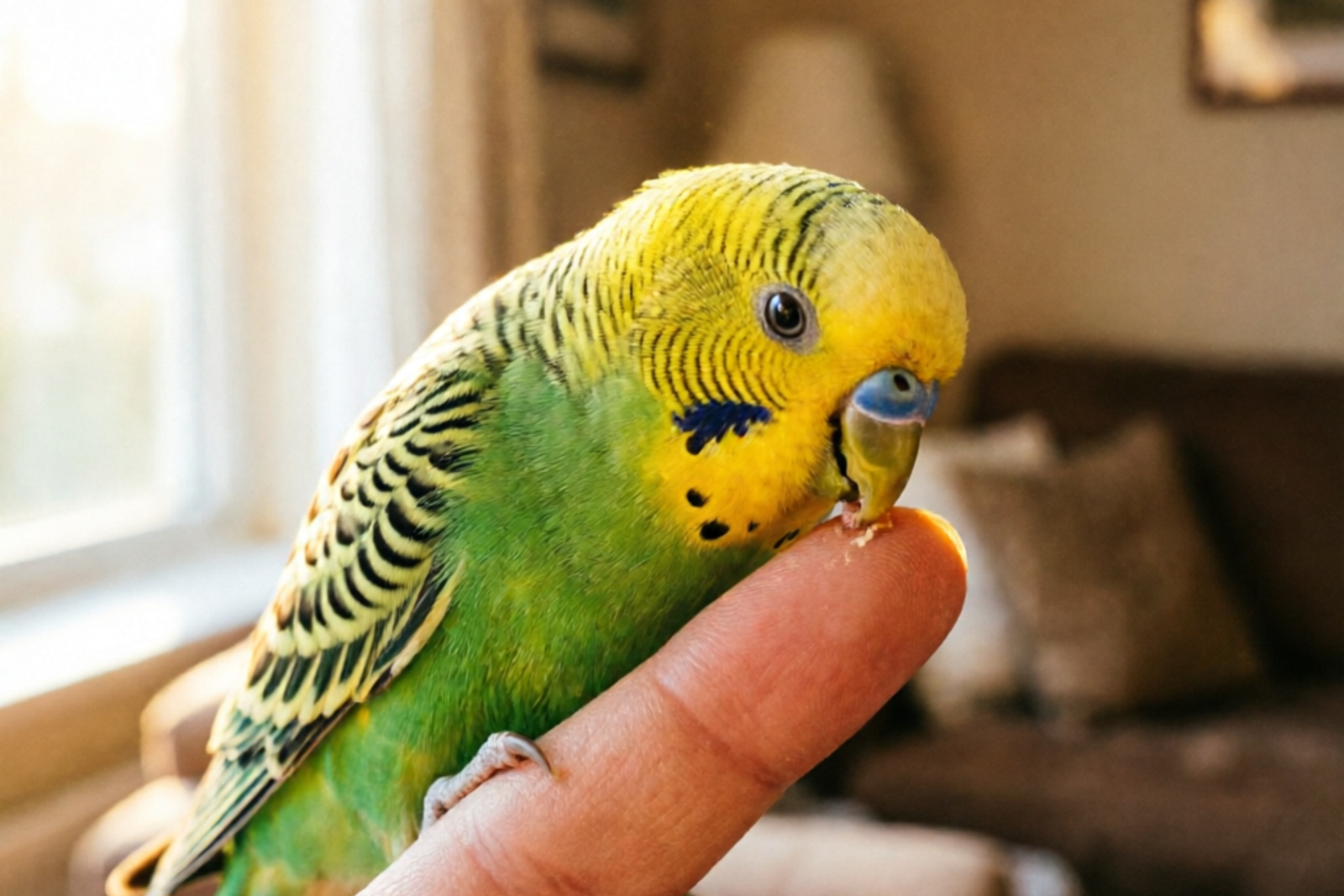
Exploratory nibbling is gentle, curious beaking where your budgie softly mouths your finger or an object. This is normal and actually a sign of trust — they’re using their beak to learn about their environment. Think of it as a toddler putting everything in their mouth — it’s how they gather information.
Warning bites are quick, deliberate nips that say “stop what you’re doing.” These don’t usually break the skin but are firm enough to get your attention. Your budgie is setting a boundary, and respecting it is the fastest way to reduce future biting.
Aggressive bites are hard, sustained bites that can break the skin and draw blood. These are almost always rooted in fear, pain, or severe territorial instinct. If you’re getting aggressive bites regularly, something fundamental in your budgie’s environment or routine needs to change. Understanding why does my budgie bite aggressively is the first step toward fixing it.
The difference matters because each type requires a different response. Punishing any form of biting — even the aggressive kind — usually makes it worse, because it destroys trust and confirms your budgie’s fear.
7 Reasons Why Your Budgie Bites
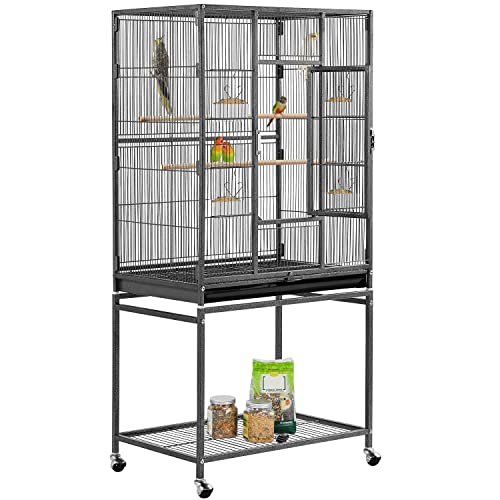
Yaheetech 54” Flight Cage is a quality option worth considering for your setup.
1. Fear or Feeling Threatened
The question why does my budgie bite is most often answered by fear. The most common question I get from new budgie owners is: why does my budgie bite? And the honest answer is that it depends — but fear is almost always involved. This is the single most common reason budgies bite, especially in newly acquired birds. If you’re wondering why does my budgie bite my finger specifically, it’s almost always because a hand approaching from above triggers their prey-animal survival instinct. In the wild, budgies are prey animals — their survival instinct tells them that anything approaching from above or moving quickly is a predator. A human hand reaching into a cage from above triggers exactly that response.
Common fear triggers include:
- Sudden hand movements toward the cage
- Loud noises (vacuum cleaner, shouting, slamming doors)
- Unfamiliar people or pets approaching
- Being grabbed or cornered
- New objects introduced to their space
Body language to watch for: A scared budgie will flatten its feathers against its body, pin its eyes (pupils shrink to tiny dots), lean away from you, and may open its beak slightly as a warning. If you see these signs, back off immediately. The budgie is telling you as clearly as it can that it’s not ready.
When someone tells me why does my budgie bite and describes the behavior, I can usually identify the cause within minutes. The fix is patience. Let your budgie set the pace. Sit near their cage without reaching in. Offer treats from your open palm and let them come to you. Most fear-based biting resolves within 2-4 weeks of consistent, gentle interaction.
2. Lack of Trust (New or Untamed Budgie)
If you just brought your budgie home, biting is expected. When trying to figure out why does my budgie bite after bringing them home, remember that trust takes time. If you’re dealing with a baby budgie biting me situation, that’s actually developmental — baby budgies use their beaks to explore the world, similar to human teething. These birds have been through enormous stress — captured, transported, placed in a new environment with unfamiliar sounds and smells. Their entire world just changed.
Even budgies from breeders need time to adjust. A hand-tamed baby budgie may regress temporarily in a new home. This is completely normal and not a reflection of the bird’s temperament or your skills as an owner.
Building trust takes patience, not force:
- Spend 15-20 minutes twice daily sitting near the cage, talking softly
- Offer millet spray from your hand — let them approach on their terms
- Avoid reaching into the cage for the first week
- Move slowly and predictably — no sudden gestures
- Don’t try to towel-wrap or grab your budgie until trust is established
Most budgies will step up willingly onto a finger within 3-4 weeks if you follow this routine. For owners asking about how to stop baby budgie biting specifically, the approach is slightly different — baby budgie beaking is mostly exploratory and usually resolves on its own by 6-8 months of age. Rushing the process is the fastest way to guarantee more biting. Think of it like building any relationship — trust can’t be forced, only earned.
3. Territorial Behavior
One reason why does my budgie bite is territorial instinct — the cage is their safe space. Budgies can be fiercely territorial, especially around their cage. In the wild, a budgie’s nest cavity is their most valuable resource — protecting it is instinctual. Your bird’s cage is essentially their bedroom, and nobody likes having someone barge into their bedroom uninvited.
Signs of territorial biting include:
- Biting when you reach into the cage
- Lunging at your hand near food bowls or favorite toys
- Aggression that’s limited to inside or near the cage but disappears when the bird is out
- Increased territorial behavior during breeding season (spring and early summer)
If you’re wondering why does my budgie bite more in spring, breeding hormones are likely the cause. Hormonal territoriality is particularly common in female budgies and can be intense. A hormonal hen may defend her cage, food bowl, or even a favorite toy with surprising ferocity. This is driven by biology, not personality — it will pass once hormone levels normalize.
For cage-related territorial biting, try training your budgie to step onto a perch rather than your hand when you need to move them. Open the cage door and let them come out voluntarily when possible. This respects their space while still giving you the interaction you want.
4. Pain or Illness
If your normally gentle bird suddenly starts biting, why does my budgie bite now? The answer may be pain. This is the reason most owners overlook. Birds are masters at hiding illness — in the wild, showing weakness makes you a target. By the time a budgie shows obvious symptoms, the condition is often advanced. This survival mechanism means your bird could be in significant discomfort and you might not know until the biting starts.
A sudden change in biting behavior can be a pain signal. If your normally gentle budgie starts biting when you touch a specific area (near the beak, crop, or feet), it may be injured or sick. If you notice budgie biting feet specifically, this often indicates foot mites, bumblefoot, or joint pain — all requiring veterinary attention.
Red flags that suggest illness-related biting:
- Biting only when touched in a specific area
- Puffed-up feathers for extended periods
- Changes in droppings (color, consistency, frequency)
- Loss of appetite or weight loss
- Sitting at the bottom of the cage
- Tail bobbing (labored breathing)
- Sleeping more than usual
If you notice why is my budgie aggressive all of a sudden, the most likely culprits are hormonal changes, sleep deprivation, or an undiagnosed health issue. Sudden aggression in a previously gentle bird warrants a vet check. Budgie biting feathers is a separate issue — it usually indicates stress, boredom, or skin irritation rather than aggression toward people. If budgie biting feathers is accompanied by bald patches, see an avian vet immediately.
If you notice any of these signs alongside new biting behavior, see an avian vet promptly. If you keep asking why does my budgie bite despite everything seeming fine, a vet check is the next step. Budgies deteriorate quickly when ill — waiting even a day or two can make a significant difference. The cost of a vet visit is far less than the cost of losing a bird that could have been treated.
5. Boredom or Lack of Stimulation
A bored budgie is a frustrated budgie, and frustration often comes out as biting. If you’re wondering why does my budgie bite everything in sight — toys, perches, cage bars — boredom is likely the answer. Budgies are highly intelligent and active — in the wild, they spend hours foraging, flying, socializing, and exploring. A cage, no matter how nice, can’t replicate that level of stimulation.
A budgie kept in a bare cage with one toy and no out-of-cage time has no outlet for all that energy. The result can be destructive behavior including feather plucking, excessive screaming, and biting. If you find yourself Googling why does my budgie bite after buying a bare cage setup, the cage environment is the problem. If you notice budgie biting cage bars repeatedly, this is a clear sign of boredom and insufficient enrichment. Budgie nipping at cage bars is also common in birds that don’t get enough flight time. I’ve seen budgies that were labeled “aggressive” completely transform simply by adding more enrichment and out-of-cage time.
Signs of a bored budgie include screaming, bar biting, pacing, and destructive chewing.
Enrichment essentials:
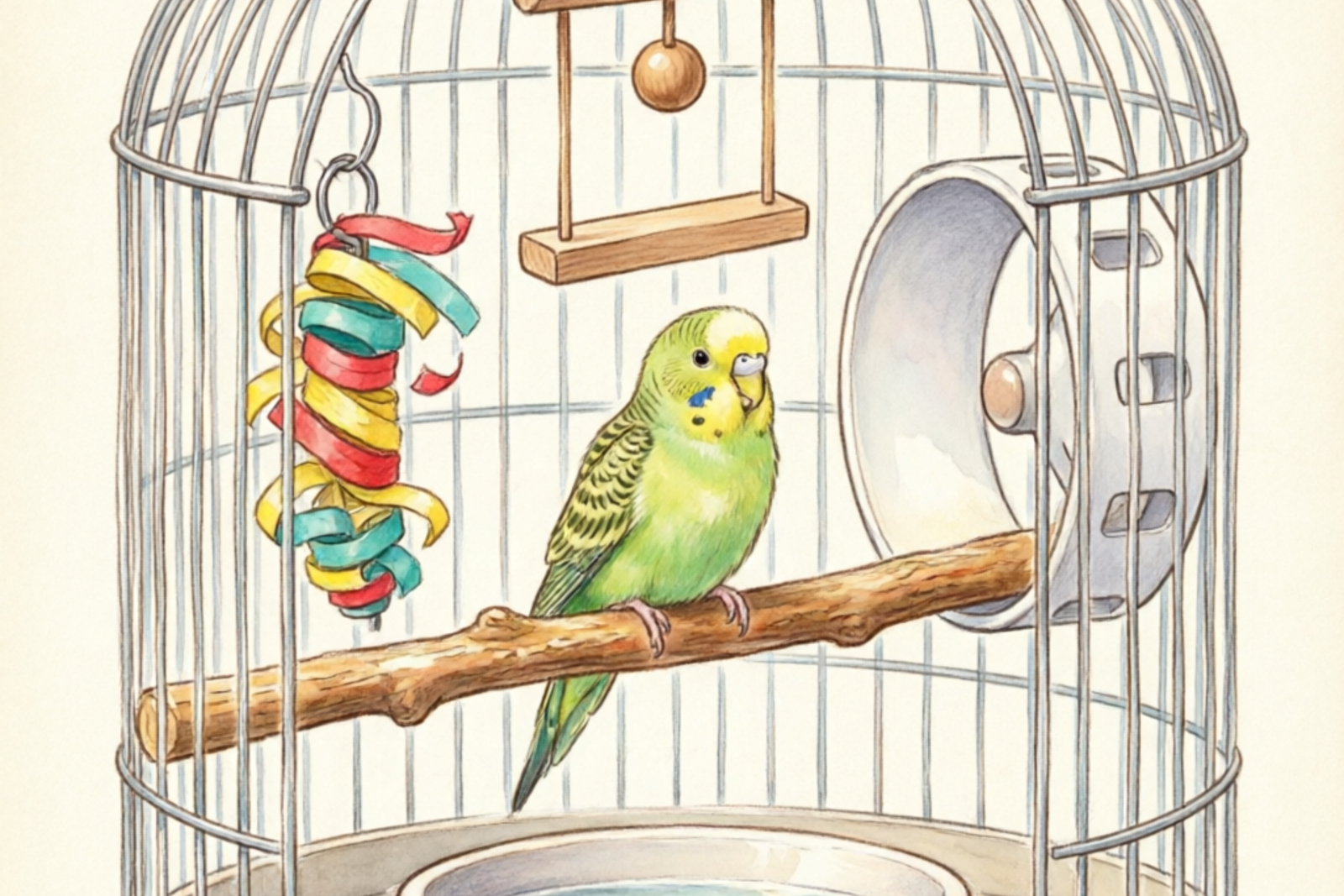
- Rotate toys weekly to maintain novelty
- Provide foraging opportunities (treat-hidden toys, cardboard to shred)
- Aim for at least 1-2 hours of supervised out-of-cage time daily
- Add a variety of toy types: shredding, swinging, puzzle, and mirror toys
- Place the cage where your budgie can see household activity but still has a quiet retreat
A well-stimulated budgie is a calmer, happier bird — and far less likely to bite.
6. Hunger or Nutritional Deficiency
Many owners searching for why does my budgie bite don’t realize hunger is a trigger. Hunger-related aggression is more common than most owners realize. A budgie that’s not getting enough food — or the right nutrients — can become irritable and bite-prone. If my budgie keeps biting me around feeding time, hunger is likely the culprit. Think about how you feel when you’re hungry — now imagine you can’t communicate that feeling except by biting.
Food aggression typically shows up around the food bowl. Your budgie may lunge or bite when you approach during feeding time, or when you reach near their seed dish. In multi-bird households, food-guarding is especially common and can lead to serious fights if not managed.
Beyond simple hunger, nutritional deficiencies can affect mood and behavior. A poor diet lacking in vitamins, minerals, or adequate protein can contribute to irritability, feather problems, and overall poor health.
Ensure your budgie has:
- A high-quality seed mix or pellets as the dietary base
- Fresh vegetables daily (leafy greens, carrot, broccoli)
- Clean water available at all times
- Cuttlebone or mineral block for calcium
- Limited treats (millet is great for training, but not as a staple)
7. Overstimulation or Irritability
Even friendly, well-bonded budgies have limits. If you’re asking why does my budgie bite during handling sessions, overstimulation is a likely cause. If my budgie keeps biting me despite bonding, overstimulation is often the cause. Just like humans get cranky when tired or overwhelmed, budgies can become irritable from too much handling, not enough sleep, or simply too much going on around them. A budgie that was perfectly happy on your shoulder five minutes ago might bite if they’ve simply had enough.
Signs of overstimulation:
- Your budgie was fine being handled but suddenly nips after 10-15 minutes
- They start pacing or fidgeting on your hand
- Tail flicking or rapid head movements
- They fly off after previously staying put
Budgies need 10-12 hours of sleep per night in a quiet, dark environment. A budgie kept in a living room with the TV on until midnight is chronically sleep-deprived, and this alone can cause significant behavioral changes including biting. I’ve worked with owners who solved persistent biting problems simply by moving the cage to a quieter room at night.
The fix: Respect your budgie’s boundaries. If they start showing signs of irritation, put them back in their cage calmly — no drama, no scolding. Short, positive interactions are far more valuable than long sessions that end in biting. Five good minutes beats thirty minutes that ends with blood.
How to Stop Your Budgie from Biting
Many owners find that Kaytee Forti-Diet Pro Health works well for their pet’s needs.
Now that you understand why your budgie bites, here’s how to stop budgie biting for good:
The first step in addressing why does my budgie bite is to understand the trigger behind each incident. React calmly (this is critical). When your budgie bites, do not yell, shake your hand, or put them back in their cage as punishment. A dramatic reaction teaches them that biting gets attention — and to a budgie, any attention (even negative) is still interaction. Instead, calmly say “no” in a firm but quiet voice, and withdraw your hand for 30 seconds. Then try again.
Use positive reinforcement. Reward good behavior — when your budgie steps up without biting, immediately offer a small treat and verbal praise. Target training is one of the most effective ways to build trust and redirect biting behavior. A clicker and some millet spray can work wonders in just a few sessions.
Understanding why does my budgie bite means learning to read their body language first. Read body language. Most bites are preceded by clear warning signs. Pinned eyes, flattened feathers, open beak, leaning away — these all mean “I’m not comfortable, please stop.” Learning to read these signals lets you prevent bites before they happen. The best bite is the one that never occurs because you read the signs and backed off in time.
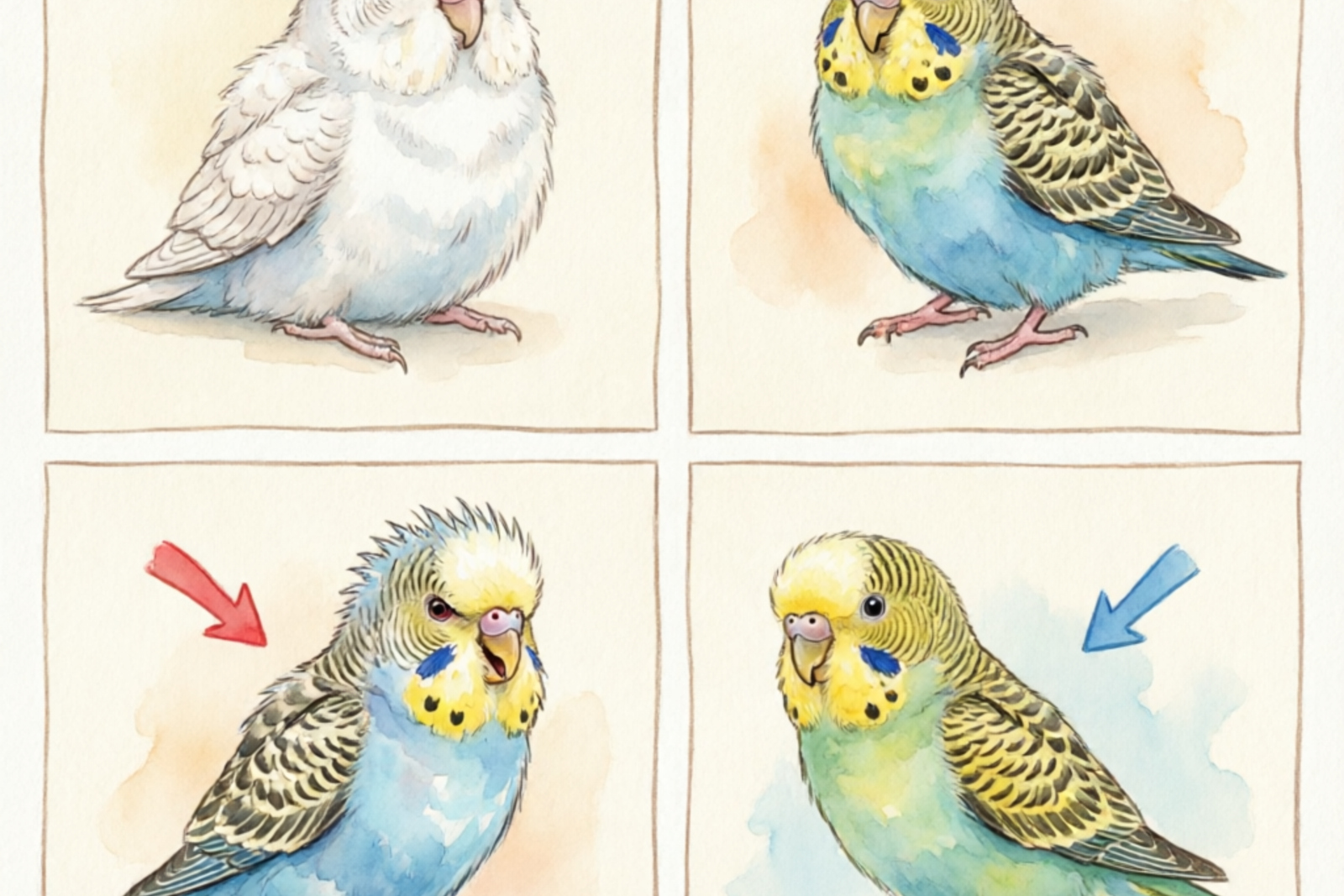
Establish a routine. Budgies thrive on predictability. Feed them, interact with them, and let them out at roughly the same times each day. A consistent routine reduces anxiety and territorial behavior. Your budgie should be able to anticipate what happens next — it makes them feel secure.
To truly solve why does my budgie bite, you must address the underlying cause. Address the root cause, not the symptom. If your budgie bites from fear, work on trust-building. If from boredom, improve their environment. If from hormones, wait it out and avoid triggering situations. Biting is a symptom — the underlying cause is what needs fixing. Treating the symptom (punishment) while ignoring the cause (fear, pain, boredom) is why most biting problems persist.
Are Budgie Bites Dangerous?
For this purpose, Prevue Pet Products Flight Cage is a popular choice among pet owners.
If you’ve been asking why does my budgie bite and whether the bites are dangerous, here’s what you need to know. Do budgie bites hurt? Yes — and if you’ve been asking yourself do budgie bites hurt, the answer is more than most people expect. A budgie’s beak is designed to crack seeds, and they can apply surprising pressure for their size. A determined bite can easily break the skin and draw blood, especially on sensitive areas like fingertips, lips, and earlobes. Children are particularly vulnerable to painful bites because their skin is thinner.
Are budgie bites dangerous? If you’re also wondering are budgie bites dangerous, the short answer is generally no — but there are exceptions:
- When asking why does my budgie bite and dealing with a bite wound, always clean it properly. Infection risk: Budgie beaks carry bacteria. Any bite that breaks the skin should be washed thoroughly with soap and warm water, then treated with antiseptic. Watch for signs of infection (redness, swelling, warmth) over the next few days. If you develop a fever or notice red streaks spreading from the wound, seek medical attention immediately.
- Allergic reactions: Some people are allergic to bird proteins in saliva. If a bite causes unusual swelling or itching beyond the immediate area, seek medical attention.
- When biting signals illness: As covered above, new or sudden biting can indicate pain or sickness. If the biting is accompanied by other symptoms, consult an avian vet — don’t assume it’s just a behavioral phase.
For context, bird bites in general are far less dangerous than cat or dog bites, but they shouldn’t be ignored either. Good hygiene and prompt wound care eliminate most risk.
Common Mistakes Budgie Owners Make
Most people who ask why does my budgie bite make the mistake of reacting with punishment. Reacting with punishment. Yelling, tapping the beak, or blowing in your budgie’s face doesn’t teach them not to bite — it teaches them that hands are unpredictable and scary, which leads to more biting. Birds don’t understand punishment the way mammals do. They understand cause and effect: “When I bite, loud scary noise happens” → “I should bite harder and faster next time.”
If you want to stop asking why does my budgie bite you, stop forcing interactions. Forced handling. Reaching into the cage and grabbing your budgie, or chasing them around the room to put them back, destroys trust instantly. Always give your budgie an escape route and let them choose to interact with you. If your budgie doesn’t want to come out today, that’s okay — try again tomorrow.
If you still find yourself asking why does my budgie bite me, it’s probably because you’re missing their warning signals. Ignoring body language. Most budgies give multiple warnings before biting. Owners who miss or ignore these signals often feel the bite came “out of nowhere” — but the budgie was clearly communicating discomfort. Learning to read bird body language (the principles are similar across species) is one of the most valuable skills you can develop as a pet owner.
Don’t chase a biting budgie. If your budgie flies away or retreats to the back of the cage, let them. Pursuing a bird that wants space is the fastest way to escalate fear-based biting. Instead, leave the cage door open, sit nearby with a treat, and wait. In most cases, curiosity wins and the budgie will come back to investigate on their own terms.
If you’re frustrated asking why does my budgie bite and nothing else has worked, check their sleep schedule. Understanding why does my budgie bite is the key to stopping it. Whether the cause is fear, hormones, boredom, pain, or overstimulation, the solution is always the same: observe, respect boundaries, and build trust patiently. There’s no quick fix — but there is a reliable one. Not providing enough sleep. This is perhaps the most underappreciated factor. A sleep-deprived budgie is irritable, anxious, and bite-prone. Cover the cage at night, keep it in a quiet room, and aim for 10-12 hours of darkness. If you work late or your household is noisy in the evenings, consider a separate sleep cage in a quiet room.