Introduction
Lovebirds are energetic, social parrots with fast metabolisms that demand lovebird food specifically tailored to their needs. Unlike budgies or cockatiels, lovebirds burn more calories per gram of body weight and require slightly higher fat content to stay healthy — which is why choosing the right lovebird food matters. The wrong lovebird food consistently leads to obesity, feather plucking, fatty liver disease, and a shortened lifespan. Choosing quality lovebird food is one of the most impactful decisions you can make for your bird.
The most common mistake new lovebird owners make, is feeding a seed-only diet — the worst dietary mistake you can make. Seeds taste great to birds but they are the avian equivalent of junk food. If you’re also caring for other birds, see our best parakeet cage guide for cage setup and our cockatiel care guide for general bird-keeping tips.
A pellet-based lovebird food diet with fresh food supplementation is the foundation of long-term health. Harrison’s is the best starting point if your budget allows. The transformation when a seed-addicted bird switches to pellets is remarkable.
This lovebird food guide ranks the best products across four categories: organic pellets, flavored pellets, fortified seed mixes, and enrichment blends. You will also find a complete lovebird food feeding guide, a step-by-step seed-to-pellet conversion plan, and a fresh food safety list.
For the broader picture on avian nutrition and how lovebird food fits into overall bird care, see our bird diet guide. If you are setting up a feeding station, our best bird cage guide covers food bowl placement and cage accessories.
Lovebird Diet Guide — What Do Lovebirds Eat?
A lovebird’s daily diet refers to the complete nutrition of a pet lovebird, which should consist of 60 to 70 percent high-quality pellets, 20 to 25 percent fresh vegetables and fruits, and 10 to 15 percent seeds and treats. Unlike wild lovebirds that forage for diverse seeds, grasses, and fruits across African savannas, pet lovebirds depend entirely on their owners for proper lovebird food and nutrition.
The Ideal Lovebird Diet Breakdown
| Diet Component | Percentage | Examples | Purpose |
|---|---|---|---|
| Pellets | 60-70% | Harrison’s, ZuPreem, RoudyBush | Complete nutrition, vitamins, minerals |
| Fresh Food | 20-25% | Leafy greens, berries, sweet potato | Vitamins, enrichment, hydration |
| Seeds/Treats | 10-15% | Millet spray, sunflower seeds | Training rewards, variety |
This nutritional ratio is not arbitrary. Avian veterinarians at the West Davis Veterinary Group and Petco’s avian care team both recommend this breakdown. The question of what do lovebirds eat comes down to this balance — pellets for baseline nutrition, fresh food for enrichment, and seeds for bonding. For more on training with food rewards, check our bird training guide.
Lovebird Diet vs Other Small Parrots
When comparing lovebird food to other parrot diets, lovebirds sit between budgies and cockatiels in terms of dietary needs. They need higher fat content than budgies, which means budgie food is not a suitable staple. Lovebird pellets should be fine or small-bird grade — smaller than conure pellets but larger than budgie crumbles.
Their protein needs fall in the 12 to 15 percent range, similar to cockatiels but higher than canaries. Because lovebirds are more active than cockatiels, they burn calories faster and need consistent lovebird diet schedules. For a broader pet nutrition comparison, see our hamster diet guide.
Lovebird Pellets vs Seeds
The pellet vs seed debate is the most critical decision in choosing the right lovebird food. Seed-only diets cause hepatic lipidosis, also known as fatty liver disease. This condition is the number one killer of pet lovebirds and develops silently over months or years.
Seeds are high in fat and low in vitamins. Pellets provide balanced nutrition in every bite with no selective feeding.
The ideal approach for any feeding plan is pellet-based feeding with seeds reserved as occasional treats, not the foundation. Many of the lovebird treats on the market are seed-based, so moderation is essential.
Lovebird Fresh Food Guide
Fresh vegetables and fruits are an essential part of any complete dietary program. Safe options include leafy greens like kale, spinach, and romaine.
Vegetables such as sweet potato, carrots, and broccoli are excellent choices. Fruits like berries, apple slices without seeds, and banana provide natural sugars in moderation.
Cooked grains like brown rice and quinoa are also well-accepted by most lovebirds. Fresh food should be removed after 4 hours to prevent bacterial growth. Wash all produce thoroughly before feeding.
Warning: Toxic foods — never feed your lovebird: Avocado contains persin, which causes heart failure in birds. Chocolate contains theobromine. Caffeine overstimulates the nervous system. Onion and garlic damage red blood cells. Fruit seeds and pits carry cyanide risk.
Lovebird Treats
Millet spray is the single best lovebird food training tool for lovebirds. Most lovebirds will work for a spray of millet, which makes it ideal for bonding and trick training. Sunflower seeds are high in fat and should be limited to two or three per day at most.
Fresh fruit pieces count as treats too — aim for one to two teaspoons per day. Treats should never exceed 10 to 15 percent of total daily food intake. For training tips using food rewards, see our bird training guide. If your lovebird shares a room with other pets, our best cockatiel toys guide covers safe enrichment options across different bird species.
Quick Comparison — All 10 Products
| # | Product | Brand | Price | Type | Best For |
|---|---|---|---|---|---|
| 1 | Harrison’s Adult Lifetime Fine | Harrison’s | Check price | Organic Pellet | TOP PICK — Organic |
| 2 | Harrison’s High Potency Maximum | Harrison’s | $74.36 | Organic Pellet | Conversion/Weaning |
| 3 | ZuPreem FruitBlend | ZuPreem | $16.64 | Flavored Pellet | Widely Purchased |
| 4 | ZuPreem Smart Selects | ZuPreem | $10.79 | Pellet + Seed Blend | Transition Food |
| 5 | RoudyBush Daily Maintenance | RoudyBush | $17.48 | Plain Pellet | Best Budget |
| 6 | Kaytee Exact Rainbow | Kaytee | $21.99 | Fortified Pellet | Vitamin-Enriched |
| 7 | Kaytee Forti-Diet Pro Health | Kaytee | $14.95 | Fortified Seed Mix | Widely Purchased Mix |
| 8 | Hagen Tropimix | Hagen | $12.99 | Enrichment Blend | Foraging Enrichment |
| 9 | Vitakraft Vita Smart | Vitakraft | $15.98 | Fortified Seed Mix | Best Value |
| 10 | Higgins Mayan Harvest | Higgins | $18.18 | Gourmet Seed Mix | Premium Variety |
10 Best Lovebird Foods Reviewed
1. Harrison’s Adult Lifetime Fine (TOP PICK)
Harrison’s Adult Lifetime Fine is the only certified organic, non-GMO pellet on this list. Veterinarians consistently recommend Harrison’s as the gold standard for small parrot nutrition. The fine pellet size fits lovebird beaks perfectly, making this our top lovebird food pick, and the resealable bag preserves freshness between feedings.
Most birds eat it without picking through it, which eliminates the selective feeding problem common with seed mixes. Birds that switch to Harrison’s typically show visible improvements in feather quality and energy levels within a few weeks.
Harrison’s Adult Lifetime Fine → Check price
What we like: Organic and non-GMO certified. Vet-recommended as the number one brand. Fine pellet size ideal for lovebird beaks. No artificial colors or preservatives.
What could be better: Price has surged significantly over the past year. Pellet size inconsistency between batches has been reported. Some seed-raised birds refuse to switch entirely. Not the most affordable option for multi-bird households.
Best for: owners wanting organic, vet-recommended lovebird food for long-term health.
Check Harrison’s Adult Lifetime Fine price
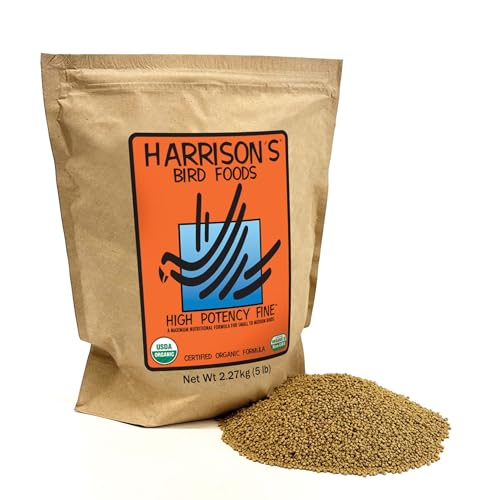
2. Harrison’s High Potency Maximum — $74.36
Harrison’s High Potency Maximum is specifically formulated for birds converting from seed to pellets or for young birds under six months. The higher protein and fat content matches what seed-fed lovebirds expect, making the transition easier. Like the Adult Lifetime formula, this is certified organic and non-GMO.
Check Harrison’s High Potency Maximum price →
What we like: Higher fat and protein for conversion and weaning. Same organic certification as Adult Lifetime. Vet-recommended for transitioning birds. Fine pellet size works for most small parrots.
What could be better: Same price surge issues as Adult Lifetime. Superfine versus fine size confusion causes wrong orders. Some sellers ship product near expiration. Rare pest contamination from storage issues reported.
Best for: lovebirds transitioning from seed-only diets or young birds needing specialized lovebird food.
Harrison’s High Potency Maximum → Amazon
3. ZuPreem FruitBlend — $16.64
ZuPreem FruitBlend is the most widely purchased lovebird food available. At $16.64 for 2 pounds, it’s a mid-range option with natural fruit flavors in banana, orange, and strawberry that appeal to picky eaters. The medium pellet size works well for lovebirds, and the price point makes it accessible for most budgets.
This is one of the best lovebird food choices for owners whose birds refuse organic or unflavored pellets — the fruit flavors provide enough incentive that most seed-raised lovebirds will at least try it. For a brand comparison, see how ZuPreem stacks up in our best cockatiel food review. You can also compare with our best conure food guide for a broader view of small parrot pellets.
ZuPreem FruitBlend → Check price
What we like: Widely purchased option with strong community feedback. Natural fruit flavors attract picky eaters. Widely available and affordable lovebird food. Good acceptance rate for seed-to-pellet transitions.
What could be better: The yellow banana-shaped pieces are frequently rejected and tossed by birds. Recent recipe changes reduced shape variety. Pellet size runs too large for some parakeets despite packaging claims. Insect contamination reported in some batches.
Best for: picky lovebirds needing the best lovebird food to ease the transition from seeds.
Check ZuPreem FruitBlend price
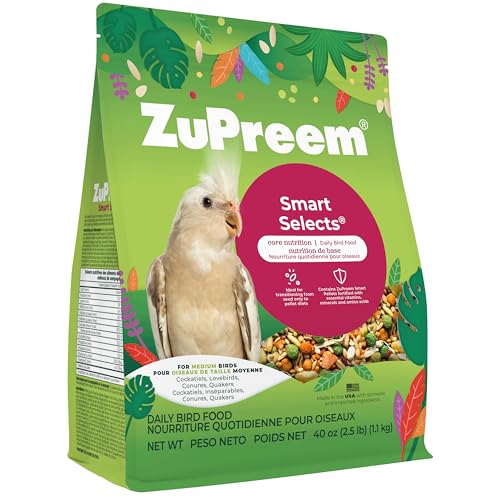
4. ZuPreem Smart Selects — $10.79
ZuPreem Smart Selects bridges the gap between pellets and seeds. At $10.79 for 2.5 pounds, this pellet and seed blend is the most affordable entry point for transitioning birds. The concept is simple: your lovebird eats familiar seeds alongside nutritious pellets, gradually accepting pellets as part of their regular lovebird food routine.
This is not a long-term staple food. The goal is to use Smart Selects for two to four weeks before transitioning to pure pellets. If your bird ignores the pellets entirely and eats only seeds, the conversion is not working and you should try a different approach.
Check ZuPreem Smart Selects price →
What we like: Hybrid pellet-seed blend eases their food transition. Affordable entry point for pellet conversion. Accepted by most small parrots.
What could be better: Bug infestation reports in recent batches. Some birds eat only the seeds and ignore pellets. Not suitable as a long-term staple. Should be phased out in favor of pure pellets.
Best for: owners in the middle of seed-to-pellet conversion.
ZuPreem Smart Selects → Amazon
5. RoudyBush Daily Maintenance — $17.48
RoudyBush Daily Maintenance is a solid budget lovebird food pellet at $17.48 for 2.75 pounds. The science-based formula contains no artificial colors, flavors, or dyes.
The crumble size works well for lovebird beaks, and the no-frills approach means your bird gets nutrition rather than eye candy.
RoudyBush is a solid budget lovebird food alternative that has been on the market for years. It is not flashy, but it delivers complete nutrition at a fraction of the price of organic lovebird food brands. For budget-conscious shoppers comparing options across species, check our best hamster food guide for another affordable pet food comparison.
Check RoudyBush Daily Maintenance price →
What we like: Cheapest pellet option at under three dollars per pound. No artificial colors, flavors, or dyes. Vet-formulated nutrition. Crumble size fits lovebird beaks. No-frills approach.
What could be better: Some birds refuse plain pellets without flavor or color. Packaging shows a canary, which confuses buyers since crumble size is too large for finches. Crushed or dusty bags reported in shipping. Not appealing to birds accustomed to colorful food.
Best for: budget-conscious owners wanting affordable lovebird food without additives.
RoudyBush Daily Maintenance → Amazon
6. Kaytee Exact Rainbow — $21.99
Kaytee Exact Rainbow is specifically labeled for parakeets and lovebirds, which means the pellet size is calibrated for small parrot beaks. The vitamin-enriched formula uses natural fruit coloring for visual appeal, and the uniform pellet size reduces mess compared to mixed seed diets.
Lovebirds generally do not make a mess with these uniform pellets, which owners appreciate. The colorful appearance provides visual stimulation during feeding. See how Kaytee compares to other brands in our best conure food review.
Check Kaytee Exact Rainbow price →
What we like: Specifically labeled for parakeets and lovebirds. Vitamin-enriched formula. Colorful pellets provide visual stimulation. Uniform pellet size reduces mess. Widely available in pet stores.
What could be better: Artificial food coloring concerns raised by reviewers. Price has doubled over the past year. Some lovebirds refuse to eat colored pellets. Pellet size may be too large for smaller parakeets despite the product name. Packages arrive crushed in shipping.
Best for: owners wanting colorful, vitamin-enriched lovebird food with species-specific labeling.
7. Kaytee Forti-Diet Pro Health — $12.95
Kaytee Forti-Diet Pro Health is the most widely purchased fortified seed mix on this list. At $12.95 for 4 pounds, the price per pound is competitive for a supplemented seed mix. The colorful blend contains different nutrient-fortified pieces designed to provide more balanced nutrition than plain seed.
However, this is a seed mix, not pellets. It should supplement a pellet-based diet, not replace it.
Multiple reviewers have noted that over 50 percent of the mix consists of sunflower seeds, which are too high in fat for daily staple feeding. Use this as a variety addition to pellets.
Check Kaytee Forti-Diet Pro Health price →
What we like: Widely purchased fortified seed mix with strong community feedback. Colorful mix with different nutrient pieces. Good value at under four dollars per pound. Digestive health and immune support claims. Widely available.
What could be better: Over 50 percent sunflower seeds makes this too fatty for staple feeding. Recent formula changes reported by long-time buyers. Bags sometimes arrive torn or open. Not suitable as a primary diet — supplement only.
Best for: supplementing a pellet diet with variety and enrichment.
Kaytee Forti-Diet Pro Health → Amazon
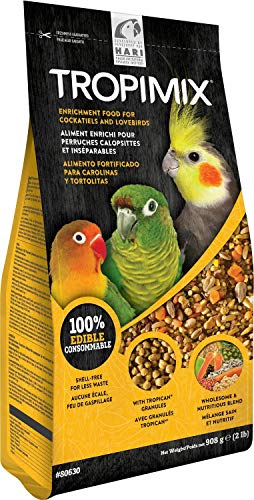
8. Hagen Tropimix — $12.99
Hagen Tropimix is an enrichment blend containing fruit, nuts, seeds, vegetables, grains, and legumes. At $12.99 for 2 pounds, the variety encourages natural foraging behavior that makes this lovebird food highly engaging. Picky birds that refuse plain pellets often accept Tropimix. Hagen has been a trusted brand for decades in the bird-keeping community.
This is enrichment food, never a nutritional staple. Lovebirds love the variety, but Tropimix should be offered alongside pellets — not as a replacement.
For more brand comparisons, see our best budgie food and best canary food reviews.
What we like: Maximum ingredient variety for foraging enrichment. Picky birds accept it when they refuse plain pellets. Trusted Hagen brand with decades of reputation. Encourages natural foraging behavior. Lovebirds enjoy the mix.
What could be better: Most expensive option at over thirteen dollars per pound. Near-expiration products reported. Moth larvae contamination in some bags. Rancid product reported in multiple cases. Not suitable as a staple diet food.
Best for: foraging enrichment as a lovebird food supplement, not as a staple.
9. Vitakraft Vita Smart — $15.98
Vitakraft Vita Smart is a vitamin-fortified seed mix with dried fruit and vegetables mixed in. At $15.98 for 4 pounds, it’s affordable for a supplemented seed mix. The European brand has a solid reputation among bird keepers for producing reasonably priced mixes.
This is a seed-raised bird’s dream. If your lovebird was raised on seeds and will not touch pellets, Vita Smart provides more nutritional variety than a plain seed mix.
However, it is not nutritionally complete as a sole food source. Use it to supplement pellets and provide dietary diversity.
Check Vitakraft Vita Smart price →
What we like: Best value fortified seed mix at $3.24 per pound. Vitamin-fortified with dried fruit and vegetables. Good for seed-raised lovebirds transitioning to varied diets. European brand with quality lovebird food reputation. Dust-free in most batches.
What could be better: Excessive millet content reduces nutritional value. Dusty on initial pour in some bags. Moth larvae contamination reported. Some birds eat it inconsistently — acceptance varies day to day. Not nutritionally complete as sole food.
Best for: budget supplement to pellet diet for variety and enrichment.
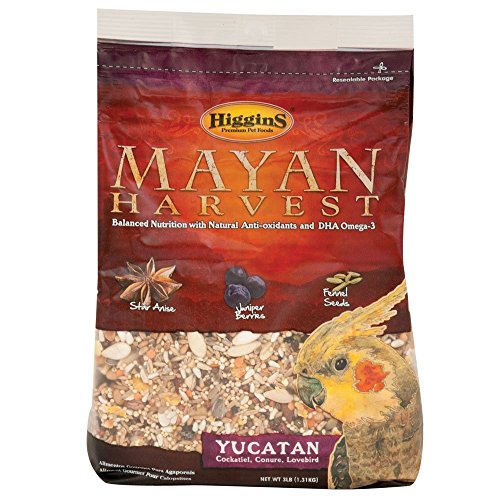
10. Higgins Mayan Harvest — $18.18
Higgins Mayan Harvest is a premium seed blend with diverse ingredients that smells fresh and looks appealing. At $18.18 for 3 pounds, the mix targets cockatiels, lovebirds, and conures. Higgins maintains a reputation for quality across multiple lovebird food sizes, and the gourmet blend provides variety that stimulates natural foraging.
Recent reviews note quality decline in the last few batches though. Excessive filler leaves have appeared in recent orders, and some pieces like pumpkin seeds are too large for lovebird beaks. This is best used as a premium treat supplement rather than a dietary staple.
Check Higgins Mayan Harvest price →
What we like: Premium seed blend with diverse ingredients. Fresh smell and visually appealing mix. Higgins brand with strong reputation across bird food lines. Well-received by conures and larger birds. Good foraging enrichment.
What could be better: Some pieces like pumpkin seeds are too large for lovebird beaks. Recent quality decline with excessive filler leaves reported. Lower quality than historical batches. Price is high for a seed mix. Better suited for larger hookbills.
Best for: premium treat supplement for variety and enrichment.
Higgins Mayan Harvest → Amazon
Seed-to-Pellet Conversion Guide
Transitioning your lovebird from seeds to pellets is one of the most impactful lovebird food decisions for their health. A gradual lovebird food conversion takes between two and eight weeks depending on your bird’s current diet and willingness to change.
Warning: Do not starve your lovebird into eating pellets. Birds that stop eating during conversion can develop fatty liver disease rapidly. Always ensure your bird is consuming food during the transition.
Step 1: Assess Current Diet
Identify what your lovebird currently eats. A bird on a 100 percent seed diet needs the most gradual transition, typically six to eight weeks.
A bird already eating a mixed diet may convert in two to four weeks. Knowing your starting point determines the pace.
Step 2: Choose the Right Conversion Food
Harrison’s High Potency Maximum is designed specifically for seed-to-pellet conversion. Its higher protein and fat content mirrors what seed-fed birds expect from their food. Start by mixing the conversion pellets with your bird’s current seed food.
Step 3: Gradually Increase Pellet Ratio
Week one and two: 25 percent pellets, 75 percent seed. Week three and four: 50 percent pellets, 50 percent seed.
Week five and six: 75 percent pellets, 25 percent seed. Week seven and eight: 100 percent pellets. If your lovebird refuses at any stage, hold the current ratio for an extra week before increasing.
Step 4: Monitor Weight and Health
Weigh your lovebird weekly during conversion on a gram scale. (VIN / VCA Canada: “Weigh your lovebird weekly on a gram scale during the transition to ensure they are consistently consuming the pellets.”) A healthy lovebird should maintain stable weight throughout the process.
Weight loss exceeding 10 percent requires veterinary consultation. Offer fresh vegetables as additional encouragement during the transition.
Lovebird Food Feeding Schedule and Portion Guide
A regular lovebird food feeding schedule helps prevent food anxiety and makes it easier to monitor intake. This lovebird feeding guide covers the daily routine.
| Meal Time | Food Type | Amount | Notes |
|---|---|---|---|
| Morning | Pellets | Bowl 2/3 full | Fresh pellets daily |
| Morning | Fresh Food | 1-2 tbsp | Remove after 4 hours |
| Afternoon | Treats | 1-2 tsp | Use for training and bonding |
| Evening | Check | Refill pellets | Remove uneaten fresh food |
| All Day | Water | Fresh daily | Clean bowl or bottle |
Daily Intake Summary
An adult lovebird consumes roughly 1.5 to 2 tablespoons of pellets per day as the core of their lovebird food. Add 1 to 2 tablespoons of fresh vegetables and 1 to 2 teaspoons of treats.
Adjust lovebird food portions based on your bird’s activity level. More active lovebirds may need slightly more food, while less active birds may need less.
Food Safety Rules
Remove fresh food after 4 hours to prevent bacterial growth. Wash all vegetables thoroughly before feeding.
Store pellets in a sealed container in a cool, dry place. Check expiration dates on all bird food before serving.
Introduce new lovebird food items gradually over two to four weeks to avoid digestive upset. Sudden lovebird food changes can cause diarrhea and stress in lovebirds. For cage setup and food bowl placement in your lovebird diet routine, see our bird cage guide and general cage setup guide.
Lovebird Food Do’s and Don’ts
** Healthy Feeding Practices**
- Base diet on pellets (60-70%) — Formulated pellets provide complete nutrition without selective feeding. (Merck Veterinary Manual)
- Offer fresh vegetables daily — Leafy greens, carrots, sweet potato provide essential vitamins pellets alone cannot fully deliver.
- Weigh your bird weekly on a gram scale — Weight changes are the earliest sign of nutritional problems. (VIN / VCA)
- Transition from seeds gradually over 2-8 weeks — Start at 25% pellets / 75% seeds and increase pellet ratio every 1-2 weeks.
- Remove fresh food after 4 hours — Prevents bacterial growth that causes digestive infections.
- Provide clean water daily — Use a water bottle or fresh bowl, cleaned daily.
- Limit seeds to 10-15% of diet — Reserve for training rewards and bonding treats.
** Dangerous Feeding Mistakes**
- Feeding a seed-only diet — Causes hepatic lipidosis (fatty liver), vitamin A deficiency, and calcium imbalance. (Merck Veterinary Manual)
- Offering avocado — Contains persin, which causes heart failure in birds.
- Starving a bird into pellet conversion — Weight loss triggers hepatic lipidosis. Always ensure food consumption during transition.
- Feeding sunflower seeds as a staple — Seed mixes with sunflower seeds can exceed 70% fat content. (AI Overview / Lafeber)
- Leaving fresh food out overnight — Bacterial contamination causes GI infections.
- Using chocolate, caffeine, onion, or garlic — All are toxic to birds and can be fatal.
- Feeding fruit seeds and pits — Contain cyanogenic glycosides (cyanide risk).
5 Signs Your Lovebird’s Diet Needs Adjusting
Even with the best lovebird food, you need to watch for signs that something’s off. Lovebirds hide illness well — it’s a survival instinct — so diet problems often show up in subtle ways before they become emergencies.
1. Feather condition is deteriorating
Dull, ruffled, or broken feathers point to protein or vitamin A deficiency. A lovebird on quality pellets should have smooth, vibrant feathers. If you’re seeing feather issues, check whether your lovebird is actually eating the pellets or just picking around them. You might need a different pellet size or brand.
2. Weight changes without explanation
Sudden weight loss means your lovebird isn’t eating enough — or isn’t absorbing nutrients from its food. Weight gain usually means too many seeds or treats. Weigh your lovebird weekly on a gram scale. For more on spotting health issues early, see our bird health guide.
3. Beak and nail problems
Soft, overgrown, or flaky beaks can indicate calcium or vitamin D deficiency. Lovebird food that’s low in these nutrients shows up in beak quality within weeks. Quality pellets like Harrison’s or Kaytee Exact Rainbow provide balanced calcium.
4. Changes in droppings
Runny, discolored, or foul-smelling droppings can signal digestive upset from a sudden food change or spoiled fresh food. If you’ve introduced a new lovebird food recently, that’s the first suspect. Remove any fresh food after 4 hours and check expiration dates on pellets.
5. Reduced activity and vocalization
A lovebird that’s less active or quieter than usual may be running low on energy. This often happens during seed-to-pellet conversion if the bird isn’t eating enough of the new food. Check that food consumption is consistent. If you’re struggling with a picky eater, our budgie diet guide covers transition strategies that work across small parrot species.
Catching these signs early lets you adjust your lovebird food choices before health problems set in. Most diet-related issues reverse quickly once you fix the underlying cause.
Frequently Asked Questions
What is the best food for a lovebird?
Harrison’s Adult Lifetime Fine is the best lovebird food overall. It is the only certified organic, non-GMO pellet available and is recommended by avian veterinarians for long-term health.
For birds switching from seed diets, Harrison’s High Potency Maximum provides extra protein and fat during the conversion period. The higher nutrient density in this lovebird food helps seed-addicted birds accept pellets more readily.
Budget-conscious owners should consider RoudyBush Daily Maintenance as an affordable alternative that still delivers complete nutrition.
Can lovebirds eat seeds only?
No. A seed-only diet causes fatty liver disease, which is the leading cause of death in pet lovebirds.
Seeds are high in fat and deficient in essential vitamins and minerals. Think of seeds as treats rather than a staple food. A healthy lovebird diet should be 60 to 70 percent pellets, 20 to 25 percent fresh food, and 10 to 15 percent seeds.
How do I convert my lovebird from seed to pellets?
Transition gradually over two to eight weeks by mixing pellets with current seed food.
Start at 25 percent pellets and 75 percent seeds. Increase the pellet ratio by 25 percent every one to two weeks.
Harrison’s High Potency Maximum is designed for this transition. Never starve a bird into eating pellets, as weight loss can trigger fatty liver disease.
What fresh foods can lovebirds eat?
Safe fresh foods include leafy greens like kale and spinach, vegetables like carrots and sweet potato, fruits like berries and banana, and cooked grains like brown rice and quinoa.
Never feed avocado, chocolate, caffeine, onion, or garlic. These foods are toxic to lovebirds and can cause serious illness or death. Remove uneaten fresh food after 4 hours to prevent bacterial growth.
How much should I feed my lovebird daily?
An adult lovebird eats roughly 1.5 to 2 tablespoons of pellets per day.
Add 1 to 2 tablespoons of fresh vegetables and 1 to 2 teaspoons of treats. Fresh food should be removed after 4 hours to prevent bacterial growth.
Always provide fresh water daily. Adjust lovebird diet portions based on your bird’s activity level and body condition.
For cage setup tips that help keep feeding areas clean, see our bird cage guide.