I’ve kept leopard geckos for seven years. My first gecko nearly died from impaction because I used calcium sand — the pet store employee told me it was safe and even beneficial. It wasn’t. Three vet visits and $800 in surgery bills later, my gecko survived, but I’ll never forget how preventable that whole ordeal was. That experience drove me to learn everything I could about proper leopard gecko care, and it’s why I wrote this guide — so you can avoid the mistakes I made.
This guide covers everything from species overview and initial setup to emergency health situations that most guides gloss over. Whether you’re choosing your first reptile or you’ve already brought a gecko home and want to make sure you’re doing it right, the information here is what I wish someone had given me seven years ago.
Quick Start: Leopard Gecko Care at a Glance
Leopard geckos (Eublepharis macularius) are the most popular beginner reptile for good reason: they’re docile, small (8-11 inches), quiet, and have simple care requirements. They need a 20-gallon tank with a temperature gradient (88-92°F warm side, 75-80°F cool side), a diet of gut-loaded live insects dusted with calcium, a humid hide for shedding, and a calcium supplement with D3. They live 15-20 years with proper care — a long-term commitment.
The three biggest killers — impaction (wrong substrate), MBD (calcium deficiency), and thermal burns (unregulated heat mats) — are all 100% preventable.
Quick-reference care sheet:
| Category | Requirement | Details |
|---|---|---|
| Tank size | 20-gallon long (min) | 30-40 gallon preferred for adults |
| Temperature | 88-92°F warm / 75-80°F cool | Under-tank heat mat + thermostat |
| Substrate | Tile, paper towel, or slate | Avoid loose sand (impaction risk) |
| Diet | Live insects only | Crickets, dubia roaches, mealworms |
| Supplements | Calcium + D3 + multivitamin | Every feeding (calcium) / 2x week (multi) |
| Humid hide | Required | Moist moss or paper towels in enclosed container |
| Water | Fresh daily | Shallow dish, dechlorinated |
| Handling | 10-15 min/day | Support body, never grab tail |
| Lifespan | 15-20 years | Females shorter if bred |
| Cost | $200-400 setup / $20-40/month | $3,500-6,000 lifetime |
For general reptile habitat principles, see our reptile habitat setup guide. For another popular beginner reptile, see our crested gecko care guide.
Appearance and Morphs
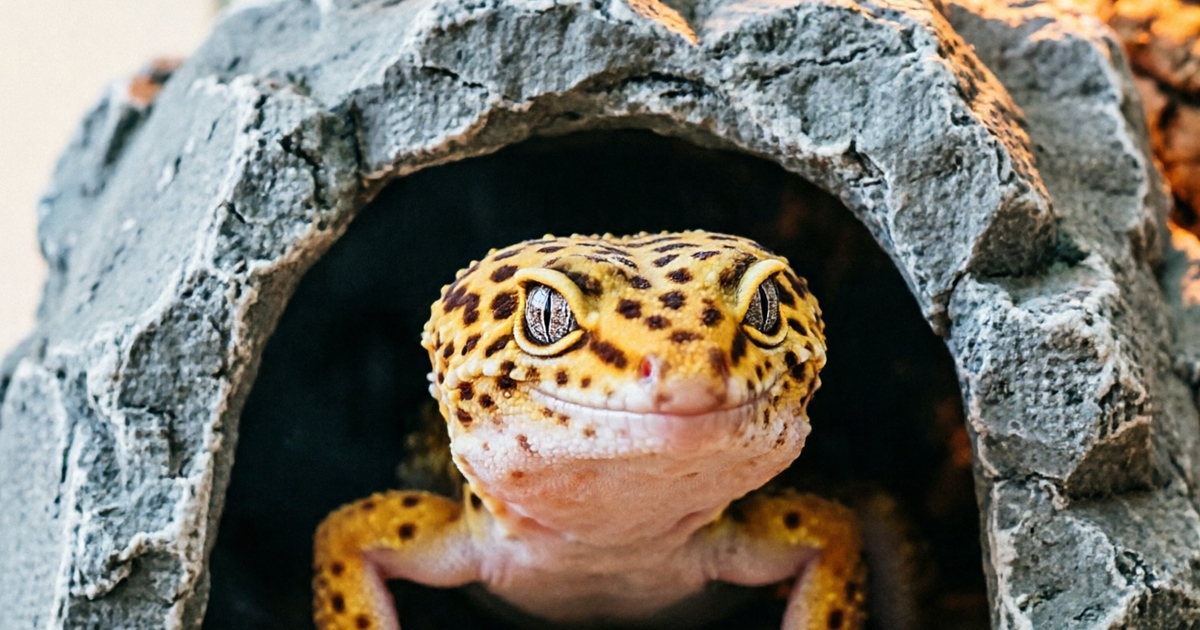
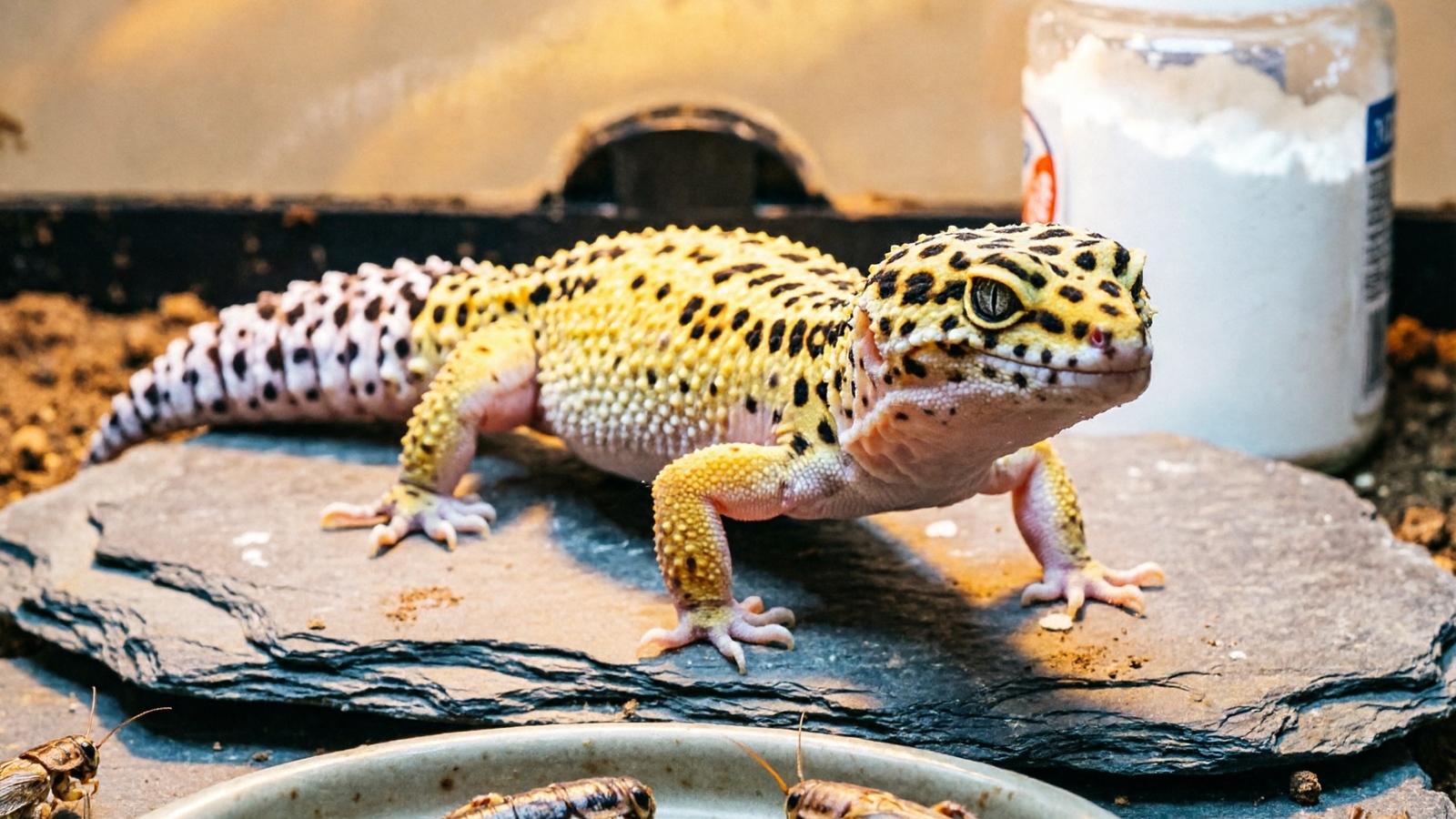
Leopard geckos are easily recognized by their spotted pattern — the “leopard” name comes from their natural wild-type coloration of yellowish-brown with dark spots and bands. Unlike most geckos, they have movable eyelids (the genus name Eublepharis means “true eyelid”) and lack adhesive toe pads, which is why they’re terrestrial rather than climbers.
Their most distinctive feature is their tail — a thick, fleshy appendage that stores fat reserves. A healthy gecko’s tail should be plump and roughly the same width as the body. The tail is also a defense mechanism: when grabbed by a predator, the gecko can detach it (autotomy), and it will regenerate over 6-8 weeks, though the replacement is typically shorter, smoother, and a different color.
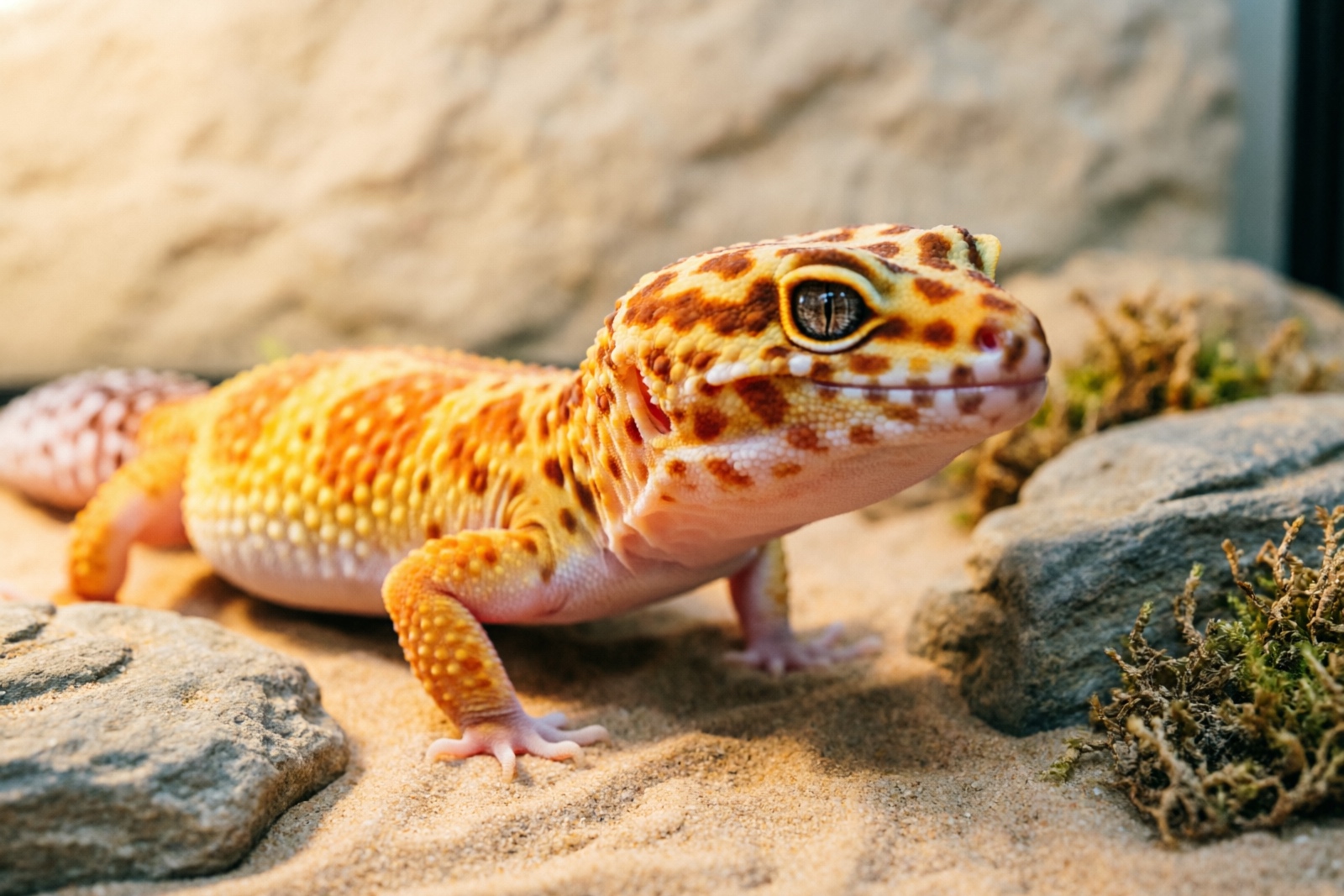
Leopard geckos come in a stunning variety of colors and patterns called “morphs.” Popular morphs include the Mack Snow (reduced yellow pigment with bold black bands) and Albino variants (lacking dark pigment entirely). There are over 100 recognized morphs including Tangerine, Tremper Albino, Bell Albino, Rainwater Albino, Blizzard, Patternless, and many combinations. Morph selection is largely a matter of personal preference — all morphs have the same care requirements regardless of appearance.
Size and Lifespan
Adult leopard geckos typically reach 8-11 inches (20-28 cm) in total length, including the tail. Males are generally larger and heavier than females, with males weighing 60-80 grams and females 45-65 grams. They reach full size by 12-18 months of age. Males also have wider heads and visible pre-anal pores, while females are generally more slender.
With proper care, leopard geckos live 15-20 years in captivity. Females tend to have slightly shorter lifespans (10-15 years) if bred. The oldest recorded leopard gecko reached 28 years. Key factors: proper temperature, correct supplementation, appropriate diet, clean enclosure, and annual vet checkups.
Natural Habitat
Understanding where these reptiles come from in the wild is essential for providing proper care in captivity.
Natural Habitat in the Wild
Leopard geckos (Eublepharis macularius) are native to the arid and semi-arid regions of Afghanistan, Pakistan, Iran, and northwestern India. They inhabit dry, rocky grasslands and desert edges where temperatures fluctuate dramatically between day and night. Unlike many gecko species, they are terrestrial — they live on the ground rather than climbing trees or walls.
Geographic Distribution:
- Primary Range: Southern Afghanistan, Pakistan, and northwestern India
- Elevation: Typically found at elevations up to 6,500 feet
- Terrain: Rocky outcrops, dry grasslands, and scrubland with loose soil
Climate Conditions:
- Daytime temperatures: 85-95°F (29-35°C) in summer
- Nighttime temperatures: Can drop to 60-70°F (15-21°C)
- Annual rainfall: Very low (4-8 inches per year)
- Humidity: Naturally low, typically 30-40%
In the wild, these reptiles spend their days hiding in burrows, rock crevices, or under stones to escape the intense heat. They emerge at dusk to hunt insects, taking advantage of cooler temperatures and higher humidity. This nocturnal behavior is hardwired into their biology and influences their care requirements in captivity.
How This Affects Captive Care
Temperature Requirements: Your gecko’s enclosure must replicate the natural temperature gradient. Provide a hot side (88-92°F) where it can digest food properly, and a cool side (75-80°F) where it can retreat to avoid overheating. This temperature gradient allows thermoregulation just as it would in the wild.
Humidity Considerations: Despite coming from arid regions, these reptiles need access to humid microclimates — particularly for shedding. In nature, they seek out damp burrows or crevices. In captivity, a humid hide filled with moist substrate replicates this essential feature.
Substrate Selection: While wild populations live on packed earth and rocky terrain, they don’t naturally encounter loose sand in the quantities found in pet stores. This is why many experienced keepers recommend solid substrates rather than loose sand, which can cause impaction if ingested.
In the wild, leopard geckos are opportunistic hunters. They wait near burrow entrances and rock crevices at dusk, ambushing passing insects. They’re not pursuit predators — they stalk slowly and strike quickly. This hunting style means they rely heavily on their sense of smell and vibration detection rather than vision for catching prey, which is why motion from live insects triggers a much stronger feeding response than dead or canned alternatives.
Their natural diet consists of crickets, beetles, spiders, scorpions (they’re immune to the venom of most scorpion species in their range), and other small invertebrates. This varied diet in the wild is why providing a diverse selection of feeder insects in captivity is so important for their nutritional health.
For more information on creating appropriate habitats, see our guide on reptile habitat basics.
Leopard Geckos as Pets
Why They’re Great for Beginners
Leopard geckos are one of the easiest reptiles to learn to care for — which is why they’re the best starting point for first-time reptile owners. Their combination of manageable size, docile temperament, and simple care requirements makes them accessible to virtually anyone willing to learn the basics.
Why leopard geckos are great first reptiles:
- Docile temperament — they rarely bite and tolerate handling well. Even the most nervous leopard gecko is unlikely to cause serious injury
- Small size — 8-11 inches fully grown, they don’t need massive enclosures. A 20-gallon tank takes up minimal space in an apartment or bedroom
- No UVB strictly required — simpler lighting setup than bearded dragons or iguanas. A simple heat mat is sufficient for heating
- Insectivore diet — feed crickets and dubia roaches, no complex omnivore diet with vegetables and fruit prep needed
- No special humidity — unlike tropical reptiles (cresties, ball pythons), they prefer dry conditions (30-40% ambient humidity)
- Long lifespan — 15-20 years of companionship, longer than most small pets
- Quiet and odorless — perfectly apartment-friendly. They don’t vocalize and their waste has minimal odor if the enclosure is spot-cleaned regularly
- Affordable maintenance — $20-40/month ongoing cost is less than most common pets
- Readily available — found in most pet stores and from hundreds of breeders nationwide
- No hibernation required — unlike some reptiles, they remain active year-round with consistent heating
How they compare to other beginner reptiles:
| Feature | Leopard Gecko | Bearded Dragon | Crested Gecko | Ball Python |
|---|---|---|---|---|
| Size | 8-11 in | 18-24 in | 7-9 in | 3-5 ft |
| Diet | Insects | Insects + veg | Fruit + insects | Frozen mice |
| Heat source | Heat mat (belly) | Heat lamp (above) | Room temp | Heat mat |
| UVB | Optional | Required | Optional | Optional |
| Humidity | Low (20-40%) | Low (30-40%) | High (60-80%) | Moderate (50-60%) |
| Handling | Easy | Easy | Moderate | Easy |
| Lifespan | 15-20 yr | 10-15 yr | 10-15 yr | 20-30 yr |
Leopard geckos stand out because they absorb heat through their bellies rather than basking under a heat lamp — a key distinction that simplifies setup significantly. For comparisons beyond this guide, see our bearded dragon care guide, ball python care guide, and corn snake care guide.
What You Need Before Getting a Gecko
Don’t bring a gecko home until you have these essentials set up:
| # | Item | Why It’s Essential | Cost |
|---|---|---|---|
| 20-gallon tank (min) | Floor space for exercise and temperature gradient | $40-80 | |
| Under-tank heat mat + thermostat | Digestion requires 88-92°F belly heat | $30-50 | |
| Digital thermometer (2 probes) | Monitor both warm and cool sides accurately | $15-25 | |
| Safe substrate (tile/paper) | Prevents impaction — non-negotiable | $10-20 | |
| 3 hides (warm, cool, humid) | Security, shedding, and thermoregulation | $20-40 | |
| Water dish (shallow) | Fresh water always available | $5-10 | |
| Calcium + D3 powder | Prevents MBD (Metabolic Bone Disease) | $12-20 | |
| Multivitamin powder | Weekly supplement for overall health | $10-15 | |
| Feeder insects (crickets/dubia) | Staple diet | $10-15/week |
Total initial setup: $160-290
Leopard Gecko Tank Setup
Tank Size Requirements
The size of your tank directly impacts your pet’s quality of life. While these reptiles don’t need massive enclosures, they do require adequate floor space for a proper temperature gradient, enrichment, and natural behaviors like exploring and climbing. A tank that’s too small leads to stress, poor thermoregulation, and health problems.
| Age | Minimum Size | Dimensions |
|---|---|---|
| Juvenile (under 6 months) | 10 gallons | 20” x 10” x 12” |
| Adult (6+ months) | 20 gallons | 30” x 12” x 12” |
| Multiple geckos | 40+ gallons | 36” x 18” x 12” |
Important: A 10-gallon tank is too small for adults. Plan to upgrade to at least 20 gallons when your gecko reaches 6 months.
REPTI ZOO 20 Gallon Glass Terrarium — Best Tank
REPTI ZOO 20 Gallon Glass Terrarium
This is the best tank for adult geckos. The front-opening design makes access easy and reduces stress during handling or maintenance. The top screen ventilation provides excellent airflow while the glass construction maintains proper temperatures. At $168.13, it’s a significant investment, but a quality enclosure lasts for years and is the foundation of your gecko’s health.
Enclosure Layout: Divide Into 3 Zones
| Zone | Temperature | What Goes Here |
|---|---|---|
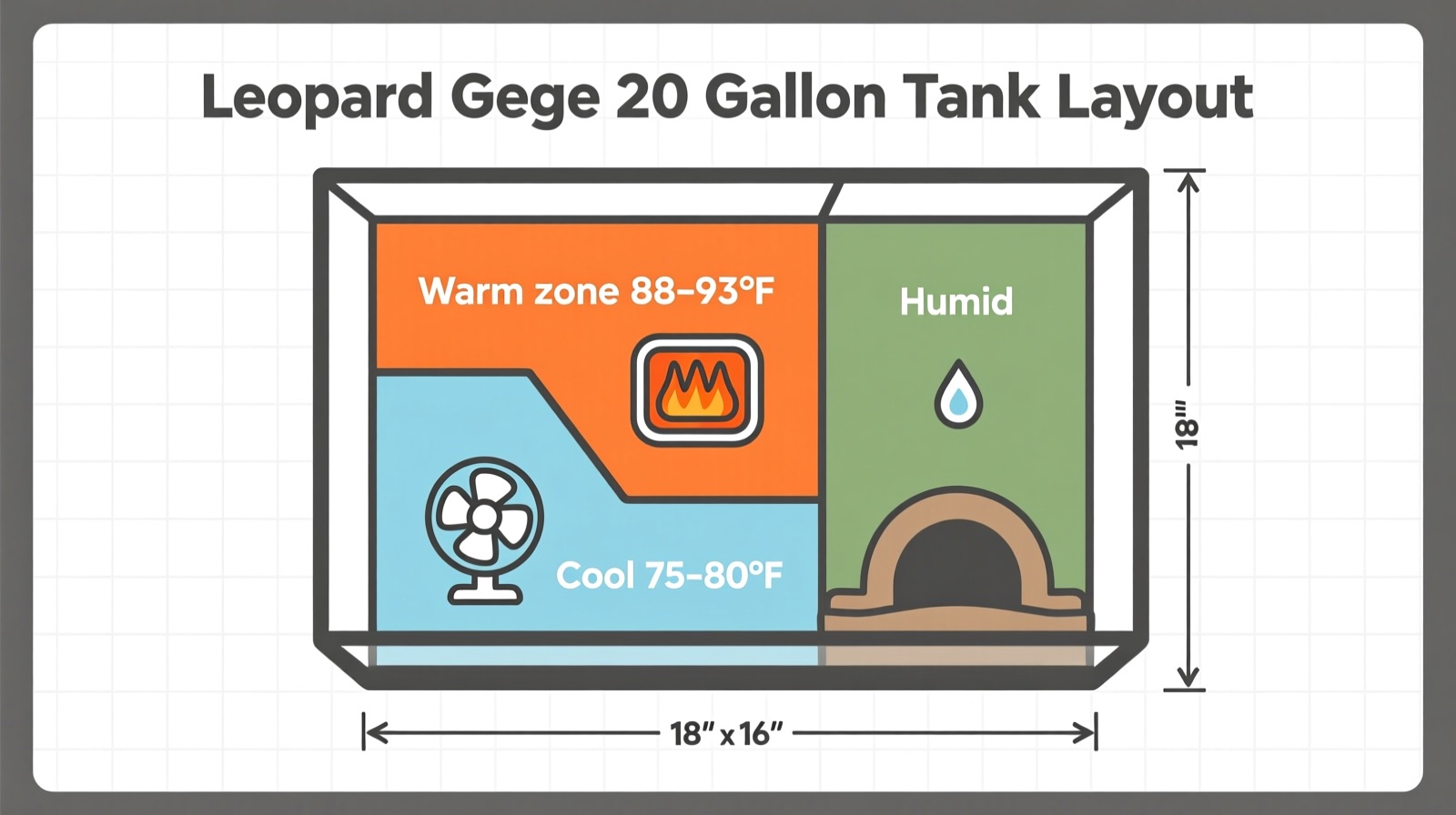
| Warm zone (1/3) | 88-92°F | Warm hide over heat mat, water dish |
| Cool zone (1/3) | 75-80°F | Cool hide, food dish |
| Middle zone (1/3) | 80-85°F | Open floor space, humid hide, enrichment |
For hides, LEOTERRA Reptile Hide caves ($13) work well — one on the warm side and one on the cool side. They have a natural rock appearance, stable base, and easy-to-clean resin material.
Enrichment ideas: Cork bark climbs (leopard geckos climb more than most people realize), fake plants for cover, smooth rocks for basking spots, and a shallow dig box with clean play sand for adults only.
Bioactive Leopard Gecko Tank
Bioactive enclosures have become increasingly popular, and for good reason. These self-sustaining ecosystems create a more natural environment while dramatically reducing maintenance.
What Is a Bioactive Setup? A bioactive terrarium is a living ecosystem that includes:
- Live plants that help maintain humidity and air quality
- Cleanup crew (isopods and springtails) that break down waste
- Natural substrate layers that support beneficial bacteria
Benefits:
- Reduced maintenance: Cleanup crews process waste naturally — you spot-clean less often
- Natural environment: Mimics wild habitat more closely than any artificial setup
- Mental enrichment: Live plants and varied terrain stimulate natural behaviors like climbing and exploring
- Better humidity control: Plants and substrate layers maintain appropriate moisture levels
- Educational value: Watching the ecosystem function is fascinating
- Aesthetic appeal: A well-done bioactive setup is genuinely beautiful
Challenges:
- Higher upfront cost: Plants, drainage layers, and cleanup crew add $50-100 to setup
- Establishment period: The ecosystem needs 2-4 weeks to stabilize before adding your gecko
- UVB required: Live plants need UVB lighting, which means investing in a proper fixture
- More complex: Not ideal for absolute beginners — start with a simple setup and upgrade to bioactive after 6-12 months of experience
Setup Steps:
- Add 2-3 inches of clay balls to the tank bottom for drainage
- Cover with mesh screen to separate drainage from substrate
- Add 3-4 inches of bioactive substrate mix
- Plant live plants and add hardscape (rocks, driftwood)
- Add leaf litter and introduce cleanup crew
- Allow the ecosystem to establish for 2-4 weeks before adding your gecko
Note: Bioactive setups require UVB lighting for plant health, which also benefits calcium metabolism.
Heating and Temperature
The temperature gradient is the single most important aspect of leopard gecko care. They need a warm side and a cool side so they can self-regulate their body temperature by moving between zones.
Temperature ranges:
| Zone | Temperature | How to Measure | Purpose |
|---|---|---|---|
| Warm side floor | 88-92°F (31-33°C) | Probe thermometer on substrate | Digestion and basking |
| Warm side air | 85-88°F (29-31°C) | Digital thermometer at 2” height | Ambient warmth |
| Cool side | 75-80°F (24-27°C) | Probe thermometer on substrate | Cooling and sleeping |
| Nighttime | 70-75°F (21-24°C) | Either side | Natural temperature drop |
Heating Equipment
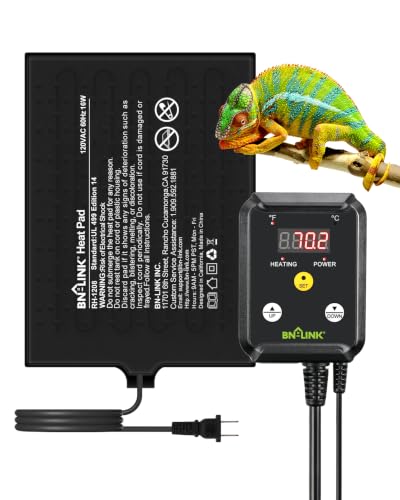
The BN-LINK Durable Reptile Heating Pad with Digital Thermostat ($31) is excellent — the 8” x 12” size covers one-third of a standard 20-gallon tank floor perfectly. The digital thermostat with probe lets you set the exact temperature.
Critical: The probe placement on the substrate surface is critical — placing it on the glass under the tank gives a false reading that can be 10-15°F lower than the actual surface temperature, leading to burns.
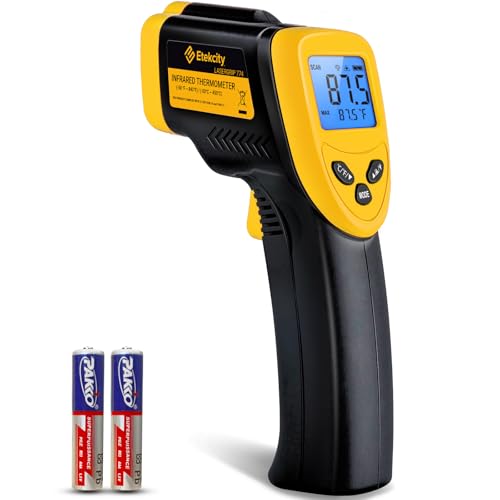
For spot-checking surface temperatures, an Etekcity Infrared Thermometer ($9.48) gives instant readings with a laser pointer for precise targeting.
Never use heat rocks — they cause severe thermal burns. The surface temperature of heat rocks is unpredictable and can spike well past 120°F. They also don’t create a proper temperature gradient. Stick with under-tank heat mats controlled by a thermostat.
Temperature Monitoring Best Practices
Accurate temperature monitoring is essential. The difference between a healthy gecko and a sick one often comes down to a 5-degree temperature difference. Many new owners underestimate how critical proper temperature is — virtually every health problem (appetite loss, impaction, respiratory infection, poor shedding) is either caused or worsened by incorrect temperatures.
Where to place thermometers:
- One probe on the substrate surface directly above the heat mat (warm side floor temp)
- One probe on the substrate surface on the opposite end (cool side floor temp)
- The warm side floor reading is the most critical — this is where your gecko digests food
Common temperature mistakes:
- Measuring air temperature instead of surface temperature — the substrate surface can be 10-15°F different from the air
- Placing the thermostat probe on the glass under the tank instead of on the substrate surface — gives a falsely low reading
- Using analog dial thermometers — they’re often inaccurate by 5-10°F. Digital thermometers with remote probes are far superior
- Not accounting for room temperature changes — in winter, the cool side may drop below 70°F at night, requiring a secondary heat source
UVB Lighting
Historically, leopard geckos were classified as nocturnal and UVB lighting was deemed unnecessary. Current understanding from veterinary research has shifted — they’re actually crepuscular (active at dawn and dusk) and do benefit from low-level UVB exposure for natural vitamin D3 synthesis and better calcium absorption.
Recommendations:
- Minimum: No UVB if you’re consistently supplementing with calcium + D3
- Best practice: Low-level UVB (2-5% output) for optimal health
- Position: 6-8 inches above the basking area
- Duration: 10-12 hours on, matching a natural light cycle
- Provide hides on both sides so the gecko can escape the light
The LUCKY HERP UVA UVB Reptile Light 10.0 ($15) works well for desert species and fits standard dome fixtures.
Replace your UVB bulb every 6-12 months — the UVB output diminishes long before the bulb burns out. A bulb that looks fine may be producing zero UVB. Write the installation date on the bulb base with a marker so you know when to replace it.
UVB setup tips:
- Position the bulb 6-8 inches above the warm side basking area — too far away and the UVB intensity drops dramatically
- Use a reflective dome fixture to maximize UVB output
- Provide plenty of hides on both the warm and cool sides — your gecko must be able to escape the UVB when it wants to
- Start with 4-6 hours of UVB per day and gradually increase to 10-12 hours over a week — this lets your gecko adjust
- Watch for signs of stress (excessive hiding, refusal to eat) when first introducing UVB
- The UVB debate is ongoing — if your gecko has thrived for years without UVB and has proper calcium supplementation, adding UVB is optional but beneficial
Substrate
Substrate choice is one of the most critical decisions you’ll make because wrong substrate causes impaction — a blocked digestive tract that can be fatal.
| Substrate | Safety | Cost | Pros | Cons |
|---|---|---|---|---|
| Slate/ceramic tile | Safest | $10-20 (one-time) | Easy to clean, looks natural, conducts belly heat well | Heavy, can chip |
| Paper towel | Safest | $3/month | Cheapest option, easy to replace, perfect for quarantine | Not aesthetically pleasing |
| Reptile carpet | Safe | $10-15 | Looks decent, reusable | Claws can snag, harder to clean |
| Shelf liner | Safe | $5-10 | Cheap, easy to wipe clean | Not natural-looking |
| Loose sand | Unsafe | $5-15 | Looks best | High impaction risk — avoid for juveniles |
| Calcium sand | VERY unsafe | $10-15 | Marketed as safe | Geckos eat it intentionally, causes fatal impaction |
Product Recommendations
2PCS Reptile Carpet for 20 Gallon — washable and reusable. Waste gets trapped in the fibers, so have two sets to swap a clean one in while washing.
Zilla Reptile Bedding Liner — disposable, easy to replace. At $7.49, ideal for quarantine setups or beginners.
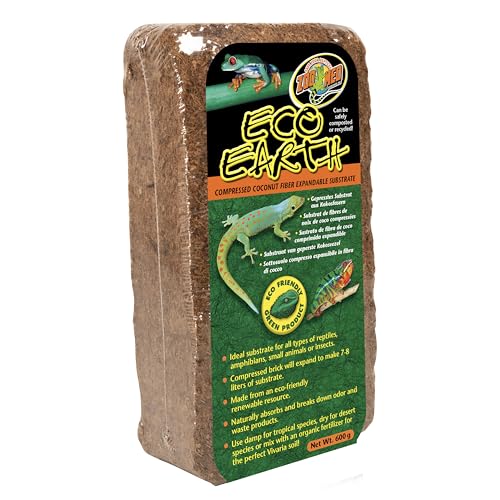
My recommendation based on seven years of experience: Use tile or paper towel for babies and juveniles without exception. Adults can go on tile or reptile carpet. If you absolutely must use sand, only with adult geckos over 12 months and 50 grams, mixed with topsoil. Never use pure calcium sand — it clumps when wet and caused my first gecko’s impaction. For substrate in the humid hide specifically, Zoo Med Eco Earth coconut fiber ($10) is ideal — it holds moisture perfectly for shedding and is safe if accidentally ingested.
Why calcium sand is dangerous: Calcium sand is marketed as “safe and digestible” because it’s made from calcium carbonate. The reality is that when it gets wet (from saliva, water spills, or waste), it clumps and hardens in the digestive tract. Geckos are also attracted to it and may intentionally eat it seeking calcium — compounding the problem. Every experienced reptile vet will tell you the same thing: avoid calcium sand entirely. I learned this the hard way with a $800 emergency surgery bill.
The Impaction Risk
Impaction occurs when a gecko swallows substrate that cannot pass through its digestive system. Young geckos and those with calcium deficiencies are particularly susceptible.
Signs of Impaction: Not eating, not pooping for extended periods, visible lump in the belly, lethargy, straining to defecate.
Prevention: Use solid substrates (tile, carpet, paper towels). If using loose substrate, feed in a separate container. Ensure proper calcium supplementation. Monitor for substrate eating behavior.
Humid Hide and Shedding
The humid hide is not optional — it’s essential for proper shedding. Without it, shed skin sticks to toes, tail tip, and eyes, causing injury and potentially infection.
How to Set Up a Humid Hide
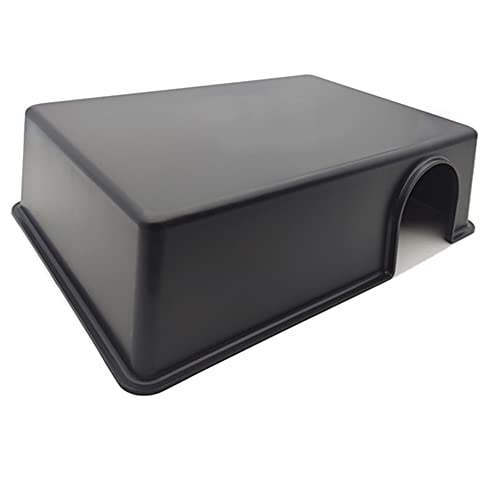
The Exo Terra Gecko Cave Medium is designed specifically for geckos. Fill it with moist sphagnum moss or paper towels and place it on the warm side of the tank.
DIY option (5 minutes, $5):
- Get a plastic Tupperware with lid (6” x 4” x 4” minimum)
- Cut a 2” x 2” hole in one side, sand the edges smooth
- Fill with Zoo Med Eco Earth coconut fiber or damp paper towels
- Squeeze the substrate — it should be damp, not dripping wet
- Place on the warm side (85-90°F)
- Re-moisten every 2-3 days, replace substrate weekly
Shedding Schedule and Issues
Babies and juveniles shed every 1-2 weeks. Adults shed every 4-6 weeks. The process takes 24-48 hours. Before shedding, their skin turns dull and grayish-white. They eat the shed skin afterward — this is completely normal and recycles nutrients.
Shedding problems that need attention:
- Stuck shed on toes: Soak in shallow warm water (80-85°F, 1 inch deep) for 10-15 minutes, then gently rub with a cotton swab
- Stuck shed on tail tip: Same warm soak treatment
- Stuck shed on eyes: If warm soak doesn’t resolve within 24 hours, see a reptile vet
- Incomplete shed: Increase humidity in the humid hide and consider adding a second humid hide temporarily
Never pull stuck shed forcefully — this can damage the new skin underneath.
Diet and Nutrition
Leopard geckos are insectivores — they eat exclusively insects. Providing a varied, nutritious diet is essential for their health and longevity.
Staple Feeder Insects
| Insect | Nutrition | Best For | Notes |
|---|---|---|---|
| Crickets | Excellent protein | All ages | Most common, active prey stimulates hunting |
| Dubia Roaches | Highest protein | All ages | Excellent nutrition, easy to keep, can’t infest |
| Mealworms | Good protein | Adults only | High fat, hard shell — avoid for juveniles |
| Black Soldier Fly Larvae | High calcium | All ages | Excellent calcium source, promotes digestion |
Secondary/Treat Feeders: Waxworms (high fat, treat only), Superworms (adults only, high fat), Hornworms (occasional treat, high moisture).
Feeding Schedule by Age
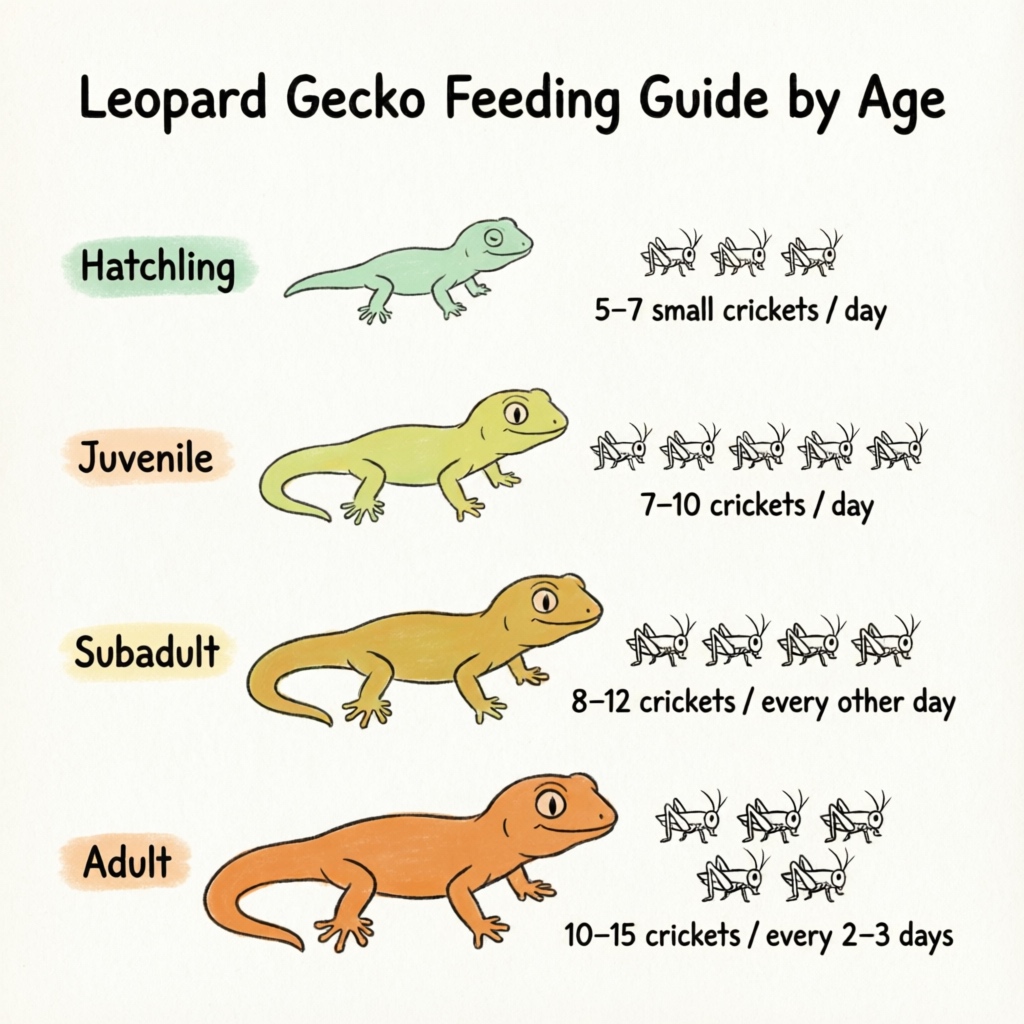
| Age | Frequency | Insect Size | Count Per Feeding |
|---|---|---|---|
| Hatchling (0-2 months) | Daily | Small crickets (1/8”) | 5-7 |
| Baby (2-4 months) | Daily | Small-medium crickets | 5-8 |
| Juvenile (4-8 months) | Daily | Medium crickets/dubia | 6-10 |
| Sub-adult (8-12 months) | Every 2 days | Medium-large | 6-8 |
| Adult (12+ months) | Every 2-3 days | Large crickets/dubia | 6-10 |
The golden rule for insect size: never feed an insect wider than the space between the gecko’s eyes. Too-large prey causes choking and impaction.
Feeding tips:
- Feed in the evening when geckos are naturally active — this matches their crepuscular nature
- Never leave uneaten crickets in the tank (they can bite your gecko and cause stress)
- Gut-load insects 24-48 hours before feeding with nutritious foods like carrots, sweet potatoes, and leafy greens
- Use an escape-proof feeding dish to prevent feeder insects from hiding in the substrate
- Monitor your gecko’s tail thickness — it should be plump but not dragging; a thinning tail is the first sign of underfeeding
- Always provide a shallow dish of fresh, dechlorinated water
- Vary the insect diet — feeding only one type of insect long-term can cause nutritional imbalances
- Avoid feeding wild-caught insects — they may carry pesticides or parasites
- Calcium-dusted crickets lose their coating quickly — feed within 15 minutes of dusting
- For picky eaters, try tong-feeding to stimulate the hunting response
Supplement Schedule
Proper supplementation prevents MBD — the number one preventable killer of captive reptiles.
| Supplement | Frequency | How | Notes |
|---|---|---|---|
| Calcium + D3 | Every feeding | Lightly dust insects | Alternate with plain calcium every other feeding |
| Plain calcium (no D3) | Every other feeding | Leave small dish in tank | Free-choice calcium dish lets gecko self-regulate |
| Multivitamin | 2x per week | Dust insects | Repashy Supervite or similar |
| Vitamin A | 1x every 2 weeks | Light dust | Important for eye health, don’t overdo |
I also keep a Zoo Med Dr.Turtle Slow-Release Calcium Block ($9.24) on the cool side as an additional calcium source.
Gut-loading: Feed feeder insects nutritious food (cricket feed, carrots, sweet potato, leafy greens) for 24 hours before offering them. Avoid citrus fruits, iceberg lettuce, and avocado.
Baby Leopard Gecko Care
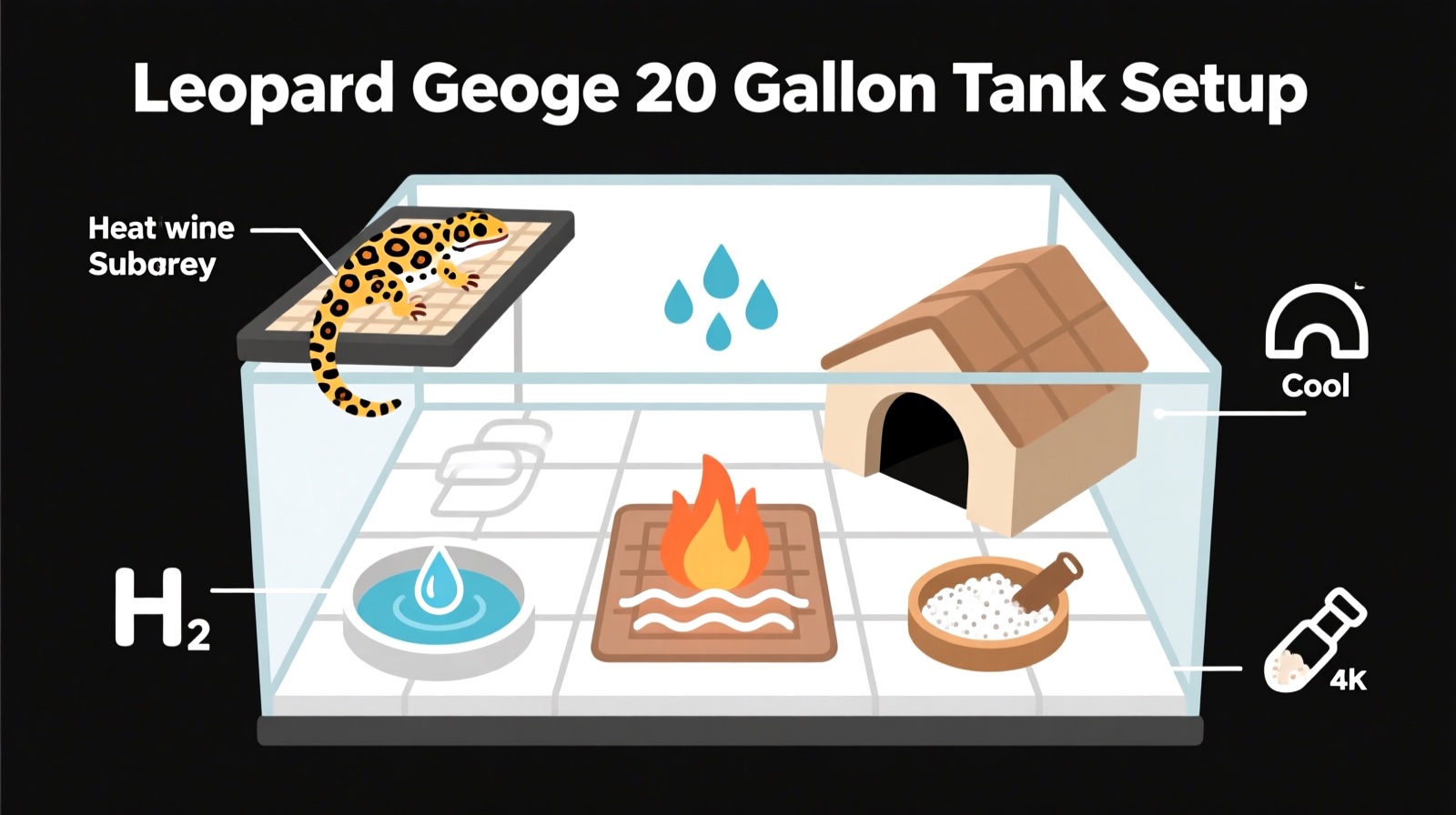
Baby geckos (0-6 months) are fragile, fast, and significantly more prone to health problems than adults.
Housing for babies:
- Start in a 10-gallon tank — upgrade to 20-gallon at 6 months
- Use paper towel substrate only — impaction risk is highest for babies
- Keep the humid hide especially moist because babies shed every 1-2 weeks
- Minimize decorations — babies hide a lot and need to find food easily
- No loose substrate, no sand, no loose moss in the main enclosure
Feeding babies:
- Feed daily at the same time each day to establish a routine
- Offer 5-8 appropriately sized crickets — no wider than the space between the gecko’s eyes
- Dust every feeding with calcium + D3 (babies need more calcium than adults)
- Remove uneaten crickets after 15 minutes — crickets nibble on sleeping geckos
- Provide a small calcium dish in the tank at all times
Handling babies:
- Wait 1-2 weeks after bringing them home before handling — let them settle in
- Start with 3-5 minutes, gradually increase to 10 minutes
- Babies are jumpy and fast — handle over a soft surface like a bed or couch
- Support the entire body, never grab from above
- If they drop their tail, don’t panic — see the tail drop care section below
- Always wash your hands before and after handling to prevent salmonella transmission
- Avoid handling during shedding — the process is stressful and their skin is fragile
Common baby gecko problems:
- Not eating for the first 3-5 days after bringing home is completely normal — it’s stress from the move
- Not eating for 7+ days is not normal — check temperature first, then see a reptile vet
- Stuck shed on toes means you need to increase humidity and soak the gecko in warm shallow water for 10 minutes
- Wobbly walking or rubbery jaws may indicate MBD (calcium deficiency) — this is a vet emergency, do not wait
- If a baby’s tail is thin and flat, it may be underfed — increase feeding frequency and check temperatures
- Babies grow rapidly and may outgrow their 10-gallon setup sooner than expected — monitor size weekly
Handling and Bonding
Leopard geckos tolerate handling better than most reptiles, but they’re not affectionate pets — they won’t seek you out; they tolerate being held. The bonding process is about building trust gradually over weeks and months.
Proper handling technique:
- Approach from the side, not from above — approaching from above looks like a predator
- Gently scoop under the belly with your palm
- Support all four feet and the tail base
- Keep them close to your body — they feel more secure against you
- Limit sessions to 10-15 minutes for adults, 5-10 minutes for babies
- Handle during evening hours when they’re naturally active and more receptive
- If the gecko runs, don’t chase — let it calm down and try again
- Never grab from above — this triggers a predator-prey response and causes stress
Signs your gecko is stressed during handling:
- Tail wagging slowly (defensive signal)
- Squeaking or chirping
- Trying to bite or run away
- Darkening of skin color
- Open-mouth breathing (severe stress — return to enclosure immediately)
Building trust takes time. Start with 3-5 minute sessions once or twice a week. Gradually increase duration as your gecko becomes more comfortable. Some geckos never fully tame down, and that’s okay — they can still have fulfilling lives with minimal handling.
Leopard Gecko Tail Drop Care
Tail autotomy is a defense mechanism. When grabbed by the tail, extremely stressed, or handled roughly, the gecko detaches its tail. The detached tail twitches for several minutes to distract predators, and the gecko does not feel pain during the drop.
Tail drop care protocol:
- Isolate the gecko — the open wound is vulnerable to infection
- Clean the wound with diluted betadine solution (available at any pharmacy)
- Switch to paper towel substrate until the wound heals completely (1-2 weeks)
- Feed more frequently — the tail stores fat reserves that the gecko has now lost
- Spot clean daily — keep the enclosure clean while the wound is open
- Regrowth takes 6-8 weeks, but the new tail will be shorter, smoother, and a different color
- See a vet if the wound shows redness, swelling, or hasn’t closed within 1 week
Disclaimer: The health information in this section is for educational purposes only and is not a substitute for professional veterinary advice.
Health and Common Problems
Daily Care Routine
A consistent daily routine is the foundation of good leopard gecko care. Here’s what you need to do each day:
- Check temperature: Verify hot side is 88-92°F and cool side is 75-80°F using your probe thermometers. Temperature fluctuations are the #1 cause of appetite loss
- Fresh water: Replace water daily, even if it looks clean. Use dechlorinated water — let tap water sit for 24 hours or use a water conditioner
- Spot clean: Remove feces, urates (white chalky deposits), and any shed skin. A clean enclosure prevents bacterial growth and respiratory issues
- Observe behavior: Note appetite, activity level, any changes in color or movement. Early detection of problems is critical
- Feed: According to age-based schedule. Remove uneaten insects after 15 minutes
- Check humid hide: Verify it’s still moist. Re-moisten every 2-3 days as needed
- Check calcium dish: Refill the free-choice calcium dish if it’s empty or soiled
Weekly Care Tasks
- Deep clean: Wipe down glass, clean water dish with hot soapy water, replace substrate if using paper towels
- Weigh your gecko: Track weight weekly using a digital kitchen scale. A sudden drop of 5+ grams in an adult warrants investigation
- Health check: Examine eyes, mouth, vent, toes, and tail for any abnormalities
- Trim claws (if needed): Use small nail clippers if claws are getting too long and curling
- Gut-load preparation: Prepare gut-load food for your feeder insects 24 hours before feeding
Leopard Gecko Impaction Signs
Impaction means the digestive tract is blocked — caused by ingesting loose substrate, eating prey that’s too large, or inadequate hydration. It’s almost entirely preventable with proper substrate choice.
Impaction signs checklist:
| Sign | Severity | Details |
|---|---|---|
| Decreased appetite | Early | Eating less than usual or refusing food |
| Smaller or infrequent poop | Early | Poop is thin, small, or absent for 3+ days |
| Swollen belly | Moderate | Lower abdomen looks distended or bloated |
| Lethargy | Moderate | Sleeping more, less active at night |
| Dark discoloration on belly | Severe | Visible through the skin — blockage shadow |
| Hind leg paralysis | Severe | Pressure on spinal nerves from blockage |
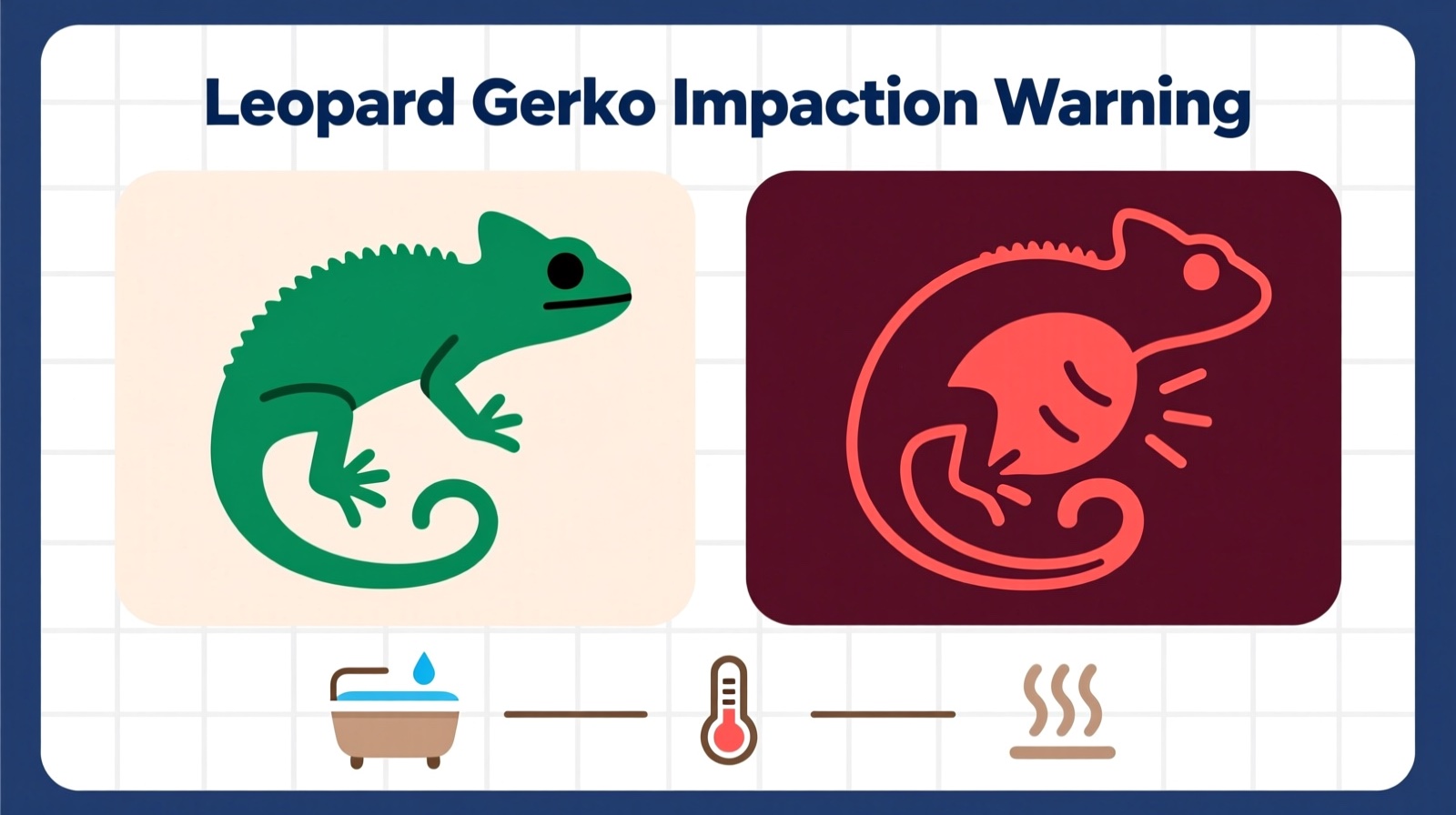
Treatment by severity:
- Mild: Warm soaks in shallow water (85°F) for 15 minutes twice daily. Gently massage the belly toward the vent.
- Moderate: Continue warm soaks plus syringe-feed a reptile electrolyte solution. See a reptile vet within 24-48 hours.
- Severe: Vet immediately. X-ray to locate the blockage. May require surgery — my gecko’s impaction surgery cost $800.
Prevention: Use safe substrate (tile or paper towel), feed appropriately sized insects (never wider than the space between the eyes), keep your gecko hydrated, provide warm soaks weekly as a preventative measure, and ensure proper temperatures — cold geckos digest more slowly, increasing impaction risk.
Important note on feeding loose substrate eaters: If you notice your gecko actively licking or eating loose substrate, switch to a solid substrate immediately. Some geckos develop a habit of substrate eating that is extremely difficult to break and almost always leads to impaction. This behavior is sometimes linked to calcium deficiency — the gecko is seeking calcium from sand or soil — so ensure your supplementation is adequate.
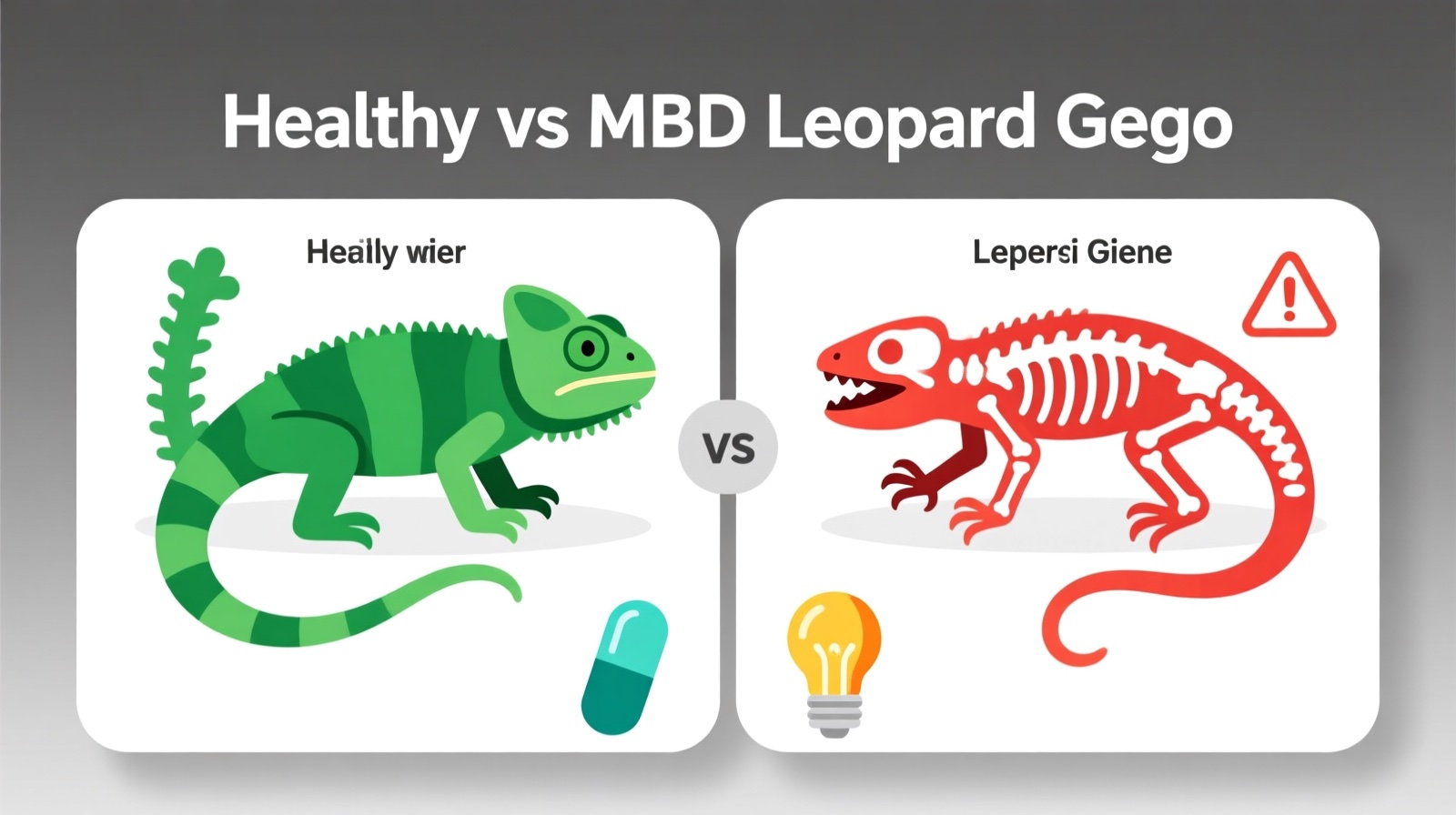
Metabolic Bone Disease (MBD)
MBD is the result of calcium deficiency and incorrect calcium-to-phosphorus ratio. Without adequate calcium, the gecko’s body leaches calcium from its own bones, causing them to become soft, weak, and deformed.
MBD progression:
| Stage | Symptoms | Reversibility |
|---|---|---|
| Early | Lethargy, decreased appetite, tremors (especially in legs) | Reversible with proper supplementation |
| Moderate | Rubbery jaw, swollen limbs, difficulty walking, wobbling | Partially reversible with vet treatment |
| Severe | Deformed bones, paralysis, multiple fractures, seizures | Permanent damage, may be fatal |
Prevention protocol — non-negotiable:
- Dust every feeding with calcium + D3 powder, alternating with plain calcium every other feeding
- Keep a calcium dish (without D3) in the tank at all times for free-choice access
- Feed gut-loaded insects with a calcium-rich diet — crickets are naturally low in calcium and high in phosphorus, making supplementation even more critical
- Use UVB lighting (even low-level helps with D3 synthesis)
- Don’t over-supplement D3 — toxicity is real, balance is key. Too much D3 causes calcification of soft tissues and organ damage
Respiratory Infection
Caused by temperatures too low or humidity too high. Symptoms: wheezing, bubbles from nose, open-mouth breathing, clicking sounds when breathing, and mucus around the mouth or nostrils.
Prevention: Proper temperature gradient (never below 70°F on the cool side), appropriate humidity (30-40% ambient, 70-80% in humid hide only), good ventilation, and avoiding waterlogged substrate.
Treatment: Mild cases may resolve with temperature correction. Moderate to severe cases require antibiotic treatment from a reptile vet — respiratory infections can progress to pneumonia rapidly and become fatal.
Parasites
Both internal and external parasites can affect leopard geckos. Internal parasites (coccidia, pinworms, cryptosporidium) cause weight loss, diarrhea, and lethargy. External parasites (mites, ticks) cause irritation, visible specks on the skin, and excessive soaking in the water dish.
Prevention: Quarantine all new geckos for 60-90 days before introducing them to an established collection. Have a fecal test done by a reptile vet during quarantine. Maintain clean enclosures and avoid cross-contamination between enclosures.
Treatment: Internal parasites require prescription anti-parasitic medication from a reptile vet. External parasites can be treated with reptile-safe mite sprays and environmental cleaning. Do not use over-the-counter parasite treatments without veterinary guidance.
Leopard Gecko Brumation
Brumation is the reptile equivalent of hibernation. In the wild, leopard geckos brumate during cooler months (November through February). In captivity, brumation is optional — most pet geckos don’t need to brumate.
Should you let your gecko brumate?
- Adults: Optional. Some geckos naturally slow down in winter. If they eat less but otherwise seem healthy, it’s fine.
- Babies and juveniles: Never. Growing geckos need consistent feeding and warmth. Brumation can be fatal to young geckos.
If your gecko starts brumating naturally:
- Don’t force-feed — offer food but don’t worry if refused
- Maintain minimum 70°F
- Reduce handling to a minimum
- Provide fresh water weekly
- Brumation typically lasts 4-8 weeks
- Weight should not drop more than 10-15%
Don’t confuse brumation with illness: Brumation is a gradual slowdown in fall or winter with the gecko otherwise appearing healthy — reduced appetite, sleeping more, but still maintaining some weight and occasionally basking. Illness is sudden appetite loss, rapid weight loss, lethargy at any time of year, and visible physical deterioration.
Key differences between brumation and illness:
- Brumation: Gradual onset (weeks), maintains stable weight, hides more but still drinks water, responsive when disturbed, occurs in fall/winter
- Illness: Sudden onset (days), rapid weight loss with thinning tail, refuses water, unresponsive or wobbly when disturbed, can happen any time of year
If you’re unsure whether your gecko is brumating or sick, see a reptile vet — it’s always better to check and be wrong than to wait and be too late.
When to See a Vet
Find a qualified reptile vet before you need one — not all veterinarians treat reptiles. The Association of Reptilian and Amphibian Veterinarians (ARAV) maintains a directory of herp vets. Ask local reptile groups for recommendations.
See a vet immediately if you notice:
- Not eating for more than 2 weeks (adults) or 3+ days (babies)
- Significant weight loss or thinning tail
- Visible injuries, swellings, or discharge
- Eye problems (swelling, cloudiness, stuck shut)
- Difficulty breathing (open-mouth, wheezing, bubbles from nose)
- Not pooping for extended periods
- Behavioral changes (lethargy, loss of balance, stumbling)
- Wobbly walking or tremors (possible MBD — emergency)
- Swollen belly with no recent feeding (possible impaction or egg-binding)
Annual checkups are recommended — a trained reptile vet can detect early signs of disease that you might miss. Budget $80-150 per annual visit.
Buying a Leopard Gecko
Where to Buy
1. Reputable Breeders (Recommended) Professional breeders are the best source for healthy, well-socialized pets. They provide complete health history, genetic information, care advice, and health guarantees. Find breeders through reptile expos, online directories (FaunaClassifieds, MorphMarket), local reptile clubs, and veterinarian recommendations. Breeders who work with specific morphs can also provide hatchling photos of the parents and lineage information.
2. Reptile Expos Reptile expos allow you to see geckos in person, talk directly with breeders, and often get better prices than pet stores. You can inspect the animal’s health before purchasing, check for signs of disease, and get immediate answers to your care questions. Most expos have a wide variety of morphs available.
3. Pet Stores (Use Caution) Pet stores often source from mass breeders with questionable practices. If you choose a pet store, research their supplier, ask for health records, quarantine for 30-60 days, and have a veterinarian check the gecko. Chain pet stores rarely provide the same level of care and health screening as dedicated breeders.
Price Guide
| Type | Price Range | Notes |
|---|---|---|
| Normal/Wild Type | $30-50 | Basic coloration, great for beginners |
| Common Morphs (Mack Snow, Tangerine) | $50-150 | Popular color variations |
| High-End Morphs (including Albino variants) | $150-500+ | Rare patterns and colors |
| Rare/Designer Morphs | $500-3,000+ | Breeding quality, unique genetics |
Signs of a Healthy Gecko
Before purchasing, check for these health indicators. Take your time examining the gecko — a responsible seller will allow you to handle the animal before committing.
Healthy Signs:
- Bright, clear eyes — no cloudiness, swelling, or discharge. The eyes should be alert and responsive to movement
- Fat tail — the tail is the gecko’s fat storage. A plump, rounded tail indicates good nutrition. It should be roughly the same width as the body
- Clean vent — no feces smearing, swelling, or discoloration around the cloaca
- Alert behavior — the gecko should be aware of its surroundings and respond to movement. Lethargy in a warm environment is a red flag
- Clean skin — no stuck shed (especially on toes and around the eyes), no abrasions, cuts, or discoloration
- All toes present — missing toes often indicate past problems with stuck shed or improper housing
- Proper weight — hip bones shouldn’t be prominently visible. The body should be well-fleshed
- Clear nostrils — no bubbles, discharge, or crusting around the nostrils
- Smooth walking — no limping, wobbling, or dragging of limbs
- Normal breathing — mouth should be closed; open-mouth breathing is an emergency sign
Warning Signs:
- Sunken eyes or visible hip bones — indicates chronic underweight or dehydration
- Stuck shed — especially around toes and eyes; indicates improper humidity or neglect
- Lethargy or unresponsiveness — may indicate illness, MBD, or improper temperatures
- Visible wounds, swellings, or discharge — signs of infection or injury
- Kinked tail or spine — often indicates MBD from calcium deficiency, especially in juveniles
- Open-mouth breathing — respiratory infection, veterinary emergency
- Dark or blackened skin — can indicate severe stress, necrosis, or infection
Cost Breakdown
Setup and Ongoing Costs
| Category | Initial Cost | Monthly Cost | Annual Cost |
|---|---|---|---|
| Tank (20-gallon) | $40-80 | — | — |
| Heat mat + thermostat | $30-50 | — | — |
| Substrate | $10-20 | $3-5 | $36-60 |
| 3 hides | $20-40 | — | — |
| Thermometers | $15-25 | — | — |
| Calcium + D3 + multivitamins | $20-30 | $5-8 | $60-96 |
| Feeder insects | $10 | $15-25 | $180-300 |
| Electricity (heat mat) | — | $3-5 | $36-60 |
| Annual vet check | — | — | $80-150 |
| Emergency vet fund | $200-500 | — | — |
| Total | $345-755 | $26-43 | $392-666 |
Over a 15-year lifespan: $3,700-10,500 total.
The emergency vet fund is not optional — reptile emergencies happen and they’re always more expensive than expected. Common emergency costs: impaction surgery ($500-1,500), respiratory infection treatment ($150-400), parasite treatment ($100-300), egg-binding surgery ($400-800). Having a $200-500 emergency fund set aside before getting a gecko is responsible pet ownership.
Money-saving tips:
- Breed your own feeder insects — a dubia roach colony costs $30-50 to start and produces free food indefinitely
- Buy supplements in bulk — a large container of calcium powder costs less per gram than small jars
- Make your own humid hide from a Tupperware container ($5) instead of buying commercial ones ($15-25)
- Use paper towels as substrate — it’s the cheapest safe option and ideal for quarantine
- Shop at reptile expos for supplies — prices are often 20-40% below retail
- Join local reptile groups — members often sell used equipment at steep discounts
Breeding Leopard Geckos
Breeding leopard geckos is a significant commitment that requires careful planning, additional equipment, and the willingness to find homes for 20-40 hatchlings per clutch. This section covers the basics — breeding is not recommended for beginners who haven’t kept leopard geckos for at least a year.
Sexing Your Gecko
Leopard geckos can be sexed at around 4-6 months of age. Males have visible pre-anal pores (a V-shaped row of small dots above the vent) and hemipenal bulges at the base of the tail. Females lack both of these features. Males also tend to be larger with broader heads.
Breeding Setup and Conditions
Before breeding, ensure both parents are:
- At least 12 months old and 50+ grams (females should be at least this weight to safely carry eggs)
- In excellent health with no signs of illness, MBD, or parasites
- Well-fed with proper supplementation for at least 3 months prior
Cooling period: Many breeders simulate a natural cooling period by reducing temperatures to 70-75°F for 4-6 weeks during winter. This triggers breeding behavior when temperatures are returned to normal. Feed reduced amounts during cooling, and stop feeding entirely if the gecko refuses food (normal during brumation).
Introducing the pair: Place the male in the female’s enclosure (or a neutral breeding tank) for a few days. Monitor closely — aggressive behavior requires immediate separation. Successful breeding is indicated by the male vibrating his tail rapidly and biting the female’s neck or tail.
Egg Laying and Incubation
Signs of gravid (pregnant) female:
- Visible egg bulges on both sides of the abdomen — you can often see the egg outlines through the belly skin when she’s close to laying
- Increased appetite and weight gain — she’s eating for herself and developing eggs
- Spending more time in the humid hide — preparing for egg laying
- Restless behavior, digging excessively
Egg laying:
- Provide a lay box — a container with moist vermiculite or Eco Earth (1:1 ratio by weight with water)
- The female will dig and bury her eggs (typically 2 eggs per clutch)
- Carefully remove eggs using a spoon — do not rotate them (the embryo attaches to the top of the egg)
- Mark the top of each egg with a pencil so you maintain orientation
Incubation:
- Temperature determines sex: 80-83°F produces mostly females, 85-87°F produces a mix, 88-91°F produces mostly males
- Incubation period: 35-60 days depending on temperature
- Use a dedicated incubator with vermiculite or perlite as incubation medium
- Maintain humidity but don’t let the medium become waterlogged
Caring for Hatchlings
Hatchlings are tiny (2-3 inches) and require extra attention:
- House individually to prevent cannibalism and competition for food
- Use paper towel substrate only
- Provide daily feedings of small crickets (3-5 per feeding)
- Dust every feeding with calcium + D3
- Keep the humid hide especially moist — hatchlings shed frequently
- Handle minimally for the first 2 weeks
- Maintain temperatures slightly warmer than adults (90-92°F warm side)
Finding homes: Before breeding, have a plan for rehoming hatchlings. Local reptile expos, online classifieds, and reptile-specific forums are options. Do not release captive-bred geckos into the wild.
Leopard geckos make excellent pets for those willing to provide proper care. Their docile nature, manageable size, and straightforward requirements have made them popular worldwide. By understanding their natural history and replicating key elements of their environment, you can provide a happy, healthy life for 15-20 years.
Key Care Points:
- Temperature gradient: Warm side 88-92°F, cool side 75-80°F
- Safe substrate: Avoid loose sand; use tile, carpet, or paper products
- Humid hide: Essential for proper shedding
- Proper diet: Insectivores requiring varied, gut-loaded prey with supplements
- Regular observation: Daily checks catch problems early
- Long-term commitment: These pets live 15-20 years
For more reptile care information, explore our guides on reptile habitat basics and bearded dragon care.