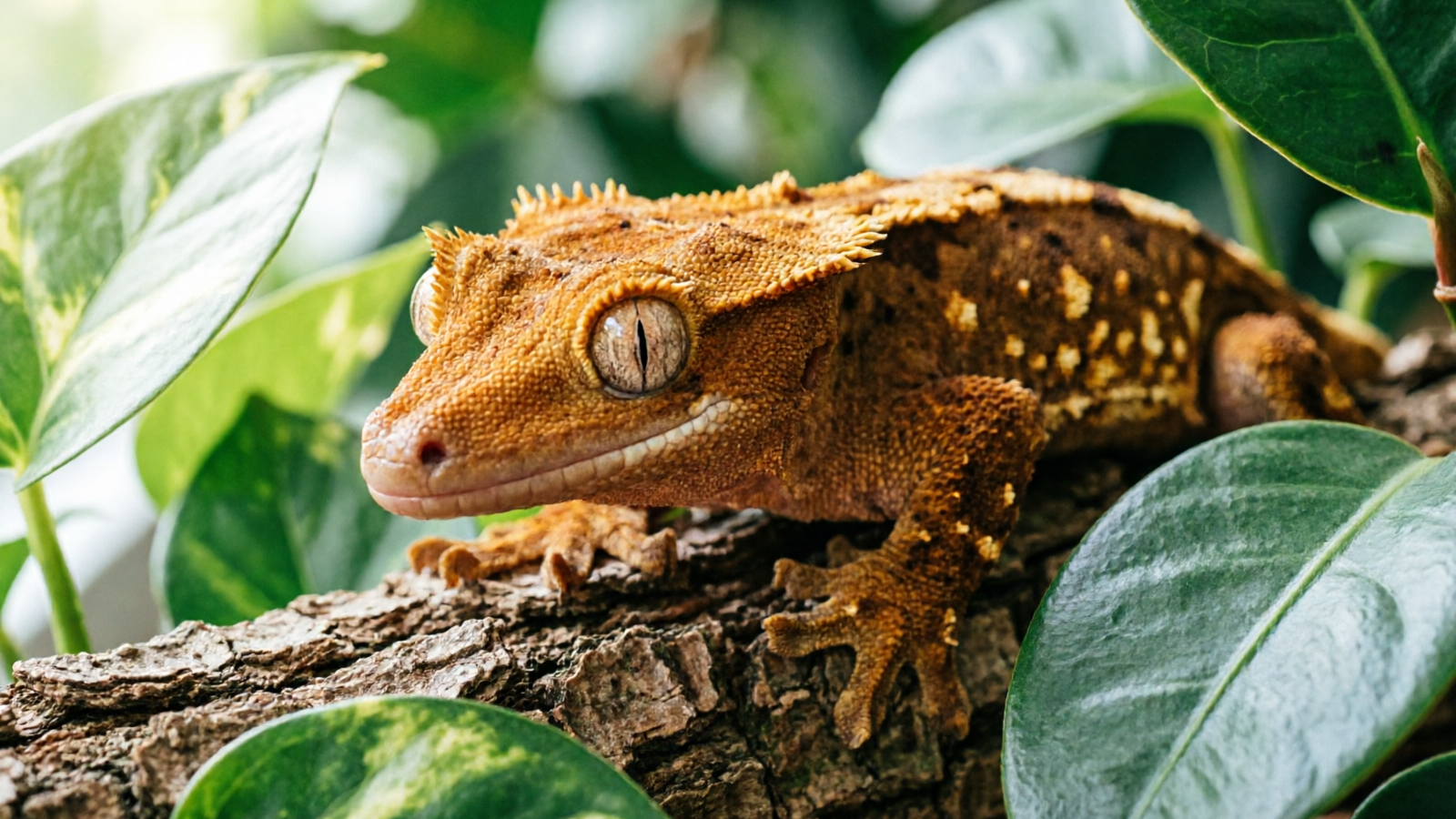
Crested Gecko Longevity Overview
Crested gecko lifespan: In captivity, geckos (Correlophus ciliatus) typically live 15 to 20 years. With optimal husbandry — stable temperature (72-78°F), consistent humidity (60-80%), a balanced diet of commercial CGD and feeder insects, and minimal handling stress — many crested geckos live well into their 20s. In the wild, lifespan is significantly shorter at 5 to 15 years due to predation, habitat loss, and inconsistent food availability.
Their longevity depends almost entirely on where they live. A landmark PLOS One study on captive reptile longevity found that species with stable environmental conditions consistently outlive wild populations by 2-3x (PLOS One — Captive Reptile Longevity Database). Captive-bred geckos with dedicated keepers regularly exceed 20 years. In the wild, the same species averages less than a decade.
This gap is not unusual among reptiles. The crested gecko lifespan advantage in captivity rivals that of ball pythons and leopard geckos. Captive ball pythons, bearded dragons, and leopard geckos all outlive their wild counterparts by significant margins. But the crested gecko’s gap is especially dramatic — two to three times longer in captivity.
The most overlooked factor is consistency. Research published in the Journal of Herpetological Medicine and Surgery shows that environmental stability — especially humidity consistency — is the single strongest predictor of reptile lifespan in captivity (JHMS — Environmental Stability and Reptile Health). Keepers who maintain stable humidity and temperature year-round tend to have geckos that thrive well past the 15-year mark.
For a complete overview of crested gecko husbandry, see our crested gecko care guide.
Captive vs. Wild Lifespan
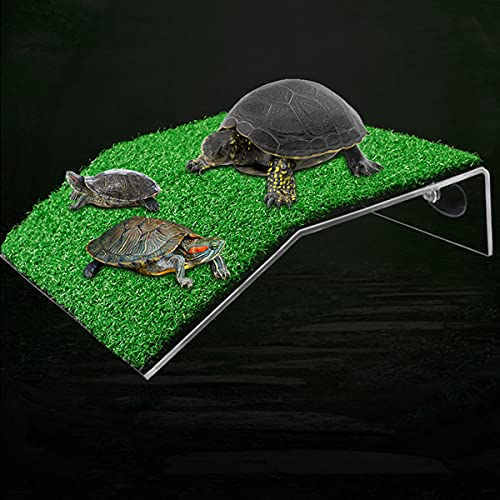
DoubleWood Floating Grass Platform (Large) is a quality option worth considering for your setup.
Captive crested geckos live two to three times longer than their wild counterparts. The difference comes down to predator elimination, consistent nutrition, and climate stability.
| Factor | Captivity | Wild |
|---|---|---|
| Average lifespan | 15-20 years | 5-15 years |
| Maximum recorded | 25+ years | ~15 years |
| Primary threats | Metabolic bone disease, stress, poor diet | Predation by rats, birds, snakes |
| Diet consistency | Daily CGD plus insects | Irregular — seasonal fruit and insects |
| Temperature control | Thermostat-regulated (72-78°F) | Fluctuates 68-85°F |
| Humidity control | Misting systems or hand spraying | Relies on rainfall cycles |
| Veterinary care | Available (exotic vet visits) | None |
The biggest lifespan difference comes from predator elimination and consistent nutrition. In the wild, New Caledonia’s introduced predators are the number one cause of premature death — not old age.
Crested geckos are endemic to New Caledonia, a remote island group in the South Pacific (International Union for Conservation of Nature — IUCN Red List). The species was first described in 1866, thought extinct by 1994, then rediscovered after a tropical storm (Reptile Database — Correlophus ciliatus). Now they are one of the most popular pet reptiles worldwide.
Ship rats (Rattus rattus), feral cats, and fire ants arrived with human activity. These predators decimate wild gecko populations (New Caledonia Government — Invasive Species Report). Combine predation pressure with nickel mining deforestation and erratic food supply, and the result is a dramatically shortened lifespan in the wild (Conservation International — New Caledonia Biodiversity Hotspot).
In captivity, the opposite is true. No predators exist inside an enclosure. Temperatures remain stable thanks to thermostats and climate-controlled homes.
Nutrition comes from scientifically formulated diets designed to match the gecko’s biological needs. The result is a dramatically extended lifespan.
The trade-off is keeper responsibility. A wild gecko that finds food survives. A captive gecko depends entirely on you for every element of its environment.
This dependency is why proper husbandry directly determines a crested gecko lifespan — for better or worse.
Life Stages of a Crested Gecko
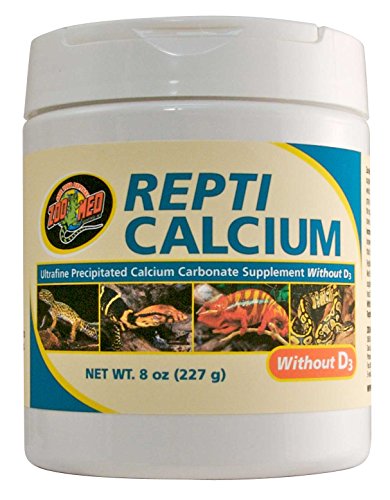
Many owners find that Zoo Med Reptile Calcium with Vitamin D3 works well for their pet’s needs.
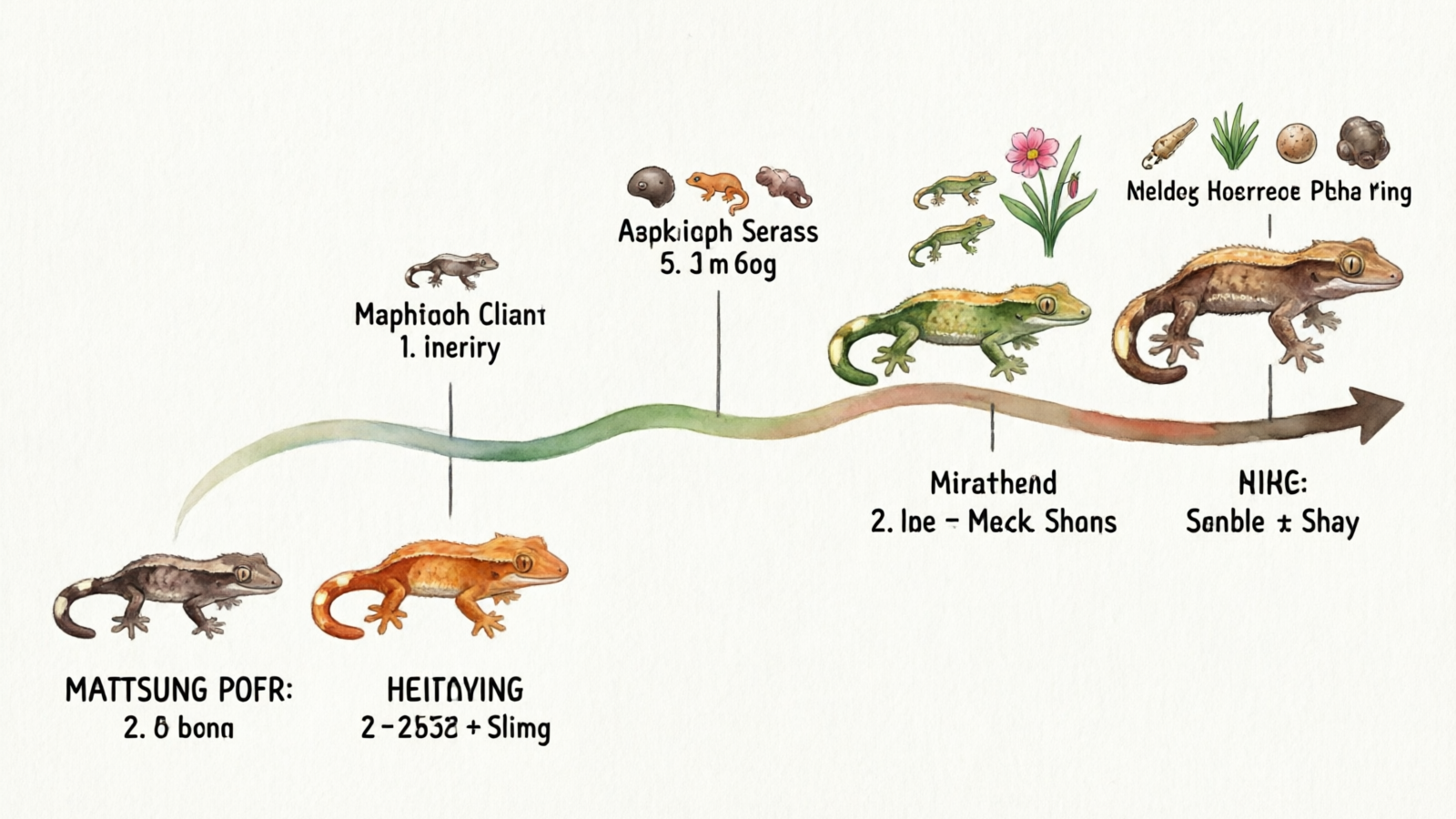
Understanding growth milestones helps you provide age-appropriate care that maximizes crested gecko lifespan at every stage. This crested gecko age chart outlines the five distinct life stages, each with different needs.
| Life Stage | Age | Size (SVL) | Weight | Key Milestones | Care Notes |
|---|---|---|---|---|---|
| Hatchling | 0-6 months | 2-3 inches | 2-4 grams | First shed (week 1), tail drop common | Fragile — minimal handling, daily feeding |
| Juvenile | 6-12 months | 3-4.5 inches | 5-15 grams | Rapid growth, color development | Handle 1-2x/week max, CGD plus insects |
| Sub-Adult | 12-18 months | 4.5-5.5 inches | 15-25 grams | Sexual maturity begins | Larger enclosure, monitor for aggression |
| Adult | 18 months+ | 5-8 inches | 25-40 grams | Full size, breeding ready | Standard adult care, stable routine |
| Senior | 10+ years | Same | May decrease | Reduced activity, slower metabolism | Softer foods, less handling, vet visits |
SVL stands for Snout-Vent Length — the standard herpetological measurement from nose to vent, excluding the tail (Merck Veterinary Manual — Reptile Physical Examination). Weight is measured in grams using a digital kitchen scale. Both metrics should be tracked regularly to monitor growth progress.
Growth rate is directly tied to feeding frequency and diet quality (VCA Hospitals — Reptile Nutrition). Hatchlings fed daily on CGD and supplemented with small insects twice per week grow significantly faster than those fed irregularly. However, faster growth does not necessarily mean longer lifespan — steady, consistent growth is healthier than rapid weight gain.
Do crested geckos have tails that grow back? No — tail loss is permanent in this species. Unlike leopard geckos, which can regenerate their tails, crested geckos lack this ability due to differences in their caudal vertebrae structure (Merck Veterinary Manual — Tail Autotomy in Lizards). Unlike leopard geckos, crested geckos cannot regenerate their tails.
Warning: Caudal Autotomy — The voluntary self-amputation of the tail as a defense mechanism. In crested geckos, this is a one-time event — the tail does not regenerate. The dropped tail continues twitching to distract predators while the gecko escapes. The wound heals within 2-4 weeks with no long-term health impact (Merck Veterinary Manual).
Tail drops are common in hatchlings due to handling stress or rough shipping, but do not affect health or overall crested gecko lifespan. Adults with intact tails are considered higher-value breeding stock.
If your gecko loses its tail, do not panic — the wound heals quickly and the gecko adapts without any long-term health consequences.
Male vs. Female Gecko Longevity
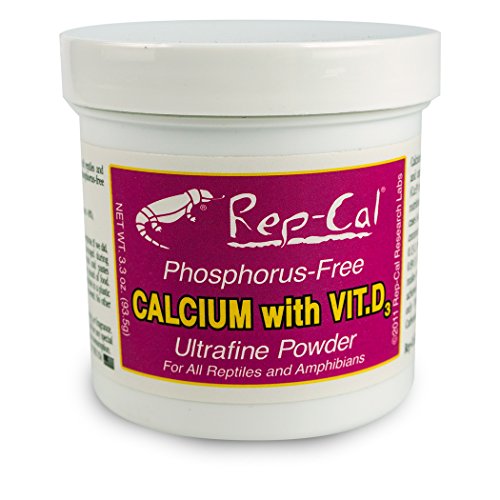
For this purpose, Rep-Cal Calcium with Vitamin D3 → is a budget-friendly choice among pet owners.
The crested gecko lifespan female vs male longevity gap for this species is one of the most significant among popular pet reptiles. Breeding females produce multiple clutches per year, with each clutch requiring 10-15% of total body calcium reserves (Reptiles Magazine — Crested Gecko Breeding and Calcium Depletion).
Males — the crested gecko lifespan male average is 15-20 years with 25+ years possible under optimal care. They reach sexual maturity at 12-18 months and can breed throughout their adult lives without physical toll.
Breeding females average only 10-15 years. The difference is caused by egg production. A single clutch requires calcium mobilization equivalent to 10-15% of the female’s total body calcium reserves.
Females bred four to five times per year show accelerated bone density loss, weight decline, and shortened lifespan by three to five years compared to non-breeding females (VCA Hospitals — Reproductive Disorders in Reptiles). The calcium drain is cumulative — each breeding season depletes reserves that take months to rebuild through diet alone.
Non-breeding females can live as long as males — 15-20 years — when not subjected to the physical strain of repeated egg production.
This matters even if you keep a female alone. Female crested geckos produce infertile eggs even without a male present. These infertile clutches still drain calcium and energy reserves.
If you keep a female, provide a lay box and supplement with extra calcium D3 during breeding season regardless of whether she is paired with a male.
Proper calcium supplementation is critical for female gecko health.
Warning: Metabolic Bone Disease (MBD) — A nutritional deficiency disease caused by inadequate calcium, incorrect calcium-to-phosphorus ratio, or insufficient UVB/D3 exposure. MBD causes soft, rubbery bones, jaw deformities, tremors, and death if untreated. In breeding crested geckos, MBD is the most common cause of premature death (Merck Veterinary Manual).
See our supplements guide for calcium D3 recommendations.
Refusing food can signal egg-binding (dystocia) in females — a life-threatening emergency requiring immediate veterinary care (Merck Veterinary Manual — Dystocia in Lizards). See our guide on crested gecko not eating for other appetite loss causes.
Factors That Affect Gecko Longevity
Six controllable factors determine whether your gecko lives 10 years or 25 years — and thus directly affect crested gecko lifespan.
Crested gecko longevity checklist:
- Feed balanced CGD (Repashy/Pangea/Clarks) 3-4x/week — supplemented with gut-loaded insects 1-2x/week
- Maintain 72-78°F ambient, 65-70°F night — no heat mats needed; sustained >82°F is fatal
- Keep humidity 60-80% — spray at night, allow daytime drying cycle; use digital hygrometer at climbing level
- Handle 10-15 min, 2-3x/week max — nocturnal species prone to chronic stress from over-handling
- Provide 12x12x18+ inch vertical enclosure — arboreal species needs climbing height, not floor space
- Buy captive-bred from reputable breeder — request hatch date and lineage tracking
- Do NOT feed baby food — peach/apricicot baby food causes metabolic issues and is nutritionally inadequate
- Do NOT use heat mats or heat lamps — crested geckos require ambient room temperature, not basking heat
- Do NOT exceed 80°F sustained temperature — heat stress is life-threatening and can cause death within hours
- Do NOT grab by the tail — tail loss is permanent (cannot regenerate); autotomy is stress-induced
- Do NOT keep in bare or horizontal enclosures — lack of vertical climbing space causes chronic stress
- Do NOT purchase wild-caught specimens — parasites and unknown health history shorten lifespan significantly
1. Diet quality — The single biggest controllable factor. A balanced diet of reputable commercial CGD (Repashy, Pangea, Clarks) supplemented with feeder insects (dubia roaches, crickets, black soldier fly larvae) provides complete nutrition. Feed CGD three to four times per week and offer insects once or twice per week.
Gut-load insects with nutritious vegetables 24 hours before feeding to maximize nutritional value. Dust insects with calcium powder before offering.
Warning: Baby food warning: Feeding peach or apricot baby food was popular in the early 2000s but is nutritionally inadequate. Allen Repashy, the creator of commercial CGD, specifically developed Repashy Superfoods to replace baby food diets after observing metabolic decline in geckos fed fruit-based diets long-term (Repashy Superfoods — Product Development History). It causes metabolic issues over time and should be avoided entirely.
2. Temperature — Crested geckos prefer 72-78°F (22-26°C). Sustained temperatures above 82°F cause heat stress and can be fatal (VCA Hospitals — Thermal Regulation in Reptiles). Below 65°F, digestion slows and immune function drops (Merck Veterinary Manual — Reptile Thermoregulation). Nighttime drops to 65-70°F are normal and healthy.
No heat mats are needed. Room temperature is sufficient for most homes.
3. Humidity — 60-80% relative humidity is required. Below 50% causes stuck shed, respiratory infections, and eye problems (Merck Veterinary Manual — Reptile Dermatology). Above 85% promotes bacterial and fungal growth.
The ideal cycle mimics natural New Caledonian weather: spray at night for humidity spikes, then allow gradual drying during the day (Merck Veterinary Manual — Reptile Husbandry). Use a digital hygrometer with a probe placed at the gecko’s climbing level, not at the bottom of the enclosure.
4. Handling stress — Crested geckos are nocturnal and stress-prone. Limit handling to 10-15 minutes, two to three times per week. Never grab by the tail — it will drop and never grow back.
Chronic stress suppresses the immune system, increasing disease susceptibility and shortening lifespan (Merck Veterinary Manual — Stress-Related Disease in Reptiles). Signs of stress include pale coloration, daytime hiding, refusal to eat, and defensive tail drops. If your gecko shows these signs consistently, reduce handling frequency and evaluate enclosure conditions.
5. Housing quality — Minimum 12x12x18 inch enclosure for one adult (Merck Veterinary Manual — Reptile Housing Standards). Proper vertical space is essential since crested geckos are arboreal. Include live or silk plants for cover and multiple climbing branches.
Small or bare enclosures cause stress and reduced activity. A stressed gecko moves less, eats less, and has a weaker immune system. Vertical territory matters more than floor space — tall enclosures with plenty of climbing surfaces produce healthier, more active geckos.
6. Genetics — Wild-caught specimens may carry parasites and have shorter lifespans. Captive-bred from reputable breeders is the standard. Avoid geckos from mass production facilities with unknown genetic lines.
Purchase from breeders who track lineage and provide hatch dates. Genetic diversity matters — geckos from heavily inbred lines may inherit health vulnerabilities that reduce lifespan.
For complete CGD brand reviews and feeding schedules, see our food guide.
Proper enclosure setup is foundational for longevity. See our enclosure guide for species-specific requirements.
How to Estimate Your Crested Gecko’s Age
Precise age estimation is straightforward in young geckos but nearly impossible in adults.
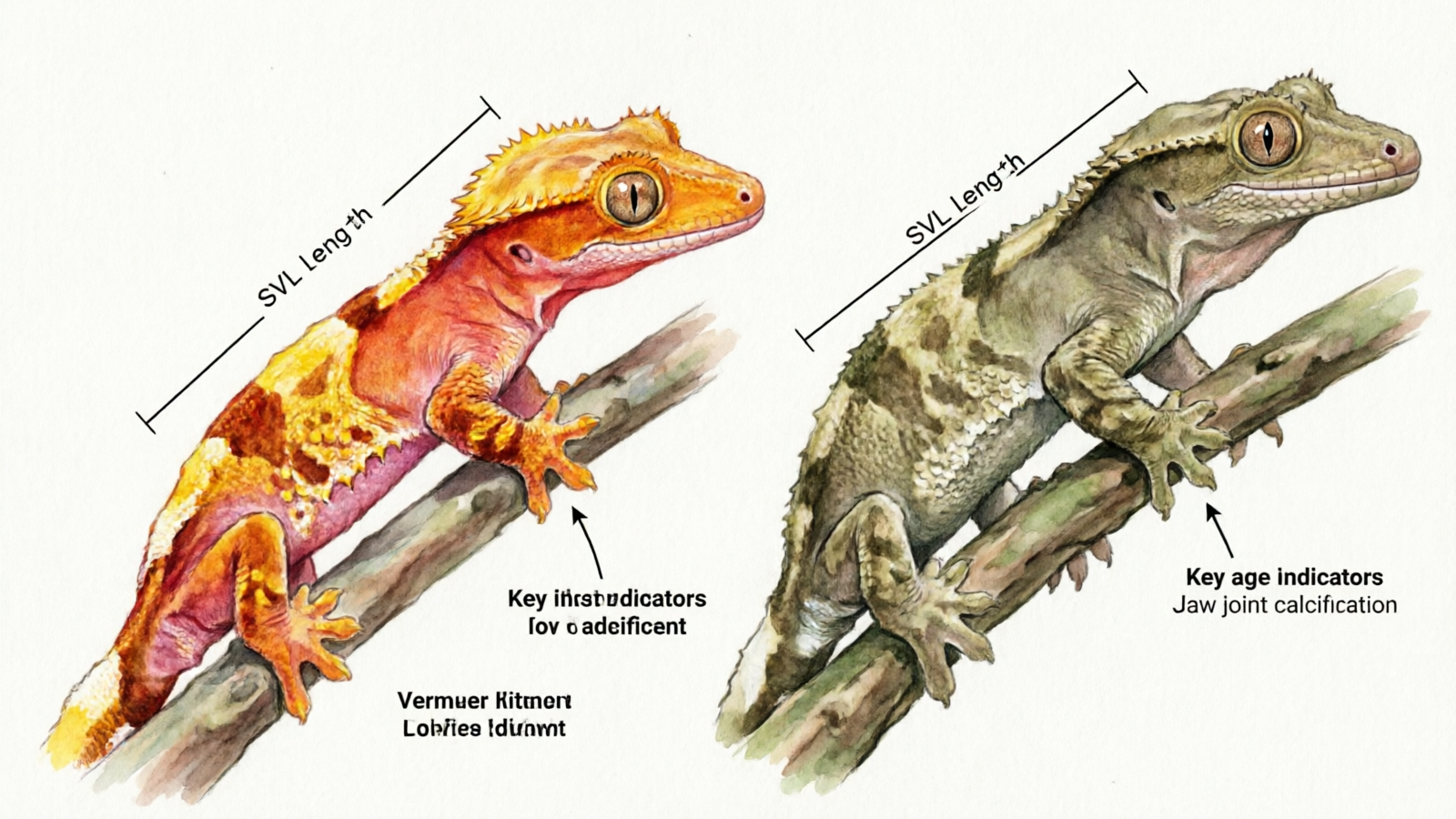
Step 1: Measure SVL (Snout-Vent Length)
Hatchlings measure 2-3 inches and juveniles roughly 3-5 inches. Sub-adults reach 5-6 inches, while adults measure 5-8 inches.
Most geckos reach full adult size by 18 to 24 months.
After that, length becomes unreliable for further aging.
Step 2: Weigh on a digital scale
Hatchlings weigh 2-4 grams, juveniles 5-15 grams, sub-adults 15-25 grams, and adults 25-40 grams. Weight fluctuates with feeding and breeding status.
Females weigh more during egg development, while senior geckos may gradually lose weight over time.
Step 3: Check coloration and pattern stability Juveniles undergo significant color changes, including “firing up” and pattern development. By 12-18 months, colors stabilize. An adult pattern means the gecko is at least 12-18 months old.
Dulling or fading in older geckos can indicate senior status (10+ years). However, color change alone is not a reliable age indicator — some morphs naturally appear duller than others.
Step 4: Assess physical condition Calcified jaw joints indicate advanced age (10+ years) — a well-documented marker in gecko species (Merck Veterinary Manual — Geriatric Reptile Assessment). Reduced grip strength, slower reflexes, and decreased climbing activity also suggest senior status. Compare to known-age photos from breeders for the best estimation.
Once a crested gecko reaches adult size at 18-24 months, precise age estimation becomes very difficult. A 5-year-old and a 15-year-old may look nearly identical. Purchase from breeders who provide hatch dates for accurate age records.
Crested Gecko Longevity Compared to Other Reptiles
Keepers often ask how crested gecko longevity compares to other popular pet reptiles. This table places the crested gecko within the broader context.
| Species | Average Lifespan | Maximum Recorded | Adult Size | Difficulty |
|---|---|---|---|---|
| Crested Gecko | 15-20 years | 25+ years | 5-8 inches | Beginner |
| Leopard Gecko | 10-20 years | 30+ years | 8-11 inches | Beginner |
| Bearded Dragon | 8-15 years | 20+ years | 18-24 inches | Beginner |
| Ball Python | 20-30 years | 40+ years | 4-6 feet | Beginner |
| Corn Snake | 15-20 years | 25+ years | 3-5 feet | Beginner |
| Russian Tortoise | 40-60 years | 100+ years | 6-10 inches | Beginner |
| Red-Eyed Tree Frog | 5-8 years | 12+ years | 2-3 inches | Intermediate |
Crested geckos sit in the middle of the reptile lifespan spectrum. When evaluating crested gecko lifespan relative to other species, the 15-20 year range positions them above most small lizards. They outlive bearded dragons and most amphibians, but fall short of ball pythons and tortoises. Their crested gecko life expectancy of 15-20 years makes them a long-term commitment — comparable to keeping a medium-sized dog.
This longevity is often underestimated by first-time buyers who expect a shorter crested gecko lifespan typical of smaller lizards. A crested gecko purchased as a classroom pet or child’s companion may still be alive when the original owner is in their thirties.
Bearded dragons share many husbandry principles with crested geckos but have different lifespans and care requirements. See our bearded dragon lifespan guide for details.
For the opposite end of the reptile lifespan spectrum, see our tortoise lifespan guide — some species outlive their owners.
Crested Gecko Longevity FAQ
How long do crested geckos live in captivity?
Crested geckos live 15 to 20 years in captivity with proper care. Many well-maintained individuals reach 20-25 years. The key factors for maximum longevity are stable temperatures (72-78°F), consistent humidity (60-80%), a balanced CGD diet, minimal handling stress, and annual exotic vet checkups.
Do male or female crested geckos live longer?
Males live longer on average — 15-20 years compared to 10-15 years for breeding females. The difference is caused by egg production, as each clutch requires massive calcium mobilization. Non-breeding females can live as long as males.
How long do crested geckos live in the wild?
The crested gecko lifespan in the wild drops to approximately 5 to 15 years. The primary causes of premature death are introduced predators (ship rats, feral cats, fire ants) and habitat destruction from mining and deforestation in New Caledonia.
Inconsistent food availability and lack of veterinary care also contribute to shorter wild lifespans.
What is the oldest crested gecko on record?
There is no officially verified record for the oldest specimen, but multiple breeders have reported crested geckos living 25-28 years in captivity. The species was rediscovered in 1994 after being thought extinct, so the maximum potential lifespan may be even higher. The oldest confirmed data comes from long-term breeding programs tracking geckos from hatch dates.
Can you tell how old a crested gecko is?
If you are wondering how to tell crested gecko age, start by measuring SVL and weight for geckos under 2 years. However, once a gecko reaches adult size at 18-24 months, precise age estimation becomes very difficult. A 5-year-old and a 15-year-old may look nearly identical. The only reliable way to know exact age — and therefore estimate crested gecko life expectancy — is from a breeder’s hatch records.
This crested gecko age chart shows the key milestones.