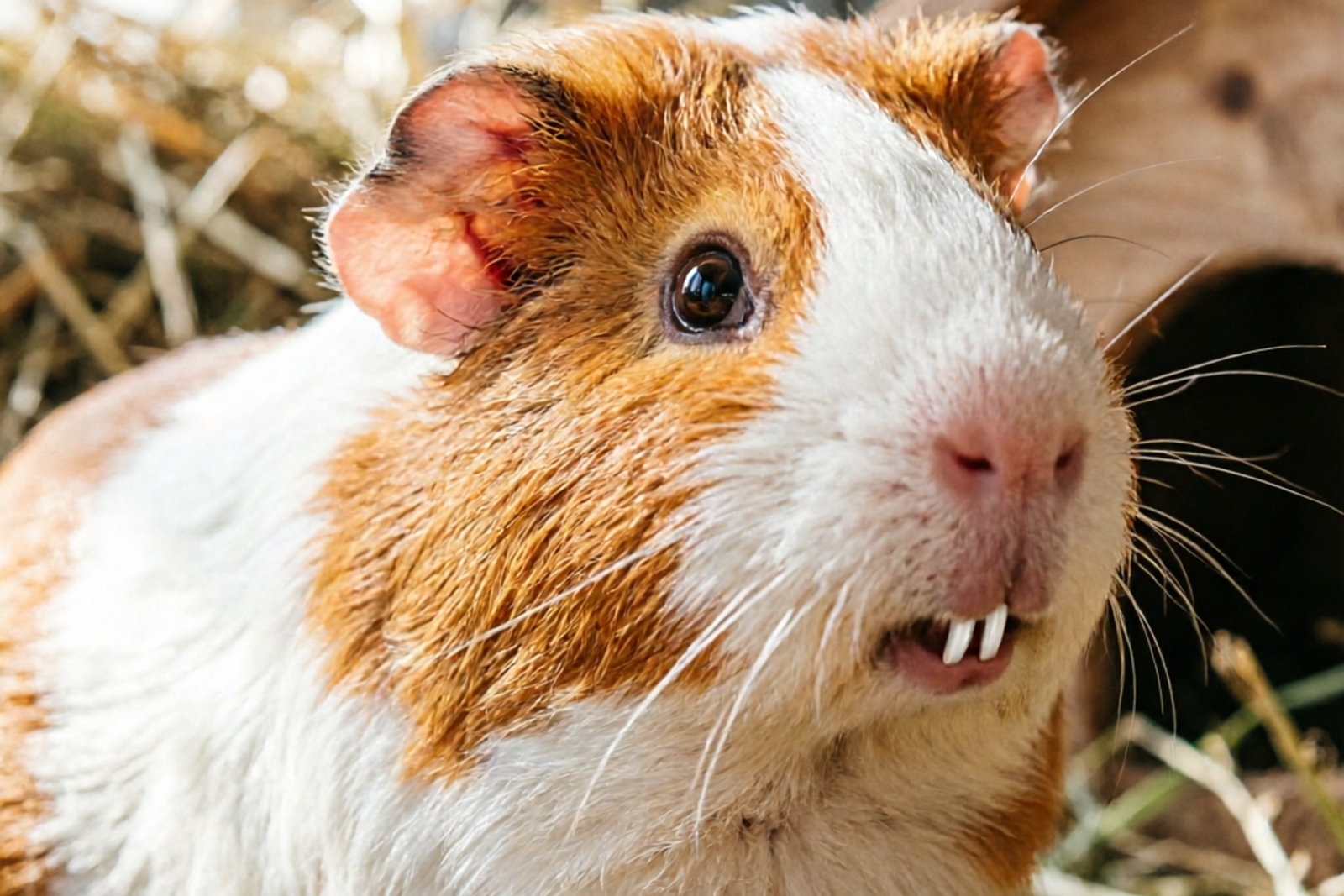
You’re sitting near your guinea pig’s cage and suddenly hear a rapid clicking sound — teeth chattering. If this is your first time hearing it, your first thought is probably why does my guinea pig chatter their teeth? It’s one of the most common and most misunderstood guinea pig behaviors. If you’re asking yourself why does my guinea pig chatter their teeth, you’re not alone — it’s one of the most common questions I get from new owners. The answer depends entirely on the situation. That same clicking sound can mean your pig is annoyed, terrified, in pain, or — in rare cases — perfectly content. This range of meanings is exactly why why does my guinea pig chatter their teeth has no single answer. If you’re wondering what does it mean when guinea pigs chatter their teeth, the context always tells the full story.
The trick is learning to read the context. Teeth chattering during a new guinea pig introduction means something completely different from chattering while your pig is resting alone in a quiet room. In this guide, I’ll walk you through all seven reasons guinea pigs chatter their teeth, how to tell them apart, and when the sound means you need to call a vet. Understanding why does my guinea pig chatter their teeth has helped me respond appropriately in every situation.
Before we dive into the reasons, let me be clear: why does my guinea pig chatter their teeth is a question with multiple valid answers. For a complete overview of all guinea pig vocalizations, our complete guinea pig sounds guide covers wheeking, rumbling, chutting, and more.
What Does Guinea Pig Teeth Chattering Sound Like?
Teeth chattering (also called teeth clicking) is a rapid, staccato clicking sound — the sound that prompts the question why does my guinea pig chatter their teeth more than any other guinea pig behavior produced when a guinea pig rapidly rubs its upper and lower teeth together. It’s one of the most distinctive and commonly heard guinea pig sounds — I’ve heard hundreds of owners describe it, and each time they’re asking why does my guinea pig chatter their teeth with genuine concern., and once you learn to recognize it, you’ll hear it frequently — especially if you have more than one pig.
Sound characteristics:
- Volume: Ranges from soft (barely audible from a foot away) to loud (clearly heard across the room)
- Speed: Rapid, machine-gun-like clicking — this is the hallmark of why does my guinea pig chatter their teeth questions I receive — much faster than grinding
- Duration: Usually short bursts of 2 to 5 seconds, but can continue for longer during confrontations — I’ve heard it go on for over a minute during heated dominance disputes, but can continue for longer during confrontations
It’s important to distinguish teeth chattering from other sounds guinea pigs make with their mouths. I see this confusion constantly in guinea pig forums when people ask why does my guinea pig chatter their teeth without realizing their pig is actually grinding. Many owners confuse these, which leads to misreading the situation.
| Sound | Description | Typical Meaning | When You Hear It |
|---|---|---|---|
| Teeth Chattering | Rapid clicking, “brr-brr-brr” | Warning, annoyance, anger | During confrontation, new introductions, or when startled |
| Teeth Grinding | Slow, heavy, coarse rubbing | Pain, discomfort, dental issues | When eating, being handled near the mouth, or at rest |
| Content Purring | Low, soft rumble | Happiness, relaxation | During lap time, petting, or cuddling |
| Alert Purring | Higher-pitched, short bursts | Nervousness, uncertainty | In new environments, hearing strange sounds |
In my experience, the key difference is speed and sound quality. Chattering is fast and clicking. Grinding is slow and heavy, like sandpaper on wood. Purring is a continuous low rumble that you feel as much as hear. Learning these distinctions is the foundation for understanding what your guinea pig is trying to tell you. Once I learned the difference, the question of why does my guinea pig chatter their teeth became much easier to answer.
Why Do Guinea Pigs Chatter Their Teeth? The 7 Reasons
Blue Mountain Hay Wheat Straw Pellets is a quality option worth considering for your setup.
Why does my guinea pig chatter their teeth? The short answer is that it’s a communication tool — and the message changes depending on the situation. Here are all seven reasons, from most common to least common, that explain why does my guinea pig chatter their teeth. Here are all seven reasons, from most common to least common.
1. Anger or Annoyance (Most Common)
This is the number one reason owners ask why does my guinea pig chatter their teeth — anger or annoyance. Your pig is telling you or another guinea pig to back off. Think of it as the guinea pig equivalent of saying “I’m not happy with this situation.” Common triggers include being picked up when they don’t want to be — this is probably the #1 reason people ask why does my guinea pig chatter their teeth after handling sessions, having their personal space invaded by a cage mate — I see this daily with my bonded pair at feeding time, or being disturbed during nap time.
2. Fear
Guinea pigs are prey animals, and in my experience, fear chattering is the second most common reason people ask why does my guinea pig chatter their teeth. A sudden loud noise, an unfamiliar person approaching the cage, or being placed in a new environment can all trigger fear-based chattering. The key difference from anger chattering is the body language — I always tell people asking why does my guinea pig chatter their teeth to watch the body first, listen second — a fearful pig will often freeze, flatten against the ground, or try to hide.
3. Territorial Dispute
This is especially common during introductions between two guinea pigs who don’t know each other yet — in fact, this is probably why you’re asking why does my guinea pig chatter their teeth right now. The resident pig may chatter to say “this is my space” while the newcomer responds in kind. Territorial chattering is usually accompanied by stiff posture and raised hackles. When I see this combination, I know the answer to why does my guinea pig chatter their teeth is territory defense.
4. Pain or Discomfort
Technically, pain more often causes slow teeth grinding rather than rapid chattering — this distinction is crucial when you’re trying to figure out why does my guinea pig chatter their teeth., but the two are frequently confused by owners. If your pig is making any mouth-related sound while showing signs of distress (hunched posture, reduced appetite, drooling), pain should be your first suspect.
5. Stress
Environmental stressors — in my case it was a barking dog nearby that triggered it — loud music, a barking dog, a cage that’s too small, or chronic loneliness — can all cause persistent teeth chattering. Stress-related chattering tends to be softer and more continuous than anger chattering — in my experience, this type is the hardest to identify because it’s so subtle, and it often occurs when the pig is alone rather than during an interaction.
6. Dominance Display
Between bonded guinea pigs, occasional teeth chattering is part of normal hierarchy maintenance. I’ve seen my dominant pig do this at every feeding time. One pig may chatter briefly during feeding time or when re-establishing who gets the best sleeping spot. This is normal as long as it doesn’t escalate. I’ve watched my pigs maintain their hierarchy for years with nothing more than brief chattering at mealtime.
7. Contentment (Rare)
In some guinea pigs, a very soft, very slow version of teeth chattering can occur during deep relaxation — I’ve only witnessed this a handful of times, and it’s always caught me off guard because most why does my guinea pig chatter their teeth questions point to negative emotions. — similar to a cat’s purr. This is uncommon and easy to confuse with light grinding, but if your pig is relaxed, half-closing its eyes, and otherwise showing all signs of comfort, the soft clicking is likely positive.
How to Tell Why Your Guinea Pig Is Chattering — Context Matters
Many owners find that Check Price works well for their pet’s needs.
The single most important skill for interpreting teeth chattering is context-reading. Why does my guinea pig chatter their teeth in one situation versus another? The answer is always in the body language. The same clicking sound in two different situations can mean completely opposite things. Here’s a practical guide to the most common scenarios:
| Context | Likely Meaning | Body Language Signs | What to Do |
|---|---|---|---|
| Introducing a new guinea pig | Territorial or dominance display | Raised hackles, stiff posture, wide yawning to show teeth | Supervise closely, separate if fighting starts |
| Reaching into the cage — the #1 trigger for why does my guinea pig chatter their teeth questions from new owners | Fear or territorial response | Backing away, hiding, wide eyes, freezing | Approach slowly, let the pig come to you first |
| During handling — another common trigger for why does my guinea pig chatter their teeth | Annoyance or overstimulation | Squirming, ear flicking, trying to jump away | Put the pig down gently, give them space |
| Loud noise nearby — another frequent cause of why does my guinea pig chatter their teeth questions | Fear or startle response | Freezing briefly, then rapid chattering, may run to hide | Remove or reduce the noise source, speak softly |
| Between bonded pigs at feeding time — perfectly normal | Mild annoyance or competition | Quick chatter, no physical escalation | Normal behavior — monitor only |
| While resting alone, very soft clicking — the rare happy answer to why does my guinea pig chatter their teeth | Possible contentment | Relaxed posture, eyes half-closed, lying stretched out | Nothing — this is a positive sign |
The principle is simple: always look at the full picture. I’ve learned this the hard way after misreading my pig’s signals more than once. Teeth chattering combined with relaxed body language in a quiet environment likely means something very different from teeth chattering combined with raised fur and stiff posture during a confrontation. For handling tips and bonding advice, our guinea pig care guide covers the fundamentals of reading your pig’s behavior.
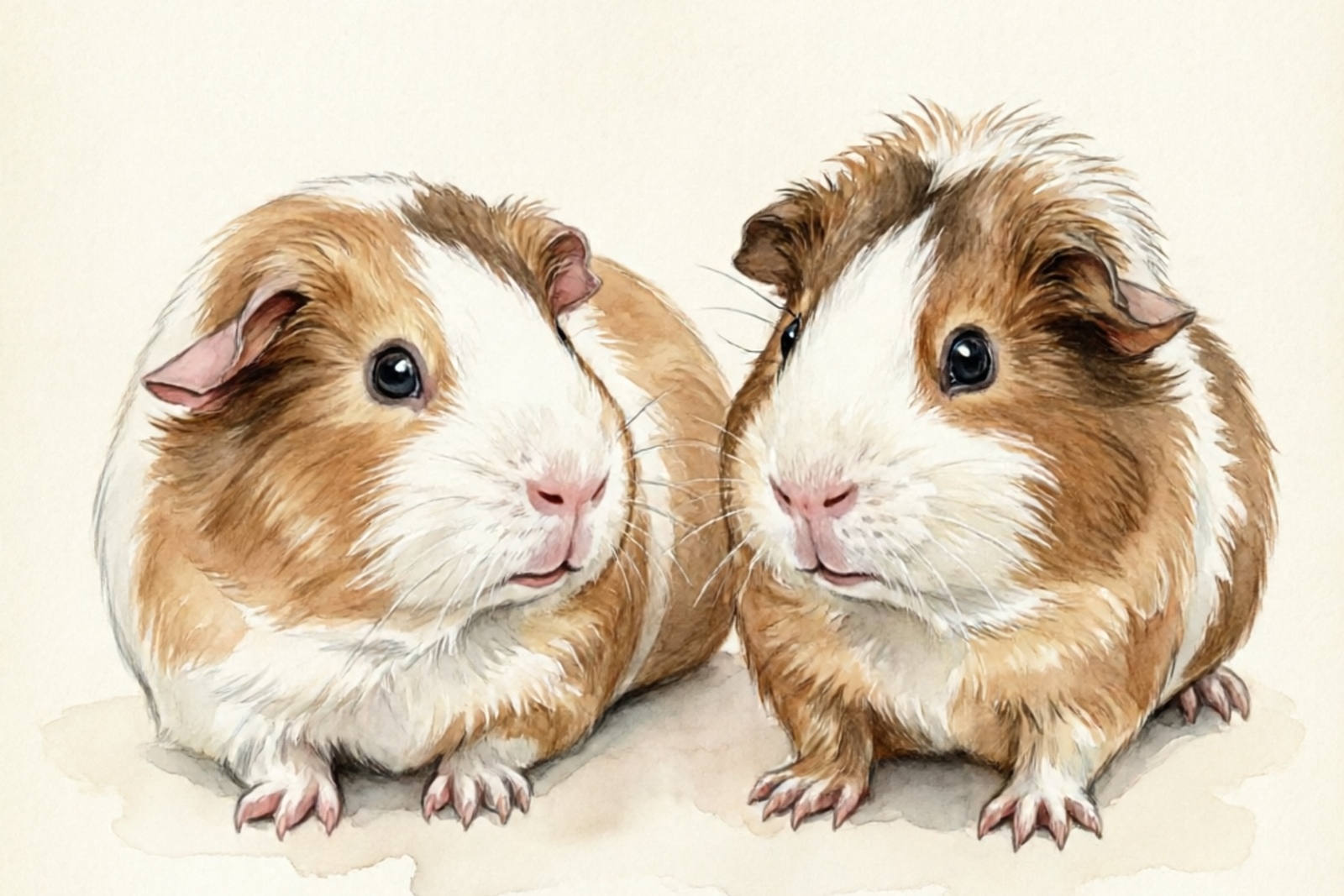
Guinea Pig Grinding Teeth vs Chattering — The Pain Signal
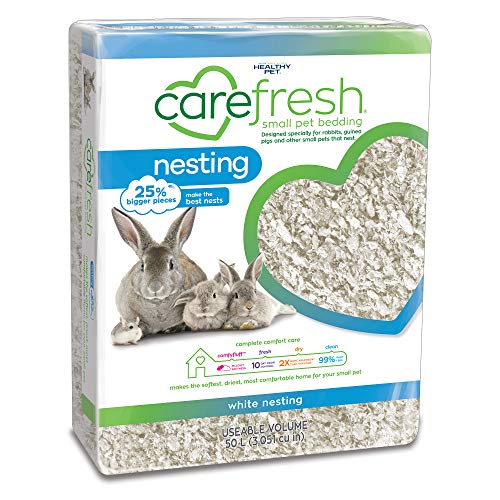
For this purpose, Carefresh 99% Dust-Free White Paper Bedding is a popular choice among pet owners.
This is the most important section in this entire guide. Teeth grinding is not the same as teeth chattering, and confusing the two can have serious consequences for your guinea pig’s health. When I first started keeping guinea pigs, I made this exact mistake — I assumed why does my guinea pig chatter their teeth was always behavioral, and missed an early dental issue.
When I first noticed my guinea pig making a different mouth sound, I panicked — I thought why does my guinea pig chatter their teeth so differently now? It turned out to be grinding, not chattering. Teeth grinding is a slow, heavy, sustained rubbing of the teeth that sounds completely different from the rapid clicking of chattering. If teeth chattering is a machine-gun click, teeth grinding is sandpaper on wood — the first time I heard grinding, I immediately knew this wasn’t the same why does my guinea pig chatter their teeth sound I was used to — coarse, deliberate, and uncomfortable to listen to. Grinding almost always indicates pain or dental discomfort, and it should never be ignored. I tell every new guinea pig owner the same thing: if you can’t tell whether your pig is chattering or grinding, assume it’s grinding and check with a vet.
Key differences:
- Speed: Grinding is slow and deliberate; chattering is rapid and staccato
- Sound quality: Grinding is heavy and coarse; chattering is light and clicking
- Timing: Grinding often happens during eating or when the mouth area is touched; chattering happens during social interactions
Guinea pig teeth problems that cause teeth grinding:
Guinea pig teeth grow continuously — roughly 1.5mm per week for the incisors. My vet showed me an X-ray once that made this growth rate terrifyingly clear. In a healthy guinea pig eating unlimited hay, this growth is naturally worn down through chewing. But when something disrupts this balance, dental problems develop rapidly — I’ve seen teeth overgrow visibly within just two weeks of reduced hay intake.
- Overgrown incisors — Without enough hay to chew, front teeth grow too long — I’ve seen this happen in rescue pigs that were fed pellet-only diets, making it difficult and painful to eat. The teeth may curve, cross over each other, or grow into the lips and gums.
- Malocclusion — Misaligned teeth that don’t meet properly. This causes uneven wear, sharp edges, and mouth ulcers where teeth rub against soft tissue. Malocclusion can be genetic or acquired through injury. I’ve had a pig with acquired malocclusion from a fall, and the recovery required months of vet visits.
- Tooth root abscess — An infection at the root of a tooth, usually a molar. My vet described this as one of the most painful conditions a guinea pig can experience. This is extremely painful and requires veterinary treatment — antibiotics alone are rarely enough. Abscesses often need surgical drainage.
- Molar spurs — Sharp points that develop on the back molars when wear is uneven. These spurs cut into the cheek and tongue, causing painful ulcers — my vet showed me photos, and it’s heartbreaking that make eating agony.
- Scurvy-related dental issues — Guinea pigs cannot synthesize vitamin C and need it from their diet. A deficiency weakens the connective tissue around the teeth — I always supplement vitamin C through bell peppers, not just water-soluble tablets, making dental problems more likely and recovery slower.
Other pain indicators to watch for: — I’ve compiled this list from personal experience and veterinary advice over years of guinea pig care
- Reduced appetite or complete refusal to eat
- Dropping food from the mouth while trying to eat
- Weight loss (check weekly — a drop of more than 50g is significant)
- Drooling or a persistently wet chin
- Reluctance to be touched near the mouth or jaw
- Hunched posture with a puffed-up appearance
- Grinding teeth that you can hear from across the room
If grinding is accompanied by any of these symptoms, see an exotic vet immediately. Dental problems in guinea pigs progress quickly and can become life-threatening if untreated. Our guinea pig health problems guide has more detail on recognizing and managing dental disease.
Diet plays a direct role in dental health. Guinea pig grinding teeth during meals is a clear sign something is wrong. Guinea pigs need unlimited hay — it should make up 80% of their total diet. I always stress this to anyone asking about why does my guinea pig chatter their teeth because dental problems from insufficient hay are entirely preventable. The long, fibrous strands of hay force the jaw to move in the wide, grinding motion — I switched to Timothy hay years ago and noticed a clear improvement in my pigs’ dental health that keeps all teeth properly worn down. For guidance on feeding the right diet, see our proper guinea pig diet recommendations.
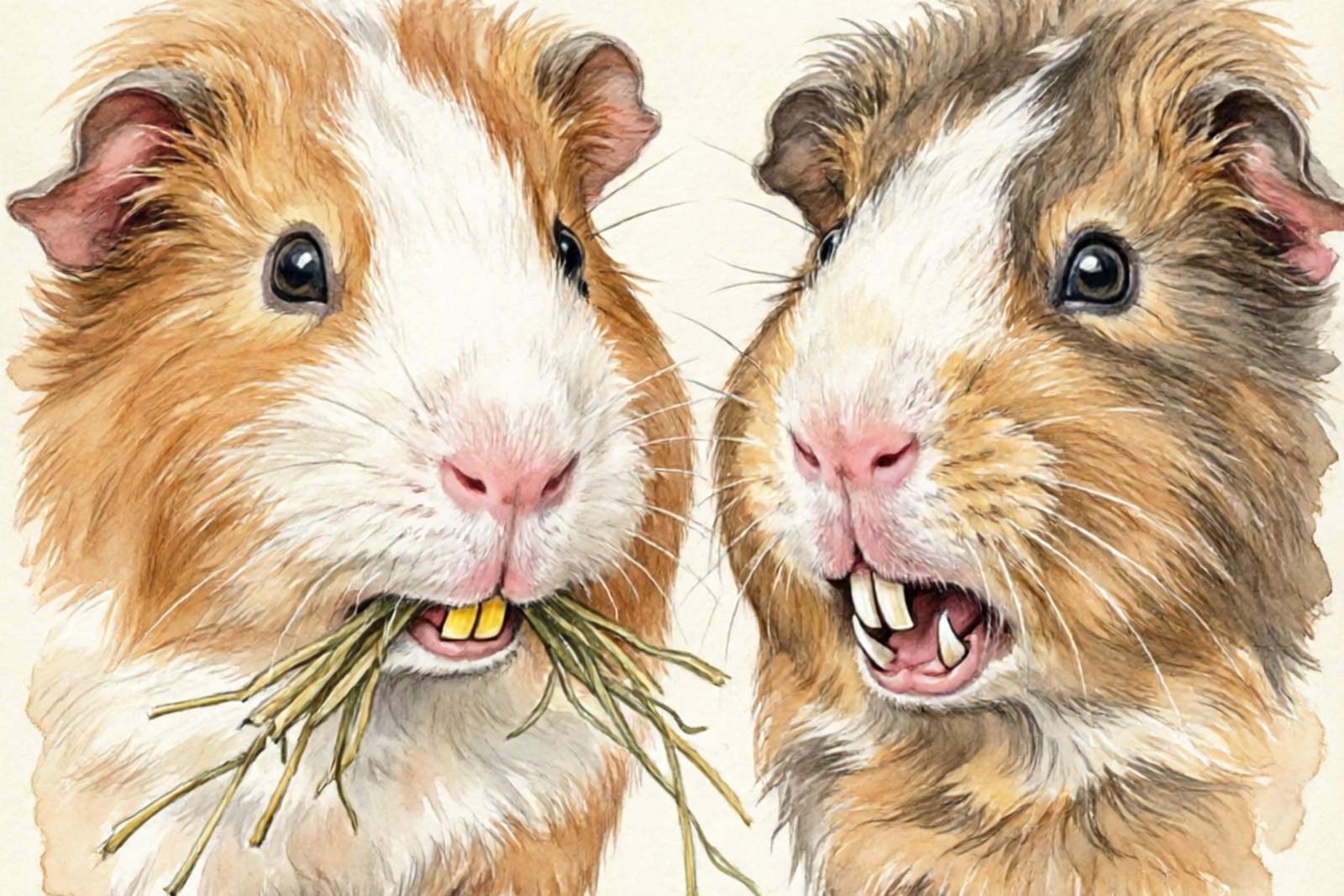
Guinea Pig Teeth Chattering During Introductions — Normal or Dangerous?
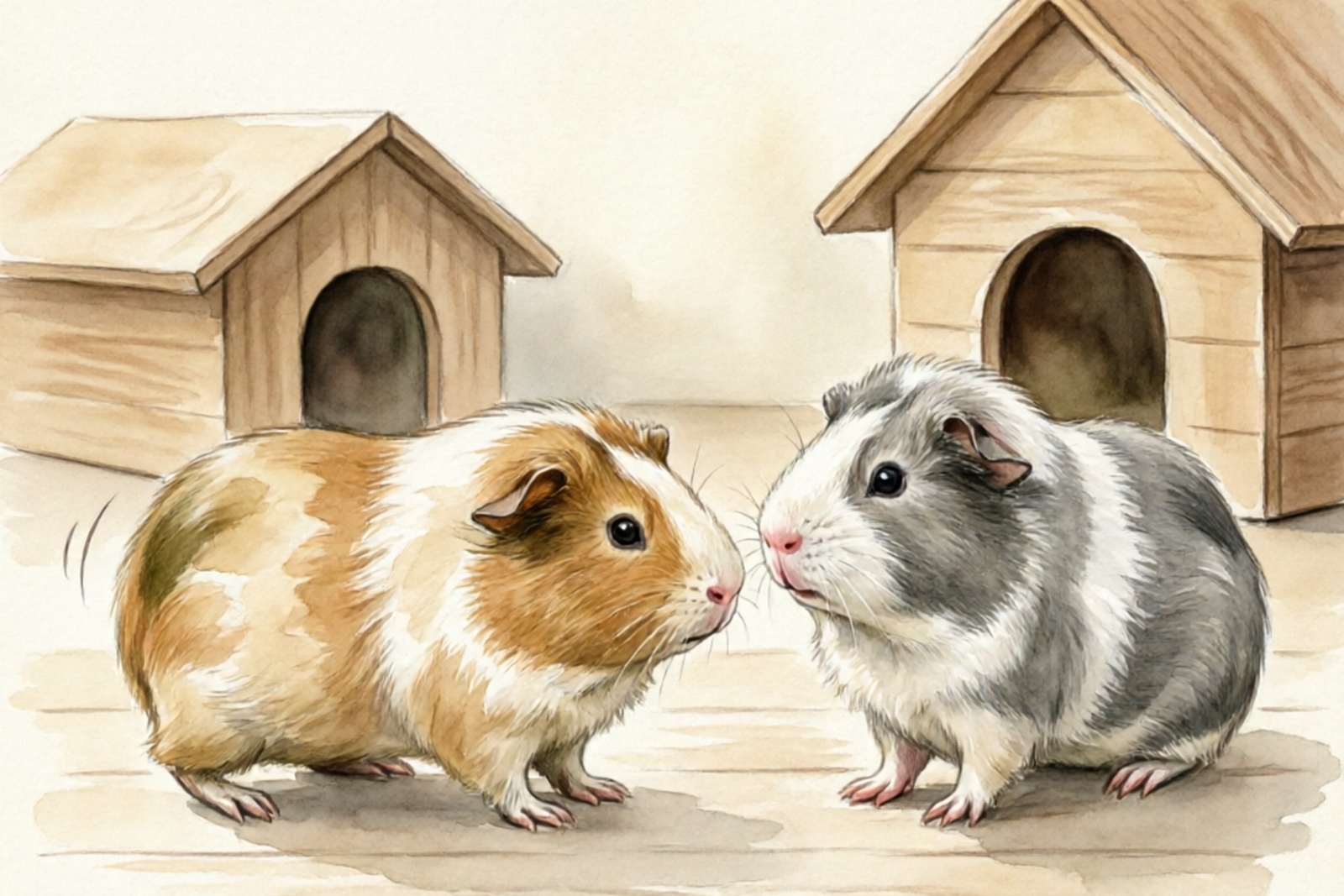
New guinea pig introductions are the single most common scenario for teeth chattering, and in my experience, this is when most owners first google why does my guinea pig chatter their teeth., and they’re also the situation where owners are most likely to panic. Here’s what’s normal and what isn’t.
Teeth chattering during introductions is expected and usually harmless — if you’re currently asking why does my guinea pig chatter their teeth during a bonding session, this is almost certainly normal dominance behavior. Two guinea pigs meeting for the first time are establishing a hierarchy — deciding who’s dominant and who’s submissive. Light chattering, sniffing, some mounting behavior, and even brief chasing are all part of normal guinea pig introductions.
Safe introduction protocol:
- Always use neutral territory — Never introduce a new guinea pig inside the resident pig’s established cage. The resident pig will defend its territory aggressively. Use a neutral space like a playpen, bathroom floor, or a completely cleaned cage that neither pig has lived in.
- Supervise all interactions — Stay present and watch the body language closely. I never leave introductions unsupervised — even for a minute. Keep a towel handy to separate the pigs if needed — never use your bare hands to break up a guinea pig fight.
- Know when to separate — If teeth chattering progresses to lunging, biting, full-body vibration — I’ve had to intervene in this situation exactly once, and the towel-separation technique works. (a sign of intense aggression), or if one pig is cornered with nowhere to retreat, separate them immediately. Some chasing and mounting is fine; actual fighting is not.
- Recognize normal dominance behavior — Light chattering, sniffing, rumblestrutting (a swaying walk), and mounting are all normal. I’ve watched dozens of introductions, and these behaviors are always part of the process. One pig will eventually submit by lying flat and allowing the other to sniff or mount — this submission usually happens within the first 15 minutes in my experience.
- Watch for warning signs — Chattering combined with raised hackles, wide yawns that show all the teeth, and stiff-legged walking means the situation is escalating — I’ve learned to spot this combination instantly. Intervene before it turns into a fight.
When to permanently separate: If two pigs consistently fight, draw blood, or if one pig becomes chronically stressed (stops eating, hides constantly, loses weight), they may not be compatible as cage mates. In my experience, some guinea pigs simply don’t get along, and forcing a bond can cause serious health problems from chronic stress. I’ve advised several owners to house their pigs separately, and the improvement in both pigs’ wellbeing was immediate.
Bonded guinea pigs who live together will still chatter at each other occasionally during minor disputes — this is completely normal and usually resolves within seconds. For adequate space to reduce territorial tension, check our guide on — in my experience, cage size is the single biggest factor in reducing territorial chattering. proper guinea pig cage size.
How to Reduce Negative Teeth Chattering
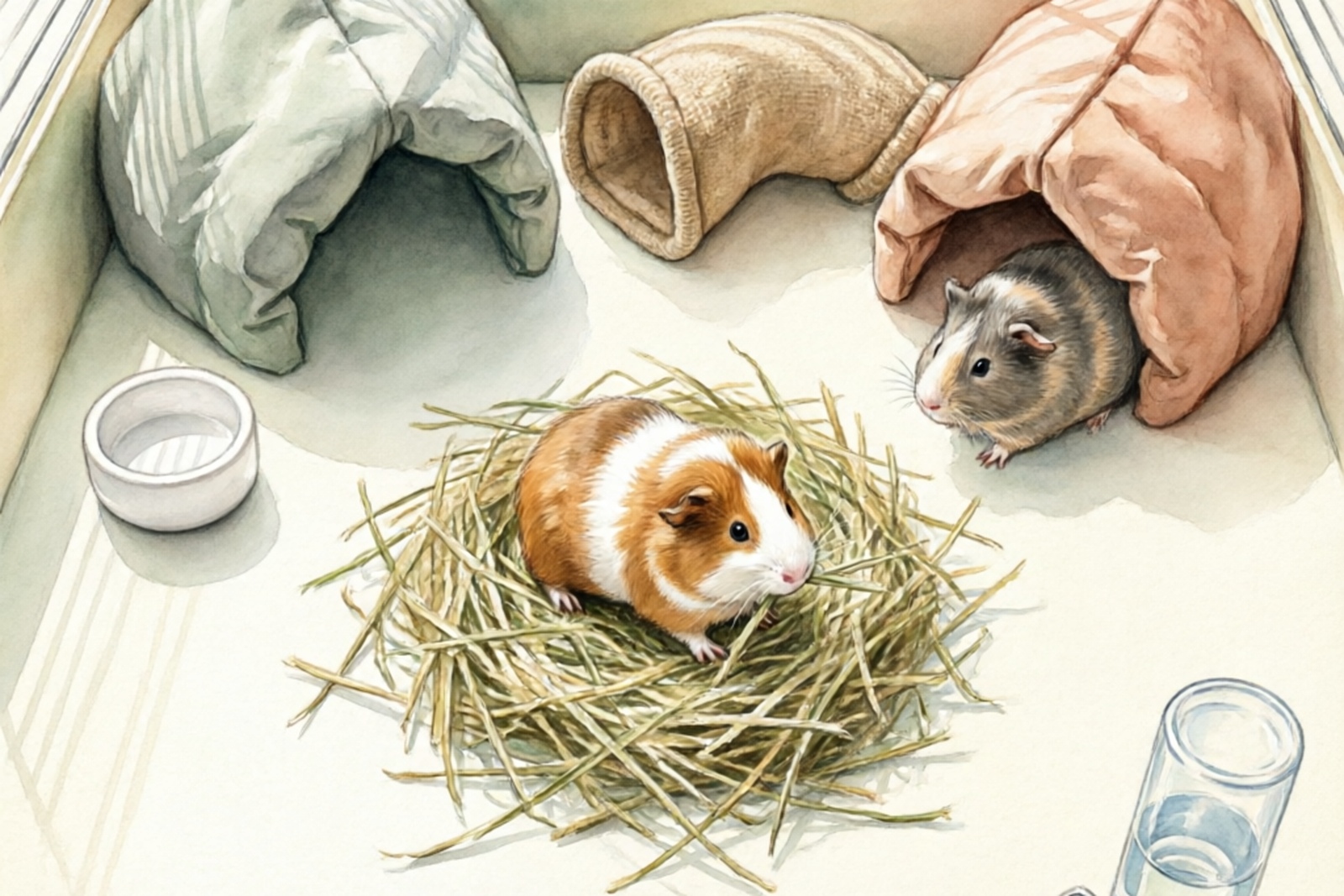
If your guinea pig is chattering frequently in non-introduction situations, you’re probably wondering why does my guinea pig chatter their teeth so much. The root cause is usually stress or discomfort. Here are five strategies I’ve used to minimize stress-related teeth chattering — these are the same approaches I recommend every time someone asks why does my guinea pig chatter their teeth and the cause is environmental:
-
Provide adequate cage space — The RSPCA recommends a minimum of 7.5 square feet — but in my experience, bigger is always better for reducing stress behaviors for one guinea pig and 10.5 square feet for a pair. Crowding is one of the most common causes of chronic stress in guinea pigs — I upgraded from a 2x3 C&C to a 2x5 and the behavioral improvement was dramatic. I’ve found that upgrading to a larger cage was the single most effective change I made to reduce stress-related chattering in my own herd.
-
Minimize sudden movements and loud noises — Guinea pigs are prey animals with excellent hearing. A slammed door, a dropped object, or a suddenly approaching hand can trigger fear chattering — I’ve learned to announce myself before approaching my pigs’ cage. Move slowly around the cage, speak in a calm voice, and avoid sudden gestures.
-
Maintain a consistent routine — Guinea pigs thrive on predictability — I feed mine at the same times daily, and this consistency alone reduced random chattering significantly. Feed them at the same times each day, handle them at consistent times, and clean the cage on a regular schedule. Unpredictability creates anxiety, and anxious guinea pigs chatter more.
-
Provide hiding spots — Every cage should have at least two hides (one per guinea pig) where the pigs can retreat when they want space. Without hides, a subordinate pig has nowhere to escape — I added a second hide to my cage and noticed a significant reduction in chattering within days a dominant cage mate’s attention, which increases stress and chattering.
-
Ensure a proper diet with unlimited hay — A diet that’s 80% hay is essential for dental health. Dental pain from overgrown teeth is a major cause of teeth grinding (the pain signal) — I always tell new owners: if you’re asking why does my guinea pig chatter their teeth and the answer isn’t behavioral, check the teeth first, and proper hay intake prevents this problem from developing. It also supports digestive health, which directly affects overall wellbeing.
What NOT to do:
- Don’t punish teeth chattering — It’s communication, not misbehavior — I wish more owners understood this when they search for why does my guinea pig chatter their teeth. Guinea pigs don’t understand punishment, and it will only increase their fear and stress. I’ve seen this mistake in online forums repeatedly — people asking why does my guinea pig chatter their teeth and then punishing the pig, which makes everything worse.
- Don’t ignore persistent grinding — If you hear slow, heavy grinding (not rapid clicking), always investigate for dental problems or pain. This is the single most important takeaway I can give you about why does my guinea pig chatter their teeth. This is the one mouth sound you should never dismiss.
- Don’t force interactions when the pig is chattering — If your guinea pig is chattering at you, respect the boundary. Why is my guinea pig chattering at me specifically? The answer is almost always that you’ve invaded their personal space. Give them space and try again later. This patience approach has never failed me when dealing with why does my guinea pig chatter their teeth during handling.
When to See a Vet
Most teeth chattering is behavioral and doesn’t require veterinary attention. But if you’ve ruled out the common behavioral causes and you’re still asking why does my guinea pig chatter their teeth, it’s time to look at medical issues. But certain signs should prompt an immediate vet visit. If you notice any of the following red flags, schedule an appointment with an exotic vet as soon as possible:
- Teeth grinding (slow, heavy rubbing) — This is a pain indicator. When I hear this sound, I immediately think why does my guinea pig chatter their teeth differently than usual — it’s grinding, not chattering. and almost always signals a dental problem or other medical issue
- Drooling or a wet chin — In my experience, this is the most visible dental disease sign and the fastest way to tell something is wrong, mouth ulcers, or difficulty swallowing
- Weight loss or reduced appetite — I weigh my pigs weekly, and any drop of more than 50g sends me straight to the vet, GI issues, or other illness
- Swelling around the jaw or mouth — Likely a tooth root abscess. My vet described this as one of the most painful conditions a guinea pig can experience, which needs urgent treatment
- Difficulty eating or dropping food — Overgrown teeth, malocclusion, or molar spurs are the most common causes — I check my pigs’ eating habits every single day
- Sudden chattering in a normally calm pig — I’ve been through this twice, and both times it turned out to be dental issues and suddenly starts, pain or illness is a likely explanation
- Chattering combined with hunched posture and lethargy — Your pig is not just annoyed — it’s sick. I cannot stress this enough. — it’s sick
I recommend routine dental checks every 6 to 12 months. In my years of keeping guinea pigs, every time I’ve asked myself why does my guinea pig chatter their teeth and the answer turned out to be medical, early detection made all the difference. as part of regular vet visits. Many dental problems develop gradually and can be caught early during a routine exam, before they cause visible symptoms. This is why I always emphasize regular vet visits to anyone asking why does my guinea pig chatter their teeth — prevention beats treatment every time. Prevention is always easier (and cheaper) than treatment — I’ve spent far more on emergency dental procedures than I would have on regular checkups.
If your guinea pig has stopped eating entirely, this is a medical emergency — and if you’re also noticing why does my guinea pig chatter their teeth changing suddenly, these two signs together warrant an urgent vet visit. Guinea pigs need to eat constantly to keep their digestive system moving — GI slowdown becomes dangerous within hours, not days. See our guide on guinea pig not eating for immediate steps to take while you get to a vet — I keep this guide bookmarked because GI slowdown is one of the most time-sensitive emergencies in guinea pig care.