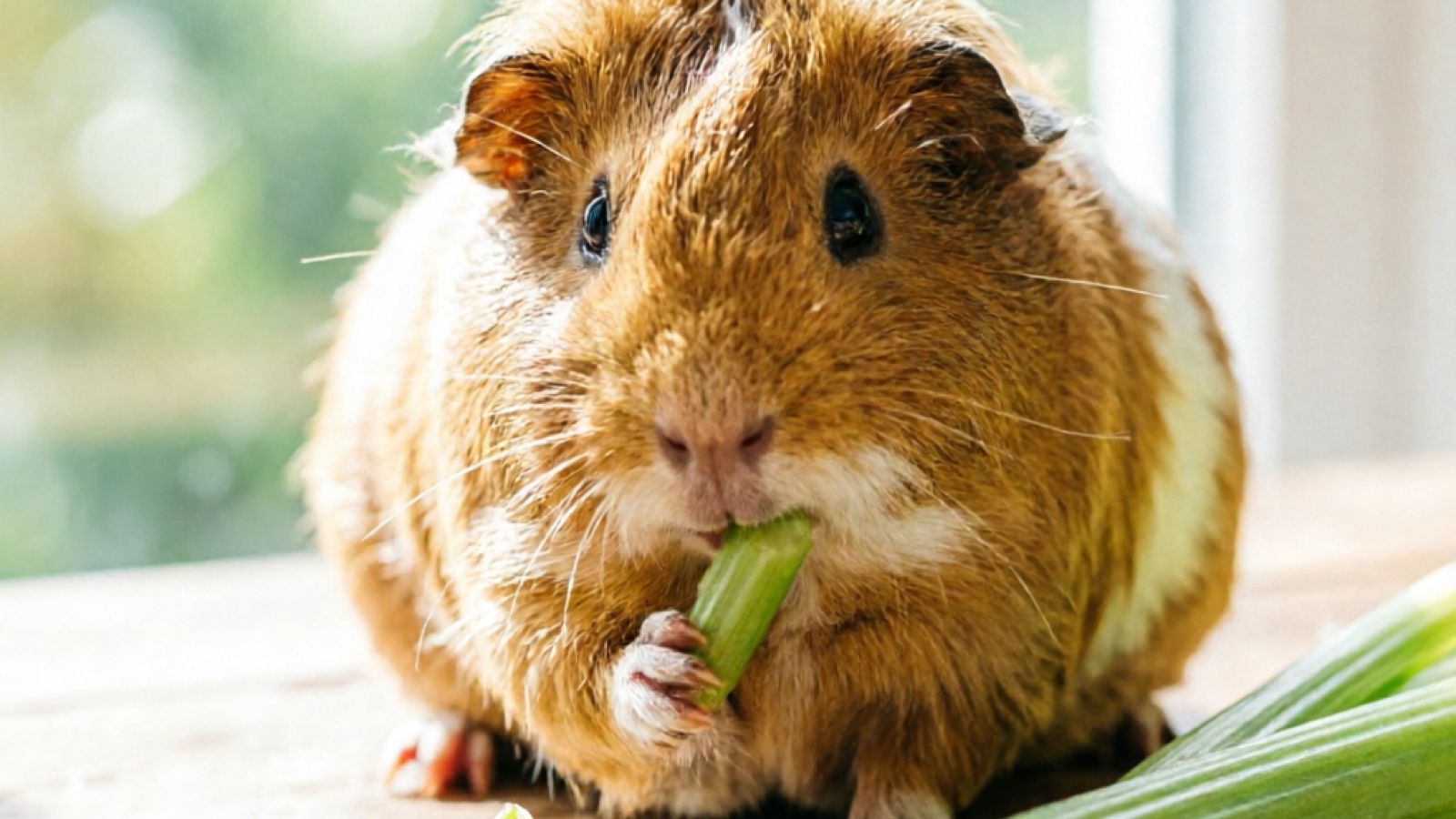
Can Guinea Pigs Eat Celery?
Yes, guinea pigs can eat celery — but it requires proper preparation and portion control. Cut into small 1-inch pieces, 2-3 times per week, celery provides hydration, fiber, and a modest vitamin C boost.
⚠️ Medical Disclaimer: This article is not a substitute for professional veterinary care. If your guinea pig shows signs of illness, consult a qualified exotic veterinarian.
Celery is 95% water, making it an excellent hydration source — especially during warm months. It also contains fiber for healthy digestion and small amounts of vitamin C, which guinea pigs need daily because they cannot produce it themselves. The key is removing the tough stringy fibers and keeping portions moderate to avoid gas and bloating.
Nutritional Profile of Celery for Guinea Pigs
Check Price is a quality option worth considering for your setup.
USDA nutritional data — raw celery, per 100g USDA FoodData Central FDC ID 11143:
| Nutrient | Amount per 100g | Per 1-Inch Piece (~10g) | Relevance |
|---|---|---|---|
| Calories | 16 kcal | 1.6 kcal | ✅ Very low |
| Water | 95.4g (95%) | 9.5g | ✅ Excellent hydration |
| Fiber | 1.6g | 0.16g | ✅ Supports digestion |
| Sugar | 1.3g | 0.13g | ✅ Very low sugar |
| Vitamin C | 3.1mg | 0.31mg | ⚠️ Low — not a primary source |
| Vitamin A | 22µg | 2.2µg | ✅ Supports eye health |
| Calcium | 40mg | 4mg | ⚠️ Moderate — watch intake |
| Potassium | 260mg | 26mg | ✅ Good — heart function |
| Vitamin K | 29.3µg | 2.9µg | ✅ Supports blood clotting |
The Numbers That Matter
3.1mg vitamin C and 1.3g sugar. Celery’s vitamin C content is modest compared to bell peppers (127.7mg per 100g) or broccoli (89.2mg). It should not be your guinea pig’s primary vitamin C source. However, at only 1.3g of sugar per 100g, celery is one of the lowest-sugar vegetables you can feed — making it safe for frequent, small portions.
The calcium content (40mg per 100g) is moderate. Guinea pigs are prone to bladder stones, and excess calcium contributes to stone formation. This is why celery should be fed in moderation, not as the sole vegetable.
Benefits of Celery for Guinea Pigs
Many owners find that Oxbow Pure Comfort Paper Bedding works well for their pet’s needs.
Hydration Support
At 95% water content, celery is one of the most hydrating vegetables available. This is particularly useful for guinea pigs that drink less water than they should. Offering water-rich vegetables like celery alongside fresh water helps maintain proper hydration and supports kidney function.
Low Sugar Content
With only 1.3g of sugar per 100g, celery is significantly lower in sugar than most fruits and many vegetables. This makes it suitable for more frequent feeding compared to sweet treats like strawberries (4.9g sugar) or carrots (4.7g sugar).
Dental Health
The crunchy texture of celery encourages chewing, which helps wear down guinea pigs’ constantly growing teeth. This is especially beneficial when served in small pieces that require gnawing rather than swallowing whole.
Fiber for Digestion
The fiber content (1.6g per 100g) supports healthy gut motility. Combined with unlimited grass hay — which should make up 80% of a guinea pig’s diet — celery contributes to a well-functioning digestive system.
Risks and Precautions
For this purpose, GuineaDad Original Reusable Cage Liner is a popular choice among pet owners.
Celery Strings — Choking Hazard
The tough, stringy fibers that run lengthwise through celery stalks are the biggest safety concern. These strings can:
- Get caught in your guinea pig’s throat
- Become stuck between teeth
- Cause intestinal blockage if swallowed whole
Always cut celery crosswise into small 1-inch pieces to break the strings into manageable lengths. For extra safety, use a vegetable peeler to remove the tough outer strings before cutting.
Calcium and Oxalates
Celery contains moderate levels of calcium (40mg per 100g) and oxalates. In guinea pigs, excess dietary calcium can crystallize in the bladder, forming painful stones. If your guinea pig has a history of bladder stones or urinary issues, limit celery to once per week and prioritize low-calcium vegetables like bell peppers and cucumber instead.
Gas and Bloating
Some guinea pigs are sensitive to celery and may develop gas or bloating, especially when first introduced. Signs of digestive discomfort include a hunched posture, reduced appetite, and a firm, distended abdomen. Introduce celery gradually — start with a tiny piece and wait 24 hours before increasing the amount.
How to Prepare Celery for Guinea Pigs
Follow these steps to prepare celery safely:
- Wash thoroughly — Rinse under running water to remove pesticides and dirt. Organic celery is preferred if available.
- Remove strings — Use a vegetable peeler to strip the tough outer strings from the stalk. This eliminates the choking hazard.
- Cut into small pieces — Slice crosswise into 1-inch (2.5cm) pieces. Never offer full-length celery sticks.
- Trim the leaves — Celery leaves are safe and nutritious. Wash and offer them separately or attached to the stalk pieces.
- Serve at room temperature — Cold vegetables straight from the refrigerator can cause digestive upset.
Serving Size Guidelines
| Guinea Pig Size | Celery Per Serving | Frequency |
|---|---|---|
| Baby (under 4 weeks) | None | Avoid |
| Young (4-12 weeks) | Tiny leaf pieces only | 1-2 times/week |
| Adult (standard) | 1-2 pieces (1 inch each) | 2-3 times/week |
| Adult (large breed) | 2-3 pieces (1 inch each) | 2-3 times/week |
Celery vs Other Safe Vegetables
How does celery compare to other guinea pig favorites?
| Vegetable | Vitamin C (per 100g) | Sugar (per 100g) | Calcium (per 100g) | Best For |
|---|---|---|---|---|
| Celery | 3.1mg | 1.3g | 40mg | Hydration, low sugar |
| Red Bell Pepper | 127.7mg | 4.2g | 7mg | Best vitamin C source |
| Romaine Lettuce | 3.5mg | 1.2g | 33mg | Daily base green |
| Cucumber | 2.8mg | 1.7g | 16mg | Hydration, lowest cal |
| Broccoli | 89.2mg | 1.7g | 47mg | High vitamin C |
| Carrots | 5.9mg | 4.7g | 33mg | Treat only (high sugar) |
Red bell peppers are the clear winner for vitamin C, while celery and romaine lettuce are excellent low-sugar daily options. Rotate several vegetables to provide balanced nutrition.
Signs of Celery-Related Problems
Watch for these symptoms after feeding celery:
- Choking or gagging — Celery strings may be stuck. Check your guinea pig’s mouth and remove any visible strings.
- Diarrhea or soft stool — Too much celery or any new food can upset digestion. Reduce the portion size.
- Bloating or hunched posture — Gas buildup. Remove celery for a few days and reintroduce more slowly.
- Reduced water intake — If your guinea pig eats lots of water-rich vegetables like celery, they may drink less water. This is usually fine but monitor overall hydration.
If any symptom persists for more than 24 hours, consult an exotic veterinarian.
Safe Alternatives to Celery
If your guinea pig does not enjoy celery or you want more variety, these vegetables offer similar or better nutritional profiles:
- Cucumber — Even higher water content, very low calories, virtually no strings
- Romaine lettuce — Excellent daily base green, very low oxalates
- Zucchini — Similar crunch to celery, low sugar, easy to prepare
- Bell peppers — Far superior vitamin C content, easy to cut into strips
For a complete list of safe foods, see our guinea pig food guide.
Quick Answer Summary
| Question | Answer |
|---|---|
| Can guinea pigs eat celery? | ✅ Yes, in moderation |
| Can guinea pigs eat celery leaves? | ✅ Yes, more nutritious than stalks |
| Can guinea pigs eat celery daily? | ⚠️ Small amounts OK, but rotate with other vegetables |
| Can guinea pigs eat celery strings? | ❌ No — remove strings or cut into small pieces |
| Serving size | 1-2 pieces (1 inch each), 2-3 times/week |
| Main benefit | Hydration (95% water), low sugar |
| Main risk | Choking from strings, calcium/oxalates |